Category Archives: Books

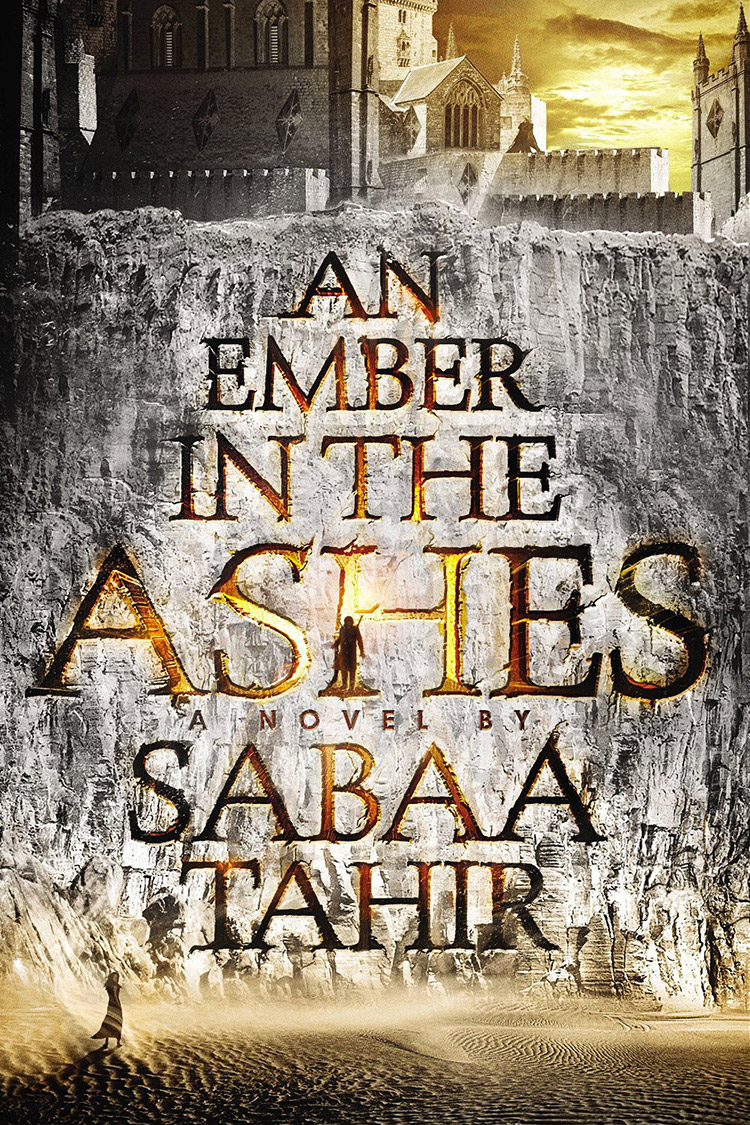
Book Review: An Ember in the Ashes by Sabaa Tahir

an-ember-in-the-ashes-by-sabaa-tahirAn Ember in the Ashes was a surprise. I was looking for (and expected) a fast, easy read that would help get me out of the reading slump I’d been in since breaking my foot in May. I don’t read much YA these days, but this book has gotten a lot of positive attention and I could have sworn that I heard somewhere that it was basically a standalone, which would have been nice since I’m not looking to get into any more uncompleted series. I figured this would be a quick, shallow, fun read that I’d never have to think about again.

It turns out I was super wrong about everything except it being a fast read. I did manage to race through it in about a day, but that was because it was really, really good, not because it was light reading.

This book is not light reading.

An Ember in the Ashes opens with a gut punch and then kicks the reader while they’re down, for over four hundred glorious pages. It’s a wild ride from the very beginning, and it’s definitely the best YA novel I’ve read in a couple of years.

At the same time, Ember is a sort of strange book for me to review. It has several glaring flaws that would ordinarily be dealbreakers for for me, but that Sabaa Tahir manages to make work.

First, I don’t love the names of the main characters, Laia and Elias. They’re just too close to each other, too many L’s and A’s, and though I never found them confusing, these names are just a little too match-y for my taste. They’re also part of a general lack of consistent naming conventions throughout the novel. The fantasy world of the book is ostensibly based upon ancient Rome, but the character names are a mix of Greek, English, Gaelic, and other origins. This could work as a way to differentiate between different cultures in the book, but that’s not how it’s done here. Instead, it’s just a mishmash of names, some of which make sense, some which don’t.

This sort of naming convention mess is increasingly characteristic of YA fiction in general, and it always turns me off a bit. It’s only tolerable here because the story Tahir tells is so well-crafted and because, while the names are sloppy, they don’t inhabit the realm of just plain silly and absurd that some YA character names do.

My second major criticism is also sort of about names, but in the general worldbuilding sense. Frankly, if it didn’t all manage to somehow work, I’d think that Tahir had used this humorous article at The Toast as a serious writing advice. Everything is just awfully generic.

There are the Scholar people, who are peaceful artisans and intellectuals who were easily overpowered and enslaved by the warlike Martial people. Aside from these two major groups, there are also Tribesmen, Barbarians, Lake People and Wildmen, The live in places like “The Empire,” “The Southern Lands,” and “The Tribal Deserts.” The one major holiday we see in the book is just called the “Moon Festival,” another extremely vague and generic piece of the world Tahir has created.

Even the prophesying Augurs seem generic when surrounded by so many other generic groups of people, and this isn’t helped much by the use of the name “Cain” for the main Augur. It’s a name that is so loaded with hackneyed connotations of antiquity, mystery and villainy (or occasional anti-heroism) that it should basically never be used unless an author is literally referring to the biblical Cain. I have a special loathing for the use of mythologically significant names in lieu of actual characterization.

All that said, there’s a lot to like about this fantasy world. There are definitely some bits of ancient Rome in here, but this isn’t Rome the great empire and foundation of western society. The Martials are Rome the violent colonizing juggernaut, and the Scholars and Tribespeople are clearly representative of the great civilizations of the Middle East and North Africa. While I think that the conflict between the Scholars and Martials is a little simplistic, it also offers a refreshingly different and much-needed perspective than the pro-imperialist ones that are more common in high fantasy.

Though there is much about this fantasy world that is bland and generic, there is still enough detail to make it stand out from more standard fare. The incorporation of creatures from Arab mythology is nice and helps to solidify the reader’s sense of the story world as vaguely Middle Eastern as opposed to the usual vaguely Medieval European fantasy.

The one really original fantastical element Tahir introduces is the masks worn by the uncreatively named Masks, and I would have liked to see this explained and explored a little more. Because Elias’s mask hasn’t bonded to him, we don’t get any firsthand details on what it’s like for any of the characters to have a mask permanently affixed to their faces. The masks are also mentioned inconsistently throughout the book, and it’s never quite clear exactly what the masks look like. It’s too bad that we don’t learn more about the masks because they’re probably the most unique worldbuilding aspect we’re shown.

The things that make all of the above-listed mediocrity okay and turn An Ember in the Ashes into a highly readable piece of work are the well-drawn main characters and a meticulously planned and beautifully realized plot. It also helps that Tahir avoids some of the more obnoxious YA tropes and what tropes she does utilize are smartly chosen. Finally, I really appreciate that Tahir isn’t afraid to hurt her characters. The stakes feel high and the danger feels real throughout the book, but at the same time I never felt like the suffering was gratuitous or overdone. 

This book feels like it shouldn’t work as well as it does, and there are any number of things I can pick out of it that I ordinarily don’t care for. However, I really enjoyed it, and I’m definitely looking forward to reading its sequel. An Ember in the Ashes is a sprawling, challenging young adult fantasy that is much greater than the sum of its parts.
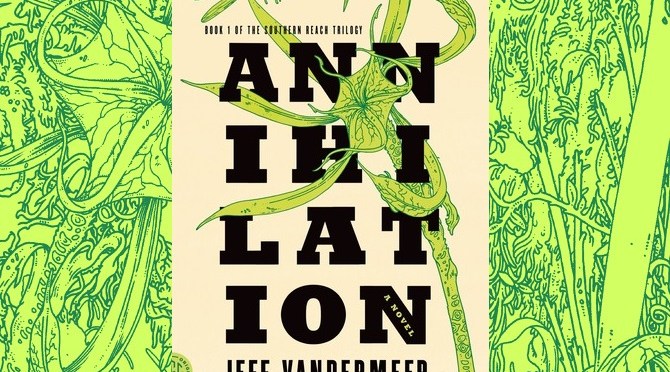
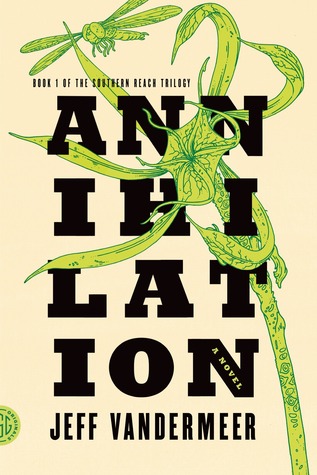
Book Review: Annihilation by Jeff VanderMeer

Annihilation_by_jeff_vandermeerAnnihilation is something else.

That said, I wouldn’t say that it was weird, exactly, as it has so much in common with traditional genre work.

It’s science fiction in the sense that it’s about science; in fact, it’s told from the first person point of view of a biologist, ostensibly on a scientific expedition. There’s a lot of scientific-sounding observations and a lot of scientific terminology tossed around. However, most of what the biologist encounters is decidedly not scientific, is indeed almost certainly supernatural or alien in nature, moving Annihilation firmly into the realm of the fantastical.

The biologist might have the mind of a scientist, but she has the soul of a poet. The descriptions of Area X’s environs are full of lush imagery and gorgeous turns of phrase that grant the whole book a sort of dreamlike quality. At times it even slips into what feels like nothing more than stream of consciousness narration, liberal interspersed with the biologists memories from before the expedition and an entire secondary story nestled in there about the biologist’s marriage, a tragic romance if there ever was one.

It’s a mystery in the sense that the reader doesn’t quite know what’s going on, but there’s no explanation in the end, and the biologist (and therefore the reader) finds far more new questions than answers over the course of the book. While reading, I generally felt like I was getting more and more information, but I was left somewhat frustrated at the end even though I felt like the biologist’s story ended in a way that felt just right for her.

Probably the thing Annihilation is most like is the works of Lovecraft and his copycats, but it’s not really horror, either. While there are some horror elements, especially of the psychological kind, I found the book to be more melancholy than anything else, and the biologist’s very detached, clinical style of narration rather dissected her feelings of horror more than it projected them to the reader. I felt like I was reading about horror, not experiencing it.

I suppose I would call Annihilation a work of literary surrealism, which definitely earns it a place under the SF umbrella, but aside from the common comparisons of it to Lovecraft (and those comparisons aren’t truly apt), I’d say it defies ordinary genre classification.

I can’t say that I particularly liked Annihilation, but there are things I loved about it. Its lovely prose and well-though-out structure show the meticulous craft that went into its creation. I don’t think I will be reading the rest of the trilogy, though. Annihilation left me wanting to know more about Area X, but it just wasn’t a very enjoyable read for me. Not enough to make me want to read another two books like it.

The SF Bluestocking 2015 Summer Reading List

I feel like breaking my foot in May derailed everything I’d planned for the summer, and I’ve been in a bit of a reading slump ever since that wasn’t helped by dealing with Game of Thrones and a nice bout of straight up depression that has left me just constantly exhausted. However, I think that’s mostly over now. The cast should be coming off my foot soon, I’m mostly recovered from Game of Thrones, and I’m ready to get back to some of what I had planned to accomplish.

This is still a slightly tentative list that might change order or expand if I get through things faster than expected, but here’s what I’ve got in my queue right now.

Annihilation_by_jeff_vandermeerAnnihilation by Jeff VanderMeer
I finished this one today, so it’s not technically “in the queue” I suppose. A proper review will be incoming in the next day or two. Annihilation won the Nebula for Best Novel a few weeks ago, so it’s definitely worth checking out if you follow awards. I’m not sure exactly what I expected when I sat down to read it, but it’s definitely something special.

The Heart Goes Last by Margaret Atwood
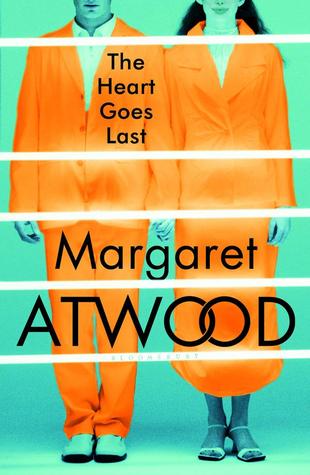
I just got approved for an ARC of The Heart Goes Last from NetGalley, and I’m super stoked about it. I love Margaret Atwood with a deep and abiding passion, but I never did get around to reading her Positron shorts on Byliner before it went bust. This is apparently those, but rewritten and with more. However, I’ve got til its release date (Sept 29) to read and review it, so I’m not in a huge rush. I figure it will end up filling in sometime this summer when I’m in between other things.

An Ember in the Ashes by Sabaa Tabir
I’ve mostly gotten away from reading much YA stuff, but this book has gotten a good deal of positive buzz. It’s apparently a standalone novel, although I see that there is a sequel in the works. I’m hoping to burn through it in a day or two so I can move along to some of the more exciting new releases that are coming up.

The Philosopher Kings by Jo Walton
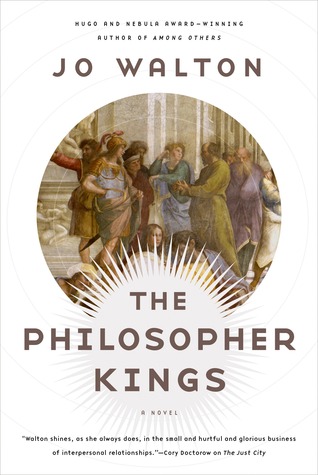
Jo Walton’s The Just City was one of the first books I read this year, so I’ve been eagerly anticipating its sequel since January. It comes out tomorrow, but I probably won’t reasonably get started on it until the weekend. Apparently there is also a third book planned in this series, which has me all aflutter, even though there’s no cover or release date for it yet.

Shadowshaper by Daniel José Older
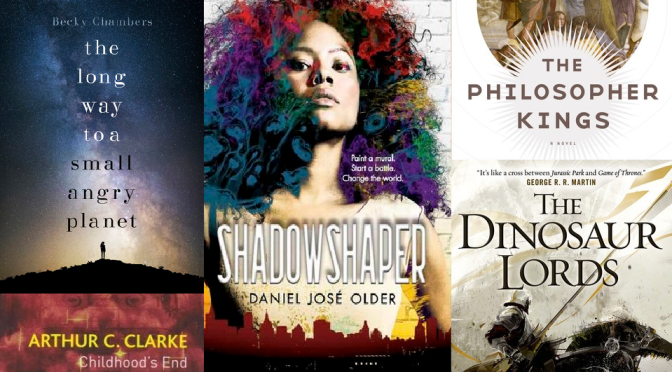
This is the second of the very few YA works I intend to read this year, and it’s another book that has been getting a ton of advance praise. Urban fantasy isn’t my usual thing, and I’m a little skeptical of anything that is being so heavily compared to Cassandra Clare’s Mortal Instruments, but I try not to put too much stock in that sort of thing. Promising Caribbean magic in Brooklyn and with an absolutely gorgeous cover, there’s basically no way that I ever wasn’t going to read this book. It comes out tomorrow along with The Philosopher Kings, which means I have a tough decision to make about which to read first.

The Invasion of the Tearling by Erika Johansen
I had a hell of a time dealing with the ridiculous name of the heroine (“Kelsea”) in The Queen of the Tearling, but I ended up rather liking the book in the end. I won’t say I’m particularly excited to dive back into this series, but I have a hard time leaving any series unfinished. I figure this will also be a nice, easy read in between some of the more difficult stuff on this list.

Station Eleven by Emily St. John Mandel
Station Eleven won the Arthur C. Clarke and was a 2014 National Book Award finalist. It also comes highly recommended by George R.R. Martin. It’s got a ridiculously long description on Goodreads, which would normally make me think that it’s either going to be big and beautiful and complex or an overambitious mess. With its awards nominations and general critical success, though, my expectation is very much that it will be the former.

Childhood’s End by Arthur C. Clarke
Speaking of Arthur C. Clarke, I’ve been wanting to read this book for a while. As part of my general wanting to become more well read in the genre, I’ve begun sort of slowly working through the SF and Fantasy Masterworks collections. While my progress in this has really been very slow, Childhood’s End became a priority when SyFy announced their miniseries adaptation of it. While there’s no air date yet for the show, I want to be sure to finish the book before then, so I can’t put it off too much longer.

The Magicians by Lev Grossman
I’ve been putting off reading this series for years, mostly because I, frankly, haven’t been that excited about it in spite of all the attention it’s gotten. It just sounds like a hipper, edgier Harry Potter for adults. I’m a little old to have ever really gotten into the Harry Potter phenomenon, so that’s always been more unappealing than otherwise to me. However, this is another book that’s being adapted for television (SyFy again!), and the first trailer looks pretty good.

The Buried Giant by Kazuo Ishiguro
I liked Never Let Me Go quite a bit, and I find it fascinating when more mainstream literary authors dabble in genre fiction. As a longtime fan of Arthuriana, I’m also very interested in the post-Arthurian premise for the story.

The Long Way to a Small, Angry Planet by Becky Chambers
I read this self-published gem earlier this year already, but I loved it so much that I’d like to reread it and give it a proper review in time for the hardcover release of it on August 13. I still can’t decide if I love or hate the new cover, though. It’s very pretty, but it looks so serious for a book that is actually quite funny. I really think I prefer the sort of pulpy charm of the original’s spaceship illustration, but the book is so great that I’m mostly just happy to see it getting a bigger release.

The Dinosaur Lords by Victor Milán
This book has a knight riding a dinosaur on the cover, and it’s a medieval fantasy based on 14th century Europe. It’s a book by a man who is known for writing libertarian science fiction, which would normally be a huge turn off for me. However, there is no universe in which I’m not going to always read a medieval fantasy called The Dinosaur Lords with a dinosaur-riding knight on the cover, because that is rad as hell. If you agree about the total radness of this cover and the book’s premise, it comes out on July 28.

The Fifth Season by N.K. Jemisin
I feel like I’ve been waiting for this book forever, even though it’s probably only been a year. N.K. Jemisin has been one of my favorite authors since I first read The Hundred Thousand Kingdoms, and I can’t wait to see what she’s got for us this time around. Just judging from the book description, it sounds pretty epic. The Fifth Season hits shelves on August 4.

The Dark Forest by Cixin Liu
I really liked The Three-Body Problem, so of course I will be reading the second book in the trilogy. I don’t read much translated fiction, and The Dark Forest has a different translator than the first book did so I’m curious to see how much difference that makes. I’m also looking forward to the promise of more action in The Dark Forest as that’s basically the one thing The Three-Body Problem could be said to lack. The Dark Forest will be available on August 11.

The House of Shattered Wings by Aliette de Bodard
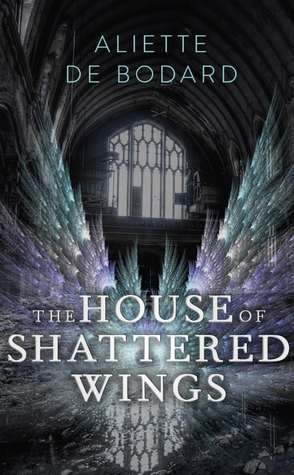
I think I read something that Aliette de Bodard wrote a couple of years ago, but I can’t for the life of me remember what it was. So I was thrilled to rediscover her this year when I read her fantastic On a Red Station Drifting. I followed that up with her Obsidian and Blood trilogy, a sort of noir detective story in 16th century Mexica, which was a ton of fun and a really refreshingly original setting. I’m very excited about The House of Shattered Wings, which will  be released on August 20.

Rereading Jonathan Strange & Mr. Norrell: Chapters 68-69

Strange_BlackAfter the relative calm of the last three chapters, the penultimate chapter of the book contains another flurry of events described in short vignettes:

  • Jonathan Strange and Mr. Norrell discuss their shared experience of wanting John Uskglass’s attention and their shared desire to impress their mutual master. To that end, they begin looking for a spell that might do the trick.
  • The gentleman with the thistledown hair approaches Starecross, bent on revenging himself against Lady Pole.
  • Lady Pole is furiously writing letters to expose Norrell’s treatment of her when she sees the gentleman and Stephen Black approaching and runs out to meet them. John Segundus follows her.
  • Back at Hurtfew, Strange and Norrell locate the book they’ve been searching for and begin their spell, targeting the “nameless slave.”
  • Outside Starecross, Stephen Black suddenly finds all the magic of England at his disposal. Quickly working through some of his complicated feelings about England, Stephen Black uses the enormous burst of magic to kill the gentleman with thistledown hair. While the gentleman warns Stephen that he will never know his true name now, Stephen has come to terms with being the nameless slave.
  • At a house in Padua, Arabella Strange steps out of a mirror and into the arms of Flora Greysteel.
  • Stephen wakes up to Lady Pole calling him from far away. He ignores her, “[casting] off the name of [his] captivity,” and walks further into Faerie, where he finds himself at Lost-hope. There, he is welcomed by the inhabitants as their new king, fulfilling his part of Vinculus’s prophecy.
  • Once more at Hurtfew, Jonathan Strange and Mr. Norrell finally feel as if they’ve gotten the attention of John Uskglass, and they find it rather disturbing. Norrell locates Lady Pole (in Yorkshire) and Arabella (in Italy), but Strange doesn’t seem particularly interested in the news.

The final chapter of the book does two things.

To start with, it mirrors the first chapter of the book by focusing on a meeting of Yorkshire magicians. This one is every bit as raucous and argumentative as the first one, especially when they learn the reason for their having been called together. Childermass is there, and he’s come to tell them that their previous agreement with Norrell is null and void, that anyone can practice magic now however they like. When they complain of their lack of books, Childermass brings forth Vinculus, whose tattoos have been rewritten entirely.

Finally, the book ends in Padua, where Arabella Strange has been recuperating with the Greysteels. She and Flora have become fast friends, and they are getting ready to return to England when a spot of darkness appears, heralding the arrival of Jonathan Strange. Arabella goes to meet her husband, but this last reunion of the novel is bittersweet.

This, I think is my favorite part of the whole book, and I will love Arabella Strange forever for not going into the Darkness with her husband. It makes for an ending that is heartbreakingly sad, but also beautiful and just and completely perfect for the story. Because, ultimately, Jonathan Strange and Mr. Norrell deserve each other.

Rereading Jonathan Strange & Mr. Norrell: Chapters 65-67

Strange_RedThese chapters continue to examine pairs of characters: Stephen Black and the gentleman with thistledown hair; Jonathan Strange and Mr. Norrell; and Childermass and Vinculus. Then last line of Chapter 67 is also what I would call the proper climax of the book, the final revelation before the denouement in the last couple of short chapters.

These three chapters are each rather short, and after the sort of frantic pace of happenings in the last few chapters, these chapters are comparably calm.

Stephen Black’s Name

Chapter 65 is half taken up with the story of how the gentleman with the thistledown hair found out Stephen Black’s true name. It’s a fascinating story, although we don’t actually find out Stephen’s name.

Primarily, this chapter contains three events. The gentleman finds out that Jonathan Strange is back in England, and then he learns that Lady Pole has been released from her enchantment. Sandwiched between these two revelations, Stephen Black and the gentleman encounter Vinculus. In a fit of malicious caprice, the gentleman hangs Vinculus from a nearby tree before Stephen Black can even protest, and then they are off again. The gentleman intends to cast a spell on Lady Pole so that she won’t live long now that she’s free of him.

Jonathan Strange and Mr. Norrell together again.

“Let you and me do something extraordinary.”

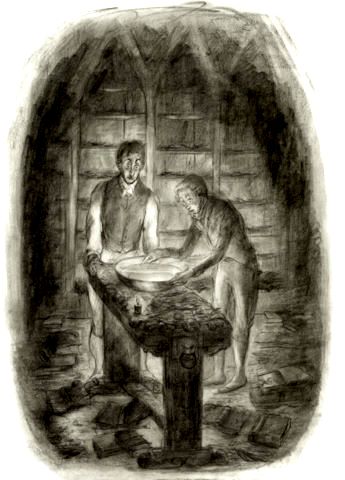
In Chapter 66, Norrell finally makes it to his library, where he finds a disheveled Jonathan Strange poring over the books. I love every single thing about this reunion. I love that it’s Jonathan Strange’s totally normal noise-making that emboldens Norrell to enter the room, and I love that the two men so quickly revert to something like their normal interactions. I love that Norrell is so easily seduced by Strange’s enticements–because no matter how repressed Norrell has been, he loves magic, and all he has wanted to do is magic, and the scary shit that Jonathan Strange is up to is exactly what Norrell has always wanted to do. I love that they find themselves stuck in Eternal Darkness together–because of course the are.

Aside from the reunion of the two magicians and all the feelings that generates, the only thing to really happen in this chapter is their attempt to summon John Uskglass. While he doesn’t show up in the room with them, Strange and Norrell are able to use a locating spell that places him in Yorkshire, and close.

John Uskglass’s Spell

Chapter 67 contains another reunion, this time between John Childermass and Vinculus, who is lately dead. Childermass comes upon Vinculus’s hanging corpse as he makes his way back towards Hurtfew Abbey, and this distracts Childermass from his stated mission to help Strange and Norrell. Instead of continuing his journey, Childermass stops to try and figure out a way to preserve the precious writing that covers Vinculus’s body.

As Childermass tries to figure out what to do, a mysterious man in black shows up. It’s obvious to the reader that this is the Raven King himself, but Childermass is unable to recognize him, probably because of magic. The Raven King resurrects Vinculus and disappears.

Vinculus awakes and Childermass thinks now that Vinculus was only unconscious. Vinculus tells Childermass some more about the prophecies that he’s told. Childermass expresses his loyalty to John Uskglass, but states that the restoration of English magic is the work of Strange and Norrell, not the Raven King. At this, Vinculus laughs outright:

“Their work!” Vinculus scoffed. “Theirs? Do you still not understand? They are the spell John Uskglass is doing. That is all they have ever been. And he is doing it now!”

Rereading Jonathan Strange & Mr. Norrell: Chapters 62-64

Strange_BlackEvery one of these chapters feels like it could be a climax, but none of them really quite manage it. Instead, they continue the enormous build up to the reuniting of Jonathan Strange and Mr. Norrell. Rereading these chapters, I found myself fascinated by a couple of things that I don’t remember really “getting” during previous readings.

First, there is some really gruesome stuff in this book–like, some really graphic and gory descriptions of violence that I guess maybe I just never caught or that never really stood out to me when I wasn’t paying so much attention.

Second, these late chapters are really where Susanna Clarke does an amazing job of working with the themes of dualities that she’s developed throughout the earlier parts of the book. Strange and Norrell’s reunion isn’t the only one happening late in the novel, and these chapters begin an almost frantic-seeming pairing off of characters and seeing how different relationships resolve before we get to the Strange/Norrell main event.

The Crossroads

Chapter 62 is entirely dedicated to a meeting between Henry Lascelles and Christopher Drawlight, and it’s amazing to see how these two characters have changed since we first met them.

Lascelles began the book as a skeptic and a cynic, but his acquaintance with Norrell has convinced him of the reality of magic as well as created in him a drive to be part of great things. Though Lascelles is not himself a magician, he rather fancies himself a sort of magician kingmaker, and he wants to make Norrell into a sort of Raven King for the modern age–primarily by zealously working to banish the mythology of John Uskglass from respectable society. Lascelles envisions magic as a gentleman’s profession, and John Uskglass and Jonathan Strange are not, in Lascelles’ view, gentlemen.

Drawlight, of course, is not so much profoundly changed by his experiences as he is almost driven mad. He’s a simple man, and his life since meeting Mr. Norrell has become anything but simple. At this point in the novel, Drawlight’s meeting with Jonathan Strange has frightened him nearly to death, and he returns to England basically to throw himself back on Lascelles mercy. Drawlight is at his wit’s end–which is no place to be for a man who has always lived by his wits.

When we met these men early in the book, they came as a pair. If they weren’t friends, exactly, they were probably as close as either of these fairly awful people could manage. It was only when Drawlight’s side business was discovered that there was a break between them. And it was only when Lascelles saw a new use for Drawlight that he bothered to “help” him out of debtor’s prison.

Now, Drawlight has returned to England carrying his three messages, and Lascelles meets him alone at a crossroads in the country. Lascelles extracts Jonathan Strange’s messages from Drawlight and then essentially executes the poor fellow. In one of the most poetically gruesome descriptions I’ve read of death in ages, Drawlight’s body is quickly eaten up by the earth, which seems to have taken on a bizarre new life. Lascelles, of course, doesn’t notice anything amiss because he’s too busy feeling like a badass after murdering his ex-friend.

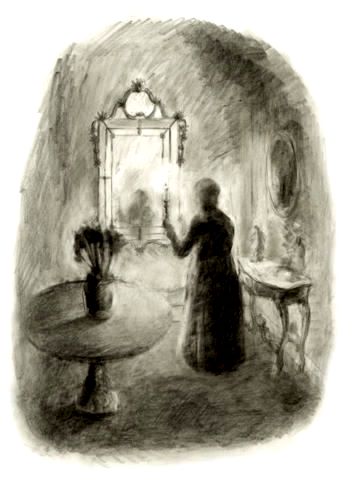
Mr. Norrell at an inn on the way to Hurtfew Abbey.

The Road to Hurtfew Abbey

When Lascelles returns to Norrell after murdering Drawlight, he tells the magician that Drawlight never showed up for their meeting, but only left a letter. Of the three messages that Jonathan Strange gave Drawlight, the only one that is conveyed accurately is the message to Norrell that Strange is coming. Though Childermass is suspicious of Lascelles, his concerns must wait to be addressed as they are quickly on their way to Hurtfew Abbey, where it seems most likely that Jonathan Strange will appear.

On the road, Lascelles and Childermass continue their various ongoing disagreements, each trying to undermine the other in Norrell’s eyes. Also on the journey, it becomes even more apparent that magic is returning to England, and one of Lascelles and Childermass’s many arguments is concerning Childermass’s failure to fight a strange man he met while exploring a fairy road. Lascelles, still riding the bloodthirsty high he got from killing Drawlight, insists that Childermass should have dueled the fellow–who was ominously called the Champion of the Castle of the Plucked Eye and Heart–and that Childermass is a coward for retreating.

By the time the party arrives at Hurtfew Abbey, things are near a breaking point, and the final argument comes while they are waiting for Jonathan Strange to arrive. Childermass has been reading his tarot cards, and he divines that Lascelles has a message for him. Lascelles denies it, and Childermass calls the other man a thief. Lascelles responds to this by attacking Childermass, cutting the servant’s face, and forcing Norrell to choose between the two of them. Norrell, ever class conscious and seemingly incapable of making a right decision, sides with Lascelles, sending Childermass packing.

Fortunately, Childermass did manage to pick Lascelle’s pocket and retrieve the box with Lady Pole’s finger, and when he leaves Hurtfew, he rides off with purpose.

The Servants

As Childermass rides away from Hurtfew, he is the first person to notice that the darkness surrounding the house is not natural–Jonathan Strange has already arrived, although the inhabitants of the place don’t know it. It doesn’t take long before things start getting weird, though, and even as Childermass is riding away all the clocks in the house start to chime.

The servants and Lascelles help Norrell with some final preparations, and the whole group starts going towards the library only to find that Jonathan Strange has changed Norrell’s labyrinth. Norrell quickly becomes lost and confused, and before long he’s been separated from the rest of the group.

In Norrell’s absence, his remaining servants realise that there is nothing else for them to do here and prepare to leave. After protesting the servants’ departure and practically accusing them of thievery, Lascelles decides to leave Hurtfew as well. While the servants are planning to disperse to neighboring farms, Lascelles determines to travel down a fairy road, hoping to find the fight he believes Childermass was a coward for running from.

Lady Pole’s Enchantment

Childermass, in the meantime, has ridden for Starecross to see Lady Pole. When he arrives, he finds John Segundus in a sorry state. Segundus has always been sensitive to magic, and living in constant contact with Lady Pole’s enchantment has caused him to be, not ill exactly, but not well either.

When he’s taken to see Lady Pole, Childermass is even more negatively influenced by the magic that surrounds her, but he is able to learn what has happened. He is even able to discern a remedy, and Childermass and Segundus cast a spell to break Lady Pole’s enchantment once and for all. The relieved Lady Pole is passionately anxious to avenge herself on Norrell and to punish Strange, and she lets slip that Stephen Black and Arabella Strange are likewise enchanted. While she is still expressing her fury, Childermass takes his leave to return to Hurtfew, where he hopes to offer his assistance to the two magicians there in freeing Stephen and Arabella.

Plucked Eye and Heart

Finally, we return to Lascelles, who manages to find the Champion that Childermass refused to fight on the fairy road. Without even listening to what the man has to say, Lascelles initiates a duel which the Champion seems to lose on purpose. Lascelles is still reveling in his victory when another traveler approaches, and Lascelles turns to the new arrival and says, “I am the Champion of the Castle of the Plucked Eye and Heart…”

It’s a fitting ending for Lascelles, and I really appreciate the symmetry of events here and the way the author has ordered things so that as one character escapes enchantment, another replaces her.

Rereading Jonathan Strange & Mr. Norrell: Chapters 59-61

Strange_RedThings just get better and better. For the reader, that is. Maybe not so much for the characters in the book, for most of whom things are just getting scary.

These are the chapters where I would say Jonathan Strange & Mr. Norrell becomes an epic fantasy in a characteristic other than page count. While Norrell has done quite a bit of magic around England, most of it has happened off-page, and though Strange has done some impressive magic, especially in the war, it still feels inconsequential in comparison to the things going on now.

Rumors

In Venice, Dr. Greysteel receives a visitor: the newly-freed-from-debtor’s-prison Mr. Drawlight, who is as odious as ever. Drawlight has already been flittering about all over Venice in order to find out rumors, malicious and otherwise, about Jonathan Strange in addition to spreading some of his own (namely, the rumor that Jonathan Strange murdered his wife). Finally, Drawlight makes his way to see Dr. Greysteel, hoping to pump the man for information about Strange. To Drawlight’s disappointment, Dr. Greysteel is a sensible man and a loyal friend; even Greysteel’s servants are incorruptible.

Unfortunately, Drawlight doesn’t truly need Greysteel’s help to blacken Strange’s name all over town, and soon “Jonathan Strange murdered his wife” is added to the list of things that “everyone” knows. When Drawlight tries to bribe Greysteel’s servant, Frank, he finds himself pushed unceremoniously into a canal that uncannily whisks him into the dark part of town that surrounds Jonathan Strange.

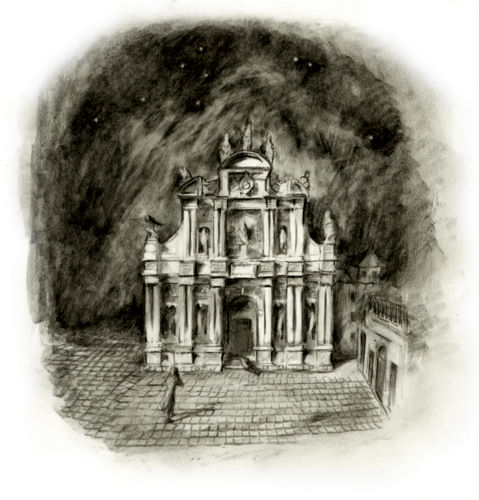
Drawlight discovers Jonathan Strange outside a church in Venice.

Three Messages

Drawlight is terrified by the darkness he finds himself in and is wandering around trying to find his way out when he finds Jonathan Strange. It takes a moment, but Strange recognizes Drawlight and tells him he has three messages Drawlight must deliver.

First Strange tells Drawlight about Lady Pole’s enchantment and that it’s Norrell’s doing. He gives Drawlight the box with Lady Pole’s finger in it and tells him to give the box to John Childermass and tell Childermass what Norrell has done. Next, Strange gives Drawlight a cryptic message for all the magicians in England:

“Tell them this… Tree speaks to stone; stone speaks to water. It is not so hard as we supposed. Tell them to read what is written in the sky. Tell them to ask the rain! All of John Uskglass’s old alliances are still in place. I am sending messengers to remind the stones and the sky and the rain of their ancient promises.”

When Strange is done, Drawlight reminds him that he never gave the third message. Strange seems very caught up in a moment of madness, but finally he spits out the last message:

“Tell Norrell I am coming!”

Back in England, Stephen Black is visited by the man with the thistledown hair, who is frightened and angry. He knows what Jonathan Strange is doing, and he doesn’t like it.

Aunt Greysteel
Aunt Greysteel

Flora Greysteel

I’m so happy that Flora kind of gets her own chapter here, and it’s a good one.

After being sent away from Venice, she and her aunt have taken lodging in Padua where Flora can rest and deal with her disappointment over her separation from Jonathan Strange. Before Flora can really move on, though, she has one last meeting with Strange, under bizarre circumstances.

We find out that the purpose of this meeting was so Flora could persuade Jonathan Strange to give up the madness, and he has even given her the bottle of tincture he made so she can dispose of it. Flora is sad about the loss of Strange, but she is determined to be a good friend to him and insists that she convinced him to leave off the madness because she believed it was what Arabella would want. When Flora pours the remainder of Strange’s madness tincture into the sea, I feel like she really is going to be okay.

The Magic of England

In England again, Norrell and Lascelles are very concerned about how things are going. While they have managed to largely discredit Jonathan Strange, this has also worked against their own interests, and Norrell is no longer receiving any commissions from the government and has become rather generally disliked and distrusted.

Perhaps the first sign of change is when Childermass informs Norrell that magic is being done in England. While there has been talk for years of magic, this is the first time that it seems to be legit claim, and Childermass seems alarmed. Lascelles is disdainful of the idea, though, and directs Norrell’s attention to a summons from the Ministers in the hope that it will be a new commission at last.

When Norrell and Lascelles meet with the Ministers, it turns out that it is a commission, but it’s not what either of them expected. Childermass was correct in his assertion that people were doing magic in England again, and the Ministers have numerous confirmed stories of their own. When Norrell denies any knowledge of or responsibility for any of this, it becomes obvious that Jonathan Strange has done something to bring back the magic.

Norrell’s new commission, therefore, is to prevent Jonathan Strange from returning to England. Norrell knows that there’s really no way he can prevent it–he can only prepare for it. Childermass suggests that Strange will go to Hurtfew Abbey–presumably for Norrell’s library–so that will be the place to meet him.

Also, Drawlight is back.

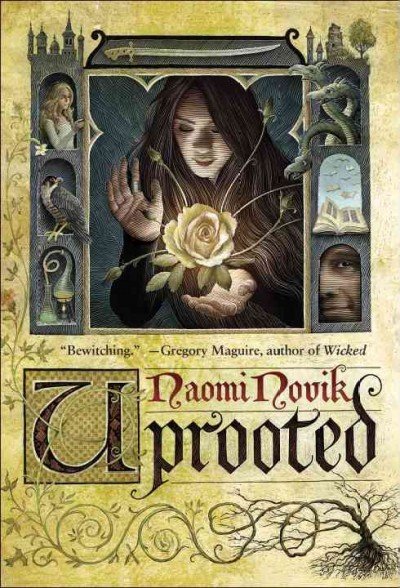
Book Review: Uprooted by Naomi Novik

Uprooted coverUprooted is probably my favorite book that I’ve read so far this year, and it’s definitely the best thing I’ve ever read by Naomi Novik. I did rather like His Majesty’s Dragon, but I never kept up on the series. This book is nothing like the Temeraire books, though.

Reading Uprooted is a truly magical experience, and I tore through it in less than a day. Although I generally am not a huge fan of first person narration, I fell in love with Agnieszka immediately. She’s a character with a very strong personality that shines out from every page, and her voice only gets stronger and more certain as she grows throughout the novel.

Her love interest, the Dragon, is a little less three-dimensional, but I think he works. While I don’t usually like large age gaps in my romance and teacher-student romances are even worse, Novik neatly side-steps about 95% of any weirdness by making Agnieszka extremely self-sufficient. The Dragon doesn’t really have that much to teach her; the things Agnieszka needs to learn can’t be taught much at all. Instead, she and the Dragon become friends and partners, and I felt like their relationship grew so organically that by the time the actually consummate it (in a scene that manages to be sexy and fun without being a distraction from the plot) it feels perfectly timed.

The supporting characters are mostly good as well. Perhaps the most important relationship in the book is the one between Agnieszka and her best friend, Kasia, and I love that it’s not always easy. Novik isn’t afraid to look at the darker side of their long friendship and explore negative emotions like jealousy and resentment in an honest and positive way. I liked the Falcon, who is one of the best sort of mostly-static characters–he is who he is, and there’s not much that is going to change him drastically. The book could stand to be more diverse, but the one notable character of color is a black woman who is a badass wizard and gets her own sort of happy ending.

The plot is something else. I read quite a lot of retold fairy tales, and I rather expected Uprooted to be in that vein. Instead, it’s something very different and fresh, and there were several times when I thought I was reading one kind of book only to turn the page and find out that it was something different. While Uprooted is inspired by Polish folk stories, which gives it a certain feeling of familiarity, it’s a wholly original work that pays homage to fairy tales but avoids all the worst fairy tale tropes. In fact, Uprooted plays with fairy tale conventions in some really interesting ways that I definitely see putting it at the top of my year’s best list.

Rereading Jonathan Strange & Mr. Norrell: Chapters 55-58

Strange_BlackSomething great about Jonathan Strange & Mr. Norrell is that there’s not really any singular point at which things go off the rails for our characters. There’s no one moment where I read it and am like, “shit just got real.” In fact, because of the way the story is presented–as if it is a slightly scholarly history book, looking back on the events of the novel from some time later–there are remarkably few actual surprises for the reader.

And so, in these chapters, although there are big reveals for several of our main characters, the surprises for the reader are much smaller scale and sandwiched into the quieter moments between major events.

Arabella

Jonathan Strange dances with a fairy woman at Lost Hope.

The biggest major event of this section of the book is Jonathan Strange learning that his wife, Arabella, is not dead at all, but has actually been imprisoned in Faerie all this time. The stand-out characters in these scenes, however, are the women–a fairy woman Jonathan Strange speaks with, Lady Pole, and Arabella herself.

Before seeing his wife alive, Strange’s first conversation at the Lost Hope party is with a fairy woman whose conversation seems to indicate that maybe the two English magicians ought to have paid better attention to Vinculus’s prophecy. Strange and Norrell must fail, she says, but Strange is unwilling or unable to understand–it’s too late for them to fail, he thinks.

After parting from the fairy woman, Strange runs into Arabella and Lady Pole. Arabella thinks he must have come to rescue them, but Lady Pole thinks (correctly) not. Lady Pole steals the scene here with her general disdain for the powers of men to do anything to help their situation. Jonathan Strange manages to look like a huge asshole throughout this whole party, to be honest, and it’s no different here.

Meanwhile, Stephen Black is trying unsuccessfully to persuade an irate gentleman with thistle-down hair that it would be best to release Lady Pole and Arabella from their enchantment to avoid angering the magician. However, the fairy gentleman has another plan entirely. To Stephen Black’s dismay, the gentleman expels Jonathan Strange from Lost Hope and places a powerful curse upon the magician.

Darkness, Misery, and Solitude

Sent forcibly back to Venice and reeling from the shock of seeing Arabella, Jonathan Strange goes immediately to tell Dr. Greysteel the news and warn him to send Flora Greysteel away. The doctor, who is a sensible man, is appalled at Strange’s seeming madness, but he can’t deny that things are getting weird. This is confirmed the next day when a huge dark tower has sprung up and looms over the city and the parish where Strange has been living is cloaked in a sort of permanent night.

Various luminaries of the city come to Dr. Greysteel to beg him to intercede with his friend the magician, but when Greysteel arrives to speak with Strange, the magician has not even been aware of the unusual darkness that surrounds him. Instead, Strange has been feverishly working magic and writing letters, primarily to Arabella’s brother, Henry Woodhope, asking him to come immediately.

While it’s not terribly important, there is, at the end of Chapter 56, an excellent encounter between Dr. Greysteel and Lord Byron, who discuss Strange’s madness. It’s a thematically interesting conversation between two characters who seem like they should never be in a room together, and it might be my favorite part of this section of the book.

Back in England, Henry Woodhope visits Mr. Norrell rather than going to Strange in Venice. Norrell denies any knowledge of what Strange’s letters might mean, and Norrell and Lascelles dissuade Henry from visiting his brother in law at all. Even the news that Arabella’s corpse had been replaced with a black log is explained away, and Strange’s letters to Henry are practically confiscated–only to turn up later, published in a misleadingly altered form in order to imply that Jonathan Strange murdered his wife with magic.

As the chapter ends, Lascelles is paying off someone’s debts–presumably the someone that he and Norrell are sending to retrieve Jonathan Strange since they don’t trust Childermass. Elsewhere in London, various ministers and the Duke of Wellington are gathered to discuss the Strange situation themselves.