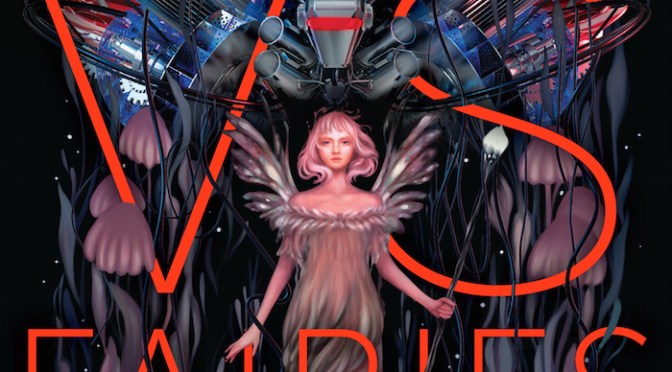
 Robots vs. Fairies is my first reading disappointment of 2018. I loved Dominik Parisien and Navah Wolfe’s first anthology, 2016’s The Starlit Wood, so I was very hyped for this one when it was announced. Unfortunately, Robots vs. Fairies is a bit of a sophomore slump for the editing pair, with a theme that feels more questionable the farther one reads into the collection, stories that largely feel a little too written to spec, and not enough that’s new and interesting to recommend it on those scores. It might work as sort of comfort reading for those who find its table of contents—filled with some of the hottest short fiction writers currently working in SFF—appealing, but if you’re looking for exciting, fresh, innovative work, there’s not much of that here.
To be fair, anthologies in general tend to be a mixed bag, and one’s enjoyment of any collection is heavily dependent on the degree to which the reader’s taste’s overlap with the editors.’ However, the concept for Robots vs. Fairies is both too specific to generate a lot of variation in styles and themes between stories in the collection and broad enough (or, rather, bifurcated) to inhibit a true sense of cohesiveness. If it wasn’t for the book’s introduction and the explanations following each story of which “team” (fairies or robots) the authors chose and why, it would be easy to mistake this for a somewhat random collection of mostly-middling stories about robots and fairies. The choice to bookend the collection with stories (by Seanan McGuire and Catherynne M. Valente) that feature both is smart, but it’s not quite enough to tie the whole thing together.
It seems that every story included here was solicited for this anthology, and this has allowed the editors to collect a veritable dream team of most of my favorite writers of short fiction. However, it’s also produced an anthology where many of the stories feel more like begrudgingly-finished assignments for a high school creative writing course than the sort of vibrant and challenging work that many of these authors have built their careers upon. It’s all just on the uninspired side. There’s not much here that’s ambitious or surprising, plots and prose are just workmanlike, and there’s nothing in these pages that surprised or excited me overly much. Perhaps it’s a shift in the reasons and ways I read short fiction these days—I’m often reading short fiction on the search for new authors and ideas—but I don’t think I’m the only one who will be disappointed by the overall lack of novelty here.
Still, none of this is to say that Robots vs. Fairies is entirely devoid of good, or at least enjoyable stories. The opening tale by Seanan McGuire, “Build Me a Wonderland,” is an interesting take on how fair folk might survive and carve out a place for themselves in a changing world. Tim Pratt’s “Murmured Under the Moon” features a heroic librarian and a sentient book, which are both things that are relevant to my interests. “Just Another Love Song” by Kat Howard has a banshee, a brownie and women helping women. In “Work Shadow/Shadow Work,” Madeline Ashby uses fairies and robots in a way that’s more heartwarming than particularly compelling, but is still a pleasant read. It’s a silly story, and admittedly a little trite, but John Scalzi’s “Three Robots Experience Objects Left Behind from the Era of Humans for the First Time” was the first story in the collection that truly delighted me; I laughed aloud at it more than once. Alyssa Wong’s bittersweet “All the Time We’ve Left to Spend” is the singular really superb story in the collection, but no one writes fairies like Catherynne M. Valente, whose “A Fall Counts Anywhere” may be a bit of a lowpoint for her but would still register as a standout piece of work from almost any other author.
It’s not that Robots vs. Fairies is a terrible anthology. It’s alright, and I’m sure if I did the math and compared it to most other anthologies I read, it’s within a standard deviation of the norm for anthology quality. Perhaps it was unreasonable to expect Wolfe and Parisien to knock one out of the park twice in a row, but I still can’t help but feel a little disappointed that they didn’t after I got so excited about the possibility. If you want some easy-ish comfort reading for a cold winter’s night and find that that this volume has all your favorite authors in it, be sure to check it out. If you’re looking for something new and exciting, perhaps think about looking for something from a smaller press or look to see what’s currently crowdfunding, as that’s where you’ll find innovation.
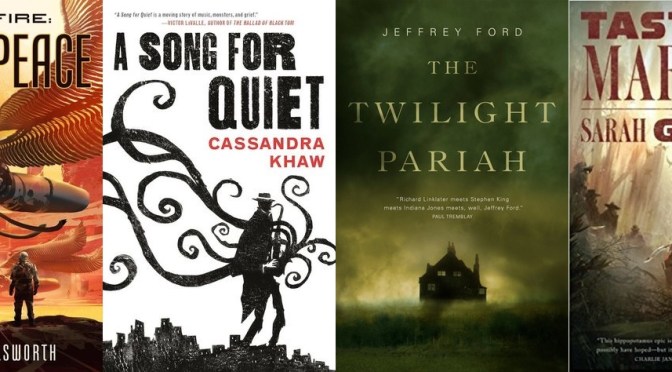
 Starfire: A Red Peace
 A Song for Quiet
 The Twilight Pariah
 Taste of Marrow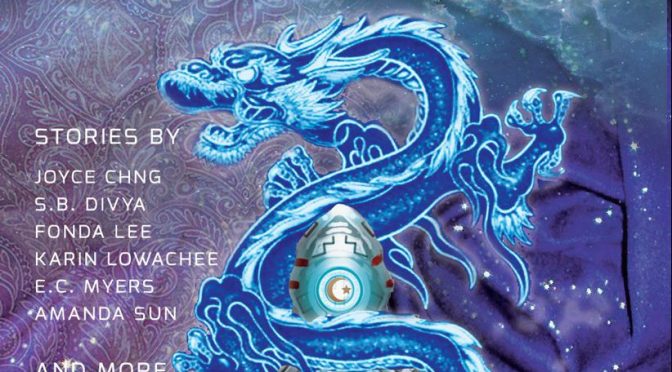
 Where the Stars Rise is a wonderfully diverse collection of Asian science fiction and fantasy that deserves to be on the shelves of anyone serious about being well-read in the genre. Like all good anthologies, there’s something here for almost anyone, while at the same time the collection has a distinctive character that’s all its own. A running theme of the collection is identity, with story after story examining ideas about racial, cultural and personal identity. Experiences of racist oppression figure largely in these stories, but so do experiences of parenthood, disability, trauma, loss and grieving, aging, and displacement or immigration. With a near-even split between science fiction and fantasy and a wide range of subgenres included, this is a remarkably well-rounded anthology that I found had a good mix of well-known and new-to-me short fiction writers. That a portion of the proceeds from its sales goes to benefit Kids Help Phone, Canada’s only 24/7 free and anonymous counseling and information service for young people, is an extra enticement to support the title (and Laksa Media more generally—all of their titles support charity).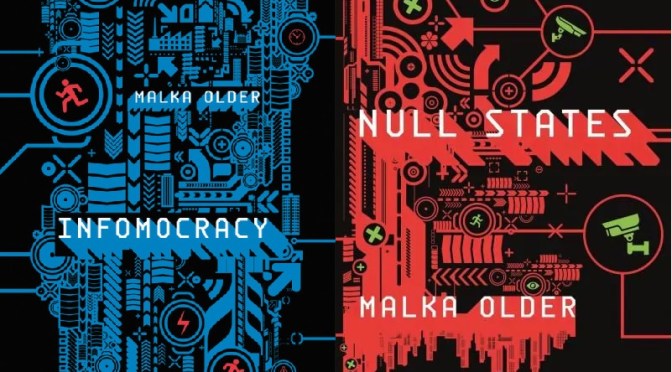

 The Ghost Line
 The Lamb Will Slaughter the Lion
 Acadie
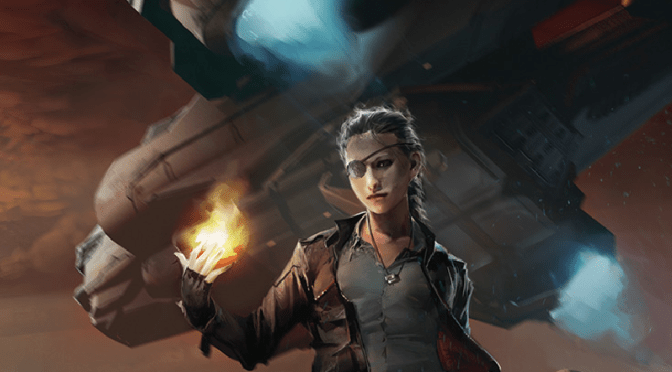
 I read quite a few debut novels and had a cool half dozen on my reading list for the first three months of 2017, but Alex Wells’ Hunger Makes the Wolf was the one I was most looking forward to in the first quarter of this year. I’m happy to say that it did not disappoint. While it may lack some of the great depth and the high level of craft of some of the other debuts I’ve read so far this year, Hunger Makes the Wolf more than makes up for it in other areas. It’s a well-conceived, smartly plotted, enthusiastically fast-paced sci-fi adventure with some cool ideas and a couple of excellent lead characters who’ve got plenty growing still to do in future books.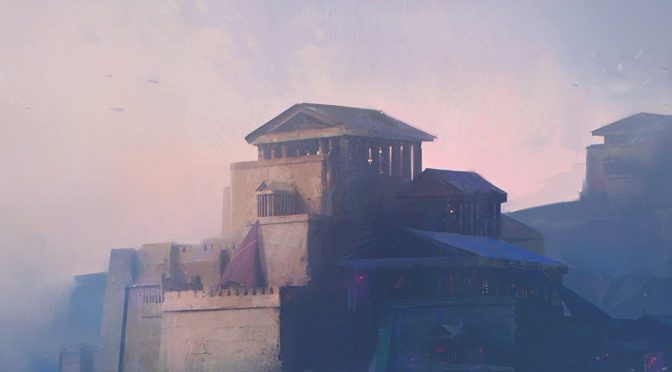
 Ada Palmer’s Too Like the Lightning was one of my favorite novels of 2016, and it was certainly among the year’s most unusual and ambitiously daring pieces of speculative fiction. Nevertheless, it felt a little unfinished, and anyone who loved it has no doubt been waiting with bated breath for the sequel that seemed necessary to complete what Too Like the Lightning started. Seven Surrenders is everything I thought/hoped it would be, with a vivid setting, intricate plot, high level philosophical and political ponderings and fascinating cast of characters, a truly worthy sequel to its brilliant predecessor and a powerfully compelling introduction to the conflict to come in the next book in the series.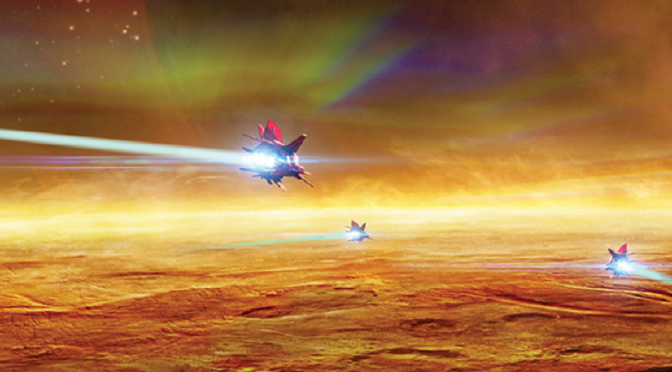
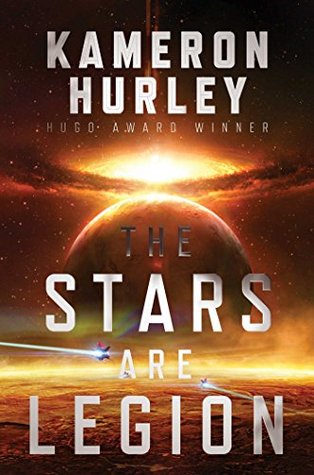 The Stars Are Legion is almost certainly the sunniest novel Kameron Hurley has ever written, which was a pleasant surprise. At the same time, it’s still very recognizably a Kameron Hurley novel, with its badass women, moral ambiguity, and copious grossness. It might be the most ambitious Hurley novel to date, at least thematically; it’s a smart, quick read; and it’s full of the inventive worldbuilding that Hurley is best known for. That it’s a standalone novel rather than the first in yet another new series that I’d have to follow for several years is just icing on the cake.
 Six Wakes is a smart, fresh, fast-paced whodunit. With clones. In space. The story starts with six clones waking up in a bloody mess and all of them with no memories of the last twenty-five or so years of their lives as the skeleton crew of a generation ship. The rest of the book alternates between the crew’s present day investigations to out what happened to them and flashbacks that show their history and allow the reader to slowly put the pieces of the puzzles together. It’s a clever construction that makes world building and character development equal priorities while never sacrificing entertainment value or readability. Mur Lafferty delivers diverse and compelling characters, a great series of twists and turns, and a satisfying conclusion with space for a sequel or simply for other books in the same setting. Which I will certainly read if they are forthcoming.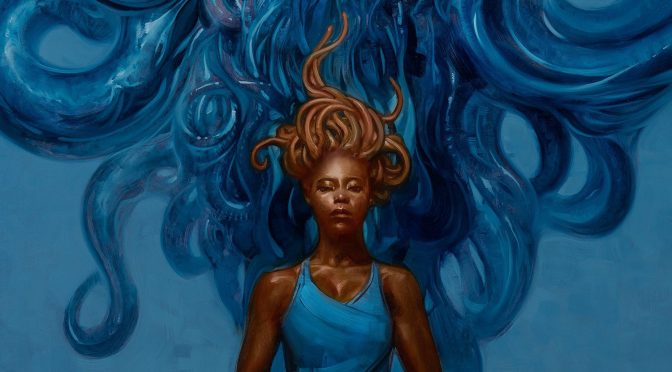
 I didn’t love Binti when I read it in 2015, in spite of having loved everything else I’d read by Nnedi Okorafor up to that point. It was on the short side for a novella, and I’d recently read Okorafor’s absolutely superb Lagoon, which set the bar high for Binti. There were things I loved about it, but I was definitely in the minority of readers who didn’t consider it one of the top novellas of the year, so I wasn’t sure how I would like Binti: Home. This book is about twice as long as its predecessor and addresses many of the things I considered shortcomings in Binti, though it does end on a particularly unsatisfying near-cliffhanger made even worse by the lack of release date for the planned third book that will complete the series.
 SF Bluestocking