Let’s get this party started, right at the beginning of the alphabet. I thought about trying to read these in a more random order or about starting with the authors I already know and like, but the more I considered my options, the more I realized that the easiest and fairest way to approach this project was just to start at the beginning and read it through in the order the stories are arranged in the book. If nothing else, this will keep me from accidentally missing someone.
All of today’s authors are ones whose work I’ve never read before, which has been interesting. They run the gamut from hard sci-fi to sword and sorcery, which made this first day of reading a pretty wild ride.
When I first read “La Héron” last night, I liked but didn’t love it, but I think it’s a story that grows on you. The more I’ve thought about it all day, the more I think I love Charlotte Ashley’s tale of an illicit duelist, her unconventional second, and a series of three duels with fantastically escalating stakes. It’s intelligent, well-structured, and entertaining, and I could read whole books about La Héron and her brawling nun companion.
Ashley’s second story, “Sigrid Under the Mountain,” isn’t as good, unfortunately. It’s not bad, either, but it does seem somewhat underbaked. I love the idea of this story, but the execution here is weak and the story has an almost flippant tone towards its subject matter that seems intended to be humorous but that I found unpleasant to read. All of the characters in “Sigrid” are supposed to be Scandinavian, but the dialogue feels very anachronistically English, and the ending is abrupt and lacks any real emotional impact.
John Ayliff’s offering is an excerpt from his 2015 debut novel, Belt Three. It seems fine, but overall pedestrian. Without knowing anything at all about the novel, I found it difficult to understand at first what was even going on, and when I did start to get it I found it dull.
Lucas Bale’s 2015 novelette, “To Sing of Chaos and Eternal Night,” is about as interesting as that pretentious title and its opening quote from Paradise Lost would suggest. Which is to say, not at all. There is a sort of Shyamalan-level twist that is moderately surprising, but it wasn’t compelling enough to make me care that much about the story.
“Pirate Songs” almost lost me at space pirates, which are terribly overdone, but I’m glad I stuck it out. While there were some very uncomfortable to read parts early on, with a bunch of gross men sexually harassing a disabled girl, Margo turns out to be a very clever protagonist once the story shifts to her point of view and “Pirate Songs” ends up being a solid bit of space opera. I didn’t love it, but it was good enough to keep me from skipping Barischoff’s second and third stories, which would have been a huge mistake.
“Follow Me Down” starts with a monstrous birth and then picks up seven years later with the story of the child that was just born. Kora is a cambion—the child of an incubus and a human woman—and this is the story of an abandoned child trying to understand where she came from and who she is. “In the Woods Behind My House” is about a boy who has a griffin living practically in his back yard, and it’s another story about a child figuring out how to belong. I don’t want to spoil these stories here by saying too much about them, but I will say this: They’re both wonderful, and together they make Nicolette Barischoff the first new-to-me author in this collection whose work I unequivocally love.
“A is for Alacrity, Astronauts, and Grief” is a gorgeous tale about, well, grief, but also family and fresh starts and healing from abuse. When Becca’s sister, Julie, is left in a persistent coma after a car crash, Becca goes back to her abusive mother’s home in order to be able to take care of her nephew, Sam. Becca and Sam work together to decipher the strange messages that appear from an old typewriter that used to belong to Becca’s father, and Becca finds the strength to make some significant decisions for herself and Sam. I definitely cried while reading this, I loved it so much.
“Clay Soldiers” is a clever mindfuck of a story, and “The Last Mardi Gras” is exactly what it says it is. Both are beautifully written (though I preferred the second story) and very short—which it turns out is exactly the right length. Some of my favorite short stories are ones that communicate a single idea or concept very succinctly, and Boden shows an aptitude for just that. He’s definitely an author I will be watching for in the future.
“The Traveler” is a somewhat meta story about a girl who works through grief over her father’s death by building a sort of H.G. Wells style time machine. It’s so lovely and so sad and so uplifting, and is my favorite story of the collection so far.
David Bruns’s first offering is “The Water Finder’s Shadow”—about a man struggling to figure out how to survive without his dog in a post-apocalyptic, drought-stricken America. This story is more of an exercise in world-building than anything else, but it stands alone well enough and left me hungry for more stories in this setting if Bruns ever writes any.
“I, Caroline” is a story with a somewhat obvious tell in its title about what it’s about, but it’s much better than the title might indicate. Caroline’s story is nothing terribly unexpected, but it’s solidly good and managed to make me more than a little teary by the end.
“It was Never the Fire” is the first story I’ve read today that I really just hated. There’s never a situation where I like reading about terrible things happening to girls. “Vanilla” was short, so I read it even though I didn’t like Martin Cahill’s first story. I don’t exactly wish I hadn’t, but this story about eating ice cream at the end of the world didn’t really connect with me either, possibly because I disliked the previous story so much. I’m not sure if changing the reading order would have changed my opinions on this pair, but it surely couldn’t have hurt.
In “Dining Out,” a corrupt food critic runs afoul of an obscure Irish goddess. On the one hand, I always enjoy learning new pieces of old mythology. On the other hand, if I have to google a major story element in order to make sense of it, that’s a problem. Once I learned who Fuamnach was, I got it, but I would have liked it better if I could have understood more about her from context in the story.
“A Most Unusual Patriot” is the first story of Up and Coming that falls properly into the realm of fantasy adventure or sword and sorcery, which is my first genre love. Unfortunately, there’s not a great deal of substance here. Jadie is fine, in a very sort of cookie-cutter quirky fantasy thief sort of way, albeit a bit Pollyannaish. There’s also an awful lot of telling-not-showing going on in this story, with long stretches dedicated to just explaining everything instead of having actual events happening. The worst thing about this one, though, is how misleading its title is. In a world where the thieves’ guild is basically owned by the ruler of the land, it means literally nothing to call a thief an “unusual patriot.” It’s explained, at length, that protecting the realm and upholding the current government is part of Jadie’s job as a member of the thieves’ guild.
Final Verdict
Nicolette Barischoff, Sofie Bird and Stefan Bolz are definitely my favorites of this first group of authors, but David Bruns and Charlotte Ashley also stand out.
I’ll be back tomorrow with a look at the next ten authors.
 This year, Bad Menagerie is offering a pretty unprecedented resource for those of us who are nominating for and voting on the John W. Campbell Award for Best New Writer that will be presented at Worldcon along with the Hugos. Up and Coming is packed with 230 works by 120 Campbell-eligible authors—over a million words of fiction, that I will be working my way through, ten authors at a time, over the next couple of weeks.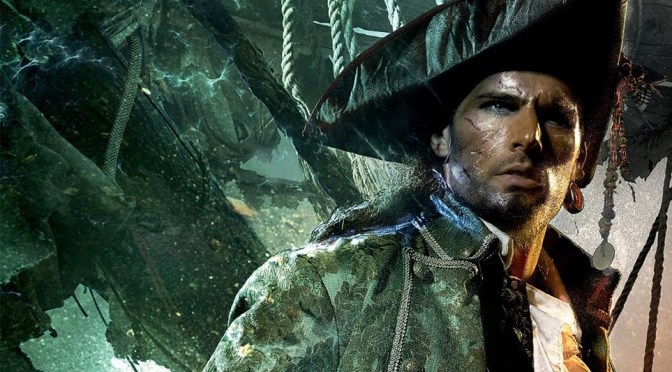
 Pieces of Hate is, technically, an okay book. However, it’s exactly the sort of thing that I normally try to avoid like the plague because I kind of hate it. It’s one of the better examples of its kind of story, but it’s still not my cup of tea. There’s very little that I find more boring than a fridged wife—nameless, even, to add insult to injury—and a manly revenge quest in which the only other women encountered are prostitutes who are (of course) repulsive to the protagonist. It’s a level of casual misogyny (either the author’s or the characters’—it doesn’t matter) that I found alienating from page one.
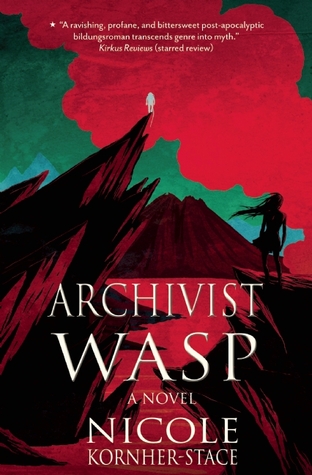 Archivist Wasp is a strange and beautiful story that still managed to be somewhat disappointing to me. I liked it quite a bit, but I didn’t love it the way I thought I would and I’m not sure exactly why except that I feel somewhat misled by an enormous amount of good reviews that were terribly vague about what this book is. At the same time, I do like that Archivist Wasp defies any neat genre categorization. It’s a book that is many things, but mostly it’s hard to describe without giving away the whole story. In any case, I’m not sure exactly what I expected from this book, but what I got wasn’t it, and I can’t say that my expectations were challenged or unsettled in any positive way. I just feel weirdly neutral about the whole thing.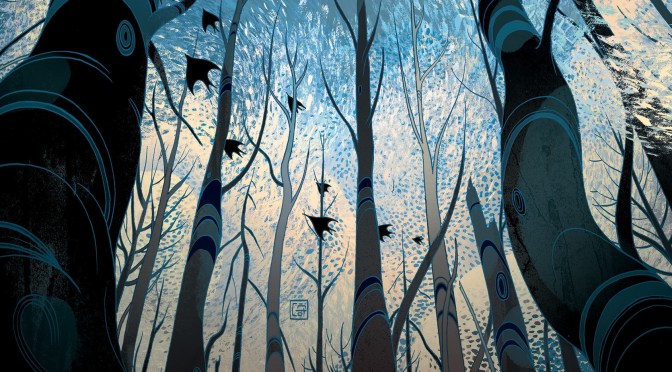
 Lawrence M. Schoen’s Barsk: The Elephants’ Graveyard is a wonderfully original masterpiece of a novel, and I am so glad that I got to it in time for Hugo Award nominations. Somehow, I’d thought it was a 2016 book because it came out so late in the year (December 29). Fortunately, it showed up on the Nebula shortlist before I missed out on it entirely. You guys, this book is so good. If you are a Hugo voter, I highly recommend reading this book before you finalize your nominations. 2015 was an amazing year for genre fiction in general, but this novel is definitely at the top of the heap of amazingness.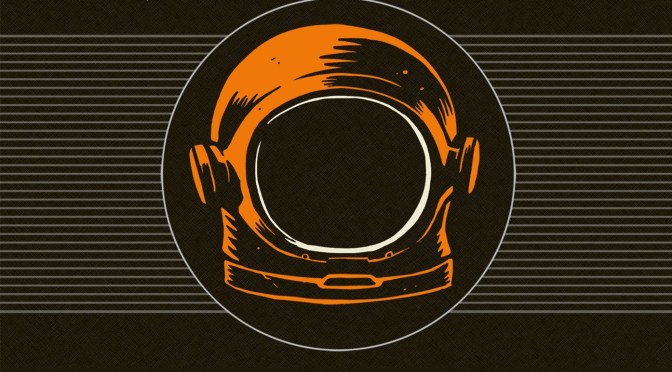
 When I read the first of Michael R. Underwood’s new Genrenauts series, I compared it to the pilot of a television show—it was a solid introduction to the series, but it had a lot of pilot episode problems. The Absconded Ambassador is a rather shaky second outing for the series, and it just didn’t work for me. This time the genrenauts travel to science fiction world, which was exciting, but Underwood didn’t really do anything particularly new or interesting with the setting. The Shootout Solution had a sort of twist that, while obvious, was an interesting exploration of western adventure tropes. There’s nothing like that here, which was a little bit of a letdown.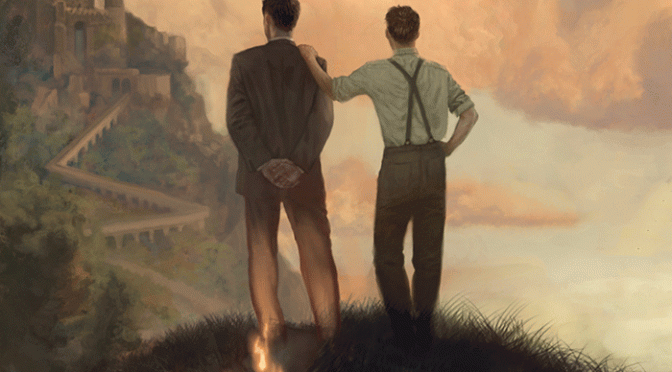
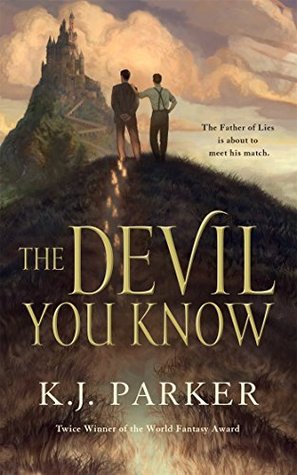 Alright, so I loved this book, but I kind of hate that I did because it’s actually, objectively, a lot of things that I hate. Mostly, The Devil You Know is just not nearly as clever an idea as the author seems to think it is. Still, I just ate it up, and I tore through this little book in the space of an afternoon, it was so much fun. K.J. Parker has taken an idea that has been done before and freshens it up just the right amount, but without making it overly precious or smugly faux-intellectual.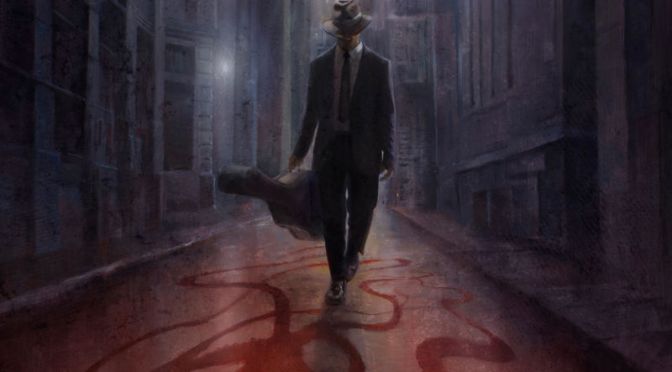
 The Ballad of Black Tom opens with a dedication, “For H.P. Lovecraft, with all my conflicted feelings,” which is a handy summary of how many, if not most, modern readers feel about Lovecraft. Victor LaValle has written at some length elsewhere about his history with Lovecraft’s work and how he was inspired to write this novella in response to the Lovecraft story “The Horror at Red Hook,” so I won’t rehash that all here. Suffice it to say that The Ballad of Black Tom functions as both an indictment of and a love letter to Lovecraft, but it’s also a great story in its own right and is sure to be one of the best novella-length works of 2016.
 I’ve always found it a little sad that there isn’t more Arthurian literature written about Guinevere, so I was excited when I saw this self-pubbed title pop up on NetGalley and had high hopes that it would offer some new insight or a unique interpretation of the mythology. Unfortunately, Daughter of Destiny was mostly a let down on that score. It’s a fast, easy read, though entirely unexceptional, and while Nicole Evelina may have some historical background, her knowledge of, understanding of, and respect for Arthurian legend and literature is marginal at best. It’s not a bad novel, but it was definitely a disappointment as an Arthurian one.
 ODY-C is an ambitious, psychedelic epic fantasy that needs to be completely finished and printed into one enormous, beautiful book so I can just read it all in one sitting. It’s a futuristic, gender-bent retelling of The Odyssey, and it’s a great way of bringing an ancient story to life for a new generation of readers.
 SF Bluestocking