 When I read the first of Michael R. Underwood’s new Genrenauts series, I compared it to the pilot of a television show—it was a solid introduction to the series, but it had a lot of pilot episode problems. The Absconded Ambassador is a rather shaky second outing for the series, and it just didn’t work for me. This time the genrenauts travel to science fiction world, which was exciting, but Underwood didn’t really do anything particularly new or interesting with the setting. The Shootout Solution had a sort of twist that, while obvious, was an interesting exploration of western adventure tropes. There’s nothing like that here, which was a little bit of a letdown.
On the bright side, there was more character development for the main characters this time around, and Leah and the rest of the genrenauts are starting to feel a little more like real people. That said, Leah isn’t a particularly likeable character, but she’s also not unlikeable in any particularly interesting ways. She also shares a lot of screen time on this outing with other characters, but none of them are very memorable, either.
If you don’t have compelling characters, a great plot is a must, but the actual plot here is whisper thin. Very few things actually happen, and those that do aren’t very interesting. The peril caused by the kidnapping of the ambassador never feels very high stakes, and the more general danger of what could happen in the real world if a genre world breaks never manages to feel, well, real.
These issues may simply be due to the limitations of the short length of these novellas and the serial nature of the story, but it’s already hard to muster up any excitement for the next installment at this point. I’ve so far compared this series to a television show, but the problem with serial novella-length installments is that they don’t come out a week apart. The next one won’t be out until months from now, and that’s a long time to wait for mediocrity.
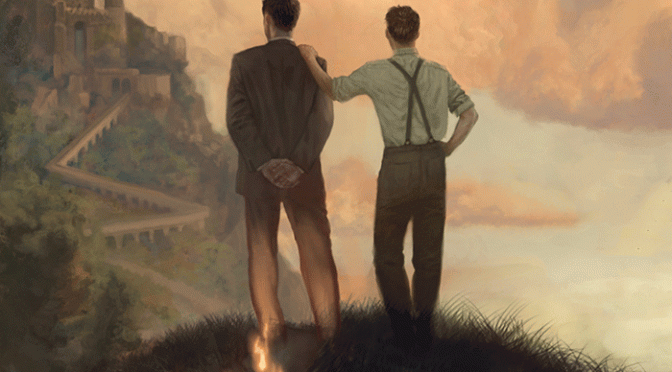
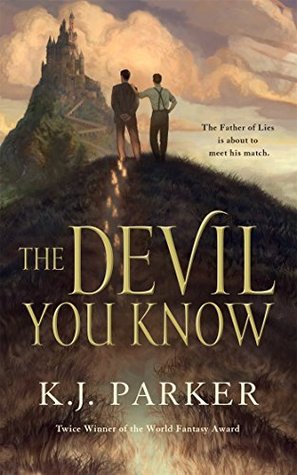 Alright, so I loved this book, but I kind of hate that I did because it’s actually, objectively, a lot of things that I hate. Mostly, The Devil You Know is just not nearly as clever an idea as the author seems to think it is. Still, I just ate it up, and I tore through this little book in the space of an afternoon, it was so much fun. K.J. Parker has taken an idea that has been done before and freshens it up just the right amount, but without making it overly precious or smugly faux-intellectual.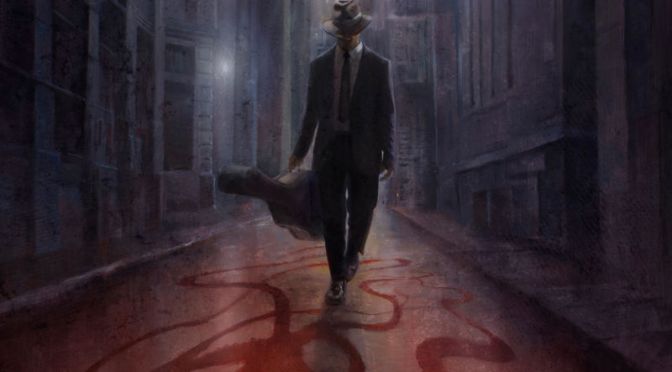
 The Ballad of Black Tom opens with a dedication, “For H.P. Lovecraft, with all my conflicted feelings,” which is a handy summary of how many, if not most, modern readers feel about Lovecraft. Victor LaValle has written at some length elsewhere about his history with Lovecraft’s work and how he was inspired to write this novella in response to the Lovecraft story “The Horror at Red Hook,” so I won’t rehash that all here. Suffice it to say that The Ballad of Black Tom functions as both an indictment of and a love letter to Lovecraft, but it’s also a great story in its own right and is sure to be one of the best novella-length works of 2016.
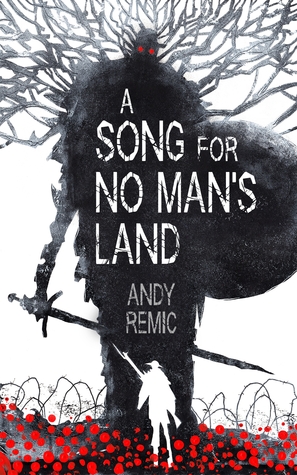 A Song for No Man’s Land is a dull, depressing slog of a novella that never seems to figure out what it wants to say. For all of its short length, it seems to drag on interminably before finally sputtering to a stop right when things seemed to almost start to get interesting. It is the first book in a series of at least three, so perhaps that can be forgiven, but I’m not sure I care enough about Robert Jones to want to come back for more.
 As is often the case with popular fairy tales, there’s very little new story to be wrung out of “Beauty and the Beast” these days, so I was a little skeptical of Bryony and Roses. Even after reading T. Kingfisher’s (a pen name of Ursula Vernon) Toad Words and Other Stories, which is full of superb fairy tale reimaginings, I was unsure if there was anything she could do to freshen up such an old and well-worn story path. An opening note that admitted an enormous debt to Robin McKinley, whose Rose Daughter is perhaps the definitive feminist “Beauty and the Beast,” was frankly more concerning than reassuring. I ought not have worried so much. Just like in her earlier fairy tale work, Vernon-as-Kingfisher does an incredible job of exploring and revitalizing ancient material, infusing it with a bright, modern, thoroughly feminist (and unequivocally delightful) sensibility.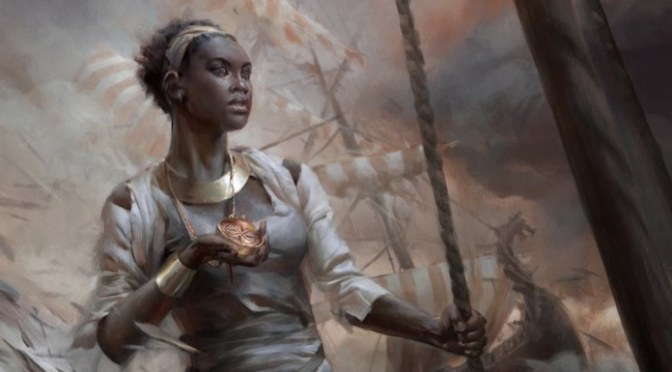
 I expected to love The Drowning Eyes, but I’m sad to say I only liked it. The gorgeous cover art and the book’s description had me very excited about it, but it just wasn’t quite what I expected.
 I received a free advance copy of this title from the publisher via NetGalley.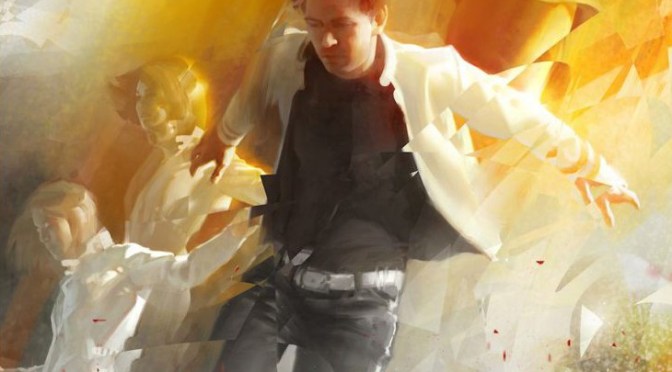
 I received a free advance copy of this title from the publisher via NetGalley.
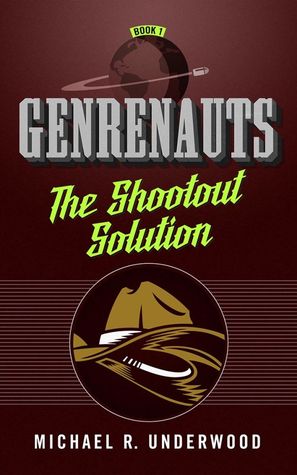 Genrenauts: The Shootout Solution is the first in a new series of novellas by Michael R. Underwood that explores and interrogates genre tropes with a premise that is basically like what would happen if the mid-90s television show Sliders got mashed together with the popular fiction section of a Barnes & Noble. It’s a fun idea, and it more or less works.
 SF Bluestocking