Category Archives: Fantasy

Book Review: Genrenauts #2, The Absconded Ambassador by Michael R. Underwood

When I read the first of Michael R. Underwood’s new Genrenauts series, I compared it to the pilot of a television show—it was a solid introduction to the series, but it had a lot of pilot episode problems. The Absconded Ambassador is a rather shaky second outing for the series, and it just didn’t work for me. This time the genrenauts travel to science fiction world, which was exciting, but Underwood didn’t really do anything particularly new or interesting with the setting. The Shootout Solution had a sort of twist that, while obvious, was an interesting exploration of western adventure tropes. There’s nothing like that here, which was a little bit of a letdown.
On the bright side, there was more character development for the main characters this time around, and Leah and the rest of the genrenauts are starting to feel a little more like real people. That said, Leah isn’t a particularly likeable character, but she’s also not unlikeable in any particularly interesting ways. She also shares a lot of screen time on this outing with other characters, but none of them are very memorable, either.

If you don’t have compelling characters, a great plot is a must, but the actual plot here is whisper thin. Very few things actually happen, and those that do aren’t very interesting. The peril caused by the kidnapping of the ambassador never feels very high stakes, and the more general danger of what could happen in the real world if a genre world breaks never manages to feel, well, real.

These issues may simply be due to the limitations of the short length of these novellas and the serial nature of the story, but it’s already hard to muster up any excitement for the next installment at this point. I’ve so far compared this series to a television show, but the problem with serial novella-length installments is that they don’t come out a week apart. The next one won’t be out until months from now, and that’s a long time to wait for mediocrity.

Book Review: The Devil You Know by K.J. Parker

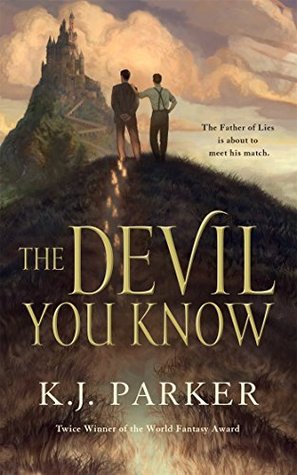
Alright, so I loved this book, but I kind of hate that I did because it’s actually, objectively, a lot of things that I hate. Mostly, The Devil You Know is just not nearly as clever an idea as the author seems to think it is. Still, I just ate it up, and I tore through this little book in the space of an afternoon, it was so much fun. K.J. Parker has taken an idea that has been done before and freshens it up just the right amount, but without making it overly precious or smugly faux-intellectual.
The Devil You Know takes the unreliable narrator trope and multiplies it by two, telling its story from the twin perspectives of an actual (if unnamed) devil and the great philosopher, Saloninus. While there are a couple of point of view shifts that were easily missed—to the point I had to go back and reread once or twice—this mostly works. Saloninus in particular is a wildly clever and funny character, and the contrast between his confidence and the increasingly worried tones of his devil servant is consistently hilarious enough to make up for some of the story’s shortcomings.

The biggest problem that I had with The Devil You Know was the way that women were treated in the narrative. For one thing, there are no actual female characters in this book. There are hordes of nameless prostitutes, shipped in to entertain the menfolk, and there is the woman presumed to be Saloninus’s ex-wife. The sheer lack of agency and importance of these women isn’t particularly surprising, but the way in which both Saloninus and his devil callously use women makes it difficult to truly root for either of them. It’s one thing to have a story with few or no women, but it’s something else entirely to have two essentially misogynistic point of view characters and expect them to be universally appealing.

Regardless, I rather found myself liking both Saloninus and his devil in spite of myself. Saloninus is a wonderfully wicked and manipulative character, but he is only human. The devil has the air of a sort of harried bureaucrat. His anxiety about the contract with Saloninus is palpable, and it’s highly entertaining to experience the devil’s warring feelings about the philosopher. Neither character is particularly compelling, and they definitely aren’t breaking any new ground, but they are both better-than-middling examples of their types.

While the story’s ending is somewhat telegraphed and certainly not very original, Parker manages to mostly make it work. It wraps up a little too quickly and neatly, if anything, and it would have been nice to see things go down in a way that was a little less expected. However, it’s a solidly entertaining story that one doesn’t have to think too hard about. Sometimes, that’s good enough, and this is one of those times.

This review is based upon a free advance copy of the book received through NetGalley.

Book Review: The Ballad of Black Tom by Victor LaValle

The Ballad of Black Tom opens with a dedication, “For H.P. Lovecraft, with all my conflicted feelings,” which is a handy summary of how many, if not most, modern readers feel about Lovecraft. Victor LaValle has written at some length elsewhere about his history with Lovecraft’s work and how he was inspired to write this novella in response to the Lovecraft story “The Horror at Red Hook,” so I won’t rehash that all here. Suffice it to say that The Ballad of Black Tom functions as both an indictment of and a love letter to Lovecraft, but it’s also a great story in its own right and is sure to be one of the best novella-length works of 2016.

It also doesn’t actually require a familiarity with the material that inspired it, although it does help. Even just a basic knowledge of Lovecraft’s work and his major themes will enrich your reading of LaValle’s novella and place The Ballad of Black Tom in proper context. While there’s definitely a vast difference in the length of Black Tom and the short story that inspired it, the biggest difference here is one of narrative scope. LaValle brings Tommy Tester and his contemporaries to life in a way that is directly contrary to Lovecraft’s fantasy of immigrant communities as unwashed, faceless hordes to be controlled and exploited by one malevolently erudite old white dude. Victor LaValle has done his research and combined it with his own lived reality in order to resurrect for the reader a specific time and place and people, and “The Horror at Red Hook”, in comparison, ends up looking like exactly what it is—the paranoid imaginings of a very sheltered, racist white man.

Whereas Lovecraft viewed immigrants and brown people with the same degree of horror with which we might think of tentacle monster gods in the depths of the ocean, LaValle is consistently clear on what the horrors are in Black Tom. At the same time, though, LaValle eschews any simple dichotomy of good and evil, instead preferring to explore ideas about how and why evil is made and used—and what it means when different people use it. When the climax of The Ballad of Black Tom comes, it’s a scene of catharsis that is both exhilarating to read and uncomfortable to feel so exhilarated about.

It’s a powerful reclamation of the racist narrative that Lovecraft created nearly a century ago, and it’s more wonderful and more unsettling than anything Lovecraft could have thought up. It’s a viscerally effecting and definitive illustration of the ways in which Lovecraft’s own biases and neuroses hindered him from telling this story in the way it deserves to be told. Victor LaValle has rehabilitated it and made it perfectly his own.

Book Review: Daughter of Destiny by Nicole Evelina

I’ve always found it a little sad that there isn’t more Arthurian literature written about Guinevere, so I was excited when I saw this self-pubbed title pop up on NetGalley and had high hopes that it would offer some new insight or a unique interpretation of the mythology. Unfortunately, Daughter of Destiny was mostly a let down on that score. It’s a fast, easy read, though entirely unexceptional, and while Nicole Evelina may have some historical background, her knowledge of, understanding of, and respect for Arthurian legend and literature is marginal at best. It’s not a bad novel, but it was definitely a disappointment as an Arthurian one.
The story starts off somewhat slowly, as 11-year-old Guinevere is sent to Avalon to train as a priestess, which feels like a page out of nearly every Arthurian retelling from Morgan’s point of view. Unlike most of those retellings, which often focus on Morgan’s relationships with the women she meets there, this first part of Guinevere’s story actually leaps over several years of her training in order to get straight into her senseless rivalry with Morgan and her relationship with, of all people, Aggrivane. I’m not sure which I find more upsetting: the conflation of Guinevere’s story with Morgan’s, the absurd twisting of the regular Arthurian timeline of events, or the general grossness of Guinevere’s relationship with Aggrivane (who is an adult man). It’s all completely unoriginal and establishes early on that the author doesn’t know or care much about the literary tradition she’s working within.

After graduating from priestess training, Guinevere doesn’t actually become a priestess. Instead, she’s sent back to her father, Leodgrance, who has become a Christian since the death of Guinevere’s mother. We’re told that Guinevere is extremely sad about her mother’s death, but the majority of Guinevere’s time in Northgallis deals with her relationship with her father. This does touch upon a common Arthurian theme—the conflict between the indigenous religions and traditions of Britain and the Christianity imported during the Roman occupation of the country—but in a very shallow manner. Rather than exploring these larger ideas, Evelina dwells on relationship drama, even contriving to have Aggrivane show up at Northgallis in order to create a situation that gets Guinevere sent away to the story’s next setting.

In Pellinor’s household, Guinevere meets Elaine (Pellinor’s daughter) and Isolde, both characters who usually have their own interesting roles to play in Arthurian legend. Here, though, Elaine is a quiet, strange girl in thrall to her domineering mother, Lyonesse, and obsessed with finding a man who she believes she is destined to marry. Isolde is the heir, in her own right apparently, to the throne of Ireland, but she’s kept practically as a servant in the household, where she spends her time sleeping around (as one does when one is a young princess in a time before birth control, I guess) and giving pages-long speeches of exposition to Guinevere. Guinevere and Isolde are supposed to be great friends, but the relationship isn’t very developed, and what passes for court intrigue is little more than mean girl antics.

The climax of the novel is a grand tournament held by Pellinor to entertain the new High King, Arthur, but there’s not much action to be had here. Guinevere again resumes her affair with Aggrivane, and they hope to marry, but instead Guinevere ends up promised to Arthur, who she has had almost no contact with whatsoever. She’s upset at first, but seems to be getting into the whole “being queen” thing by the end of the novel. Even Aggrivane doesn’t actually say anything in protest, even though he had been assured by his own father that marriage to Guinevere was a done deal. It ends up feeling like a betrayal of the whole book up to this point, with no foreshadowing or anything to prepare the reader for this. Obviously, as someone familiar with the story, I wasn’t surprised to have Guinevere paired off with Arthur—that’s a non-negotiable facet of the legend and was definitely going to happen by the end of the book—but it felt incredibly unearned here, as if the author expected it to be a shocking turn of events. Instead it just seemed silly and calls into question the purpose of the entire rest of the book.

There’s no particularly new ground covered in Daughter of Destiny. It borrows heavily from The Mists of Avalon and similar feminist interpretations of the Arthurian mythos, but without any real understanding of the things that make those stories compelling. Although she has some admirable (albeit generic) qualities, Guinevere is a passive character throughout her own story, with very little agency. Her singular rebellion (outside of her ill-advised relationship with Aggrivane) is to secretly continue her weapons training, which connects her to her dead mother and to her ancestral people, but this is never fully explored and is also never once relevant to the plot. Meanwhile, every major event in Guinevere’s life is determined by the men who control every aspect of her present and future.

[This review is based on a copy of the novel received through NetGalley.]

Book Review: A Song for No Man’s Land by Andy Remic

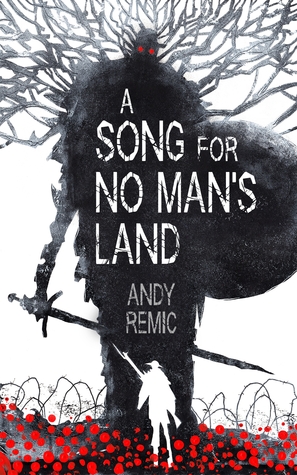
A Song for No Man’s Land is a dull, depressing slog of a novella that never seems to figure out what it wants to say. For all of its short length, it seems to drag on interminably before finally sputtering to a stop right when things seemed to almost start to get interesting. It is the first book in a series of at least three, so perhaps that can be forgiven, but I’m not sure I care enough about Robert Jones to want to come back for more.
The story alternates fairly rhythmically between Robert’s time as a soldier during World War I and his childhood in rural Wales, but neither setting is particularly compelling. Robert’s time in the war is characterized by pretty run-of-the-mill WWI imagery and tropes while the flashbacks to his youth are mostly concerned with introducing the story’s mystical elements. However, the use of Scandinavian mythology (the hulder) seems out of place in a story about a Welshman as well as in a story about WWI. I’m not averse to the idea of forest spirits being upset or angry at the destruction of war (that would be very Princess Mononoke), but it seems an odd choice to co-opt the forest spirits of a neutral country where there was no actual fighting during the war. Alternatively, the forest spirits could be a reference to some similar German creatures, but that still doesn’t explain what they would be doing hanging around in Wales while Robert Jones was a kid.

The other characters introduced never manage to come truly alive, though Bainbridge comes closest. Instead, they’re all simply passing through, and they don’t even seem to have much impact on Robert, much less on the reader. Even Robert’s supposed friend, George, appears abruptly in the final quarter of the book only to come to a senselessly tragic end that left me wondering why he was introduced at all. The only women mentioned are either decidedly subservient figures (mothers, a sister, a nurse) who exist only to coo over or fuck the men in the story—well, mostly just Robert—or they are the demonically horrific Skogsrå that has apparently been menacing Robert Jones since he was a little boy.

The horror elements of A Song for No Man’s Land are sadly underdeveloped. The abovementioned appropriated mythology is made regrettably generic, and the monsters themselves are left largely to the reader’s imagination. I believe that Andy Remic was trying to rely on building a horrific atmosphere and crafting a feeling of terror through language, but his workmanlike prose is just not up to the task. Furthermore, the decision to replace vulgarities with “______” is described in an introductory note as a hat tip to the time of the book’s setting, but it comes off as coy, distracting, and frankly confusing as it’s often not clear what the censored term ought to be. This choice might have made sense if the overall tone of the writing was made to feel antiquated, but in a book that is otherwise modern in its style it just feels like an on the nose anachronism.

One of the reasons I read all of Tor.com’s novellas is because doing so encourages me to read outside my comfort zone and try new things that I wouldn’t normally pick up. Often, this has paid off big time; it’s been nice to discover several new authors to follow, and it’s interesting to read stuff that isn’t my usual cup of tea. Unfortunately, this time it just didn’t work out that way. A Song for No Man’s Land might be a great story for the right reader, but I just couldn’t like it.

Book Review: All the Birds in the Sky by Charlie Jane Anders

All the Birds in the Sky, on its surface, is a story about two weirdos who come of age and fall in love during an apocalypse. It’s a story infused with magic, from the first time we see Patricia talk to a bird, and it’s a story about bad timing, from the moment Laurence makes his first two-second time machine. It’s a comedy of errors about the end of the world, and it’s one of the most wonderful things I’ve ever read. I’m only a little disappointed to have read it so early in the year. I feel about All the Birds in the Sky the way I felt about N.K. Jemisin’s The Fifth Season (which this novel is absolutely nothing like) last year; I just know, deep down, that nothing else I read in 2016 is going to top it.
In Patricia and Laurence, Charlie Jane Anders has created a pair of compelling and dynamic protagonists who are in perfect balance with each other. Patricia learns at an early age that she’s a witch, and Laurence is doing advanced tinkering in first grade. By the time they are in middle school, they’re both decidedly outcast by their peers and bond over that shared status even though they are otherwise nearly polar opposites. However, Anders avoids stereotypes and simplistic characterization in her depiction of her leads. Laurence and Patricia are both grandly archetypal and intensely real, and their story is at once epic and deeply personal.

Anders also peoples the world that Patricia and Laurence live in with a diverse cast of characters, from their two very different but equally dysfunctional families to their mentors to their adult friend groups who turn out to have more in common than not. There are talking birds, an AI, a tree spirit, and even a time traveling assassin/guidance counselor who ends up being one of the funniest characters in the book. While, on one level, all of these secondary and tertiary characters are arrayed like chess pieces, again Anders avoids drawing the battle lines too clearly, creating an interesting, nuanced dramatis personae.

The story meanders between fantasy and science fiction towards a climax that combines the best of both to excellent effect. The plotting and pacing are consistently good, and the tropes Anders utilizes are well chosen and smartly combined. When she chooses to subvert the reader’s expectations, it’s done in a way that is obviously very clever but never veering into twee territory. All the Birds invites the reader to play along when other less deft works might simply toy with the reader’s emotions. There’s plenty in this book that is unexpected, but there’s enough of the familiar to make it feel like an old friend that you’ll want to visit again and again.

It’s a strange book to review because I don’t want to give too much away, but also because I’ve never read anything quite like it. All the Birds reminds me most of Neil Gaiman and Terry Pratchett’s Good Omens, albeit vaguely, and it objectively has very little in common with that book outside of the fact that it also deals with an apocalyptic event and was quite funny. The truth is that All the Birds in the Sky is a wonderfully unique and fabulously original novel that isn’t really quite like anything except itself.

Book Review: The Seventh Bride by T. Kingfisher

The Seventh Bride is, loosely, a retelling of “Bluebeard,” which is a nice change from the more common fairy tale retellings that populate most shelves. I don’t see “Bluebeard” pop up that often in the vast sea of princess stories that seem to get almost obligatorily reimagined on a perennial basis, so right out of the gate I was predisposed to love this story because it was so obviously a fresh perspective. It turns out to be much more than just a simple retelling of an old tale, however. The Seventh Bride is a beautiful, clever, funny story about power, abuse, revenge, and—above all—the ties of shared experiences that bind women together and the vital importance of women loving and supporting each other.

Rhea is the fifteen-year-old daughter of a miller in a small town, and while she always did expect to be married someday, she didn’t expect to find herself engaged so young and rather against her will to the wealthy (and sinister) Lord Crevan. Although Rhea’s parents are good, loving people who want their daughter to be happy, there’s very little they can do to prevent the marriage. The marriage to the much older, more powerful, and creepy man isn’t ideal, but peasants don’t say no to lords. When Rhea goes to live at Crevan’s house before the actual wedding takes place, however, she finds out that things are much worse than she thought they were. Not only has Crevan been married before, but his previous wives aren’t dead. Well, mostly.

Perhaps what I love best about Rhea is that she’s such a refreshingly ordinary girl. This is characteristic of much of T. Kingfisher’s (Ursula Vernon in disguise) work, and so far I have never not been delighted by the total lack of exceptionalism among her heroines. It’s not that her girls and women don’t have any exceptional qualities; Rhea, for example, is exceptionally tenacious, brave, kind, and principled. It’s just that there’s nothing about a T. Kingfisher heroine that is ever framed as “not like other girls.” I feel like this shouldn’t be noteworthy, but “not like other girls” is sadly too often the shorthand authors use in order to create “strong female characters” so I’m always happy—especially in work about and for teenage girls—to see girl characters who are allowed to exist without being shown as constantly in competition with other girls and women.

Instead of just one exceptional girl, Ursula Vernon creates a whole cast of diverse and compelling women who, ultimately, have to work together in order to defeat the man who has harmed them all and fight back against a system that gives them little recourse to address the injustices they’ve been subjected to. It’s a powerfully feminist message that resonates with a deep and abiding truth that many women will relate to and all girls need to hear. At the same time, it’s a story that isn’t preachy and never gets bogged down in messaging. Rather, it’s a fast-paced tale that utilizes some familiar fairytale tropes and subverts others, all while taking place in a well-drawn and richly detailed fantasy world that is steeped in whimsy but never overly precious.

With The Seventh Bride, Vernon continues to prove herself as a consistent producer of marvelously enchanting fairy tale stories. She knows her genre and audience well enough to perfectly walk the line between comfortingly familiar and delightfully fresh and subversive.

Book Review: Bryony and Roses by T. Kingfisher

As is often the case with  popular fairy tales, there’s very little new story to be wrung out of “Beauty and the Beast” these days, so I was a little skeptical of Bryony and Roses. Even after reading T. Kingfisher’s (a pen name of Ursula Vernon) Toad Words and Other Stories, which is full of superb fairy tale reimaginings, I was unsure if there was anything she could do to freshen up such an old and well-worn story path. An opening note that admitted an enormous debt to Robin McKinley, whose Rose Daughter is perhaps the definitive feminist “Beauty and the Beast,” was frankly more concerning than reassuring. I ought not have worried so much. Just like in her earlier fairy tale work, Vernon-as-Kingfisher does an incredible job of exploring and revitalizing ancient material, infusing it with a bright, modern, thoroughly feminist (and unequivocally delightful) sensibility.
Bryony and Roses is clearly heavily influenced by Rose Daughter. Let’s get that out of the way, first. However, it’s been nearly twenty years since the release of that book, almost forty years since McKinley’s first “Beauty and the Beast” retelling, Beauty, and close to twenty-five years since the release of Disney’s animated version. There’s also been any number of other retellings of the story, with perhaps a handful of significant new versions in any given year. While Bryony and Roses shares some ideas and motifs with Rose Daughter, it also owes a considerable amount to other versions of the story, if in no other way than that it’s very obvious that Ursula Vernon went into writing this tale with a long list of things not to do and a few tropes that she specifically seems to have set out to upend.

**Spoilers Ahead** Continue reading Book Review: Bryony and Roses by T. Kingfisher

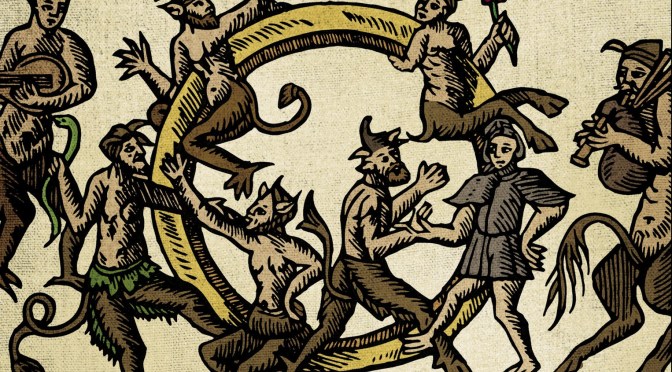
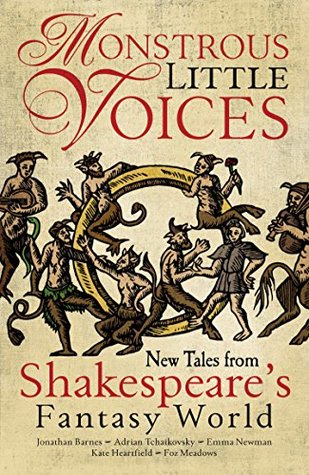
Book Review – Monstrous Little Voices: New Tales from Shakespeare’s Fantasy World

Monstrous Little Voices is a collection of five short novellas that take place within a fantasy world based upon the works of William Shakespeare, and it’s about 80% brilliant, which is pretty good for an anthology. There’s something of an overarching storyline connecting the stories, in addition to common themes and motifs, and this is nicely executed without making the stories feel totally linear or requiring them to be read in order. At the same time, each one also stands alone quite well.

Foz Meadows kicks things off with “Coral Bones,” a deliberate and thoughtful meditation on the ways in which we learn and perform gender roles. Through the examination of the character of Miranda and Miranda’s life after her marriage and “rescue,” Meadows explores questions about where gender comes from, how it’s imposed upon people, and what are some of the consequences—both personal and social—for failing to adequately conform to strict gender roles. She imagines essentially three worlds: the island where Miranda grew up unconstrained by social expectations, though being also groomed by her father, Prospero, to perform femininity; the world of the court of Naples, where Miranda lives after her marriage to Ferdinand, in which her performance of femininity is no longer optional and the qualities that made her different and attractive to Ferdinand on the island are now unnecessary and unwanted; and the fairy world, into which Miranda flees to escape her unhappy marriage after suffering a miscarriage, and in which gender is fluid and sexuality is flexible. It’s a clever story, and Meadows makes superb use of the Shakespearean elements in order to both pay tribute to and interrogate the Bard’s work.

“The Course of True Love” by Katherine Heartfield takes place, in the world of the book, some twenty years after “Coral Bones,” and it’s an altogether different sort of story—a fairly straightforward romance—that also plays with its source material in interesting ways. Heartfield tells the story of the witch Pomona, who is a friend of Sycorax and devotee of Hecate, and her encounter with an imprisoned fairy ambassador. Of all the stories in Monstrous Little Voices, this one may be the most in the spirit of Shakespeare, filled as it is with fairies, witches, mistaken identities, gender swaps, and humorous banter. What I liked best about it, however, is that it’s a romance where an old woman gets to be the main heroine. Like the previous tale, it’s overtly feminist, but with a significantly lighter and less complicated feminist message than “Coral Bones.”

Emma Newman’s “The Unkindest Cut” may be my favorite story in the collection, and it’s definitely the one about which I most wonder what happens next. Lucia de Medici is a girl with a destiny—to enter into a marriage that will end a war before it even begins—and she’ll do anything to ensure that it comes to pass. It’s an enormous amount of character development and growth squeezed into a relatively short number of pages, and it’s fascinating to watch Lucia change over the course of the story’s events. This girl who begins as somewhat shallow and seemingly marriage-obsessed turns out to be clever, resourceful, and downright ruthless in pursuit of her goals. The ending of the story is somewhat heavily telegraphed, and the ultimate solution to Lucia’s central problem is obvious before it’s even revealed, but it’s so great and the punchline of the story is delivered with such panache that I can barely even think of this as a drawback.

Adrian Tchaikovsky contributes “Even in the Cannon’s Mouth,” which is the story in the collection that is most like an actual play, with at rise descriptions and stage directions being used to provide a theatrical tone and break up the story into distinct scenes. It’s a tactic that I think is used to mixed success here, and I honestly found myself just being overwhelmed by the number of characters and disoriented by the swift and often sudden changes in the narrative. It’s a wild ride, for sure, and there are some interesting interpretations of Shakespeare’s characters—especially Helena—but the actual events of the story are sometimes difficult to follow. I was very glad to be taking notes, but not everyone likes to treat their leisure-reading like homework. Fortunately, everything comes more or less into focus by the end of the story so that there is a mostly satisfying ending, but “Even in the Cannon’s Mouth” is noticeably less substantive than all three of the previous stories. It’s not a bad tale, but it has far less to say than any of the others.

The final story in Monstrous Little Voices is “On the Twelfth Night” by Jonathan Barnes, and it comes somewhat out of left field. It starts off promisingly, albeit very differently than any of the rest of the stories in the collection, being told in second person from the point of view of Shakespeare’s wife, Anne. Then, though, things get weird, and the story barrels towards an ending that I found profoundly disappointing, mostly because it was so completely disconnected from the rest of the collection in tone and subject matter. I might have liked “On the Twelfth Night” in a different context, but here it just feels out of place and so completely unpredicated by the rest of the stories that it’s both baffling and irritating. It’s the highest concept of the book’s tales, but in this case that only means that it has the biggest opportunity to fail with its audience.

All in all, though, Monstrous Little Voices is something special, and this is a great year for reading Shakespeare, being the four hundredth anniversary of his death. With the introduction and afterword, I’d say that it’s definitely worth it to buy the full book, but each story is also being sold separately as an ebook if you prefer to read them that way. At the very least, the first three stories are essential reading, but the whole thing together is worth checking out.

(I received a copy of this title from the publisher via Netgalley.)

Book Review: Truthwitch by Susan Dennard

Whew! Truthwitch is an absolutely exhausting, if exhilarating, read. There’s an enormous amount of stuff going on in this book, and I kind of loved it, but the problem with doing lots of things in a novel is that it’s only seldom that they’re all done well. Like many other ambitious and complex works, especially those intended for a YA audience, Truthwitch is a bit of a mixed bag.

The biggest problem with Truthwitch is that, while a ton of stuff happens, nothing is resolved and not all of the things that happen seem to belong in the same story with each other. Some parts feel almost entirely disconnected from the rest, while other parts are both too obviously connected with each other and made to feel much more mysterious than they actually are.

The book opens with main characters Safiya and Iseult in the middle of a “heist,” though it’s never particularly clear what they’re up to, how they planned to get away with it, or why this was how Susan Dennard decided to start the story. It could be intended to establish the girls’ “normal” state of affairs, but it’s made very clear later on that this was something that they did infrequently, as both of them have legit positions in the city they live in that would prevent them from really engaging in a life of crime—not to mention the ways their choices are constricted by their social positions. It’s a strange opening that—even more so in hindsight—feels like the beginning of a very different book than what we’re actually given.

Once you get past the unfortunately confusing and unnecessarily cold open, though, Truthwitch is a fast-paced, enjoyable read. It’s still somewhat scattered at times, with a couple of lengthy diversions into subplots that I’m sure will come to fruition later in the series, but the majority of the book is forward motion. By the final quarter, it veritably hurtles towards a conclusion that is equal parts devastating (in a good way), aggravating, and altogether too neat after the chaotic middle section of the book. This is highlighted by having a final chapter dedicated to wrapping up each character’s story in a few paragraphs to prepare the reader for the next book. This seems to be a common trend in YA series, and I hate it. It’s just too much like handholding, and it puts me in mind of the stilted, at-least-half-redundant fashion in which eighth graders write conclusions to essays.

The other major issue I have with this book is a world-building complaint. While the Witchlands is a big, beautiful, complex fantasy world, the details of its magic system can be frustratingly opaque at times. It’s a great idea, and I loved all the different types of magic, but there are several concepts that are woefully underdeveloped and a couple that are just plain ill-conceived. The worst offenses on this score are Safi and Iseult’s powers, which are both poorly defined and not utilized very smartly in the narrative.

Iseult’s magic as a Threadwitch seems useful, but it’s obvious early on that her abilities are non-normative. It’s also just not really that clear what exactly Threadwitch’s do. Although Iseult’s mother seems to have an important place in their Nomatsi community, it’s never actually explained what her role is or how the Threadwitch magic works. Instead, there’s a lot of sort of mystical explanations that seem at odds with the utilitarian descriptions we get when Iseult actually uses her powers.

Meanwhile, Safi’s magic as a Truthwitch is supposedly extremely rare and ridiculously powerful, but there’s nothing in the narrative to confirm that this is truly the case. Again, there are some descriptions of her using her magic that make is seem extremely useful, but it doesn’t seem to affect Safi’s day to day life that much. Especially when it’s revealed—and relatively early in the book—that Safi’s witchery may not be as accurate or powerful as everyone seems to think, I was left feeling that there’s a good deal of much ado about nothing going on. Indeed, Safi’s magic seems redundant and second-rate when Wordwitches exist; certainly, it doesn’t seem to be powerful enough to be worth starting a world war over, though that is exactly what is happening by the end of the book.

That said, the way that Dennard describes and utilizes the magic of the book’s secondary characters is really well-done. Wordwitches, Glamourwitches, and Windwitches drift in and out of the narrative doing really interesting stuff with their magics, which are shown rather than told about. The Bloodwitch, Aeduan, has his abilities described wonderfully—much more what I would expect of a very rare and powerful magic—and again we are shown how his magic works and the way it fits into the story Dennard is telling. I expect that Safi and Iseult’s magics will play a much larger role in future books, but there’s a coyness to the way they’re used in Truthwitch that I found highly unpleasant, largely because of the way in which it contrasts with the much better fashion in which Dennard shows us literally everyone else’s magic.

The greatest strength of Truthwitch, on the other hand, is its focus on exploring friendship and the families that people choose as opposed to those we’re born into. Safi and Iseult’s relationship is the strongest one in the novel, and no matter what else happens to the two girls, they prioritize their love for each other over nearly everything else. With so many other YA books having a heavier focus on romance, it’s delightfully refreshing to read something where everything revolves around the friendship and love between two young women. At the same time, both Safi and Iseult are distinct individuals with concerns, plans, hopes, and dreams of their own. Though their destinies may be intertwined, they are never subsumed in each other, and their personalities are complementary rather than particularly similar to each other.

That’s not to say that there isn’t any romance, of course, and I found myself rather enjoying Merik and Safi’s hate-to-love journey, though it’s not covering any new ground in the genre. It’s pedestrian, but in a way that is comfortingly familiar. It also helps that it’s not given so much page time that it distracts from other things. Additionally, Merik’s friendship with Kullen is well-portrayed as a parallel to Safi’s friendship with Iseult, so there’s much more than just a romantic subplot going on. Speaking of romance, though, I’m much more interested in whatever is going on between Iseult and Aeduan. Yeah, he’s a terrifying Bloodwitch who is hunting the girls across the world to probably kill them, but there are some sparks there (#iamtrash).

All in all, Truthwitch is a solidly entertaining read and a strong start to an interesting new series. It’s very reminiscent of Sarah J. Maas’s Throne of Glass series, and I’m loving this kind of sword and sorcery trend in YA fiction. While Truthwitch isn’t perfect, none of its flaws are fatal ones, and all are forgivable. I can’t wait to see what happens in the Witchlands next.