All posts by SF Bluestocking

Recent Reads: The Book Smugglers Novella Initiative

With just eleven days left on the Kickstarter for the Book Smugglers’ Level Up, it feels like a good time to talk about the Book Smugglers’ newest publishing project, The Novella Initiative. Over the last couple of years, The Book Smugglers has quickly become one of the most exciting new markets for short fiction in SFF, and the Novella Initiative is (for me, especially, as a great lover of novella-length work in general) a thrilling new step in their evolution as publishers. Editors Thea James and Ana Grilo have shown a commitment to showcasing work from diverse voices and fresh points of view, and it’s great to see them expanding their work.

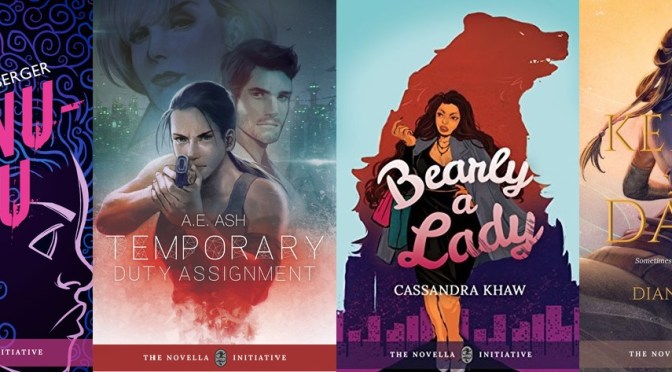
I reviewed their first novella, Dianna Gunn’s very nice YA fantasy romance, Keeper of the Dawn, earlier this year, and their second novella, Michele Tracy Berger’s excellent Reenu-You, merited an honorable mention in my Spring Reading Wrap-Up. This summer brought Cassandra Khaw’s delightful urban fantasy, Bearly a Lady (in July), and A.E. Ash’s smart and fast-paced Special Duty Assignment (August), and there’s still one more to go, Tansy Rayner Roberts’ Girl Reporter, planned for December.

About Keeper of the Dawn, I said that it “combines a smartly plotted adventure with a sweetly written romance in a richly imagined fantasy world,” though I did find it a little overstuffed with plot; it could easily have been a full-length novel, but it was nonetheless an enjoyable read. I didn’t write much about Reenu-You, partly because it dealt with race issues that I (as a white woman) didn’t feel equal to discussing or criticizing in any depth. However, it’s a story that still, months later, has stuck with me. Michele Tracy Berger’s take on corporate malfeasance and the importance solidarity and sisterhood is powerful and timely (and, frankly, likely to be more so in the years to come).

The first Book Smugglers novella of the summer was Cassandra Khaw’s Bearly a Lady, which is without a doubt the best (or at least my personal favorite) of their releases to date. It’s certainly the most polished of the series so far, largely absent some of the copy-editing issues that plagued (albeit very minorly–I’m just nit-picky) the first couple books. The thing about Bearly a Lady, however, is that it’s simply a great deal of fun, a smart, silly, sexy romp that was exactly what I wanted to read at the time, and I am very hopeful that Khaw will write more stories about Zelda the werebear and her friends. The book is also well worth picking up for Khaw’s essay on her influences and inspirations. I loved her thoughts on chick-lit, and she’s right-on about the way light, romantic reads for women are undersold and demeaned. As she says: “…there’s a place and time for darkness and grim ruminations, and there’s a place and time for bisexual werebears with killer wardrobes and a soft spot for pastries.”

The most recent Book Smugglers novella is Temporary Duty Assignment by A.E. Ash. Temporary Duty Assignment walks an interesting middle ground between Reenu-You‘s story of people injured an evil corporation and Bearly a Lady‘s light-hearted romance. The sci-fi elements of the book are thoughtful, but it’s the characters that take center stage. Super soldier Sam and scientist Caleb are both delightful, and it’s easy to root for them, both separately and together in this second chance romance. I could have gone for a bit more romance, personally, though I liked that what romance there was, while not without problems, wasn’t especially fraught or complicated. It’s always clear and easy to understand why Sam and Caleb want to be together, and their problems have been ones of timing rather than incompatibility or mistreatment of each other. All in all, Temporary Duty Assignment is a sweet, clever sci-fi romance that’s well worth reading, but if you aren’t sure and want a small taste before diving into the novella, A.E. Ash also has a prequel story, “Nice,” available for free on the Book Smugglers website.

The final Book Smugglers novella of 2017 will be Tansy Rayner Roberts’ superhero story, Girl Reporter, in December. It’s not available for pre-order just yet (I’ll update this post when it is), but it’s always a good time to read Roberts’ essay, “One Girl in the Justice League,” or her previous Book Smuggler’s novelette, “Kid Dark Against the Machine.”


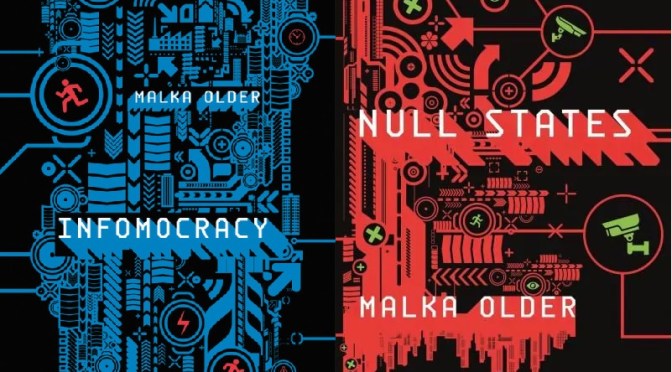
Book Review: INFOMOCRACY and NULL STATES by Malka Older

It took me a long time to read Malka Older’s Infomocracy. I couldn’t get into it right away when it came out last summer, and then the 2016 election happened and it was, perhaps understandably, just far too painful, upsetting and infuriating for me to even think about reading a book centered around election shenanigans for a good while. After a couple of false starts earlier this year, I picked up the paperback of Infomocracy and couldn’t put it down. Luckily, I had an ARC of Null States waiting for me when I finished it. The downside, of course, is that I have to wait another full year for the next installment of the series. The Centenal Cycle so far is a brilliantly clever, deeply entertaining, and extremely timely series full of great characters and smart insights into the back-end business of politics and governance.

Though it’s not hard to see how some readers may interpret the series as dystopian, perhaps my favorite thing about the Centenal Cycle is that it’s decidedly optimistic about the power of systems and public servants to achieve positive change in the world. Older recognizes the flaws in institutions and the people administering them, but in a profoundly (and refreshingly) humanist move she also recognizes the power of individuals to enact change, for good or ill. The micro-democracy depicted in the books isn’t perfect, but it’s an improvement on our current system of government, and Older does an excellent job of exploring both the possibilities and pitfalls of such a system. The global organization of Information is key to both the successes and challenges of micro-democracy, and Older’s nuanced look at the ways in which media affects elections and the ways in which information can be manipulated and controlled to achieve desired outcomes is as timely as it is erudite and insightful.

In a SFF landscape that reveres meticulously detailed worldbuilding, the world of the Centenal books stands out as an example of a setting that isn’t so much built as it is just perfectly realized. Every inch of it feels real and lived-in. They say one ought to write what one knows, and Malka Older knows a good deal about a lot of things (or at least did a lot of research to make it seem like she does), which makes for a pair of novels that work on every level. The technological advances she describes feel plausible, and the ways in which technology is used—for travel, surveillance, security, media consumption, and so on—make sense and are entirely natural-seeming extrapolations from current trends. A particularly nice touch is the names of political parties in micro-democracy. Groups like Heritage, Liberty, PhilipMorris and others are clear references to current political factions and business interests, and it’s easy to imagine how those power players would survive and thrive in the kind of political environment created by micro-democracy.

The greatest thing about these books, however, isn’t the political wonkery (though that is a quality I deeply appreciated); it’s the characters. Mishima is a consummate badass, and Ken is a perfect complement for her. They’re both easy to root for, and their intertwining stories as they work both apart and together to foil a massive conspiracy in Infomocracy are highly entertaining. The main protagonist of Null States, Roz, is something else, however. Like Mishima and Ken, she’s tough and smart and resourceful and principled, but Roz’s work in Darfur is very different than either Mishima’s or Ken’s. The stakes in Null States are, at least on the surface, less global in scale, and they’re certainly much more personal as Roz gets to know the people of the area. What’s most lovable about Roz isn’t her capability or strength but her capacity for empathy, and this quality is a driving force in her narrative. Much of Roz’s story is about the ways in which empathy, caring for others and openness to new ideas and different points of view is integral to public service, and I love that Malka Older imagined Roz to embody so many of those qualities, even if she does have to grow into them a little over the course of her book. Also, Suleyman is a babe.

The optimism of the Centenal Cycle isn’t obvious, judging by the number of people who call the books dystopia, but it’s my kind of optimism. It’s not the optimism that there’s some perfect system of government that’s the silver bullet to solve all the world’s problems or that aliens are going to show up on the eve of a technological revolution and save us all. It’s the optimism that hard work and decency never go entirely out of fashion, that they pay off and that individuals can and do make a difference. It’s the reminder that the arc of history bends towards progress and that we don’t have to have all the answers in order to do some good. And all that optimism is conveyed not with speeches or platitudes, but through the actions of Mishima, Ken, Roz and others. I cannot wait to find out what these characters do next.

State of the Blog and Weekend Links: September 17, 2017

Thursday was the first time in a couple of weeks that I managed to write anything substantive (and, boy, am I ever happy to be done with Game of Thrones for a while), but it still wasn’t as much as I’d have liked. That said, I read two full books and have spent some time working on outlines for my backlog of book reviews, plus I had a good idea for a future feature here that I’ll be working on with the tentative plan/hope of starting it after the first of the year. I’m still trying to stay away from making promises about my productivity or what I’ll be publishing this week, but right now, Sunday evening, I’m feeling more optimistic about the upcoming week than I have in some time.

I’ve read some great books lately, and I’ve got an exciting Fall Reading List in the works (watch for that next week), so I’m determined to turn out as many reviews as possible before I do my quarterly clearing of my schedule so I can start the new season with a clean slate instead of an enormous backlog of unfinished projects. Next weekend brings the first episode of Star Trek: Discovery, and season premieres of The Good PlaceLucifer, and The Shannara Chronicles (and Bob’s Burgers and Dancing with the Stars) coming over the next month or so as well, so there will be plenty to watch and write about in the coming weeks. I’ve even got a few movies on my to-watch list (Wonder WomanThe Girl With All the GiftsColossalIt Stains the Sand Red) that I may have something to say about when I watch them. Finally, I still haven’t forgotten about Gormenghast; I am coming back to you, Mervyn Peake.

Ideally, I won’t be coming down with any more nasty colds or other productivity-killing conditions for a while. My mental health has been improving steadily(-ish), and I’m so very ready to start turning that into words on a page. And now for links!

Nnedi Okorafor’s new YA novel, Akata Warrior comes out October 3.

The HBO adaptation of Nnedi Okorafor’s Who Fears Death has a screenwriter according to executive producer George R.R. Martin.

There were two excellent interviews with Nnedi Okorafor this week as well. She talked about the Who Fears Death adaptation, her upcoming YA novel release (Akata Warrior, Oct. 3), and the nuances of Afrofuturism:

The first of Martha Wells’ Murderbot Diaries, All Systems Red, is one of my favorite novellas of 2017 so far, and there are three more planned in the series. The second volume, Artificial Condition, has a cover, a release date (May 8, 2018), and a cover, and Martha Wells was interviewed about the series over at The Verge.

Also coming in 2018 is a pair of novellas by Mary Robinette Kowal as a follow up to her 2013 novelette, “The Lady Astronaut of Mars.” Check out the covers and descriptions for The Calculating Stars and The Fated Sky.

31189192Malka Older’s Null States is one of the fantastic novels I’ve read in the past couple weeks while being sick, and its official release date is this Tuesday, September 19. I’m working on a full review, but I’ll say right now that you need this book.

Older herself wrote two posts at Tor.com this week talking about the book and its premise: “It’s Not a Good Idea to Forget About the Null States” and “Writing Political Science Fiction by Observing the Present.” Malka Older, her experiences and ideas are fascinating, and I increasingly find myself hanging on her every word, so I was thrilled to see her interviewed at Nerds of a Feather this week as well, where she’s every bit as erudite and entertaining as her books are.

Catherynne M. Valente wrote about the Big Idea in her new middle grade novel, The Glass Town Game.

Claire Eddy, Ibrahim Al-Marashi, Anoud and Dr. Zhraa Alhaboby wrote about several of the many Big Ideas in Iraq+100.

The most recent anthology from Laksa Media is The Sum of Us: Tales of the Bonded and Bound, which collects SFF stories about caregiving and caregivers. Editors Susan Forest and Lucas K. Law talked about their Favorite Bits and Big Ideas this week.

The Book Smugglers Level Up Kickstarter is almost halfway funded. Thea James and Ana Grilo popped in at Terrible Minds to share five things they’ve learned starting a short fiction program from scratch.

At Pornokitsch: Sweet Savage Love, Romance and Realism.

Luminescent Threads: Connections to Octavia E. Butler, from Twelfth Planet Press, is a collection of essays and ephemera about Butler and her work.

At Book Riot, Laura Sackton shares what SFF taught her about queer family-making.

If you’re on Twitter, you might have seen it already, but #drawingwhileblack is so full of wonderful art and amazing talent, and I’ve been getting so much joy from checking up on the hashtag repeatedly this weekend.

There’s a new reviewer of short SFF stories in town. Be sure to check out and subscribe to SFF Reviews.

The first half of content for Uncanny Magazine’s Issue 18 is up, and it doesn’t include any of my especial favorites, but there are still a few standout pieces for you to read online for free right now:

Honestly, though, you owe it to yourself to just go ahead and buy the issue so you can read Catherynne M. Valente’s Cthulu Mythos and Clockwork Orange mash-up, “Down and Out in R’lyeh” and Vina Jie-Min Prasad’s “Fandom for Robots” right away.

Chapter Four of Sarah Gailey’s serial The Fisher of Bones is up at Fireside Fiction.

There’s a new Kameron Hurley story in this month’s Apex Magazine: “Tumbledown.” And an interview with the author.

I think all creative people can relate, to one degree or another, to Kameron Hurley’s most recent blog post on creativity and the fear of losing “the magic.” This was a surprisingly heartening take on the topic.

Finally, Fangirl Happy Hour is asking for media recs!

The current theme is pirates, in honor of Talk Like a Pirate Day. Check out their cool form and submit stuff. Recs will appear in the Fangirl Happy Hour newsletter.

Game of Thrones Recap/Review: Season 7, Episode 7 “The Dragon and the Wolf”

[Better late than never.]

My biggest prediction about “The Dragon and the Wolf” was that it would be boring, and that turned out to be largely correct. Sure, some things happened, and a couple of those things were somewhat unexpected, but the show’s generally awful writing and failure to effectively build consistent characters with understandable motivations makes it difficult to care deeply about any of what happens on screen. It’s an action-light episode, which doesn’t help, and even the moments that should provide the greatest catharsis after years of build-up don’t. It’s an altogether disappointing end to a season that has turned out to be one long slog of nonsensical plot points, poorly conceived battles and silly character beats.

**Spoilers ahead!** Continue reading Game of Thrones Recap/Review: Season 7, Episode 7 “The Dragon and the Wolf”

State of the Blog and Weekend Links: September 10, 2017

So, the good news is that I think I’ve turned a bit of a corner with this depression thing this week. The bad news is that I spent most of the week prostrated by an absolutely horrible cold, and I’m still not 100% better. That said, I’ve been heavily doped up on cold medicine for several days, and it’s helping. Today, I’d say I was running at about 60% normal energy, lingering sinus headache and all, which is still a good bit better than I have been in general the last couple of months. My hope is that this upswing in energy holds out as I continue to recover from this cold; ideally it will be a sustainable trend going forward that will allow me to get caught up on things and accomplish more of my future goals here at SF Bluestocking.

Also a cool thing: I finally got ghost cat form in WoW, which I didn’t know would leave a trail of sparkles when I run around. I am delighted with it.

It’s the beginning of the month, which means Tor.com has their lists up of the new books coming out from major publishers in September:

If you only have time for one long read this week, make it Ta-Nehisi Coates’ new piece at The Atlantic: “The First White President.”

Apparently, this summer’s box office slump isn’t the fault of movie studios that keep inundating us with endless sequels, reboots and super hero pablum. Some film executives blame Rotten Tomatoes. LOL.

You may have heard that N.K. Jemisin’s Broken Earth trilogy is in development for television at TNT. I chatted a little about it with Renay and KJ at Lady Business.

Also at Lady Business, Renay interviewed Kate Elliot.

Malka Older’s Null States comes out on September 19. It’s amazing, and you should definitely pre-order it, but if you aren’t sold yet, you can listen to her interview at Skiffy and Fanty.

Max Gladstone’s newest Craft novel, The Ruin of Angels, was out this past Tuesday. He wrote about his Big Idea at Whatever and was interviewed at The Illustrated Page.

Nisi Shawl’s Expanded Course in the History of Black Science Fiction continued at Tor.com with Walter Mosley’s Futureland.

One of my most-anticipated reads this year is the US paperback edition of Iraq+100, which hits shelves on Tuesday. At the Tor/Forge blog, two of the collection’s contributors talked about science fiction in Arabic literature.

The Wertzone’s Cities of Fantasy series continued with a post on Midgar from Final Fantasy.

At Nerds of a Feather, Charles Payseur kicked off a new series on mapping the world of SFF short fiction.

This month, Fantasy Faction profiled Arachne Press.

There’s an interesting piece at Pornokitsch about what happens when creators make big changes in their fictional worlds.

P.Z. Myers takes a look at Jon Del Arroz’s complaints about how hard it is to be a man in SFF. (lol)

Strange Horizons started their 2017 Fund Drive.

The Book Smugglers are Kickstarting a Level Up for their site and for their next year’s worth of publishing projects.

State of the Blog and Weekend Links: September 3, 2017 (Belated)(Whoops!)

I’d love to say that last week was a turning point in SF Bluestocking productivity, but obviously it hasn’t been. Honestly, I still haven’t even finished writing about the season finale of Game of Thrones because, you guys, it was so bad.  That said, I’m actually writing tonight, and I plan to keep on writing tomorrow and through the rest of the week with a new system in place to help me stay on task and accountable, even if it’s only to myself.

So, I’m not making promises, but I’m hopeful that I’ll be getting things back on track here, especially with just under a month left before I have a busy schedule of television coverage planned. This year, the plan is to cover Star Trek: Discovery (airing Sundays starting Sept. 24), Lucifer (Season 3 airing Mondays starting Oct. 2) and The Shannara Chronicles (Season 2 airing Wednesdays starting Oct. 11). I’d love to do The Good Place (Season 2  on Thursdays starting Sept. 28), but I think I’ll be busy enough as it is; I think I’ll skip writing about it unless I think of a good angle on it.

I still haven’t forgotten about the Gormenghast project, and I’m currently working up a tentative schedule to get that finished by the end of this year, which I still think is possible if I can make a plan and stick to it. I’ve got several other book reviews and essays on the docket as well, and though I’m trying hard to not be overly optimistic about my new routine I’m nonetheless hopeful that I’ll be getting them up on the blog sooner rather than later.

Finally, in more personal-ish news, I got a rad black unicorn mount in WoW this weekend, and it made me happy. After all these years, that silly game still brings me a lot of joy sometimes.

So, last weekend it was big news that an unscrupulous author had tried the game the New York Times’ YA Bestseller List. This week, Claribel Ortega actually read that garbage book, and it sounds awful.

You can now see the cover and table of contents for Uncanny Issue 18. The first half of the issue will be online tomorrow.

It’s the beginning of the month, and that means a new post at the B&N Sci-Fi and Fantasy Blog of September’s SFF new releases.

All of Terry Pratchett’s unfinished work was run over with a steamroller.

N.K. Jemisin did a Reddit AMA, and LitHub has the highlights.

Some dipshits thought it was a good idea to greenlight a Lord of the Flies remake with an all-girl cast–written by men. Libba Bray already wrote something like that years ago, and she’s got a good breakdown of why this movie is a bad idea.

At the Book Smugglers, Sarah Kuhn writes about women who lust.

Kelly Robson has a novella coming out in March–Gods, Monsters and the Lucky Peach–and you can pre-order it now.

Jaym Gates talked about the Big Idea in her new kickstarted anthology, Strange California. I’m a little bummed that physical book rewards are out and I’m still waiting on my ebook version, but I’m still pretty excited about it.

The Fandomentals is doing a Classic Sci-Fi Book Club, and the first title they covered is William Gibson’s Neuromancer.

Sarah Gailey’s serial at Fireside, The Fisher of Bones, has a new installment: Chapter Three: Increase. (Chapter One: Naming | Chapter Two: Cycle)

State of the Blog and Weekend Links: August 27, 2017

Welp, this week wasn’t nearly as productive as I’d hoped it would be. It turns out depression is still a cold, hard bitch, and willpower isn’t enough to beat her entirely.

I still remain hopeful, however, and this week I’ve got a plan in place for a new exercise and healthy eating routine. Tonight was the season finale of Game of Thrones, which means the end of weekly semi-binge drinking during the episodes, and it looks like this is going to be a long break between seasons. It’s probably for the best. The next big things coming up are the new seasons of Lucifer and The Shannara Chronicles, both in early October, so my plan, at least right now, is to work on getting caught up on other projects between now and then.

This week will see the start of a new fitness and calorie-counting regime from me, in the interests of getting healthy again, but at the same time ALL of my teenage daughter’s extracurricular activities start this week, with several auditions and after school meetings. Still, I should have plenty of time to write, and I’ve got several things I hope to read this week, having come nowhere near to my reading goals for the weekend. I think I’ll finish The Stone Sky tonight, but only if I don’t pass out first, which is looking very iffy at this point. Regardless, I’m hoping a new routine will help.

Silvia Moreno-Garcia is crowdfunding her first novella, Prime Meridian, on Indiegogo, and there’s still 8 days left to help her reach her goal.

There’s a trailer and episode titles for the next season of Black Mirror. There’s nothing that looks as incredible as “San Junipero,” but that piece of cinematic perfection is a hard act to follow, and I’m still looking forward to the new season.

James Cameron embarrassed himself with his garbage opinion on Wonder Woman, but Patty Jenkins shut that shit down fast.

Book Riot rounded up some Chinese SFF in translation.

At Nerds of a Feather, the G sat down for an excellent chat with Jonah Sutton-Morse from Cabbages a& Kings.

Annalee Newitz was interviewed for Lightspeed.

Spencer Ellsworth shared his favorite bit of his [excellent] new short novel, Starfire: A Red Peace.

At Fantasy Faction, Ada Palmer was interviewed about Seven Surrenders.

At Long Reads, Adrian Daub wrote about losing oneself in the geography of fantasy worlds.

At Tor.com, Jack Heckel took a critical look at Prince Charming.

Mari Ness examined Anne Thackeray Ritchie’s The Sleeping Beauty in the Wood.

A garbage book managed to, momentarily, scam its way onto the NYT Bestseller list.

You guys. This book is REALLY bad. It popped up on NetGalley for a minute, but it was removed quickly enough that I’ll never get a chance to mock it firsthand, since I can’t see myself actually spending money on it.

There’s a new Kai Ashante Wilson story at Tor.com: “The Lamentation of Their Women.”

“Avi Cantor Has Six Months to Live” by Sacha Lamb is the latest and last story in the Book Smuggler’s Gods & Monsters series, and it’s wonderful. Gay trans boys and queer families and Judaism and the demon Lilit, you guys. Probably you will tear up at least a couple times, at least a little bit.

Read about Sacha Lamb’s inspirations and influences.

Game of Thrones Recap/Review: Season 7, Episode 6 “Beyond the Wall”

This penultimate episode of season seven continues the storytelling trends that we’ve already seen in the last five episodes, and it manages to be boring, to boot. After last week’s constant jumping around between characters and storylines, which all seemed to be increasingly spread apart from each other, “Beyond the Wall” is all about bringing storylines back together (with the season finale looking to do so even more). Unfortunately, the show continues to be plagued by the same pacing issues and the same bizarre character work that has been emblematic of the season so far. If I didn’t know it was in earnest, I’d think “Beyond the Wall” was a cruel, absurdist experiment to see how far audiences are willing to follow this show as it descends into complete nonsense.

However, Benioff and Weiss still profess to be writing this pablum in good faith, so let’s dig in.

**Spoilers below, obv.**

At Winterfell

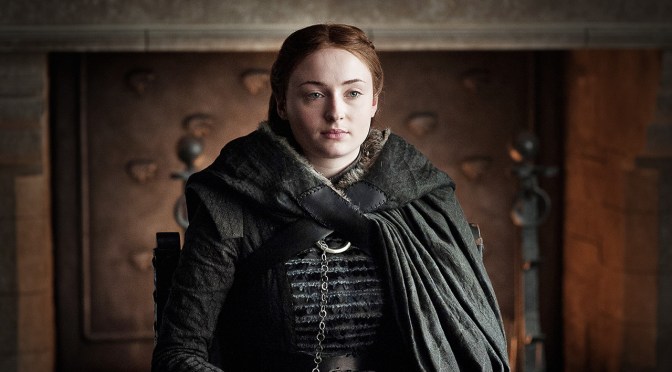
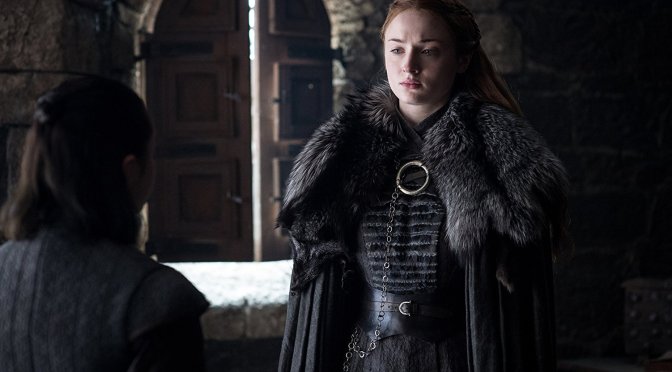
We’ll start at Winterfell, with Sansa and Arya, though the episode doesn’t begin with their story. The other two major storylines in “Beyond the Wall” are intertwined enough to make them worth looking at together, but this one is self-contained and almost entirely separate from anything else that happened this week. It’s also profoundly stupid and deeply, infuriatingly misogynistic, just an absolute quagmire of hot garbage from start to finish.

So, last week Arya found the letter that Sansa wrote way back in season one asking her mother and brother to come to King’s Landing and bend the knee to then-King Joffrey Baratheon, and it wasn’t clear exactly what Arya might (or even could) do with it, since it was pretty clear at the time that it was written under heavy duress by a traumatized child being kept as a prisoner and being lied to by her captors. Everyone who read the note at the time basically agreed that Cersei had dictated it to Sansa and that Sansa shouldn’t be blamed for cooperating under the circumstances. Now, to be fair, Arya wasn’t in on any of those conversations, and her own memory of Sansa at the time was of Sansa standing with Cersei while Joffrey gave the order to have Ned Stark beheaded, and that’s something that could be fodder for conflict between the sisters. However, that’s only an aside in this week’s storyline, which is almost entirely focused on Arya’s general hatred of and resentment towards Sansa and more specifically on Arya’s grievance over this note and Arya’s threats of violence towards her sister. It’s nonsensical, and there’s not an honest motivation or compelling emotional beat in the whole episode.

It’s not hard to imagine that Arya and Sansa’s different experiences along their wildly divergent paths over the last several seasons of the show might set them up for conflict. The two girls have extremely different temperaments and skill sets, and it makes sense that they would have disagreements among themselves on how to deal with their current situation. However, the story being shown on screen doesn’t suggest any understanding on the part of the show’s writers of girls, sibling rivalry, normal human interactions or even just basic logic. Instead, all this episode’s so-called drama at Winterfell is a boring, tedious rehash of the show’s longstanding commitment to pitting women against each other at every turn while devaluing and vilifying femininity, often in hopelessly sophomoric fashion.

First up, we get Arya confronting Sansa with the letter and blaming Sansa for their father’s death. When Sansa protests that she was a child and frightened and that she thought cooperating would help Ned, Arya taunts her for being “stupid” enough to believe the Lannisters and mocking her with comparisons to Lyanna Mormont. But the whole “not trusting Lannisters” thing only makes sense at all with the benefit of hindsight; while obviously smooth political operators, and with the taint of Jaime’s kingslaying on the family, the Lannisters haven’t, prior to this generation, had a reputation as particularly devious. Indeed, the popularity of the saying “a Lannister always pays his debt” suggests that Lannisters are in fact generally viewed as trustworthy, even if not always as forthright. Certainly, they are no less untrustworthy than any of the other great houses of the Seven Kingdoms, and Sansa, as a sheltered child with romantic ideals, can’t reasonably be called “stupid” for believing them—especially when Cersei herself was acting in good(-ish) faith with Sansa; Joffrey’s decision to execute Ned Stark surprised his mother as well, and this impolitic action was even the reason Tywin sent Tyrion to King’s Landing to act as Hand of the King in Tywin’s stead. And on the note of Sansa being sheltered, it’s equally ridiculous to compare Sansa to Lyanna Mormont. Lyanna Mormont has been the opposite of sheltered, in many ways, and is much worldlier than Sansa was at that age, largely because Lyanna has never had the same privileges of wealth and station and intact nuclear family that Sansa had. As a result, Lyanna has also never had to endure the misfortunes and hardship Sansa did; she’s had different challenges to face just like Arya has had different challenges, and this is the thing that Benioff and Weiss don’t seem to grasp. Sansa, Arya and Lyanna are three different individuals with different upbringings, skills and hardships, and it’s both absurd and wildly unfair for them to be pitted against each other in this way.

From a more practical standpoint, what exactly is Arya’s motivation here? Her strongest grievance against Sansa seems to be less related to their father’s death or even to Arya’s suspicions that Sansa could be disloyal to Jon Snow. Instead, it’s Arya’s perception of Sansa as weak and girly that comes up again and again in their conversations and from which Arya’s other resentments stem. Several times now, Arya has mentioned Sansa’s “pretty dresses,” and she’s been straightforward in accusing Sansa of greed, materialism and shallowness, projecting these qualities onto Sansa as possible motivations for Sansa to betray her family every chance she gets. Arya isn’t attacking Sansa’s actions, none of which realistically suggest any kind of malfeasance on Sansa’s part (in fact, literally the opposite); she’s attacking Sansa as a woman, assigning to Sansa negative qualities and motivations based on misogynistic stereotypes of the type of conventionally feminine woman Sansa is. There’s never been any inkling of Sansa as the shallow, frivolous, image-obsessed, devious, grasping figure Arya imagines, and there’s literally no evidence of it on screen at any point in seven seasons of the show, and yet all of this contrived conflict treats Arya’s accusations as if they have more weight than the spiteful, petty imaginings of a traumatized girl dealing with her own survivor’s guilt and cruelly lashing out at the sister she never was very close with to begin with.

In the end, Arya doesn’t make any specific demands on Sansa, even when Arya finds Sansa snooping around her chambers (where Sansa finds a bag of comically terrible severed face props). In a well-written story, it would be clear what Arya wants from her sister, even if all Arya wants is to punish Sansa for her perceived wrongs. Here, though, there’s no telling. Arya’s driving motivation for years has been revenge, symbolized by her list of names even as many of those characters have died while she was off training, so it was moderately surprising when Arya turned north instead of heading to King’s Landing to kill Cersei. The show has completely squandered all the potential of this turn of events, though, and much of that is because there’s no longer any obvious motive for anything Arya does. Arya’s suspicion of Sansa is so unfounded as to be almost deranged, but even if that wasn’t the case Arya’s lack of conditions for Sansa to meet makes this situation especially untenable and puts Sansa in the position of becoming rather justifiably paranoid about her sister’s intentions, which ends up leaving Sansa vulnerable to manipulation by Littlefinger, who has engineered this whole thing. For someone who is very quick to judge others for their stupidity, Arya sure has lapped up every bit of what Littlefinger has fed her.

This storyline finishes out the episode with Sansa sending Brienne away to serve as her representative in King’s Landing (although it’s also implied, poorly, that Sansa sends Brienne away out of a sense of self-preservation, believing that Brienne could side with Arya over her) and Arya threatening to cut Sansa’s face off and wear it.

At Dragonstone

Daenerys likes Tyrion because he’s not a Hero, which is mildly insulting, but he magnanimously gets what she’s trying to say. They talk a little bit about power and ethics, which ends with Tyrion calling Daenerys impulsive (she’s demonstrably not, in most situations) and then badgering her about the succession, even though she hasn’t even successfully won the Iron Throne yet. It’s a new low of paternalistic, sexist condescension from Tyrion, no matter how much the show tries to portray Daenerys as paranoid and irrational.

North of the Wall

Jon and company spend half the episode trudging through the snow and the other half fighting an extremely ill-conceived battle against zombies on a frozen lake while they wait for Gendry to send a text raven to Daenerys for help. These conversations, like all conversations on this show, are a mix of boring, bafflingly silly, and offensively bad, so I’m just going to list them here.

  1. Gendry complains to Tormund and Jon about the cold and asks how they stay warm. Fighting and fucking, apparently, according to Tormund, who them makes a rape joke implying that Gendry might not be safe, which is a great way for the show to treat a character who has already been actually sexually assaulted.
  2. Tormund criticizes Jon’s unwillingness to bend the knee to Daenerys, comparing it to Mance Rayder’s refusal to kneel to Stannis and pointing out that Mance got a lot of people killed. These aren’t exactly the same thing, but okay.
  3. Gendry is still mad at the Brotherhood Without Banners for selling him to Melisandre, who sexually assaulted him and wanted to kill him. Sandor Clegane totally dismisses Gendry’s anger and trauma and tells him to quit “whinging.”
  4. Jon and Jorah talk about their respective dads and daddy issues. Jon tries to give Longclaw to Jorah, but Jorah refuses because he feels unworthy. Jorah’s assertion that it should belong to Jon and Jon’s children reads as Jorah endorsing Jon’s relationship with Daenerys. Thank goodness Jon and Daenerys have Jorah’s blessing.
  5. Tormund and Sandor talk about Brienne. It’s gross, and it takes a weird homophobic turn partway through.
  6. Beric tells Jon that Jon doesn’t look like Ned Stark, which might be the dumbest thing said in this episode. Jon looking like a Stark—resembling Ned, to start with, and Arya, but also his mother Lyanna Stark—is a genuinely significant thing that is mentioned over and over again in the books. It did get somewhat short shrift in the show, but this is the first time it’s been so completely dismissed. Jon and Beric go on to have a talk about faith and purpose and the value of fighting for life even though the enemy is death and you’ll always lose. This conversation could have worked in a better show, but here it comes off as a little too serious and self-righteous.
  7. As the snow thickens and visibility gets worse, the group is attacked by a zombie polar bear. Some redshirts die and Thoros is injured. The whole thing would have been cooler if it was easier to see what was happening. Just because the characters are experiencing low visibility doesn’t mean the audience should as well. Not really a conversation, but just as meaningless as the conversations that surround it.
  8. Jorah and Thoros talk about some battle on Pyke where Thoros committed some act of drunken heroism. I think this might have been mentioned once before on the show, or maybe I just remember hearing about it in the books, but there’s no reason for this conversation to take place at all. I guess it shows that Thoros’s injury isn’t doing so great.

Eventually the weather clears up a little, and the group sees a small group of zombies with one of the Others marching through a narrow space between hills and decide this is there chance to catch a zombie. This goes alright at first, and they discover (albeit too conveniently) that killing one of the Others destroys all the zombies they have personally animated. They end up catching their zombie, since it’s the last one left after killing the Other, but not before it shrieks loud enough to wake the dead, or at least to draw the whole rest of the army of the dead down on them. Gendry is sent back to Eastwatch to send a raven to Dragonstone for help, even though it feels as if the group had been marching for days north of the Wall, Gendry doesn’t know his way around, and a raven would take at least several more days to get to Dragonstone and Dany would take some time as well to get back north, even on dragonback. The show has always played fast and loose with travel times, and there’s a certain amount of fudging the numbers that is acceptable for plot convenience or thematic reasons, but this is laughably awful.

While they wait for Daenerys to rescue them, Jon and company run across a frozen lake and are momentarily saved from the zombie horde when the ice starts to crack and about a three-foot line of water appears in almost a perfect circle around a large rock in the middle of the lake. Apparently, zombies can’t jump, so they all stop in a ring, trapping Jon and company in the middle of the lake, where they hunker down to wait for morning and, hopefully, Daenerys. Thoros dies in the night and is unceremoniously burned, which is disappointing since there are no other major human character deaths this episode. It’s not that I’m anxious for anyone else to die (and there is one brief moment in the fighting where it seems like Tormund might be in real danger), but this all still feels very low stakes for the main characters, especially with redshirts dropping like flies. Thoros’s death just isn’t enough to make the situation feel really dangerous or impactful. He’s not a big enough character, we weren’t attached enough to him, and in the moment it’s treated as no big deal.

Once there’s full light, or at least as close to full light as this poorly lit monstrosity of a show ever gets, the Hound starts tossing rocks at the zombies, and that’s about when they realize that the ice has refrozen during the night and start charging the group on the rock. They fight valiantly, the last redshirt or two die in the battle, Tormund almost gets ripped in half, and they realize that they’re completely surrounded and trapped in a moment that hilariously seems as if Jon Snow is truly only just now noticing this fact. And that’s when Daenerys ex machina happens. Although Tyrion warned her against it, Daenerys brings all three of her dragons North in order to rescue Jon Snow. Only she doesn’t manage to rescue Jon, just the rest of the men, and she’s forced to flee on Drogon after the Night King uses an ice spear to take down one of the other dragons, Viserion. Jon is left to fight his way out of the situation on his own, though he is in turn saved by his uncle Benjen, who appears almost magically and certainly too-fortuitously. Jon eventually makes it back to Eastwatch, where Daenerys has been waiting for him, and they have the first interaction where even a glimmer of true mutual attraction or affection is apparent between the two of them. However, even that moment is cut short as Daenerys quickly exits the scene as soon as she has an emotion, and Jon is left alone as they travel south towards King’s Landing.

The episode ends back north of the Wall, where the Night King has a bunch of zombies pulling on chains to drag Viserion out of the frozen lake so he can get turned into an ice zombie dragon. It’s meant to be ominously foreboding, but it’s honestly just silly and predictable.
Recent Reads: Summer Magazines and Short Fiction

One of the few New Year’s resolutions I’ve kept this year was to read more short fiction, and I’ve been doing that largely through magazines. It’s a great way of discovering new-to-me authors and catching on early to new trends in genre publishing, and after many years of not reading much short fiction I’ve been having a great time rediscovering  all the things I loved so much about short fiction in the first place. Here’s what I’ve been reading and loving lately:

Apex Magazine #99:
A Celebration of Indigenous American Fantasists

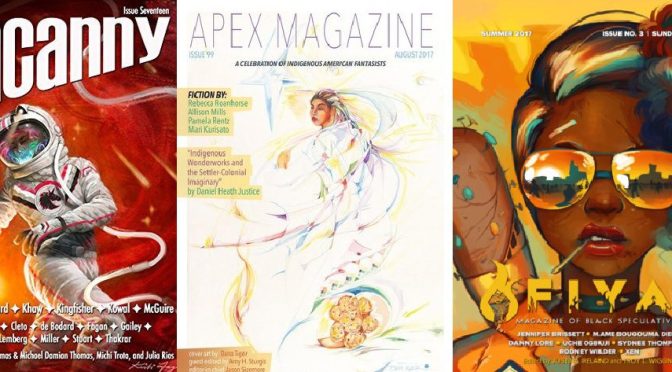
I’m generally not a cover-to-cover reader of Apex Magazine, instead reading whatever sounds good when their content shows up online for free, but I recently subscribed to it,. It turned out to be the perfect time to do so. #99 was the first issue I got, and it’s one that’s definitely worth reading cover-to-cover. Guest-edited by Amy H. Sturgis, it’s got non-fiction by Daniel Heath Justice and Daniel José Older and four wonderful short stories by indigenous women. The highlights, however, are “Welcome to Your Authentic Indian Experience” by Rebecca Roanhorse, an absolutely gutting near-ish future sci-fi story about Native identity and the harm caused by cultural appropriation, and “Skinny Charlie’s Orbiting Teepee” by Pamela Rentz, which tackles some similar themes with a lighter, more humorous touch in a very different sci-fi setting.

FIYAH Literary Magazine, Issue 3: Sundown Towns

FIYAH continues to do exactly what it promised when the project was announced, delivering a solid collection of black speculative fiction in a gorgeously packaged quarterly publication. In fact, though it may just be the bright, warm colors on this one, but I think Geneva Benton has delivered the best cover art to date on this issue. I was hoping for a vampire story, which the issue did not deliver, but Sundown Towns nonetheless offers a great selection of takes on its theme. If you only have time for one story from the issue, though, be sure to make it Danny Lore’s “The Last Exorcist.” “Toward the Sun” by Sydnee Thompson and “Cracks” by Xen are also excellent, but “The Last Exorcist” is the story I continue to find myself thinking about weeks later. Also, I don’t know of another publication that’s sharing issue playlists with each issue, and if there is I know it can’t be as good as the ones from FIYAH. Check this out.

Uncanny Magazine, Issue 17: July/Aug 2017

Issue 17 of Uncanny is, for Uncanny, pretty middle-of-the-road, but Uncanny is an unusually and consistently excellent publication. There’s a good interview with Maurice Broaddus, whose fictional contribution to the issue, “The Ache of Home,” is also well worth reading. I loved “A Nest of Ghosts, a House of Birds” by Kat Howard and “Packing” by T. Kingfisher (I always love a T. Kingfisher story). Mary Robinette Kowal’s “The Worshipful Society of Glovers” is an interesting and surprisingly dark fairy tale in the mode of “The Elves and the Shoemaker,” while Seanan McGuire offers a charming origin story for Maine Coon cats in “How the Maine Coon Cat Learned to Love the Sea.” Sarah Gailey’s essay, “Why Millennials Yearn for Magical School,” fell a little flat with me, likely because I’m just old enough to not really identify with it, like, at all, but I saw it floating around Twitter enough to know that it hit its mark with those less crotchety than me. If you like poetry, I thought “Domovoi” by Rose Lemberg and “Questions We Asked for the Girls Turned to Limbs” by Chloe N. Clark were the standouts this issue.

Beneath Ceaseless Skies #232

I’m an infrequent reader of Beneath Ceaseless Skies, but I always read issues that feature work by authors I like. The major draw for me in #232 was a new story by Benjanun Sriduangkaew. “No Pearls as Blue as These” is a gorgeously clever queer romance with a great setting, a fascinating protagonist and a nicely hopeful message that makes it pretty much exactly the sort of thing I want to read these days. “Red Bark and Ambergris” by Kate Marshall turned out to be a nice bonus, a well-conceived and fresh take on a story of a lady poisoner that works well as a thematic complement to Sriduangkaew’s story. At the website, though it’s not in the ebook version of the issue, BCS recommends the courtly romance/quest story “Y Brenin” by Cae Hawksmoor, which is always worth a reread (or a first read, if you haven’t read it yet, you barbarian).

Fireside Fiction

The most important thing I’ve read recently in Fireside is actually non-fiction. Their second annual #BlackSpecFic Report came out last month, and it’s a must-read for anyone working in publishing or with more than a passing interest in the genre. Don’t miss the extra articles and interviews that go along with it.

I’ve still been slowly making my way through Infomocracy by Malka Older, but I loved her short story in that same universe, “Narrative Disorder,” and her follow-up essay about it.

“The Witch in the Tower” by Mari Ness is a short, smart reimagining of “Rapunzel.”

Finally, Fireside is publishing a new serial story by Sarah Gailey, The Fisher of Bones, and the first two chapters (“Naming” and “Cycle”) are available now.

Tor.com

I’m about to start never shutting up about J.Y. Yang’s Tor.com novellas, The Black Tides of Heaven and The Red Threads of Fortune, now that we’re getting closer to the publication date (9/26) but in the meantime you should read Yang’s Tor.com short story, “Waiting on a Bright Moon.”

Cassandra Khaw recently released the perfectly delightful urban fantasy novella Bearly a Lady at The Book Smugglers, and she’s got another Lovecraftian novella, A Song for Quiet, coming out this coming Tuesday (8/29) from Tor.com, but if you’re getting antsy for another Cassandra Khaw story, “These Deathless Bones” just came out a couple weeks ago.

A new Kai Ashante Wilson story just came out yesterday. You should go read “The Lamentation of Their Women” as soon as possible, and, while you’re at it, read (or re-read) his 2014 story, “The Devil in America.” It’s only getting more and more timely and important.

State of the Blog and Weekend Links: August 20, 2017

So, let’s just say right up front that this wasn’t a great week for me. I’m depressed, which sucks, and last weekend saw literal fucking Nazi’s marching in the streets of America, which isn’t surprising but is nonetheless upsetting and disheartening. I’m having a hard time dealing with the fact that we’ve got more than three years of this shit to go. At least.

On the good news front, my daughter is back in school; she started 9th grade on Wednesday, which means I’ve got a good deal more theoretically productive alone time coming my way now. Tomorrow, we’re heading to Bowling Green, Kentucky to see the eclipse slightly better than we would see it here in Cincinnati, but after that it’s back to school for my daughter and back to work for me. As shitty as this past week has been, it’s managed to be kind of inexplicably restful as well, and I’ve got some stuff to work on this week that I’m excited about.

This week, my Game of Thrones post was very late (like, today late), but I hope to have it out either late tomorrow or sometime on Tuesday. After that, I’ve got a review post on recent magazine and short fiction reads in the works. I’m also hoping to get back on track this week with Let’s Read! Gormenghast. I haven’t forgotten about the project, though I have taken an extended break from it, and I’m determined to finish it. Right now, I’m not making any promises about what I’ll be publishing, but I’m hopeful that I’ll be able to get back to a two or three posts a week schedule now that I have more time to myself during the day. It’s a weird balance, this trying to be productive while also trying to be kind to myself (which in turn makes it easier to be productive than wallowing in self-loathing).

If you’re feeling fatalistic, I saw this neat piece the other day about how Earth’s final total solar eclipse is less than a billion years away.

Speaking of the apocalypse, N.K. Jemisin’s The Fifth Season is being adapted for television.

Jemisin discussed the Broken Earth trilogy at the Barnes & Noble Sci-Fi and Fantasy Blog.

Jemisin was also interviewed for Playboy, where she disclosed that her next series will be based on her Tor.com short story, “The City Born Great,” and will take on the Lovecraftian Mythos.

Becky Chambers’ next Wayfarers book, Record of a Spaceborn Few, has a cover blurb. I am excited.

Chapter Two of Sarah Gailey’s new serial at Fireside, The Fisher of Bones, is out. Read Chapter One here.

The newest Book Smugglers novella, Temporary Duty Assignment by A.E. Ash, is out now. There’s five days left on the paperback giveaway,, and you can read about Ash’s inspirations and influences here.

The Wertzone’s Cities of Fantasy series continues with Golgotterath, from R. Scott Baker’s Second Apocalypse series.

Black Gate is signal boosting the Kickstarter for the first English translation of a Brazilian solarpunk anthology. Intriguing.

I am in love with these adorable PRONOUNS enamel pins.

Silvia Moreno-Garcia is crowdfunding a novella!

In new that should surprise no one, Joss Whedon’s ex-wife called him out today as a hypocritical faux-feminist. That does sound like him.