All posts by SF Bluestocking

Lucifer: After two steps forward, “Et Tu Doctor?” is a decided step back

After two very good, though decidedly not great, episodes, this week Lucifer falls back into the tired cop show trap it’s struggled in all season. Of the show’s more procedural type episodes, “Et Tu, Doctor?” is among the better ones, and there were a couple of developments that I really liked, but the reality is that Lucifer has a tendency to be dragged down by its procedural elements rather than elevating them. What made the last couple of episodes better than the first half of the season was their heavier focus on the mythology that ought to make Lucifer fresh and interesting, but this episode is mostly back to a humdrum case of the week that even guest star Al Madrigal can’t rescue.

When a therapist known for advising couples to cheat on each other (Is this a real thing?) turns up dead, Lucifer manages to get his own therapist in on the case because he’s convinced that Chloe’s consistent rejection of him and his jealousy over her relationship with Dan is a sign of a problem with Chloe. This whole bit—that Lucifer is so used to getting what he wants that he just can’t wrap his head around the idea that someone doesn’t want to bang him—is one of my least favorite things about this show, to be honest. Lucifer’s fixation on Chloe isn’t cute or endearing; it’s unhealthy and his level of selfish entitlement is slightly frightening. Occasionally the show manages to make this whole mess work, and the last couple of weeks saw some of Lucifer’s worst behaviors subsiding. However, this episode brings all of it back with a vengeance, and there’s not much more infuriating to see than Chloe’s patient indulgence of Lucifer’s nonsense.

However, I complained just last week that none of the women on the show ever get to talk to each other, and this week was actually mostly them talking to each other. Well, not mostly, but Lucifer himself did take a bit of a back seat in this episode. Chloe and Dr. Martin actually have a somewhat fun dynamic as they work the case of the murdered therapist together, and I think this episode finally manages to pass the Bechdel test. Dr. Martin also gets to meet Maze, though that interaction is less interesting, as the show still seems determined to write Maze as more of a very jealous, possessive, catty girlfriend of Lucifer’s than anything else. Still, and sadly, having these women interact with each other at all is a kind of progress for this program, even if it doesn’t entirely pay off.

In better news, this episode addresses Dr. Martin’s unethical behavior—which I’ve criticized before as highly unbelievable—more or less head on. Considering how little Lucifer’s sexual relationship with Dr. Martin has really figured into either of their characters’ development so far, I’m not sure why it was bothered with at all, but I’m happy to see that chapter of their interactions come to a close. Dr. Martin is a potentially very interesting character, but it’s been frustrating to watch her be mostly flustered by Lucifer and engaging in such clearly problematic behavior with a patient when she could be much better used as, well, Lucifer’s actual therapist. The idea of the Devil working through his feelings in talk therapy isn’t a bad one, but the running “joke” of Lucifer banging his hot therapist has made it difficult to take any of his sessions very seriously. Also, it’s not funny. Hopefully the change in their arrangement this week means that we’ll see some real improvements over the last few episodes of the season.

The other major development this week concerns the Palmetto case, which Chloe and Dan are still investigating together. Amenadiel, for some reason, resurrected Malcolm right as his life support was being disconnected, and this week Malcolm confronts Chloe about her investigation, claiming that he also wants to know who the dirty cop is who shot him. Their conversation gives Chloe the idea that Malcolm’s partner must have been the shooter, and this seems to be proven when the partner turns up dead of an apparent suicide, accompanied by a note confessing. Before the end of the hour, though, we learn that this is all a red herring meant to stop Chloe’s investigation. We also learn that it wasn’t Malcolm’s partner who shot him—it was Chloe’s ex, Dan. This is a legitimately surprising development, and promises some serious drama to come.

Miscellaneous thoughts:

  • No Amenadiel this week, though Lucifer did figure out some of what his brother is up to—as well as Maze’s betrayal.
  • Thematically, this episode worked, for the most part, as an exploration of jealousy, but I don’t think Lucifer really grew or learned anything about himself, which is a disappointment.
  • I think I would have an easier time buying into the Lucifer/Chloe will they or won’t they thing if these two characters had any discernable romantic chemistry or sexual tension.
  • The show has implied that Lucifer is not that choosy about the gender of his sexual partners, so is there a reason that every person he needs to fuck in order to get stuff has to be a beautiful woman? (A reason besides sexism and/or homophobia, that is.)
Let’s Read! Up and Coming: Stories by the 2016 Campbell-Eligible Authors

This year, Bad Menagerie is offering a pretty unprecedented resource for those of us who are nominating for and voting on the John W. Campbell Award for Best New Writer that will be presented at Worldcon along with the Hugos. Up and Coming is packed with 230 works by 120 Campbell-eligible authors—over a million words of fiction, that I will be working my way through, ten authors at a time, over the next couple of weeks.
I plan to finish by March 30, as nominations for the Campbell and Hugo Awards are due on the 31st, and ten authors every day or so is a pretty blazing pace, so my plan is to read at least one story by each author. If their first story doesn’t grab me, I’ll be moving along to the next author in order to better manage my time and enable me to actually make it through this enormous body of work. I’ll let you know which authors I skipped and why, though I expect to spend much more time extolling the virtues of my favorites than criticizing what I don’t like. That said, if I skip over your favorites, be sure to let me know in the comments what a jerk I am and all about what I’m missing out on.

Look for my first big post to appear tomorrow (hopefully) or Wednesday. This should be an almost every day thing between now and the end of the month.

If you want to read along, you can download the collection at Bad Menagerie any time before March 31, 2016.

Weekend Links: March 12, 2016 (Belated)

Yesterday ended up being a totally unproductive day for me in general, at least in terms of reading and writing and so on. Instead of working on stuff, I ended up driving a very nice older man to his neighborhood on the other side of the city after he was abandoned on this side of town by his son, which ate up most of the afternoon. After that, I had to run a few errands and stuff, which left me, frankly, too worn out to do much by the time I got home. Today has been a little better, but not by too much.

The biggest news of the week, perhaps, has been J.K. Rowling’s continued expansion of her wizarding world. She just can’t leave well enough alone, and her History of Magic in North America is a disaster in basically every possible way. Native Appropriations has a good breakdown of some of the most offensive aspects of Rowling’s piss poor research, and N.K. Jemisin has some great suggestions for ways in which it could have been great.

The winners of this year’s Kitschies were announced.

My favorite good news of the week is that Into the Badlands has been renewed for a second season that will start in 2017. I had gotten really concerned with the lack of official announcement, but it was one of my favorite new shows last year so I can deal with having to wait almost a full year for new episodes.

There’s finally a proper trailer for Game of Thrones season six, which I have mixed feelings about.

On the one hand, season five was so very, very bad. I was ready to give up on it by the end. On the other hand, I can’t wait to see how D&D fuck up this year. What else am I going to write 3-5k words a week about for a couple months in the spring?

Winter is Coming has a thorough recap of what we can actually see in this trailer. And Fandom Following has some additional ideas on what we can expect from season six based on what the trailer holds.

And, bonus! Fandom Following also has thoughts on what a D&D adaptation of Much Ado About Nothing would look like. I ugly laughed.

Sofia Samatar’s The Winged Histories is coming out on Tuesday, and she’s been interviewed at Weird Sister and on Midnight in Karachi in the last week.

Fantastic Stories published a Crash Course in the History of Black Science Fiction.

A few weeks ago, Mythcreants gave us Five Signs Your Story is Sexist, and this week they published Five More Signs Your Story is Sexist.

Feminist Fiction is late to the Fury Road party, but this piece–Is Mad Max: Fury Road too feminist to be feminist?–is a must-read.

Charles Stross gives us Towards a Taxonomy of Cliches in Space Opera. It’s a good start.

Finally, Peter McLean has a great post on Blackgate on Why We Shouldn’t Hunt the Trope to Extinction. It’s a little bit of a solution in search of a problem, but he brings up some good points that touch on some of the common misconceptions about tropes and the ways they should be analyzed.

[Header image is Sir Terry Pratchett with a pig.]


Book Review: Pieces of Hate by Tim Lebbon

Pieces of Hate is, technically, an okay book. However, it’s exactly the sort of thing that I normally try to avoid like the plague because I kind of hate it. It’s one of the better examples of its kind of story, but it’s still not my cup of tea. There’s very little that I find more boring than a fridged wife—nameless, even, to add insult to injury—and a manly revenge quest in which the only other women encountered are prostitutes who are (of course) repulsive to the protagonist. It’s a level of casual misogyny (either the author’s or the characters’—it doesn’t matter) that I found alienating from page one.
The mythology of surrounding the characters of Gabriel and Temple is moderately interesting, but nothing particularly special. The introductory novelette, “Dead Man’s Hand” didn’t help much in this regard, either. If anything, it was especially dull, being told from the point of view of a minor character who doesn’t actually know or understand the events happening around him. It’s also a pretty terrible introduction to Gabriel as a character. Without any of the insight into Gabriel’s inner thoughts like we get in Pieces of Hate, the Gabriel of “Dead Man’s Hand” isn’t at all likeable or sympathetic.

While I like the flexibility the premise of the two warriors, locked in an ongoing battle or hunt across time and space, offers, the downside of it here is that the two stories in this volume are so different that they are very disconnected. It lets Lebbon experiment with different genres, which could be potentially very interesting, but the juxtaposition here of the western with a sort of pirate story just doesn’t work. Partly this is because it’s cliché, but the disconnectedness of the narratives is exacerbated by the abovementioned change in point of view between the two parts of the book.

The biggest issue I had with Pieces of Hate, however, is just that it’s not my kind of story. While I enjoy reading outside my usual genre comfort zones from time to time, it’s very difficult for me to get into any of these sort of testosterone-fueled revenge narratives unless there is something really special or unique about them. Unfortunately, Pieces of Hate isn’t anything I haven’t read many times before, and Tim Lebbon fails to bring anything fresh or compelling to a set of very old tropes.

This review is based upon a copy of the book received from the publisher through NetGalley.

Hugo Recommendations: Best Dramatic Presentations

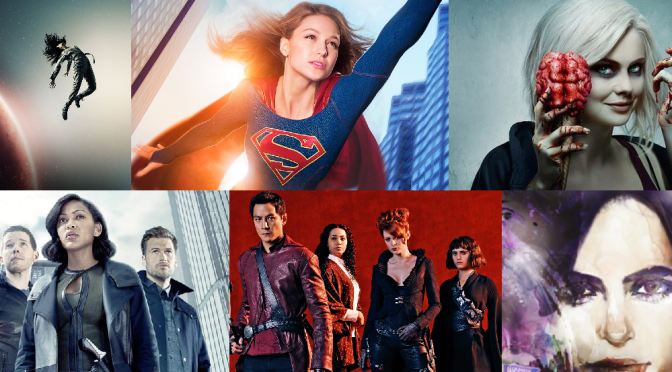
The Hugo Awards’ Best Dramatic Long Form and Short Form categories are probably the ones that I’m most ambivalent about, to be honest. However, they are also the categories in which I think I’ve probably consumed the highest proportion of eligible work. When I look back over the last year, I have to admit that I’ve watched an awful lot of television, and I’ve seen all of the Hugo-eligible films that I’m likely to enjoy. It’s probably too late for most folks to actually sit and watch however many hours of material I’m about to recommend, but here’s what I think was the best of the genre film and television I watched in 2015.

Best Dramatic Presentation, Long Form
  • Crimson Peak
    There is almost no way this is going to even make the shortlist for the Hugo, but it might be my favorite film of last year. It’s got gorgeous costumes, Tom Hiddleston’s butt, and a badass knife fight between two women wearing big billowing nightgowns and ridiculously long wigs in the snow.
  • Mad Max: Fury Road
    This two-hour long car chase with ecofeminist messaging is also near the top of my list.
  • Advantageous
    This film made the rounds of some festivals and stuff, but it never got a wide release. Instead, it went straight to Netflix, where it’s still available to watch. It’s a beautiful meditation on aging, motherhood, and the sacrifices women make in order to survive in late-stage capitalism and secure a future for their children.
  • Star Wars: The Force Awakens
    It’s just like A New Hope, but better. I wasn’t that excited about a new Star Wars movie, to be honest, but this one was surprisingly wonderful and an objectively good film.
  • The Martian
    The Martian isn’t as good as the book that it’s based on, but it’s one of the better film adaptations I’ve seen in recent years. Matt Damon is tolerable in the lead role, and the supporting cast is excellent. I also have a deep appreciation for optimistic humanist science fiction, and this example of it stands out in the best way in a genre landscape that has been trending towards dark and gritty for at least a solid decade now.
  • Jonathan Strange & Mr. Norrell
    No television adaptation could ever be as marvelous as Susanna Clarke’s novel, but this one comes close.
  • Marvel’s Jessica Jones (Season One)
    By far the best Marvel adaptation to date, Jessica Jones is a feminist masterpiece.
  • Into the Badlands (Season One)
    I often feel as if no one else loved this show the way it deserves to be loved, but it just got officially renewed for a second season. The first season starts off a little rocky, but by the end of its six episode run, it gets great. It also delivers some of the finest martial arts choreography ever to appear on the small screen.
Best Dramatic Presentation, Short Form
  • Doctor Who “The Husbands of River Song”
    My interest in Doctor Who has been pretty steadily waning since Steven Moffat took over the show, but I loved last year’s Christmas Special so much. It was a perfect send-off for River Song. Moffat created her and ruined her, but in this episode he mostly managed to finally do right by her. That final scene at the Singing Towers of Darillium was swoon-worthy, for sure.
  • Marvel’s Jessica Jones “AKA Smile”
    I’m thinking about nominating the whole show, but if I had to pick a favorite episode, it’s the final one of the season. It’s amazing and delivers on every promise of the episodes leading up to it.
  • Minority Report “American Dream”
    I don’t think this show was overall good enough to be nominated as a whole, no matter how much I kind of loved it in spite of its many flaws. However, this is the episode that came closest to actually realizing the full potential of what this series should have been all along.
  • The Expanse “Dulcinea”
    By far the best sci-fi show on television since Battlestar Galactica, and this episode started the series of strongly.
  • iZombie “Dead Rat, Live Rat, Brown Rat, White Rat”
    The penultimate episode of season one is no longer the best episode of iZombie to date, but it is the best episode that is Hugo-eligible this year.
  • Supergirl “Human for a Day”
    I really like this show, but I’m not certain if any episode is strong enough on its own to merit a rocket. This one comes close, though.
  • Into the Badlands “Hand of Five Poisons”
    This show is definitely a grower, not a shower, and the final episode in its short run is definitely the apex of the first season’s quality. All the shit gets real in this episode, and it’s excellent enough that I can even forgive for ending on a cliffhanger before the show even got a second season confirmed.

Hugo Recommendations: Novel and Novella

I’m still working through some eleventh hour reading of short stories and novelettes from last year, so those recommendations will be coming later, but let’s kick things off with my short-ish lists (not my final ballot, which I haven’t 100% decided on, yet) for the big one—Best Novel—and for Best Novella, which is going to be interesting this year I think, with Tor.com publishing so many novella-length works.

Best Novel
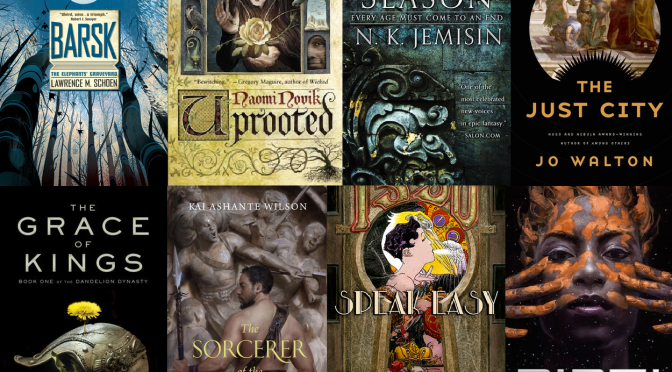
  • The Fifth Season by N.K. Jemisin
    This book is just incredible. Hands down my favorite book of 2015, it’s big and beautiful and simply marvelous on the technical level. It’s definitely Jemisin’s best book to date, and it stands head and shoulders above most of the competition.
  • The Grace of Kings by Ken Liu
    I feel like almost no one loved this book as much as I did, probably because Liu’s combination of Eastern and Western influences make this novel a kind of strange read for folks who are used to more Tolkien-inspired, rather than actual epic-inspired, epic fantasy. I expect this title to be a long shot for making the final shortlist, but I could be wrong.
  • Barsk: The Elephants’ Graveyard by Lawrence M. Schoen
    I only read Barsk a couple weeks ago, and it’s the last 2015 novel I’m likely to read unless something that I haven’t read already makes the finalist list for the Hugos. I’m so glad I did. It’s a really excellent bit of science fantasy, and I can honestly say I’ve never read anything quite like it. 2015 was chock full of highly original SFF, and this title was among the most inventive books of the year.
  • Uprooted by Naomi Novik
    There’s very little new under the sun when it comes to reimagined fairy tales, but Naomi Novik found some of it and put it into this gorgeous standalone novel.
  • Radiance by Catherynne M. Valente
    I will read literally anything Cat Valente publishes, and Radiance had me at “decopunk pulp SF alt-history space opera mystery” and never let me go. It’s probably a little too experimental/literary for everyone to find it as delightfully fun as I did, but I’d love to see it get a Hugo nod, even if it doesn’t win.
  • The Traitor Baru Cormorant by Seth Dickinson
    I’m still not in love with the ending of this book, but it’s one of the most technically perfect books I’ve ever read. The whole thing just runs like clockwork, and it’s a masterpiece of story engineering.
  • The Just City and/or The Philosopher Kings by Jo Walton
    I adored both of these, but I’d obviously have to pick just one if I decided to put one on my ballot. Probably it would be The Just City, though. You’ve got to love a book whose climax is a debate between Sokrates and Athena, and things got a little weird at the end of The Philosopher Kings.

I also loved The Dark Forest by Liu Cixin and Ann Leckie’s Ancillary Mercy, but both of those are sequels to books that have already won, so I’d prefer to see the love spread around. Plus, the translation on The Dark Forest just wasn’t up to the same standard as that of The Three-Body Problem, and as much as I liked Ancillary Mercy, it wasn’t as good as Ancillary Justice.

Best Novella
  • The Builders by Daniel Polansky
    I would never have guessed that this would be my favorite novella of 2015, but it is. It’s basically like a Tarantino flick with cute little forest animals—a wild ride from start to finish.
  • Binti by Nnedi Okorafor
    I actually didn’t love this one when I first read it, but it’s grown on me since. The more I think about it, the better I think it is.
  • Sorcerer of the Wildeeps by Kai Ashante Wilson
    This was published as a novella, but it may be too long to technically fit into the category for award purposes. Either way, it’s a superbly original bit of sword and sorcery-ish stuff.
  • The Pauper Prince and the Eucalyptus Jinn by Usman T. Malik
    I only got around to this title this week, but it’s another one that I’m glad I squeezed in before I sent in my ballot. It’s a great little book about identity and immigration and integrating the past with the future.
  • The Citadel of Weeping Pearls by Aliette de Bodard
    If you read and enjoyed On a Red Station Drifting, you will love this return to that same universe. Writing in this setting is what Aliette de Bodard does best, by far.
  • Speak Easy by Catherynne M. Valente
    Zelda Fitzgerald meets “Twelve Dancing Princesses” meets something wiser and darker and more postmodern. Valente’s command of words is always impressive, and like everything else she writes, Speak Easy is gorgeous. Also, have you seen that cover? This book is the whole package.

Movie Review: Zootopia

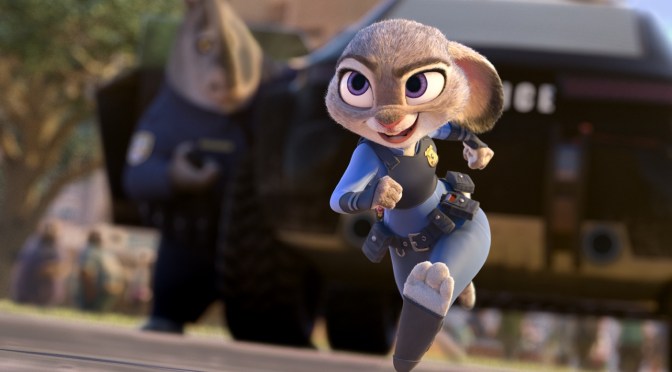
Zootopia is perhaps the best animated film Disney has ever made. It’s gorgeous to look at, with a great voice cast, a solid story, a lot of laughs, and a great message. It also the perfect way to capitalize on the crushes that probably millions of now-parents had on certain other cartoon foxes when we were kids. I loved it so much.

Ginnifer Goodwin and Jason Bateman are perfectly cast in the lead roles. Judy Hopps is a great protagonist—smart, creative, tough, kind, and flawed in ways far more complex than is typical of the heroes in most children’s movies. Bateman’s Nick Wilde is the first time in years that I’ve liked him in anything; he’s a perfectly lovable rogue, with enough intelligence and depth to keep him from being a stock sidekick for Goodwin’s Judy. The friendship between the two characters grows in a way that feels real and honest, and their eventual breakup and ultimate reconciliation feel earned.

The supporting cast of characters is wonderful, with Idris Elba as Judy’s gruff superior, the Cape buffalo Bogo, Nate Torrence as Clawhauser the cheetah, J.K. Simmons as Mayor Lionheart, Jenny Slate as Assistant Mayor Bellwether, and Shakira as pop star Gazelle. Tommy Chong plays a nudist Yak, Alan Tudyk is a criminal weasel, Octavia Spencer plays the wife of one of the movie’s missing mammals, and Bonnie Hunt and Don Lake are Judy’s loving, if imperfectly supportive, parents. While most of these characters do fall into standard tropes for this sort of story, the tropes utilized are well-chosen and nicely put together in a way that avoids being cliché. The buddy cop mystery plot isn’t groundbreaking, but it’s a particularly excellent story of its type, and the cast is more than up for the challenge of bringing it to life.

The greatest strength of Zootopia, though, is the way it handles its largest theme—how racism works. With a maturity and grace not usually seen in adult films, much less in a movie for kids, Zootopia manages to break down systems of oppression in a way that even a child can understand. Certainly it’s not uncommon for writers of all kinds to use fantasy worlds and fantasy races/species as stand-ins for real world people in allegorical examinations of race issues, but what is done here is something pretty special. Zootopia goes a step further and looks at the ways in which even people who are marginalized in some ways can be privileged in other ways. And more—Zootopia doesn’t stick to any cutesy situations; it’s a straight up police state situation, and protagonist Judy is at the center of the events that bring it about. To be sure, she’s also part of the solution, but only after taking a long hard look at her own actions and committing herself to being and doing better.

It’s a timely, poignant film that doesn’t have any pat answers to the contemporary problems it deals with. Instead, Zootopia’s central message is summed up in its only original song, “Try Everything,” a paean to perseverance. The world may not be perfect, and you may not always be right, but all you can do is keep trying—like Judy does—to be and do better and work to make the world a kinder place. It’s a surprisingly mature and complex message to find in a children’s movie, and it makes Zootopia something really unique and special.

Lucifer: “Wingman” is another strong episode with some smart writing

I’m starting to think Lucifer might really be hitting its stride. “Wingman” proves that last week’s solid showing wasn’t a fluke, and it’s another strong episode with some great character work as we pass the midpoint of the season.

This is the first week that I really, really buy the burgeoning friendship between Lucifer and Chloe. The parallel development of their characters and their growing mutual affection seemed more organic this week than it has up to this point, and the dynamic between Lucifer, Chloe, and Dan was natural and, refreshingly, free of much bullshit male posturing. There’s definitely some jealousy there, but Dan is more concerned with sorting out his and Chloe’s relationship problems—which have nothing to do with Lucifer—and Lucifer has finally stopped being sexually aggressive with Chloe like he was in the first few episodes and is learning how to be a real friend.

For her part, Chloe got a huge dose of character development this week. The Palmetto case—Chloe is certain that it’s a case of a dirty cop—has been mentioned before, and it’s the reason why Chloe has problems with the other detectives at the precinct. In “Wingman,” we finally get to learn more about the situation, and there’s even a sort of resolution to it. I really enjoyed seeing Chloe struggle to balance her desire for truth at all costs with Dan’s argument that truth doesn’t always mean justice. Proving that Malcolm was dirty would deprive his family of the pension that they would normally get for an officer killed in the line of duty, and perhaps cause real hardship for them. Still, I loved the way that this conflict played out. Dan respects and supports Chloe, in spite of their disagreement, and when Chloe has a fresh idea about the case, it’s Dan who she shares her moment with. Their relationship is complex in some very interesting ways. I can see why their marriage is on the rocks, but there are also a lot of reasons to root for them to get back together.

The best thing about “Wingman,” however, is seeing Lucifer and Amenadiel work together. This is the first time these two have spent this much time with each other to date, and it’s excellent. They have a great on screen chemistry, and their dysfunctional familial dynamic is fascinating. This week, the show really digs into the divine aspects of that, setting up some clear consequences for both Lucifer and Amenadiel and taking a look at the wider-reaching effects Lucifer’s dereliction of duty might have. It also offered a much better and more philosophically sophisticated explanation for Lucifer’s decision to leave Hell in the first place. Last week, the show highlighted the “rebellious son” angle, but this week shows us both that Lucifer had something real to rebel against and that it didn’t come without some deep personal cost to himself.

Tom Ellis and D.B. Woodside were both at the top of their game in “Wingman,” and both of their characters got big injections of pathos that give them much more complexity than they had, say, two weeks ago. Amenadiel’s shock and sorrow when Lucifer burns his wings was a powerful moment, as was the anger that came on the heels of that pain. It’s tempting as a viewer to think that Lucifer deserved every punch, but his own lack of fighting back suggests that he thinks so, too, and only adds to the sense of tragedy here. The psychological, theological, and philosophical complexities of the show are slowly building up, and they’re being worked in in some smart and subtle ways, and if the show can keep it up it might turn into something really special and unique.

Miscellaneous thoughts:

  • This show’s episode titles have been very hit-or-miss, but this is a good one—an amusing play on words with multiple layers of meaning. Excellent job, person in charge of picking it.
  • Dr. Martin doesn’t appear this week, and I think the episode is actually better for it. Too many of her interactions with Lucifer are uncomfortable, and her lack of ethics makes her ability to be an effective therapist questionable.
  • It seems pretty heavily telegraphed that the downed officer’s partner is the guy who shot him, which is a bummer. I’d like a little more mystery, to be honest. We’ll see, though.
  • Who else suspects that Lucifer might have only burned the fake wings?
  • I feel like the show isn’t really quite sure what to do with Mazikeen. She’s an interesting character, but she doesn’t interact much with anyone besides Lucifer, and I hate that she seems to be so motivated right now by jealousy of Chloe.
  • Finally, if I have one major ongoing general criticism of the show, it’s that none of Lucifer’s female characters talk to other women at all. There’s been so much other stuff to criticize that I’ve never gotten around to it before now, but it would be great if Chloe had a girlfriend or two that she could talk with about things. It might be tough to work in friends for Maze or Dr. Martin, but Chloe could definitely do with a girls’ night out every once in a while.

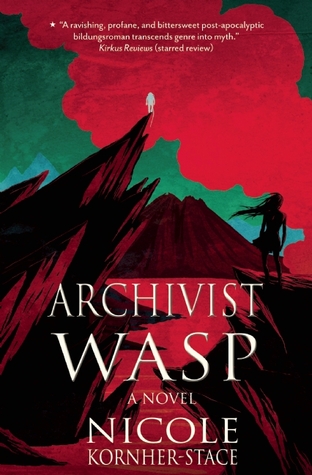
Book Review: Archivist Wasp by Nicole Kornher-Stace

Archivist Wasp is a strange and beautiful story that still managed to be somewhat disappointing to me. I liked it quite a bit, but I didn’t love it the way I thought I would and I’m not sure exactly why except that I feel somewhat misled by an enormous amount of good reviews that were terribly vague about what this book is. At the same time, I do like that Archivist Wasp defies any neat genre categorization. It’s a book that is many things, but mostly it’s hard to describe without giving away the whole story. In any case, I’m not sure exactly what I expected from this book, but what I got wasn’t it, and I can’t say that my expectations were challenged or unsettled in any positive way. I just feel weirdly neutral about the whole thing.

After about a week of trying to figure out why this book just didn’t sit right with me, I think it’s largely because, while it’s a thematically strong work—dealing with issues of identity and choice and the ways in which people can be susceptible to bad ideas—there’s just not a whole lot of actual story. The whisper thin plot might have worked if Nicole Kornher-Stace made up for it with particularly beautiful prose or great characters or a good sense of the setting, but that’s not the case. Kornher-Stace’s prose is just workmanlike; Wasp is kind of a wonderful character, but she’s not enough to carry a whole novel; and the setting seems to be shooting for almost mythic—a journey through an underworld—but fails, and at the same time is a post-apocalyptic dystopia of sorts—but without any details to give it any specificity or to ground it in a plausible future.

It seems to be somewhat in vogue these days for authors to skirt the line between science fiction and fantasy, and genre-bending is a common buzzword of recent years that I’d heard used to describe Archivist Wasp. That may be the case, but to me it felt more noncommittal than purposeful in its failure to decide what it wanted to be. Wasp’s abilities seem to be mystical in nature, and this isn’t entirely at odds with a world that appears to have been shattered by a human-caused apocalypse, but there’s really no explanations for either of these things. Certainly, there isn’t nearly enough explanation given to even begin to explain how the world shifted from the one that produced the super soldiers whose ghosts Wasp interacts with to the world in which Wasp has been raised.

It’s not always necessary to explain this stuff, and sometimes it’s actually better if authors don’t bother—too many potentially good books have been ruined by over-explaining—but the society that Wasp is part of is so alien that it’s difficult to imagine how it happened at all. If I’m being very generous, I could say that this makes the book original, and it is, as far as that goes, but in the absence of any common genre tropes, it becomes the responsibility of the author to make sure that the reader has all the information they need to grok the book.

I suppose that in the end, though, it’s not so much that Archivist Wasp is hard to understand; it’s just deeply unsatisfying. While I can appreciate what I suspect is the author’s aversion to holding the reader’s hand, just a little more explanation would have gone a long way towards making this a much more enjoyable read.

Weekend Links: March 5, 2016

March is here, and we’re now really getting into good new fiction season. Even though there are far more new releases than I’m even capable of keeping up with, I wrapped up two final novels from 2015 this week–Archivist Wasp and Barsk: The Elephants’ GraveyardBarsk was nominated for a Nebula, and Archivist Wasp has been getting a good amount of awards buzz as well, so I thought I’d check them out in time for Hugo nominations. Over the next week or two, I’ll be reading a bit of short fiction and one more 2015 novella, and then I will be making a short-ish list post or two before I send in my final lists.

The John W. Campbell Award can be a little trickier to nominate for, but this year it’s being made somewhat easier by Bad Menagerie’s Up and Coming anthology, with collects some representative short stories from many of the currently eligible authors. Up and Coming: Stories by the 2016 Campbell-Eligible Authors is out now and will be available as a free download through March 31.

The nominees for this year’s Spectrum 23 Awards were announced this week.

If you’re a fan of classic sci-fi, all of IF Magazine–176 issues from 1952 through 1974–is now available for free download.

io9 has a great list of all the books we should all be looking forward to in March.

But, wait! Fantasy Faction has a list of small press titles to keep an eye out for as well.

The American Gods adaptation finally has its Wednesday–and it’s Ian McShane, which is pretty exciting.

Gene Roddenberry’s son has been hired as an executive producer for Bryan Fuller’s new Star Trek series.

Meanwhile, over at the Wertzone is the first post I’ve come across so far talking about Star Trek‘s impending 50th anniversary.

At The Toast, three adults have a serious conversation about The Hero and the Crown.

The final installment of Catherynne M. Valente’s Fairyland series–The Girl Who Raced Fairyland All the Way Home–came out this week, and Valente was on the Once & Future Podcast to talk about it.

Mary Robinette Kowal has a new novella coming out on Tuesday from Tor.com, Forest of Memory, and she was on Midnight in Karachi to discuss it. If you can’t wait for the new book or don’t know who she is, you can read her wonderful novelette, “The Lady Astronaut of Mars” online for free right now.

Alex Marshall’s identity was revealed this week when he was interviewed by Kameron Hurley over at Medium.

This month’s Clarkesworld has a great interview with Charlie Jane Anders.

I loved Victor LaValle’s The Ballad of Black Tom, and he’s still doing some interviews to promote it. This week, he showed up at Vice and on NPR to talk about his book, Lovecraft, and racism.

In a similar vein, Jim C. Hines has a great piece in this month’s Uncanny Magazine about “men of their times.” 

Fandom Following has a great piece on women in Middle Earth–and how bad being one would be.

Lady Business has a must-read post about the tyranny of the “do it yourself” mentality that so often characterizes responses to complaints about lack of representation.

This new Van Gogh biopic–animated with oil paintings by over a hundred artists–looks amazing:

Brain Pickings collects a whole bunch of Arthur Rackham’s illustrations for Grimm’s Fairy Tales.

Pamela Anderson stars in this incredible new short sci-fi film, “Connected”: