All posts by SF Bluestocking

State of the Blog and Weekend Links: June 11, 2017

Sometimes I feel like I’m never going to catch a break. After being moderately productive last week, I was all prepared to churn out some work this week, especially since I started a new blogging project (Let’s Read! Gormenghast) that I’ve been excited to dig into for months.

Reader, I’m already a post behind where I’d planned to be. And the thing is, it’s not even depression or poor time management, which would be disappointing, but also classic me. Nope. This time it’s just plain old seasonal allergies, which got randomly worse for me last weekend and have only let up in the last 36 or so hours. I’ve always had a little bit of sniffling, like in April when every flower in my town blooms at once and I have the windows open for fresh air, but usually it clears up by now. Not this year, though. This year, I just got a full week of sinus pain, stuffiness, runny eyes and constant headaches that were literally only helped by laying completely horizontal and essentially doing nothing. Which amounted to quite a lot of sleeping, as the headaches made it hard to even read a book, much less anything else even remotely productive.

Today is the first day in over a week that I’ve felt anything close to normal, and most of my waking hours have been spent at my nephew’s birthday party, which was nice, but the noise has undone most of the good that a couple days of pretty solid resting and quiet/early (for me) evenings have done. The good news is that I think the allergy situation is clearing up now that it’s hitting 90 degrees and I turned on the A/C. I have high hopes that this coming week will be a bit more normal.

All that said, this past week wasn’t the total worst, all things considered. I reviewed iZombie as normal, and I did get out two of the three posts I’d planned to do about Titus GroanPart 1 | Part 2–with another one likely to be ready tomorrow. If my energy level stays high and the rest of my body cooperates, I’m hoping to catch up this week by just making up this week’s missed post by Friday. Here’s what I’ve got planned next if you’re following along:

  • Monday: Titus Groan, Chapters 10-13
  • TBD: Titus Groan, Chapters 14-17
  • TBD: Titus Groan, Chapters 18-23
  • TBD: Titus Groan, Chapters 24-26

Energy level and health again permitting, I’ve got several book reviews in the works, and I’d love to get out sometime soon to catch Guardians of the Galaxy 2 and Wonder Woman, which I expect to have thoughts on–unless I decide to just hold off on movie-going until The Little Hours and/or Atomic Blonde comes out. Because, really, raunchy nuns and Charlize Theron killing dudes and romancing Sofia Boutella will almost certainly be better than anything Marvel or DC is going to put out this year.

In sad news this week, original Batman star Adam West passed away at age 88.

If you’re planning your summer reading already and can’t wait around for my Summer Reading List near the end of June, the Barnes & Noble Sci-Fi and Fantasy Blog has a book for you each week in both science fiction and fantasy.

If you’re reading for the Hugo Awards, you should definitely be following along with Joe Sherry at Nerds of a Feather. He just did short stories.

Finalist lists were announced this week for this year’s Mythopoeic Award and John W. Campbell Memorial Award.

The Wertzone’s Cities of Fantasy series continues with Waterdeep.

In her continuing fairy tale series at Tor.com, Mari Ness talks Hansel and Gretel.

As I gear up and prepare my liver for season seven of Game of Thrones, that show’s numerous failings have been much on my mind. Fortuitously, the good folks over at the Fandomentals have organized most of the reasons why Game of Thrones is bad in a handy 101 post.

Pornokitsch offers up a taxonomy of villains.
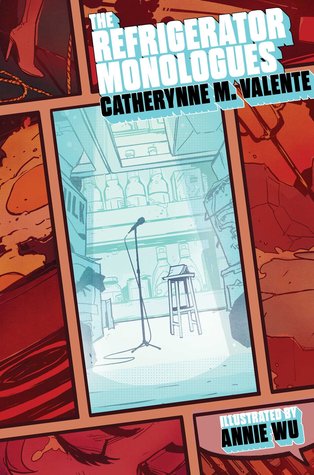
One of the books I’m hoping to finish a review of this week is Catherynne M. Valente’s The Refrigerator Monologues, which is every bit as superbly excellent as you might expect anything by Valente to be. She was interviewed over at Vox this week; you can read her Big Idea post about the new book; and if you still aren’t convinced, you can read an excerpt at Paste.

Yoon Ha Lee’s Raven Stratagem, out Tuesday (6/13), is the next major release I’m hotly anticipating, and he’s been making the rounds to promote it this week.

The other release I’m looking forward to this week is Mary Turzillo’s YA novella, Mars Girls, from Apex Publications, which I’ve had on pre-order for what feels like forever. There’s been a big blog tour going on this week ahead of publication (and stretching into next week), and all it’s done is whet my appetite for this book. I mean, look at that stunning cover and that book description. Can not wait.

While we’re still waiting on the next Book Smugglers novella, they did just reveal the cover and synopsis for the first book in their 2017 short story season, Beauty, Glory, Thrift by Alison Tam. Reader, I instantly pre-ordered it. All the cool kids are doing it.

Finally, Book Smugglers is also where I found out about the Kickstarter for the Tansy Rayner Roberts-edited anthology, Mother of Invention. I’m starting to be slightly concerned about how much the Book Smugglers are influencing my spending decisions, but AUS $10 will net you a digital edition of the book when it comes out. It had me at “diverse, challenging stories about gender as it relates to the creation of artificial intelligence and robotics.”

Also, I know I negged superhero movies a bit earlier, but the first teaser for Black Panther looks promising:
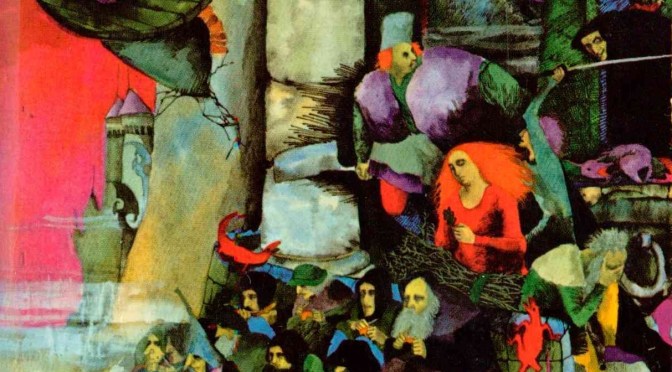
Let’s Read! Gormenghast: Titus Groan, Chapters 4-9

These next few chapters of Titus Groan vary in length, further adding to the sense of unease and strangeness that permeates the book, while at the same time slowly metering out more information about Gormenghast and the Groan family. There’s even the glimmering of the beginning of a proper plot, though, like the first three chapters, these contain only a couple of actual events that don’t represent any particular forward motion in the story.

Chapter 4, “The Stone Lanes,” begins with Mr. Flay becoming overwhelmed with disgust at Swelter and the kitchen. He leaves through a door that Steerpike has never used before, and Steerpike follows him into the Stone Lanes, a mazelike set of tunnels within the castle. When Flay discovers Steerpike following him, he takes the boy to see the “cat room,” which is just what it sounds like, and to spy on the Earl and Doctor Prunesquallor as they talk about the baby, who is apparently very ugly, with unusual violet-colored eyes. When Flay tries to send Steerpike back to the kitchen, Steerpike refuses, threatening to spread the gossip about the new baby throughout the rest of the staff, which prompts Flay to lock him up to be dealt with later.

Meanwhile, the Lady Gertrude, 76th Countess of Groan, is chafing at her enforced bedrest after childbirth. She proves herself an indifferent mother at best when her new son is brought to her and she simply names him—Titus—and sends him away, to be brought back to her when he’s six years old. Finally, we get something of a glimpse into the life of Lord Sepulchrave as he meets with the “Lord of the Library,” Sourdust, and plans his day using a set of enormous books that detail routines stretching back generations. Nearly seventy pages into the book, I would expect for more stuff to actually be happening, but there’s still so much that’s delightful about the Mervyn Peake’s lush and atmospheric prose and sharp, often funny worldbuilding that I’m not even a tiny bit bored yet.

The central motifs continue to develop, with strong references to birds and disease, though descriptions of humidity have petered out in favor of just a general pall of ill health. In these chapters, we finally get some appreciable dialogue from characters who aren’t (as Swelter was) drunk, and it gets weird. Time and again, characters talk right past each other in conversations that never quite connect, where the results of a discussion don’t quite logically follow from its content. Words and phrases are repeated for emphasis or as mantras, not quite on the level of catchphrases for each character yet, but the reader is almost certainly intended to associate certain lines and manners of address with particular characters.

  • Mr. Flay’s conversation with Steerpike, such as it is, reveals something of Steerpike’s ambition—to be out of the kitchen and away from Swelter—and much about Flay’s obsession with Gormenghast and its history and the preservation of whatever twisted sort of order exists in this place. Flay repeats the question and accusation, “Rebellion,” several times, suggesting that he maintains a level of paranoia about it without having a firm idea of what rebellion might look like.
  • Doctor Prunesquallor is a fool and a drunk, prone to sycophantic fawning on the Earl and his family.
  • Fuchsia’s theatricality and self-absorption is felt in every line of her brief speech.
  • Lady Gertrude’s irascible temper and wry good humor is swiftly established in the way she talks with her birds. Her treatment of Nanny Slag is less unkind than impatient, and again it’s characterization that is managed economically.
  • Lord Sepulchrave may be the sanest of the characters we’ve met so far by this point in the novel, though even he is plagued by a pervasive melancholia, burdened by the weight of history and tradition as we find out he is in his short conversation with Sourdust.

Finally, it’s encouraging that there are already multiple female characters introduced, although it’s less encouraging (albeit interesting) the ways in which these women conform to and sometimes defy stereotypes.

It’s Fuchsia who we meet properly first, and she’s little more than a child, petty and spiteful and jealous in the way of some young teenagers, angry at the prospect of having a brother and casually cruel about him when she first sees him. Fuchsia is said to be almost beautiful, though, and Peake goes on to describe her in somewhat creepily sexual terms (“Her sullen mouth was full and rich; her eyes smoldered.”) before then switching tacks and calling her manner “utterly unfeminine—no man could have invented it,” in a direct contradiction to the earlier, sexually-charged description. At the same time, Fuchsia wears a red dress—a color long associated with passion and sexuality—and has long dark hair “like a pirate’s flag,” a descriptor which casts Fuchsia, though only fifteen, as both sexually aggressive and somewhat disreputable. It’s a weird mix of traits for the character, and while Fuchsia may yet grow into such a fearsome description of her person and mannerisms, I can’t help being mildly to moderately squicked out when I remember that she’s only fifteen.

Fuchsia’s mother, Lady Gertrude, may be my favorite character in the book so far. It seems to me that Peake intends for us to understand Gertrude as being at least slightly mad, with her indifference to motherhood just one facet of her madness, but one can also read her as simply repressed, trapped in her role as the 76th Countess of Groan and resentful of it. Peake’s physical descriptions of Gertrude are fascinating. She’s a large woman, and some other writers may have portrayed her as grossly fat, but even in a book where words that connote illness and disease are common, Peake avoids this. Instead, Gertrude is shown as large and rather impressively imposing: “The effect she produced was one of bulk, though only her head, neck, shoulders, and arms could be seen above the bedclothes.” Covered with birds, Gertrude feels almost part of the very architecture of Gormenghast; it’s not clear where she came from before marrying Sepulchrave, but it seems obvious that’s she’s quite gone to root in this place.

She’s got a wry, sardonic wit and a sense of generalized impatience with those around her. She’s bored and irritated by Nanny Slagg—a fairly stock old, doting nursemaid sort of character—and dismissive of Doctor Prunesquallor. Still, like basically all the other characters in the book so far, Gertrude still doesn’t have a story aside from having just given birth, recovered quickly, and refused to raise her own child. There’s no obvious story blueprint for where any of this goes next, to be honest, so it will be neat to see what the next 450 pages of this book are all about.

iZombie: “Return of the Dead Guy” wastes time dredging up the past

There’s a lot going on every week on iZombie, but “Return of the Dead Guy” is extraordinarily busy, even by iZombie standards. The show is juggling multiple different plots, even adding new ones, and while this is something iZombie has always done with mixed success, this week’s mix is more bad than good. Still, the good parts are very good. It’s just a shame that they’re tied to garbage material like “Fort Lust” that does nothing but drag down the episode.

**Spoilers below.**

The highest stakes plot this week is, fortunately, one of the ones that works best in this episode. After Harley and his zombie truthers showed up at the morgue last week, they’ve commandeered Ravi and repaired to the gun shop, where they have Don E. imprisoned and a live video feed set up to document his declining health as they starve him of brains. With his phone confiscated and surrounded by dudes with guns, Ravi is still determined to prevent the torture planned for Don E. Eventually, Ravi manages to get Don E.’s phone and call Blaine, but by the end of the episode Ravi and Don E. are still waiting on their rescue and shit just got real. With the view counter for the livestream over 100k, Harley and his friends are ready to go to town on Don E., and the episode ends with Ravi physically blocking their way and Harley putting a literal gun to Ravi’s head. Of course, the viewer knows that Blaine is outside, with Liv, and gearing up to save the day (finally), and this does diminish the overall effect of the attempted cliffhanger, but it still works well. It’s especially nice to see Ravi getting a storyline that takes his character growth in a positive direction and gives him a chance to do something heroic.

The other storyline that works in this episode is Blaine’s, if only because villainous Blaine is vastly more fun—even absent David Anders’ singing—than nice Blaine ever was. This week, we get a showdown of sorts between Blaine and Mr. Boss, rather sooner than expected, when Boss shows up at the funeral home and shoots Blaine as soon as he opens the door. Obviously, this doesn’t go well for Boss. Blaine trusses him up, lays him out in a casket and then gives him a crash course on the existence of zombies. There’s a lot to love about Boss’s reaction to this news, which is neither the easy(-ish) acceptance of Ravi and Clive nor the fear and hatred of the truthers. Instead, Boss is skeptical, or perhaps “violently disbelieving,” and he continues trying to kill Blaine until it becomes extremely obvious that it’s not going to work. What’s less obvious is why Blaine wants Boss as a business partner after all this. It seems like the sort of thing that is obviously going to backfire at some point, probably sooner rather than later.

Interestingly, there is no regular case of the week this week. Instead, Liv finally eats the brain of the dominatrix murderer, Weckler, who Peyton thinks may have been innocent. It turns out that he wasn’t, but it also turns out that he was, himself, murdered. This is found out in scenes that involve some interesting (in a “gift to the femslash community” way) roleplay between Liv and Peyton. Liv and Clive investigate, trying to figure out who might have had Weckler murdered, but they hit a wall when Weckler’s daughter refuses to cooperate with their investigation. Also, Weckler’s daughter is a zombie, staying with a zombie family, and they’re involved somehow with Fillmore Graves since they eat tube brains. Unfortunately, this plot twist is more confusing than anything else. This episode did an okay job of establishing some of what happened with Weckler, it feels as if we’re as far away as ever from learning why, and a whole new plot just got thrown into the mix as well.

The other side effect of Weckler’s brain is that Liv experiences aspects of Weckler’s mental illness, particularly his visions of his dead wife, except Liv sees her dead boyfriend, Drake, because she apparently still has some issues to work through regarding his death by her hand. Here’s the thing, though. Liv straight up says to ghost delusion Drake that the reason she’s been throwing herself into all these different brains has been to avoid having to live in her own head and thus having to deal with actually processing the grief and trauma and guilt she feels about Drake’s death. However, she’s just spent several days on tube brains, specifically so she could be herself, unaffected by other personalities, in order to pursue her relationship with Justin, who she spends most of this week—even after being visited by ghost delusion Drake—trying to bone. And when it really comes down to it, she’s able to talk herself out of her Drake-induced doldrums relatively quickly (and successfully bone Justin). The time to address this stuff was about eight episodes ago; at this point in the season it just feels superfluous and, frankly, baffling.

Finally, for some unfathomable reason, this episode contains not just one but several check-ins with Major and his new friend Shauna, who have built themselves a blanket fort for sex. I mean. Okay. Fine. Liv is slightly jealous and weirded out by it, but not enough to stop her from going right out and sleeping with Justin. Shauna seems nice, but not in any truly sinister way, which is almost sinister just in and of itself. But the truth is there’s no particular reason for any of this stuff to have made the cut in an already busy episode. It’s late in the season to be introducing a new character that we’re supposed to care about, and Shauna isn’t particularly likeable or at all interesting. Sure, Major doesn’t have much to do now that he’s not a zombie any longer, but that’s okay. It would be better to have no Major at all than to have Major engaging in overly saccharine sexy times with a virtual stranger when there’s far more interesting stuff going on elsewhere.

Miscellany:

  • Mr. Boss sneaking in and out of his own house while his wife is on the phone with her lawyer or the life insurance company or whatever was a smart, funny intro to the episode.
  • Even as Blaine is expanding his business, there’s some grumbling in his crew about how things are going.
  • Curious to find out who Rachel is. My money is on FBI, but we’ll see.

Let’s Read! Gormenghast: Titus Groan, Chapters 1-3

“Gormenghast, that is, the main massing of the original stone, taken by itself would have displayed a certain ponderous architectural quality were it possible to have ignored the circumfusion of those mean dwellings that swarmed like an epidemic around its Outer Walls.”

Having once read it, there’s no way one could mistake the opening sentence of Titus Groan for that of any other book. For one thing, it begins with the name, “Gormenghast,” simply and instantaneously establishing a setting and setting a tone before continuing in a tumble of words that feel as meticulously chosen as they are off-kilter. “Off-kilter,” of course, may be the best one-word description of these first three chapters. From sentence and paragraph structure to word choice, everything about these chapters feels at least slightly askew and unbalanced from the very first words of the book.

The homes of the common people “swarm” and “sprawl.” The earth is sloping and the roofs are uneven. These buildings are “held back by the castle ramparts” as if they’re assaulting the castle—the poor imposing upon the wealthy, titled and powerful by simply existing—and they’re tenacious, “…like limpets on a rock.” The castle itself complements the ramshackle town around it with its “time-eaten buttresses” and “broken and lofty turrets.” Gormenghast is ancient and enormous, but it’s also crumbling and in disrepair. Worse, there’s something obscene about it; it’s most distinguishing feature the Tower of Flints, which “arose like a mutilated finger from among the fists of knuckled masonry and pointed blasphemously at heaven.” To round out the picture, the tower is full of owls, noisy at night and quiet during the day.

And that’s all just the first paragraph.

Chapter 1, “The Hall of the Bright Carvings,” continues to establish the setting. Gormenghast is an ancient but decaying seat of power, and every description of it is reflective of its decline. The place is gloomy and dingy, collapsing under the weight of time, and there’s a profound disconnectedness between the denizens of the town and those of the castle. The annual carving contest, through which three sculptures are added to the eponymous Hall, is a tradition without meaning. The townspeople, we’re told, spend all year working on their submitted pieces, only to have the majority of them burned after the Earl of Groan judges them and chooses the winners. The chosen pieces are relegated to an enormous gallery kept up by a Curator, Rottcodd, who obsessively, but joylessly keeps them dust-free. They are otherwise seen by no one, as no one except Rottcodd seems to go to the Hall, and he lives there as well as works there. It’s not only those in the castle and those without who are disconnected from each other.

Within the castle, too, there are sharp divides between the gentry and the staff and within the staff as well. This is shown in Flay’s interactions with Rottcodd, but it’s further highlighted in the next chapters, “The Great Kitchen” and “Swelter.” While the workers in the Great Kitchen may be more in the loop of major events inside the castle than Rottcodd was, at least enough so that they know to get wildly drunk in celebration of the new Lord Groan’s birth, they’re no more emotionally connected to the Earl and his family than the Curator. Their bacchanalian revels are just as empty a tradition as the sculpture contest, and the kitchen staff may work for the Earl, but they worship the Chef, Swelter. Like the description of the Tower of Flints, the descriptions of the Great Kitchen and its Chef have a feeling of the profane about them. The Kitchen—hot, stifling, crowded, smelly, cacophonous—is a Hell, and Swelter is its ruler.

To the degree that these first three chapters have a plot (which is debatable), it is this: a new heir to the Earldom has been born, and Lord Sepulchrave’s personal servant, Mr. Flay, is spreading the news. Mr. Flay is so excited about the birth that he is in search of someone to share it with who won’t have heard of it yet, and this sends him to Rottcodd in the Hall of the Bright Carvings. When Rottcodd’s reaction is disappointing, Flay then heads to the Great Kitchen, where he knows that there will be, if not surprise at the novelty of the birth, at least some appropriate amount of celebratory reaction. It’s not much, as plots go, and 33 pages of story with only, essentially, a single event is an unfashionably (by today’s standards) slow start to any novel. However, there’s so much emotive and atmospheric worldbuilding detail and sly characterization of the first few characters we meet that it’s hard to resent the lack of actual story.

Notable Motifs:

  • Birds – There are owls in the Tower of Flints; Rottcodd uses a feather duster; there are birds (ravens, starlings, a white rook) in the Lady’s chamber; Rottcodd’s head moves back and forth “like a bird’s”; Flay has a “scarecrow frame”; Steerpike is Swelter’s “impatient lovebird.”
  • Pathology/Illness – The buildings in the first sentence “swarmed like an epidemic”; the Tower of Flints is “like a mutilated finger”; the sculpture competition is “rabid”; the afternoon that Flay visits Rottcodd is “unhealthy”; the kitchen has a “sickening atmosphere”; Swelter was at the back of Flay’s mind “like a tumor”; Swelter’s first word is to call the kitchen boys, “Gallstones!”
  • Humidity – It’s a hot, humid day when Flay goes to see Rottcodd; the Great Kitchen is oppressively humid.

Some Notes on Names:

I suspect Mervyn Peake’s naming conventions in this series will provoke either love or hate reactions in readers. I am firmly in the love camp, myself, and I appreciate the wryly ironic comedic absurdity of it all.

  • Gormenghast – An ugly word that suggests both “gorge” and “ghastly” and that seems designed to cram as much information as possible about the place into its name.
  • Flay – A single syllable, but a full, real word. Whether you understand it as “to skin,” “to beat,” or “to brutally criticize,” it seems appropriate for our Mr. Flay.
  • Rottcodd – Suggests both death and the smell of something vile. I’m curious to see if Rottcodd appears later in the novel, as this seems like it could be a foreshadowingly symbolic name.
  • Sepulchrave – From “sepulcher,” obviously, so another death name, with a suffix that could lay equal claim to origins in “craven” or “raving.” Or even “raven,” I suppose, which would fit in with the bird motif.
  • Groan – The family name of the Earl. Like “Flay,” it’s a single syllable real word that seems intended to be understood for any or all of its various connotations.
  • Swelter – A name that implies heat and wetness, size—especially in contrast to the simply named Flay—and a certain grossness. Swelter’s first name is Abiatha, perhaps from the Biblical Abiathar, which means “excellent father.” This would make sense in light of Swelter’s affectionately abusive paternal-ish relationship with the kitchen boys, and it would also jive with their seemingly religious devotion to him.
  • Steerpike – Suggests agency with “steer” and sharpness (like a weapon) with “pike.”

State of the Blog and Weekend Links: June 4, 2017

Last weekend was busy enough, with my daughter’s belated birthday party (I still can’t believe she’s fourteen) and then a family get-together for the holiday, that I ended up just skipping this post. The truth is, it was also just an altogether dull week (for me, not in general–this country is an absolute shitshow), without even any especially interesting links to share.

This week hasn’t been great, overall, but there have been some bright spots. The most recent episode of iZombie was a new high point for one of my favorite shows. Lucifer ended its second season with a strong finale. Still Star-Crossed premiered and seemed promising. There was a new Marie Brennan novella, Lightning in the Blood, and it’s fantastic. I read Catherynne M. Valente’s The Refrigerator Monologues and Seanan McGuire’s Down Among the Sticks and Bones, which were both superb. I pre-ordered my copy of The Refrigerator Monologues along with Raven Stratagem by Yoon Ha Lee and The Prey of Gods by Nicky Drayden, so I’ve got something to look forward to in a couple weeks when those show up.

I didn’t write much–being slightly depressed and home with a bored teenager on summer break isn’t exactly awesome for one’s productivity–but I did introduce my big Let’s Read! Gormenghast project. It’ll start properly tomorrow with Titus Groan Chapters 1-3, with chapters 4-9 and 10-13 later in the week.

It’s the start of a new month, June, which means we’re getting into the end of my Spring Reading List. However, if you’re looking for a full(-ish) list of June releases, Tor.com is the place to go, as always:

Meanwhile, the B&N Sci-fi and Fantasy Blog has a great list of 6 Standout Short Story Collections to start your summer with.

B&N is now publishing fiction, and they started strong last week with Sarah Gailey’s “A Lady’s Maid.”

Mari Ness wrote about Jane Yolen’s Briar Rose.

The Wertzone’s Cities of Fantasy series continues with New Crobuzon.

There’s a new Malka Older story at Fireside: “Narrative Disorder.”

It sounds like the final season of Game of Thrones might not air until 2019, which is a bummer. I’m ready to be done with it, to be honest. I guess, on the bright side, it will give my liver time to recover after all the alcohol I plan on drinking when I watch the upcoming season.

Introducing: Let’s Read! Gormenghast

2016 was not a great year for me, and this was reflected nowhere more strongly than in my failure to finish my Let’s Read! coverage of Dune. It turns out that a summer full of travel and an autumn and winter full of one personal and financial crisis after another, combined with a book that I just didn’t care for that much isn’t a winning recipe for productivity. I got derailed early in last year’s project, and never quite managed to get back on track, so by the time the end of the year rolled around I decided to just call it quits and start planning my next project.

I knew early on that it was going to be Mervyn Peake’s Gormenghast Trilogy. I’d watched the BBC miniseries based on the books back in 2000, partly because I had a huge crush on Jonathan Rhys Meyers at the time and partly because I was deep into epic fantasy at the time and Peter Jackson’s The Fellowship of the Ring was still a year away. I remember that Gormenghast miniseries being dark and weird, suffused with gloom and a pervasive sense of irony that borders on visual sarcasm; I loved it, even when I didn’t “get” it because I was a teenager, and teenagers rarely get anything that’s worth really getting. In any case, gotten or not, Gormenghast has stuck with me all these years, so when I was brainstorming classic SFF works to read and blog in 2017 it was at the top of my list. After spending a couple of years reading some classics of science fiction (Dune, Childhood’s End, and others), it felt natural to go with fantasy this time around.
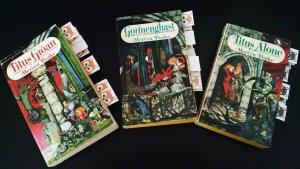
I actually tried to read Gormenghast back in the early aughts, but the enormous annotated version of the trilogy I bought back then was impossible to enjoy—too-small print, too-thin pages, too heavy to hold comfortably and too large to fit in any purse I owned—so it went the way of my old copy of Ulysses, which I also never got more than a couple dozen pages into. This time around, I knew I needed to look for some more manageable copies of the books if I was going to spend some months reading and writing about them.

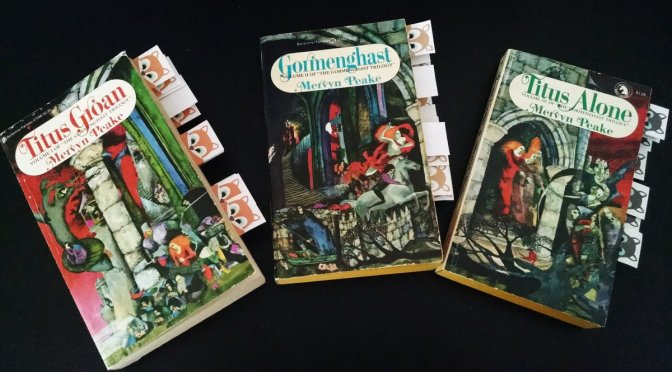
In the end, I settled on the Ballantine mass markets first printed in the late 1960s (though mine are later printings ranging from 1974 to 1977—Titus Groan, Gormenghast and Titus Alone, if you’d like to copy my exact reading experience. These editions have some gorgeously strange cover art Bob Pepper, whose work you might recognize from numerous other Ballantine covers from the 60s and 70s (including works by Asimov, Ellison, Moorcock, Dick and others). They also include the author’s original illustrations inside the books, a reasonable print size, and the pleasant weight of paper and nice glued bindings that characterize older mass markets. These things, if you take care of them, will last practically forever. Plus, old books smell amazing (if you’re into that sort of thing, and I am).

That said, all three books in the trilogy are conveniently broken up into chapters, which is how I’ve split them up into bite-sized sections—fifteen sections around 34 pages each in the first two books and ten sections around 28 pages or so each in the third one, which is a good deal shorter than the first two. I’ll be covering three sections per week starting on Monday, June 5. I’m also planning on, perhaps after the first book, perhaps at the end of the project, rewatching the 2000 mini-series to see how it holds up after all these years and examine how it works as an adaptation of the books.

The first three posts will cover:

  • Part One: Chapters 1-3
  • Part Two: Chapters 4-9
  • Part Three: Chapters 10-13

After this, I will include further section information as part of my weekly State of the Blog post as well as at the end of the last post in the series each week. Additionally, each post will be tagged “Let’s Read! Gormenghast” and there will be a link straight to the project on the navigation bar at the top of the blog.

Readers, I am so excited about this project. While the US might be going to hell in a handbasket, I have no expectation of any barriers on my end to staying on task and finishing this project as planned, and having started the reading, I can already tell I’m going to love these books. It’s going to be a fun summer here at SF Bluestocking.

iZombie: “Twenty-Sided, Die” is the best episode

“Twenty-Sided, Die” is by far the strongest episode of the season so far, and it’s probably my personal favorite episode of iZombie of all time. It’s got a good case of the week along with some excellent big picture plot development, and Liv gets to DM a D&D game for her friends. Spoiler: It’s glorious.

**Real spoilers below.**

Last week’s episode ended on a tense note, with Ravi going alone and unarmed into a meeting for the local zombie conspiracy theorists, and this episode starts with showing us how that goes. Fortunately, it’s not as awful as it could have been, and Ravi gets out intact, but it’s definitely a meeting full of bad news for Seattle’s zombies. Harley Johns has identified Floyd Baracus as a zombie, and he’s got files on numerous other people he suspects. He’s also got a plan to kidnap a zombie and starve it, then publicize it in order to convince the public of the existence of zombies and to highlight the threat they pose. Thinking quickly, Ravi reveals his identity and claims to be working on a zombie vaccine, urging Harley and the others to delay their plans. At the end of the episode, however, we find out that even Ravi’s sensible urging of caution isn’t enough to stop Harley and his brother from capturing a zombie at the first opportunity. They’ve collared a berserk Don E. and brought him straight to Ravi thinking that Ravi might have a tranquilizer that would calm Don E. down.

Don E. is going berserk, of course, because he’s gotten into Blaine’s new product: the brain of a WWII veteran and ladies’ man that has been soaking in Ravi’s blue memory serum liquid for twenty days. After Tanner enjoys the experience after eating a tiny sliver of the blue brain as a test, Don E. takes a much larger piece for a spin, and it looks like they’ve discovered the potential downside of the product. Too bad Blaine isn’t around to know about it. Riding the high of the initial successful test of blue brains, Blaine heads out to the well where he dumped his dad last week to have a nice, long gloat. Too top off the list of things Blaine doesn’t know about that might derail Blaine’s optimism, the episode ends with Mr. Boss coming back to town, an unexpected development that doesn’t bode well for pretty much any of the main cast and adds yet another subplot to an already packed story.

This week’s murder mystery is a weird one. A dungeon master running a weekly D&D game night is poisoned, and his circle of gamer friends—including police sketch artist Jimmy and IT guy Vampire Steve—come under suspicion for the crime. However, as Liv and Clive slowly clear each member of the group, they stumble upon a hidden room at the DM’s apartment that houses some advanced looking computers tied to Russian power plants. It’s weird, and it’s even weirder when the case goes unsolved by the end of the episode. Apparently, it’s a situation that’s enough about Liv and Clive’s pay grade that the FBI takes over, which offers a chance for Dale Bozzio to come back and break Clive’s (and our) heart all over again. It’s unclear so far whether this is the end of this case and the final nail in the coffin of the Clive-Dale romance or if this is yet another new story thread being woven into the mix, but it seems awful late in the season to be bringing back not one, but two characters that it seemed we’d seen the last of so long ago.

The highlight of the episode is Liv on dungeon master brains. Sure, her dice-rolling outside the game setting is odd and leans a little too hard on supernerd stereotypes, but Liv pressing her friends into service so she can run a D&D session in an effort to trigger a vision is everything perfect about this show. Of course Peyton is the kind of player who asks why they can’t just kill the quest giver for the reward instead of going on the quest. Ravi resuscitating Peyton’s character to keep her in the game was hilarious—and of course Ravi is an engaged and knowledgeable player despite mocking this particular kind of nerdery. Obviously Major plays a paladin. And even more obviously, Clive is the guy who isn’t into it until he is and then he’s really into it. It’s a scene that is clearly written and filmed with love for the game and deep knowledge and care of the show’s characters, and everyone in it seems to be having so much fun it’s infectious. I would definitely watch this group play D&D Critical Role-style, is what I’m saying.

Miscellany:

  • After the meeting at the beginning of the episode, Ravi meets a photographer named Rachel, who I’m curious to see more of. She wants to photograph a zombie, but it also seems like she could be a possible new love interest for Ravi.
  • Ravi hiding all Major’s hatemail is very sweet.
  • Major inviting this Shawna woman over sight unseen is just weird. (Also just plain ill-advised.)
  • Not as weird as how totally fine Major is with Liv dating Justin. He’s even giving Liv his stash of brain tubes so she can be herself with Justin.
  • It’s also not as weird as Liv being much more girlfriend-y with Justin than has really been established so far. This show has never been a romance-heavy program, but we’ve only seen them go on a couple of dates, and things onscreen have been decidedly PG so far. I dunno. It’s fine. Honestly, I’m just worried for Justin. He seems nice, and Liv’s boyfriends do not have a great life expectancy.
  • Liv finally meets Chase Graves, and he’s intense. Also, flirting with Liv? I kind of ship it because I’m trash, but also because I’m firmly on Team Protect Justin.
  • Peyton is getting increasingly suspicious about the dominatrix murder case, especially when her boss Baracus tells her to drop it and then Liv tells her that Baracus was one of the dominatrix’s clients.
  • Best line delivery of the episode: Clive shouting, “Where is the lich?!”

iZombie: “Eat a Knievel” takes some risks, but not necessarily the right ones

After a couple of lackluster episodes, I had high hopes for “Eat a Knievel” after seeing the preview for it last week. Eh. It’s alright. The case of the week is decent, if predictable, and there’s some major progress made in some of the show’s other plotlines as well. Not all the plot progress is great, and there’s at least one highly questionable turn of events, but “Eat a Knievel” is at least a solid enough episode to deserve its extremely rad title.

**Spoilers ahead.**

The best development of the week is Blaine’s return to villainy. Last week ended with Blaine shot and left for dead by one of his dad’s flunkies; this week starts with Blaine hunting down one of his own ex-clients to ask for a scratch and directions to where Don E. and Angus are working. It ends with Blaine encasing his father’s feet in cement and dropping him into a well on their family property before heading off to have an almost-touching reunion with Don E. Blaine has always been best as a villain, and his amnesiac turn sucked a good deal of the life out of him; returned to zombie form and freed from the constraints of trying to be a better man, he showed more vim and vigor this week than he has in the whole rest of the season so far. The only thing missing was a Blaine musical number.

The other event of significance is the apparent murder of Vivian Stoll, right after she figured out that Major is human. This is the questionable part of things. The arrival of Vivian and Fillmore Graves on the scene at the end of season two was promising, and they figured largely in the first couple episodes of season three before being moved to a decidedly back burner in recent weeks so the show could focus more on the personal drama of Major’s illness and de-zombie-fying and Blaine’s faked amnesia. While we’ve seen some of the Fillmore Graves crew (mostly in Major’s storyline), there hasn’t been any new development on the bigger Fillmore Graves storyline (whatever that’s supposed to be) in weeks.

When one of the first scenes in this episode was a sort of update meeting with Clive, Liv and Major reporting to Vivian, it seemed that we might be coming back around to some of the bigger picture zombie stuff that Fillmore Graves represents. Instead, what we get is the Fillmore Graves leadership team killed and the company taken over by Vivian’s brother-in-law, who’s some kind of aggressively militaristic loose cannon. It’s unlikely that any good will come of this change in management, and it seems at least somewhat likely that the new guy is behind Vivian’s death to begin with, but with Vivian dead Major’s secret (that he’s human again) is still safe—even if Major himself is decidedly less so.

The case of the week involved the murder of one “Finn Vincible,” who is less Evel Knievel (excellent episode title pun, though) and more Jackass. The identity of the murderer—Finn Vincible’s producer, Rudy—is heavily telegraphed from the very start of the investigation, though it takes most of the episode to ferret out his motive. Because this season seems to be all about investigating the murders of the worst people, we learn that Finn “pranked” Rudy by supposedly fake-banging Rudy’s then-girlfriend-now-wife. Rudy only finds out that the affair was real when his wife gives birth to a baby that is obviously Finn’s, so Rudy sabotages one of Finn’s stunts. There aren’t too many surprises here, and it would have been nice to get a little more interaction with Finn’s acquaintances, but it’s a totally serviceable murder mystery that doesn’t interfere too much with all the much more interesting and significant stuff that’s happening around it in this episode.

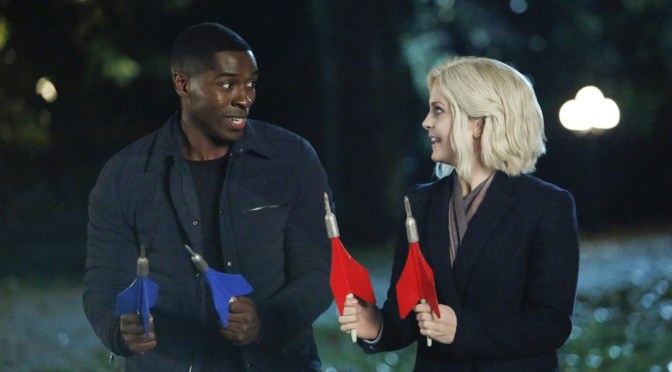
Liv on jackass brain isn’t as hilarious as she could have been, but she’s also not nearly as insufferable and unfunny as she was on the last couple brains she’s had. It’s almost all worth it for the shot of Liv sitting in on an interrogation with staples in her face; Clive’s facial expression in that scene alone is almost enough to carry the whole episode. His reaction faces to Liv’s antics have always been great, but they’re reaching a whole new level of amazing now that Clive knows that Liv is a zombie and understands how the brains affect her. The other thing that happens with Liv on jackass brains is her second date with Justin. She cooks up some brains for him so they can be on the same brain together, and then they go out and play with lawn darts before sharing a nice kiss. It’s really too bad that Justin seems doomed; I like him a lot (even if it does still seem weird how fast Liv has moved past Major), but he’s already had multiple foreshadowing events that suggest that the iZombie universe is out to kill him.

The episode finishes with Liv and Ravi trying to sneak into an anti-zombie conspiracy theorist event, but Liv is forced to turn back at the door when they realize that the zombie-haters are checking blood pressure at the door to prevent exactly this sort of thing. In the end, we’re left with an almost-cliffhanger—I mean, it’s tense, but it’s not really high stakes enough for proper cliffhanger status—as Ravi enters into the anti-zombie event alone to find out what these folks know and how organized they really are.

Miscellany:

  • “Stop talking. You had me at ‘money.’”
  • I suppose this episode finally lays to rest the theory that it was the Fillmore Graves folk who stole the cure from the morgue. The more I think about it, the more my money is on Blaine as the culprit. We saw him messing around with making his own batch of Ravi’s blue memory serum, so could Blaine be looking to sell the cure for top dollar and then charge people for the memory serum as well to “cure” the temporary amnesia? With no other likely suspects, this seems as plausible as any other theories I’ve seen.

Movie Review – King Arthur: Legend of the Sword

As a longtime lover of all things Arthurian for whom Lock, Stock and Two Smoking Barrels used to be a favorite movie, there was no way that I wasn’t going to go see this glorious mess at the first opportunity. If you’re like me, and the trailer for King Arthur: Legend of the Sword filled you with unironically joyful anticipation for this film, you will probably love the finished product, which is basically the trailer, but two hours long and on an enormous screen in a dark room. It’s all giant magic war elephants, fast-talking heist-planning, aggressively ugly action scenes, and hilariously confused imagery. I don’t think I stopped smiling from the first frame to the last, though I also lost count of the number of times I gleefully whispered, “What the fuck?” to myself. I adore this movie.
To the degree that King Arthur deserves serious analysis, it’s not as bad as you might expect. Like all of Guy Ritchie’s oeuvre that I’ve seen (which admittedly isn’t all, as I’m by no means a great fan of his), this movie is heavily focused on exploring the filmmaker’s seemingly complicated feelings about class and masculinity. What’s interesting about King Arthur, however, as opposed to Ritchie’s early work, is the presence of women and the way that the film’s masculine identities are constructed around the characters’ interactions with women. Whereas movies like Snatch and Lock, Stock didn’t feature any women at all, being entirely concerned with men and their homosocial interactions as a microcosm within which to explore broader (if only slightly) social issues, women figure prominently in King Arthur and in a variety of roles.

It’s not that the women of King Arthur are particularly interesting on their own—indeed, only the Mage and Maggie get any appreciable speaking time—the way they exist in the narrative and what they mean to the male characters is kind of fascinating.

Arthur’s mother could almost be considered a classic case of fridging, but the truth is that the deaths of Arthur’s parents occur at the same time in a scene that, visually, recalls the murder of Bruce Wayne’s parents several iterations of the Batman origin story as much as anything else. And make no mistake about it, this King Arthur is a super hero, which is an obvious and natural modern interpretation of the source material that ought to be accepted in order to best understand and enjoy this version of the story. While it’s primarily Arthur’s father, Uther, whose death Arthur must come to terms with to learn how to control the power of Excalibur, the trauma of his mother’s death is revisited numerous times throughout the movie as well, and she’s not forgotten or ignored even if she isn’t especially important.

While King Arthur has commonly been interpreted as a Christ figure, our earliest significant image of this Arthur is his being pulled out of the river like Moses when he’s found floating on the Thames by some prostitutes, who then raise the boy in their brothel in Londinium. These women (with a single, sadly fridged exception, Lucy) remain unnamed, and while the adult Arthur seems to respect and care for them—even working as a sort of bouncer for the brothel and taking actions to keep the women safe and avenge wrongs against them—the montage of Arthur’s childhood suggests that he was largely left to run wild, growing up on the streets with a couple of similar-age male friends and being taught how to fight by some of the adult men in their neighborhood community. It’s a kind of bizarre case of trying to have one’s cake and eat it, too; we’re meant to understand these women as important to Arthur, to understand Arthur as a man who likes and cares about women (and, to be fair, Arthur in the movie is unfailingly polite, gentle and respectful of the women he interacts with), but we’re also meant to understand Arthur as having practically raised himself. He’s a fantasy of a very literally self-made man, pulling himself up by his bootstraps through hard work, cleverness and a charm I would normally describe as “rakish” if it wasn’t so weirdly sexless (not that he’s lacking sex appeal, however).

Many critics have pointed out that the mythology of the movie, just in general, has little to do with classic Arthuriana, and one of the more interesting departures from the source material is to eschew Merlin almost entirely. He’s mentioned, almost as if the writers wanted to make sure the audience knew that they had read some King Arthur stuff, but Arthur’s magical mentor here is instead a woman who works for Merlin. The Mage is never given a proper name, and this interestingly works well to prevent the audience from projecting expectations on her. I spent the whole movie thinking she would eventually be revealed as Morgana or Nimue or maybe even Guinevere, but she never was, and it’s kind of amazing. Though the Mage doesn’t get much of a character arc of her own (the film is pretty strictly from Arthur’s point of view), the decision to avoid naming her as any of the classic Arthurian women lets us interpret her without any of the centuries of baggage those names carry, allowing the Mage to exist as a wholly original character. Surprisingly, she never becomes a love interest for Arthur—is not, in fact, sexualized at all—and while she is at one point captured by Vortigern she’s also never portrayed as a damsel in distress. Instead, Arthur is able to simply negotiate for her release in exchange for himself, and she’s returned unharmed and ready to help him in his final battle against Vortigern. We never actually see her trapped or suffering or powerless on screen, and though she doesn’t save herself from this situation, it’s a minor beat in the larger story and her capture and release is never given enough emotional weight to conform to the usual damsel in distress pattern. All in all, it’s a neat way of averting an all-too-common (and frankly boring) sexist trope.

Maggie is a woman working in Vortigern’s household, and while it’s not entirely clear what her job is—Cook? Maid? Concubine? Vortigern sarcastically calls her a representative of the people, but then he also has her escorting him when he travels, so who knows?—her importance in the story is as a spy for the resistance against Vortigern. Maggie is competent, brave and loyal to the cause. Oddly, though, she never actually interacts directly with Arthur. Instead, she reports on her spying to Bedivere, and her most memorable interactions are with Vortigern when he realizes (somehow) that she’s a spy. What’s interesting about Maggie is that she doesn’t die tragically once her duplicity is found out, but lives right on to the end of the movie, where it’s visually hinted at that she is paired off with Bedivere.

If Arthur is meant to be understood as a man who values and respects women, even as he avoids romantic entanglements, Vortigern is the opposite. One of Vortigern’s first actions in the movie is to sacrifice his wife to gain magic powers so he can defeat his brother, Uther. One of his last actions is to sacrifice his daughter to the same evil-seeming creature (which, incidentally, is three women and a bunch of slimy tentacles) in exchange for yet more power in his futile quest to possess Excalibur. This is by no means a feminist film, and it may be the most generous interpretation of it, but it’s easy to read Vortigern’s willingness to destroy women—even those he claims to love—as a key to his downfall and Arthur’s respect for women as a key to his success.

Ultimately, though, this is a movie about masculinity. Arthur’s coming of age and acceding the throne is tied directly to his ability to control Excalibur, a sword (this sword, even) being a classic phallic symbol. Vortigern’s power is represented in an enormous tower, even more aggressively phallic than Arthur’s sword—especially when we consider that Arthur treats Excalibur casually (e.g. letting it drag on the ground, allowing it to be passed around and carried by his various friends, easily lending it to Bedivere so that Bedivere can knight Arthur’s friends) and with some ambivalence of feeling (there’s a whole sequence where he tries to throw the sword away and the Lady of the Lake has to convince him to take it back), while Vortigern’s tower is jealously guarded and vigorously defended. It feels as if this wants to be a rejection of toxic masculinity—represented by Vortigern and his armies—in favor of a more sociable, constructive masculinity as represented by Arthur, with much of the meaning conveyed through their respective interactions with women, but it’s honestly a mixed bag. There’s a lot to analyze, but for a movie that’s not actually about women at all, there are so many female characters that it’s genuinely hard to make heads or tails of what the filmmakers are trying to say about them.

Miscellany:

  • Charlie Hunnam wears far too many shirts in this movie. Yeah, there’s a nice scene where he wakes up and pulls his shirt off and we get to feast our eyes upon his gorgeous back muscles, but even that was too short. Know your audience, Guy Ritchie.
  • Someone ought to write more about the bizarre use of religious and pagan imagery in this movie. It’s downright bananas, and it doesn’t even stick to just classic Arthurian retelling stuff like trying to visually represent the conflict between Roman-influenced Christianity and the indigenous religions of Britain.
  • In an age where the artfully gritty gore of Game of Thrones and the surreal stylized hyper-violence of American Gods are the fashion, this movie’s violence feels almost old-fashioned. There’s a high body count in King Arthur, but there’s very little blood and no guts to speak of. Also notably absent is the sexualized violence against women that is so endemic in Game of Thrones. When Lucy is abused by the Vikings early in the film it’s left deliberately vague what has happened to her, her injuries are painful-looking but relatively minor, and (most importantly) we’re not shown any of that violence at all—much less shown it in the gleefully gratuitous torture-porny manner that Game of Thrones has popularized. The violence of King Arthur is largely sanitized comic book-style violence, and that’s a good thing.
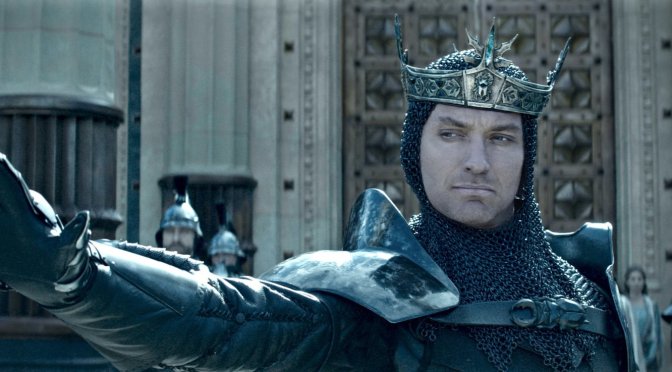
  • Jude Law is an absolutely perfect scenery-chewing villain.
  • I genuinely hope that a miracle happens and this movie is financially successful enough for it to continue as a franchise. I would gladly watch a dozen more just like it.

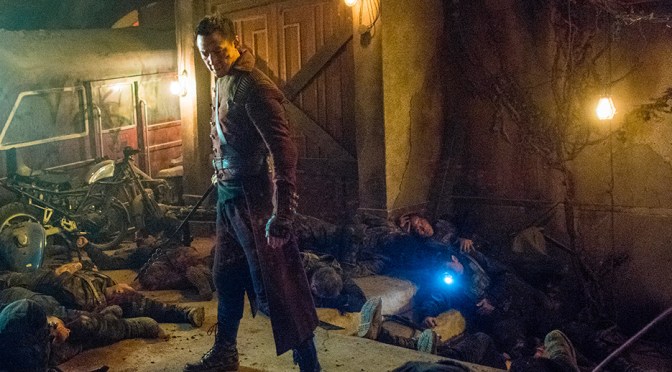
Into the Badlands: In “Wolf’s Breath, Dragon Fire,” are you fucking kidding me with this?

Sometimes a show is disappointing for doing the easy, predictable thing. Into the Badlands, however, disappoints by doing something so unexpectedly cruel it verges on nihilistic.

**Spoilers ahead.**

As a conclusion to the season, “Wolf’s Breath, Dragon Fire” is far better than the season one finale at wrapping things up, but there’s still quite a lot of unanswered questions and unfinished business by the end, even regarding the show’s biggest storylines. Unfortunately, basically everything in the episode is completely overshadowed by the senselessly unnecessary and tragic death of Veil, which is hands down the most infuriating thing I’ve seen on television so far in 2017.

It’s been a tough season for Veil from start to finish, as she’s spent ten episodes as Quinn’s prisoner, trying to survive and protect her infant son from Quinn’s increasing brain tumor-fueled madness and violence. The damsel in distress trope is played out enough on its own, but it worked well for most of the season, partly because there’s still a certain amount of novelty in the damselled romantic lead being a black woman and partly because Veil has had numerous opportunities throughout the season to distinguish herself as a strong character with as much agency as her volatile circumstances have allowed.

In a sense, this continues in the finale; Veil’s death is, more or less, by her own hand as she runs herself through in order to strike a killing blow against Quinn. But the way that we get to that point in the first place is just absurd, even for a show in which characters routinely take a bananas amount of punishment before dying. Quinn, having survived Sunny’s season one attempt on his life—nursed back to health by Veil herself—has survived a brain tumor all this season. He’s survived the Widow and Lydia and even just narrowly missed out on another attempt on his life by Veil on their wedding night. Just in this episode, Quinn survives his own explosion to collapse the tunnels of his hideout, and he then survives being impaled through chest twice before he even lays hands on Veil. Honestly, just the idea that Sunny wouldn’t make damn sure of a killing blow of his own before turning his back on Quinn is absolutely mindboggling, and it costs Veil her life.

Honestly, I just don’t know if I can keep watching this show after this. It’s the second time this season that a woman has been blatantly fridged (I haven’t forgotten Ava), and that this time it’s the only woman of color in the main cast is unforgivable. Veil was a great character who was a valuable bit of representation in a show with a tendency to give white women the more exciting, ass-kicking storylines. Even through all the shit Veil had to put up with this season—which, frankly, got to be straight up torture porn at times—she endured and schemed and was constantly waiting for her moment to escape. There’s no reason at all to have Veil sacrifice herself in this way except to reorient the narrative so that the viewer is reminded that this show really is all about Sunny after all.

I suppose, in Sunny’s story, Veil is disposable. Which… fine. But I don’t want to watch a story where that’s the case, especially when we’ve been told all season that it wasn’t.

For a more in-depth write-up of just how fucked up this all is and why it’s hurtful and disappointing, be sure to check out Monique Jones’s piece on the episode over at Black Girl Nerds.