Star Trek: Discovery – A long, poetic episode title is no substitute for real depth

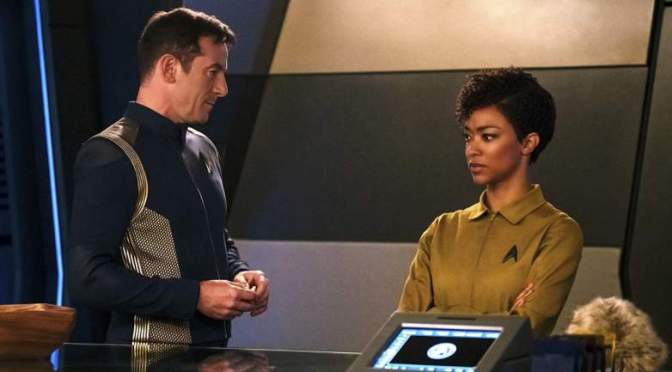
After a strong two-part premiere and a decent transitional episode last week, “The Butcher’s Knife Cares Not for the Lamb’s Cry” is a bit of a disappointment. After cramming a ton of set-up and plot into its first three episodes, what the show needs now is to establish a new normal and give the characters a reprieve from the constant barrage of Events! Happening! so the audience can get to know these people we’re supposed to care about. This is a needle that was successfully threaded in “The Vulcan Hello” and “Battle at the Binary Stars,” where we were given a nice prologue and several flashbacks to establish Burnham’s character and her friendship with Captain Georgiou, and this gave weight to the events at the end of the second episode, setting up Burnham for a redemption arc over the rest of the series. Last week’s episode contrived to get Burnham onto the Discovery and introduced a new cast of characters, so the next logical step would be to show us more of how these characters interact with each other, what makes them tick, or even just how Burnham settles in to the normal rhythm of life on the ship. Instead, this episode features another crisis, but it struggles throughout to convey why any of these events should matter to the viewer.

**Spoilers below.**

One of the things that worried me most about this show was when I read, months ago, about the ways in which it was inspired and influenced by Game of Thrones. While the most optimistic interpretations of statements from the Star Trek: Discovery show runners to this effect could point to a more general aspiration to craft the show more in the fashion of HBO’s prestige programming, I was pretty certain from the favorably framed allusions to Thrones’ penchant for killing major characters that whatever lessons Discovery was taking from Game of Thrones were wrong ones. I was disappointed when Georgiou was killed off so early in the season, but it made sense if the show was going to be about Burnham and her redemption arc. T’kuvma’s death didn’t even feel like a main character death; it had already become clear that Voq was the main point of view character in the Klingons’ storyline. These deaths made sense in context and within the larger structure of the show, even if they weren’t entirely welcome. The optics of Georgiou’s death were especially bad considering how much the show leaned on marketing the mentorship relationship between Georgiou and Burnham in the lead-up to the series, but still. It made sense, from a storytelling standpoint.

Last week, there was a classic redshirt death on board the Glenn when Burnham, Lieutenant Stamets, Cadet Tilly and Commander Landry went to investigate what had cause the other ship to stop communications. It was a little darker than one might expect from Star Trek, but not terribly so, and the redshirt trope is a trope for a reason. It was fine. Meaningless, but fine. If nothing else, it was in keeping with the overall tone of the episode and the series so far. This week, however, it’s Commander Landry’s turn to shuffle off her mortal coil, and it’s the definition of gratuitous.

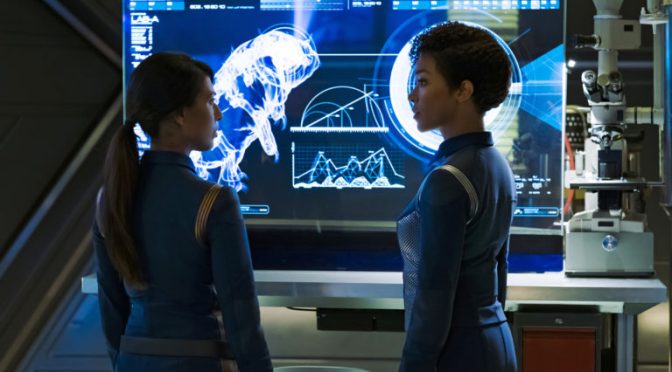
Burnham’s first official assignment on the Discovery isn’t with Stamets as expected. Instead, she’s taken down to Lorca’s little mad science lab where the creature from the Glenn is being kept and told to find a way to find out how it was so good at fighting and to “weaponize” the beast. To keep Burnham on task, Commander Landry is assigned to oversee the project, but she quickly loses patience with the lack of immediate results. Burnham’s initial examination of the creature suggests that it’s an herbivore, something akin to a tardigrade, that was only acting in self-defense, but Landry is impatient to find some aspect of it to exploit. To that end and against Burnham’s protests, she opens the cell and attacks the creature only to die horribly when it responds in kind. Lorca uses Landry’s death to exhort Burnham to hurry up and find some way to use the creature—so that Landry’s death won’t be “in vain”—but the truth is that the whole thing happens so quickly and Landry has been so poorly developed (and with only antagonistic character traits in this episode) that it’s impossible to care very much about her other than simply on the very basic level of not wanting her to die because she seemed like an important character.

There’s certainly no reason for Landry’s death to affect Burnham, and it doesn’t; Burnham continues to investigate the creature, dubbed “Ripper,” in her own way and finds out that its usefulness is not as a weapon but as a tool for using Stamets’ spores for travel. Ripper is how the scientists on the Glenn were planning to navigate using the spore drive, and Stamets is able to use the creature to get the Discovery to a crucial Federation outpost that is under attack by Klingons. The Discovery saves the day, but Burnham notices something disturbing: the device used to harness Ripper’s navigational powers seems to be hurting it. However, that’s an ethical dilemma for another episode because this one isn’t about to deal with anything so interesting or Trek-y.

In the end, it’s hard to see the point of Landry’s death here, and the pointlessness of her death makes the existence of the character at all highly questionable. If Landry was intended to be a foil for Burnham, as it seems she was, the perfunctory way in which she was disposed of kind of defeats the purpose. We didn’t get to know her well enough to feel much of anything about her on a personal level. In fact, I had to check IMDb for her name. Landry is never a threat to Burnham’s new position on the ship, and she never truly challenges or tests Burnham’s beliefs or values, only reinforces them. If the point of Landry’s death was to reinforce the value of Burnham’s methods to others on the ship, it doesn’t seem to have done that; Lorca, at least, is unaffected by the death, and no other characters seem to know or care about it since Landry isn’t mentioned again once her corpse is packed away. That Landry is the second woman of color to be violently killed in just four episodes only makes things worse. This show traded heavily on its diversity in marketing, but the systematic killing off of non-white characters is at odds with the picture they’ve tried to put forward of a diverse and inclusive series. It’s disappointing, to say the least.

On a more general note, the show is suffering quite a bit from its overall surfeit of plot. There’s still a lot going on, and all of it is supposed to feel urgent, which makes none of it feel very urgent. The worst part is that there’s no time being spent on giving us any real sense of who any of these characters are or how they exist together. Potentially interesting relationships are suggested or teased, such as the antagonism between Landry and Burnham or Burnham’s complicated situation with Saru or the budding friendship between Burnham and Tilly. Even Stamets’ sense of awe and wonder when he sees the tardigrade monster with the spores has the potential to be an interesting glimpse into the inner workings of the character. But over and over again, revealing moments are cut off before they can reveal much of anything and character development is rushed past or ignored altogether in favor of showing us a thing happening. The problem is that we need character development and relationships in order to care about the constant crises the crew is finding themselves in.

There’s a reason why so many episodes of other Treks featured the crew during their leisure time. There’s nothing like a malfunctioning holodeck or a trip to a resort planet to reveal something new about the characters and force them to work together to solve a problem. So far, that sense of unity and cohesiveness of purpose is decidedly missing from Discovery.

Miscellany:

  • The reveal that Voq and the Klingons ate Captain Georgiou’s body was another bit of absolutely gratuitous grimness.
  • I do like L’Rell, and I’m looking forward to seeing Klingon matriarchs.
  • Why did it take so long for Georgiou’s bequest to make it to Burnham? Because it sure seems like a case of naked emotional manipulation on the part of the show’s writers, who really want us to feel something about it. All I can think of is that I would still much rather be watching the story of Burnham and Georgiou’s years together on the Shenzhou.
State of the Blog and Weekend Links: October 8, 2017

Well, this has been a hell of a week, and I haven’t had the energy or emotional fortitude to do pretty much anything other than play Destiny 2. Yesterday was my birthday, which was as uneventful a day as I could hope for in this garbage year. I drank a bottle of cheap wine. It helped, a little.

The good news is that I’m feeling better, enough so that my lack of productivity today was part of a purposeful day of recharging rather than another day of devastatingly crippling depression and anxiety and shame-spiraling. I’m not making promises about the coming week, as I’m just gonna take things one day at a time for a little while, but I will say that I’ve got a to-do list ready for tomorrow and I’m going to get a good night’s rest tonight, so I’m cautiously optimistic.

The first week of October and my birthday are basically when I really feel like it’s fall, and that means fall recipes. This year, I’m aiming to eat as much pumpkin and squash as I can, and here’s where I’m starting:

While I wish all of us were having an easier year and better times to look forward to ahead, it’s also somewhat comforting to know that I’m not the only one struggling, as this John Scalzi post on 2017, Word Counts and Writing Process from earlier this week reminded me.

Equally reassuring was Kameron Hurley’s post on keeping on keeping on.

Tor.com has collected all the new books you should be watching for this month:

The Book Smuggler’s Kickstarter is funded (with stretch goals!) and over with, and now they’re accepting submissions for next year’s short stories on the theme of “Awakenings.”

The Ripped Bodice published a report on The State of Racial Diversity in Romance Publishing. Predictably, it’s not great. Do better, romance publishing industry.

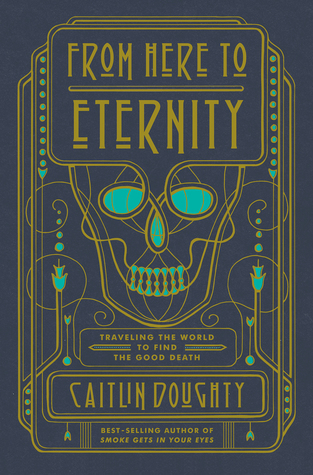
I haven’t gotten to dig into Caitlin Doughty’s new book, From Here to Eternity: Traveling the World to Find the Good Death, yet, but I did dig her interview at The Hairpin.
Kat Howard shared her Big Idea for An Unkindness of Magicians.

The Murders of Molly Southbourne author Tade Thompson was interviewed at The Illustrated Page.

Jeanette Ng, whose new novel, Under the Pendulum Sun, I’m currently reading and enjoying, wrote about Moon Festival at the Angry Robot Blog.

The Tiger’s Daughter author K. Arsenault Rivera wrote about Personal Failures in Fiction for the Tor/Forge Blog.

Sarah Gailey watched Blade Runner for the first time.

LitHub collected a bunch of very creepy book covers to kick off Halloween month.

Chloe N. Clark continued her Horror 101 series with “Dread.”

Lee Foster wrote about loving horror while living with disability.

Mari Ness finally got around to talking about one of my favorite fairy tales, Diamonds and Toads.

Which means this is a great time to implore everyone to drop what they’re doing and go read the lovely T. Kingfisher take on it: “Toad Words.”

There’s a new A. Merc Rustad story in Lightspeed: “Longing for Stars Once Lost” and an accompanying Author Spotlight.

Also in Lightspeed, you can read the wonderful story Sofia Samatar had in last year’s The Starlit Wood: “The Tale of Mahliya and Mauhub and the White-Footed Gazelle.”

The second half of content from the current issue of Uncanny Magazine is now available to read online for free. My recommendations:

Star Trek: Discovery – “Context is for Kings” introduces a new ship, new characters and a new direction for the show

In “Context is for Kings,” Star Trek: Discovery does several interesting things, but some of the fundamental problems with the show’s premise and execution are on display as well. My appraisal of last week’s two-part series premiere as a prologue to the actual series is confirmed; though there are some familiar faces on the Discovery, there’s a significant difference in tone, content and style from last week. This is a much more Trek-y episode, structurally, than either of the previous two, which should please longtime fans of the franchise, but the strong shift from last week’s introduction and the necessity of reintroducing Burnham’s new circumstances, introducing some all-new characters, and setting up the rest of the season-long arc makes this hour feel like a pilot episode all over again. It’s still, overall, promising, but it’s also not quite as cohesive or compelling as the first two episodes were.

**Spoilers ahead.**

The episode picks up six months after Michael Burnham has been sentenced to life imprisonment, and she’s already infamous. The conflict with the Klingons has continued in the intervening six months, and the Federation and Starfleet are apparently fully focused on the war effort. During what appears to be a routine prisoner transfer, the shuttle Burnham is on with three other prisoners runs into some trouble and is picked up in the tractor beam of a brand new, state-of-the-art science ship, the Discovery under the command of Captain Gabriel Lorca (Jason Isaacs). When Burnham is basically conscripted into service on the Discovery, ostensibly until the shuttle she arrived on is repaired, she finds that her past has followed her here. She’s reunited with Saru (now Lorca’s First Officer) and another officer she served with on the Shenzhou, and things are awkward, but pretty much all reactions to Burnham range between distrust and hostility; she’s widely blamed for the war with the Klingons and the thousands of casualties at the Battle at the Binary Stars.

Sensibly, Burnham’s strategy is to keep her head down. It’s obvious that she’s still consumed with guilt and grief over the consequences of her decisions and actions on the Shenzhou, and she insists several times to Captain Lorca and to Saru that she wants to return to her imprisonment where she belongs. It’s also obvious that no one Burnham meets is willing to forget the Shenzhou either; even Burnham’s roommate, the sunny-dispositioned Cadet Sylvia Tilly (Mary Wiseman) turns cold at the mention of Michael’s name. All the same, Burnham finds herself intrigued by the work being done aboard the Discovery. It’s the largest science ship ever built, with space to have hundreds of projects working at once, all bent on discovering, inventing or refining some new technology that will help the Federation win out against the Klingons. Burnham is assigned to work under Paul Stamets (Anthony Rapp), who is doing some kind of probably-mad-science experiment involving fungus and quantum mechanics.

Stamets is working in tandem with a close colleague on another ship, the Glenn, but whatever they are up to goes very wrong, knocking out communications with the Glenn and sending Stamets with an away team—including Burnham—to find out what went wrong. When they arrive on the Glenn, they find the place full of mangled corpses that have been twisted and torn apart by something that looks like a giant tardigrade, which they then have to escape from. It’s Burnham’s quick thinking and knowledge of ship architecture that lets her distract the monster so Stamets and the others can get back to their shuttle, but what I loved best about this sequence was Burnham reciting lines from Lewis Carroll to herself as she crawls through the ship. It’s a detail that works nicely on its own as an indicator of an interesting whimsical streak in an otherwise highly logical and grounded-seeming character, but it’s also a neat Easter egg for serious Trek fans, who may remember that Amanda Grayson was a fan of Lewis Carroll in the animated series.

In any case, the team makes it back to the Discovery, minus one redshirt (sadly difficult to identify with these new uniforms); the Glenn is destroyed; and Burnham has earned herself the offer of a permanent (presumably) place on the ship. She’s skeptical of Lorca’s motives, however. Stamets, an academic, called the captain a warmonger, and Burnham has drawn her own conclusions about what the Discovery’s mission may be. For all that her actions helped to foment this war with the Klingons, Burnham still believes in the more peaceful mission of Starfleet and doesn’t want to help develop weapons, especially when she suspects that Lorca’s goals are somewhat outside the bounds of what would be strictly considered legal. He insists, however, that they aren’t working on a weapon but on a new method of near-instantaneous travel using the power of Stamets’ spores, and, in the end, Burnham is convinced. She’s fascinated by the work and hoping for a chance at redemption, and that’s enough to overcome her distrust of Lorca and his motives.

And she should be distrustful of Lorca. His “context is for kings” speech, in which he pontificates about the importance of knowing when and how to break rules is a giant red flag. Also, the creepy lab where he’s keeping that tardigrade monster doesn’t exactly seem like it’s totally on the up and up, either.

Miscellany:

  • Lorca has a pet tribble on his desk.
  • It’s not clear so far exactly what Cadet Tilly’s “special needs” are supposed to be. While she specifically cites allergies and a tendency to snore, it also seems like we’re supposed to understand her as being on the autism spectrum. Her tics and social strangeness read as something more than simple nervousness. So far, she seems like a sensitive portrayal of an autistic character, and I like that she’s ambitious, intelligent and seems to be cool under pressure. She does well on the Glenn, anyway. I’ll be interested to see what more expert-on-autism viewers have to say about this portrayal of disability, though.
  • Saru is probably the second most interesting character on the show after Burnham. I loved his bowl of blueberries. I’m curious to find out what he was reacting to at the end of the episode when his danger-sensing frill thingies stood up. Was he reacting to the tardigrade being brought aboard or to Burnham not leaving?
  • Commander Landry is played by Rekha Sharma, who was the cylon Tory in Battlestar Galactica.
  • I despise Rent, so I thought I would hate Anthony Rapp as Stamets, but I kind of like him? The academic pressed to adapt his research for war is an interesting character through which to explore the tension between Starfleet’s ideals and the reality of their doubling as military forces.
  • I was really hopeful that we’d see more of Georgiou in flashbacks, but that wasn’t the case this week.

State of the Blog and Weekend Links: October 1, 2017

I’ve been pretty concerned for a few weeks that I was going to have a freak-out as I got closer to my 35th birthday on October 7, but so far I’m feeling okay about it. All things considered (and there are a lot of things to consider these days), it feels like it might not be a completely horrible year. Feeling optimistic-ish about the future, I’ve even updated my Amazon wishlist just in case anyone is interested in feeding my endless hunger for literary criticism and beautiful cookbooks.

Here at the blog, I’ve been somewhat busy this week–and certainly more productive than I have been for a while. I covered the first two episodes of Star Trek: Discovery and reviewed Kat Howard’s An Unkindness of Magicians. The really important things, though, are my Fall Reading List and the Summer Wrap-Up post I just put up today.

Check out the amazing patch designed by Ira Gladkova that will be available if they hit the $18,100 stretch goal!

In happy news this week, the Book Smugglers’ Level Up Kickstarter hit its first goal and is well on its way to some great stretch goals, including a new serialized story by JY Yang if they make it to $20,000.

For more about the Book Smugglers, check out Nine Questions with them at Reading the End and this interview with Book Smugglers editor Ana Grilo at Lady Business. And at the Book Smugglers blog, Ana and co-editor Thea James so some self-reflection.

The first teaser trailer for Annihilation, based on Jeff VanderMeer’s novel of the same name, is finally out, and I am HYPED:

At Engadget, Swapna Krishna explains what should be obvious: Star Trek: Discovery shouldn’t be streaming-only.

If you’re enjoying Star Trek: Discovery but are sad about the lack of more Burnham and Georgiou material, there’s a book for that: Desperate Hours tells more of their story.

Salik Shah explains why Mithila Review has closed submissions. Spoiler: the problem is lack of funding. It’s a great publication, and I highly recommend checking it out and supporting it via Patreon. $2.50/issue gets you a digital copy of each new one as its published, and Shah has said submissions will reopen when they hit their first funding goal of $250 per issue.

This Lani Sarem/Handbook for Mortals story is a gift that just keeps on giving. Lani Sarem sounds like an absolute nightmare, and the boldness with which she lies is just incredible.

There’s going to be a Karen Memory novella! Stone Mad by Elizabeth Bear will be out March 20, 2018.

Taste of Wrath, the final volume of Matt Wallace’s fantastic Sin du Jour series, has a cover and a release date: April 10, 2018. It is both too soon and too far away.

At nerds of a feather, flock together, Chloe N. Clarke kicked off a new series on horror fiction with an introduction on what makes horror work.

At Slate, erstwhile io9 cofounder and Autonomous author Annalee Newitz wrote about how to write a novel set 125 years in the future.

Tananarive Due was interviewed at Bitch Media.

Jeannette Ng wrote about the origin of her upcoming novel, Under the Pendulum Sun, at The Illustrated Page.

Fran Wilde shared her thoughts on her favorite book of her Bone Universe trilogy.

Ann Leckie was interviewed at the Book Smugglers AND in the most recent Feminist Frequency newsletter.

K. Arsenault Rivera, author of the upcoming fantasy novel The Tiger’s Daughter, was interviewed at the Tor/Forge blog.

JY Yang was interviewed at The Illustrated Page. Meanwhile, Tor.com has an introductory guide to the Tensorate series.

An Unkindness of Magicians author Kat Howard was interviewed at Unbound Worlds, then popped in at Uncanny to write about “The Dearth of Fairy Godmothers” in her new book.

The next installment of Sarah Gailey’s The Fisher of Bones, “Fear,” is up at Fireside Fiction.

Starting in 2018, Apex Magazine will also be available in print!

The SF Bluestocking Summer 2017 Reading List Wrap-Up

So, 2017 is a year that just keeps happening, whether we want it to or not, and it’s now the end of summer. I didn’t read nearly as much as I’d have liked, and I certainly fell very short of all my writing goals, but it hasn’t been a total disaster, either. The things I did manage to read were mostly good, and there were some real standouts in basically every category. Here are my favorites.

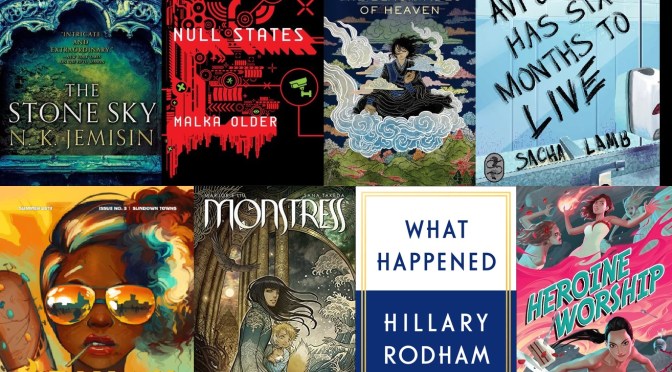
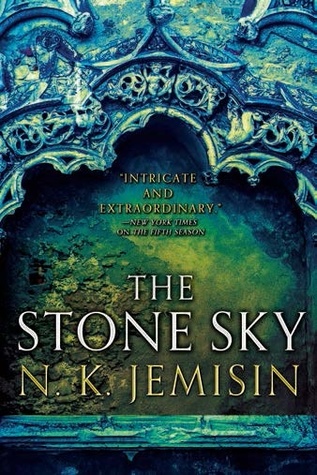
Best Fantasy Novel – The Stone Sky by N.K. Jemisin

To say N.K. Jemisin stuck the landing on this series is really an understatement; though, like the previous book, it doesn’t quite match the sheer sublime brilliance of The Fifth Season, this novel is nonetheless stratospherically fantastic, and if the Broken Earth trilogy doesn’t become a bonafide classic the genre, there really is no justice in the world. It’s a thoughtful, inventive and compulsively readable story, with strong world-building, a powerful message (or, rather, several) and a pair of iconic lead characters in Essun and her daughter Nassun.

Best Science Fiction Novel – Null States by Malka Older
I’m torn between being sad that I waited so long to read Infomocracy and its sequel and being happy that I was able to read them one right after the other (though that brings me back round to sad again that I’ve now got another full year before the next book comes out). As good as Infomocracy was, I think Null States is definitely the stronger book of the pair, and a lot of that is because of its main heroine, Roz, who was a minor character in the first book but moves to the forefront in this one, where she proves herself to be smart, tough, resourceful and empathetic. While these books have been described by some as “dystopian,” I disagree that the word applies to them at all. Personally, I found the series compelling, insightful and, above all, optimistic about the future.

Best Novella – The Black Tides of Heaven by JY Yang

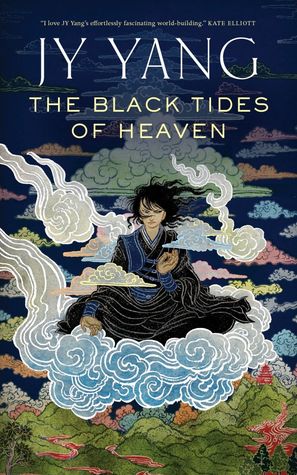
Both installments of JY Yang’s new novella duology from Tor.com are well worth reading, and I can’t wait to read more books set in the Tensorate universe, but The Black Tides of Heaven is a perfectly conceived and executed introduction to an intricately lovely and highly entertaining new fantasy setting. The twins Mokoya and Akeha are well drawn and fully realized characters, the world in which they exist feels real and lived-in, and the conflict between magic and technology is both epic in scale and deeply personal to the characters. Also, just look at that gorgeous book cover. One of the best of the year, full stop.

Best Novelette – “Avi Cantor Has Six Months to Live” by Sacha Lamb

This sweet and tenderly charming novelette features a pair of trans boys, their loving families and a just enough magic to scootch the story into the category of fantasy, though one could make the argument that it’s more in magical realism territory. What I loved about i, though, is that it’s a story that is kind to its characters. Avi has troubles, but he’s also surrounded by people who care about him and wish him well. He’s going to be okay, and that’s nice.

35649628Best Magazine – FIYAH Literary Magazine, Issue 3, “Sundown Towns”

I am still slightly bummed that this issue didn’t have a vampire story in it, but it does have “The Last Exorcist” by Danny Lore, which is one of my favorite stories of 2017 so far. “Cracks” by Xen is another stand-out tale. It’s also got another incredible cover by Geneva Benton, whose vision for the magazine’s first year has gone a long way towards helping to establish the publication’s unique and distinctive identity. FIYAH just keeps getting better and better.

Best Comic – Monstress, Volume 2: The Blood
Marjorie Liu and Sana Takeda continue to make magic together in this second collection, which includes issues seven through twelve. After the somewhat unrelenting darkness of Volume One, I was pleased that this one at least slightly less brutal. Volume 2 brings us a bunch of new characters and greatly expands upon the world introduced in the first volume over the course of a quest story line that enhances the overall epic feel of the series. Plus, the book itself is a thing of pure beauty; Sana Takeda’s sumptuous artwork for the series is as marvelously detailed and layered as its ever been, and every page is a joy to look at.

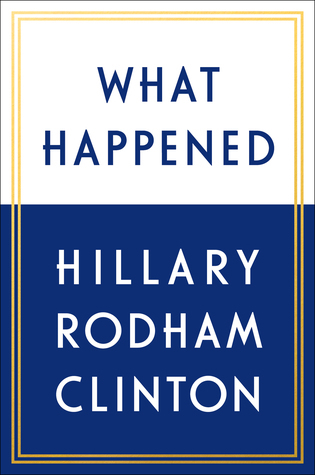
Best Non-SFF Read – What Happened by Hillary Clinton

Listen, I love and admire Hillary Clinton so much, and I don’t think I’ll ever not be incandescently furious that this woman isn’t our President. Her campaign memoir is every bit as erudite, well-researched, and thoughtfully put together as you would expect from Clinton’s public persona, and it’s also wryly funny and full of personal quirks and tics that provide a fuller picture than perhaps ever before of the real woman behind that public persona. I know I’m going to still be angry about the Trump administration and worried for the future of this country and the whole world for a long time, but reading this book is something of a healing experience, if only because it’s reassuring to know, well, what happened.

Best Awesome Super Hero Romance Novel – Heroine Worship by Sarah Kuhn

I binged this title and its predecessor, Heroine Complex, back to back over like a day and a half, and I loved every single minute of them. They’re whip-smart, funny, fast-paced and slightly sexy, but the real draw, for me, was the strong focus on the friendship relationship between Annie and Aveda. Each of the books is as much coming-of-age story as it is romance, and I loved reading about how these women level up together and learn to have a healthy adult friendship with each other.

Honorable Mentions:

  • The Red Threads of Fortune by JY Yang
    It’s got a lot of the same great stuff that its partner book has, but also dinosaurs.
  • Uncanny Magazine #18, Sept/Oct 2017
    This issue has a Catherynne M. Valente-penned Clockwork Orange and Cthulhu Mythos mashup.
  • A Taste of Marrow by Sarah Gailey
    More hippos, but also better character arcs and a more satisfying ending than River of Teeth.
  • An Oath of Dogs by Wendy N. Wagner
    Great worldbuilding and an interesting main idea.
  • The Strange Case of the Alchemist’s Daughter by Theodora Goss
    I love monstrous women. This one fooled me a little with its cover, which looked a bit more literary than its contents turned out to be, but it’s a great read.
  • Provenance by Ann Leckie
    Ann Leckie is one of my favorite authors of space opera right now.
  • Jane, Unlimited by Kristin Cashore
    This is a very weird book, and I don’t think it was entirely successful, but I still kind of loved it.