Lucifer: Still with the good looks and charm, but this show desperately needs substance

I really, really want to like this show. It’s got quite a few things going for it that I actually do like, if I look at them in isolation. Unfortunately, none of those things are working that well together yet.

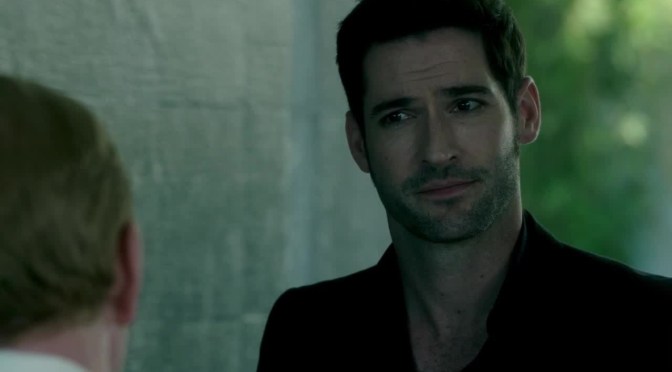
Tom Ellis continues to shine in the titular role. He’s absurdly good-looking and quite funny, with an excellent sense of both comedic and dramatic timing. It’s an interesting balancing act he’s got to maintain, trying to create Lucifer as both the jaded, misanthropic ex-Lord of Hell and a compellingly human character that the audience can care about. This second episode finds him managing this with mixed success. There’s an excellent opening scene where Lucifer takes down an unscrupulous street preacher, and there’s a scene where he’s learning more about Chloe’s history that is nice. But then there’s also stuff like his interaction with Trixie Decker, which only retreads ground that was already covered in the pilot and which wasn’t very funny then, either.

Lauren German does the best she can with the shoddy-to-fair material she’s granted as Detective Chloe Decker. If her interest in Lucifer was prurient, that might make more sense than what’s going on here. I could understand why a beautiful, hot-blooded woman would want to bang this guy, but Chloe’s desire to explain the inexplicable things she’s seen would be much more believable if Lucifer wasn’t literally telling her exactly what’s going on all the time. Frankly, it makes her seem a little slow, especially when combined with her apparent complete lack of professionalism or adherence to police procedures. Her best scene this episode actually comes at the end and has nothing to do with Lucifer or the case of the week. Instead, it’s when she decides that she’s going to tell her daughter about her teen movie past—only to find out that Trixie already knows. It’s a sweet moment, and a cute reminder that kids are often smarter and better than people give them credit for.

The dynamic I was most interested to see this week was also the biggest letdown. I love the idea of Lucifer having a therapist, but the episode didn’t spend much time on his sessions. Both of the scenes with Dr. Martin felt rushed and inconsequential, and neither of them added much to the story or Lucifer’s character arc (such as it is). Similarly dull are Lucifer’s relationships with Amenadiel, who is little more than a laconic wet blanket so far, and Mazikeen, who is still sadly under-baked while also being kind of weirdly invested in Lucifer’s being evil. It could be that the show is simply ramping up its more supernatural plots instead of just throwing us into them, but so far none of this stuff has really grabbed me.

The biggest problem I have with the show so far is that it’s wildly entertaining, but not much else. It’s got slick production values, decent actors, a devilishly handsome lead, and good pacing, but there’s not a whole lot going on under the surface so far. It’s a concept that could lend itself well for exploring all kinds of interesting themes and ideas, but instead it wastes time joking about how big Lucifer’s dick is and leering about Chloe’s nude scene in a movie from fifteen years before the show even starts. The ending of this episode does hint at some deeper things going on, and it could be that we’re going to really get more substance going forward, but something needs to happen quick. As I said about the pilot, good looks and charm will only take this show so far. At some point it needs to have something to actually say.

Miscellaneous thoughts:

  • “King of Pain” is a little on the nose.
  • Lucifer, to an apple: “Hello, old friend.”
  • Lucifer, when he sees Chloe’s home: “Do you take bribes?”
  • Chloe’s ex, Dan, was surprisingly decent this week. I like when exes are friendly with each other like this. It’s much more interesting to me than when they just hate each other.
  • Trixie, about the dvd: “This isn’t even in HD.”

The X-Files: “Mulder and Scully Meet the Were-Monster” is a near-perfect deconstruction of the show

“Mulder and Scully Meet the Were-Monster” is by far the best episode of season ten so far, but it also ranks among the show’s best episodes ever. Certainly it’s one of the funniest episodes of The X-Files, but it’s also surprisingly affecting as an exploration of how Mulder and Scully have changed with age and wonderfully effective as an examination of some of the show’s bigger ideas. I love a good genre deconstruction, and this episode is a near-perfectly executed one.

It’s interesting to see the show tackling head-on some of the issues presented by the just the existence of these new episodes. Namely, what are we even doing here? Why bother after all these years? It’s definitely true that even just these last few years have made many of the original series’ mysteries much less mystifying, and government conspiracies have become somewhat less entertaining in the post-9/11 world. And the truth is, the more we know about the world the more it’s confirmed that there is no magic and that the seemingly inexplicable seldom actually is. This was always the case with The X-Files, as well, although it often tried to have it both ways, leaving many of its “mysteries” ultimately unresolved—which has always made the show something short of truly fulfilling. This week, we take a good, hard look at what that means for Mulder and Scully.

Much as in the last couple of episodes, the show continues to be primarily concerned with Mulder and his journey. We find him having a sort of midlife existential crisis as he’s digging back into the X-Files. He’s questioning not just whether his time in the department was worth anything, but whether or not this is what he wants to be doing at his age. After all, Mulder reasons, they never did find any real evidence of anything supernatural, and many of his theories have actually been made ridiculous in light of new science. It’s a fascinatingly meta argument and a bold way of addressing the show’s critics and engaging longtime fans by referencing particular past episodes.

Scully, on the other hand, seems revitalized by their return to the X-Files (it’s her “I want to believe” poster that Mulder is destroying), and she’s excited about a new case—one with a monster. Mulder’s newfound maturity has made him insecure and questioning, while Scully has grown into her skepticism and her faith so that she’s returning to work with a new confidence and fresh enthusiasm. I kind of love this sort of role reversal, and Gillian Anderson sparkles with wit throughout the hour. While the episode is largely dominated by Mulder’s problems, his crisis, and his emotional growth, Scully gets some of the best lines and she definitely gets to make the best wryly amused and affectionately indulgent faces of the night.

The actual story this week is profoundly silly, but in a good way. It injects the new season with a much-needed dose of fun and lightens up some otherwise overly serious and self-indulgent character work. Mulder has never been my favorite half of The X-Files, and it would have been far too easy for an episode focused almost entirely on examining some of his most irritating character traits to be a masturbatory disaster. Instead, this one turns out to be a charming delight that proves that the writers and actors have a good sense of humor about what they’re doing here.

Miscellaneous thoughts:

  • What a waste of Kumail Nanjiani. He’s so funny, but he’s tragically underused here.
  • Mulder and Scully aren’t that old. Jokes about how confused they are by smartphones are lazy.
  • The creepy motel and its weirdo owner would have been enough to carry their own episode.
  • The lizardman feels urges to get a job, worry about retirement, and lie about his sex life. I love it.
  • Awww. Queequeg.
  • Scully straight up stole a dog. That is probably the best thing that could possibly happen in this show.

Book Review: Bryony and Roses by T. Kingfisher

As is often the case with  popular fairy tales, there’s very little new story to be wrung out of “Beauty and the Beast” these days, so I was a little skeptical of Bryony and Roses. Even after reading T. Kingfisher’s (a pen name of Ursula Vernon) Toad Words and Other Stories, which is full of superb fairy tale reimaginings, I was unsure if there was anything she could do to freshen up such an old and well-worn story path. An opening note that admitted an enormous debt to Robin McKinley, whose Rose Daughter is perhaps the definitive feminist “Beauty and the Beast,” was frankly more concerning than reassuring. I ought not have worried so much. Just like in her earlier fairy tale work, Vernon-as-Kingfisher does an incredible job of exploring and revitalizing ancient material, infusing it with a bright, modern, thoroughly feminist (and unequivocally delightful) sensibility.

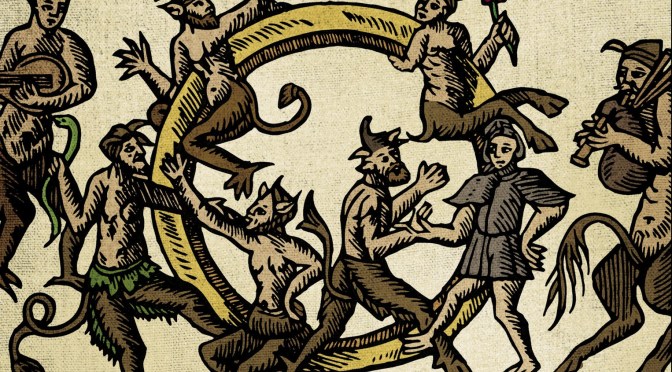
Bryony and Roses is clearly heavily influenced by Rose Daughter. Let’s get that out of the way, first. However, it’s been nearly twenty years since the release of that book, almost forty years since McKinley’s first “Beauty and the Beast” retelling, Beauty, and close to twenty-five years since the release of Disney’s animated version. There’s also been any number of other retellings of the story, with perhaps a handful of significant new versions in any given year. While Bryony and Roses shares some ideas and motifs with Rose Daughter, it also owes a considerable amount to other versions of the story, if in no other way than that it’s very obvious that Ursula Vernon went into writing this tale with a long list of things not to do and a few tropes that she specifically seems to have set out to upend.

**Spoilers Ahead** Continue reading Book Review: Bryony and Roses by T. Kingfisher

Weekend Links: January 30, 2016

It amazing how quickly a full month of 2016 is gone. The good news about getting further along in the year is that we’re moving somewhat away from all of the year-end and year-beginning posts clogging up everyplace on the internet, and we’re starting to see more new content and real news taking its place.

That said, there’s still some year-beginning stuff worth reading–like this list at Kirkus of 150 sci-fi, fantasy, and horror books to look forward to in 2016: Part 1 (Feb-Apr), Part 2 (May-July), Part 3 (Aug-Dec).

For many of us readers, the final bit of 2015 retrospective will of course be the Hugo Awards, and nominations are now open. If you’d like to nominate and vote this year, there are still a little over twenty-four hours left to register for this year’s MidAmeriCon II or next year’s WorldCon in Helsinki.

There’s a wiki (though it seems somewhat sparse) full of Hugo-eligible work.

nerds of a feather, flock together has the most comprehensive long list for the Hugos that I’ve seen so far, though I’m certain more will be forthcoming in the coming weeks.

Surprisingly enough, and I reserve the right to take this back if things degenerate into the mess we had last year, Sad Puppies 4 has a moderately interesting way of doing things this time around. So far there are no slates, and not even any recommended reading lists. It’s just a bunch of open threads for people to shout their Hugo recs into the void. Personally, I prefer a nice, organized list or wiki, but just looking through some of the threads it appears that there’s a pretty good mix of suggestions over there.

No word yet on Vox Day and the Rabid Puppies. Back on January 3, Vox said that Rabid Puppies was gearing up, but since then he seems to be very distracted by being a complete piece of trash about literally everything else he can have an opinion on. We’ll see.

Speaking of dirtbags, at least the Birth of Dirtbag Venus is funny.

Soon, you will be able to buy a brand new DeLorean.

Or, more realistically, a Lego minifig with a wheelchair.

You can already buy Barbie dolls with more diverse body types. They’re not perfect, but they’re definitely a step in the right direction for the venerable brand.

In less encouraging news for young girls, new research has found that even in the theoretically girl-powered Disney Princess films, women talk less than men. In an interesting counterpoint to the generally popular narrative that the films have gotten more progressive and better for girls over time, it even turns out the the newer movies are even worse than some of the classics.

On a tangentially related note, Geek Mom takes a look at some of the many problems with Supergirl‘s Cat GrantCat is often the show’s main mouthpiece for feminist speechifying, so it’s important to look at what the character’s portrayal actually says about the show’s purported feminism.

Meanwhile, at Tor.com, there’s a list of 9 female heroes of color who should get their own shows. I’m as happy as anyone about having Supergirl and Jessica Jones and Agent Carter, but more women of color, please.

At the Book Smugglers, Mahvesh Murad talks about what a tricky word diversity is in an essay reprinted from Volume IV of the Apex Book of World Sci-Fi.

Foz Meadows writes about the politics of presence.

Daniel José Older has a new Buzzfeed piece, 12 Fundamentals of Writing the Other.

At Women in Science Fiction, Toni Weisskopf has a guest blog.

At Literary Hub, Our Fairy Tales Ourselves: Storytelling from East to West.

Season 10 of the X-Files premiered this week, and Screen Rant has a complete guide to the show’s mythology that may or may not be useful.

Feminist Fiction wrote about why we have to stop debating Mary Sues. Spoiler alert: because it’s a shitty, sexist concept.

Last week I shared “Kara,” a short Star Wars fan film. SF Signal has collected two more to go with it.

The Museum of Science Fiction has released the first issue of their new scholarly journal. You can download it here.

J.K. Rowling has released the names of several new schools in her wizarding world.

Electric Literature shows off a new comic, Literary Witches, by Katy Horan and Taisia Kitaiskaia.

Matt Wallace’s second Sin du Jour novella, Lustlocked, came out this week from Tor.com. He wrote an excellent guest post over at SF Signal, and he was interviewed at My Bookish Ways. You can read my review of Lustlocked here.

The other exciting new release this week is Charlie Jane Anders’ All the Birds in the Sky, which I’m currently reading and enjoying. Anders has a great piece up at io9 about what it means to be a science fiction writer in the 21st century, and she was interviewed at the Qwillery and Omnivoracious.

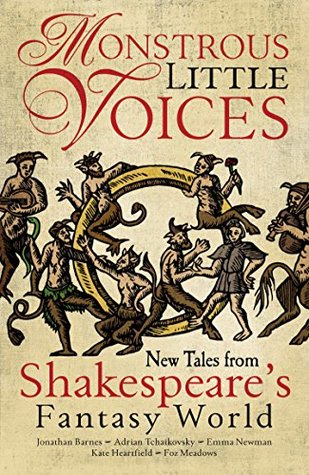
The only book I managed to review this week, between a very busy schedule of writing about new television, was Monstrous Little Voices: New Tales from Shakespeare’s Fantasy World. It’s a really wonderful collection, and Abaddon Books commissioning editor David Thomas Moore was interviewed this week by A Fantastical Librarian.

Finally, it’s been a pretty good week for short fiction on the internet. My favorites:


Book Review – Monstrous Little Voices: New Tales from Shakespeare’s Fantasy World

Monstrous Little Voices is a collection of five short novellas that take place within a fantasy world based upon the works of William Shakespeare, and it’s about 80% brilliant, which is pretty good for an anthology. There’s something of an overarching storyline connecting the stories, in addition to common themes and motifs, and this is nicely executed without making the stories feel totally linear or requiring them to be read in order. At the same time, each one also stands alone quite well.

Foz Meadows kicks things off with “Coral Bones,” a deliberate and thoughtful meditation on the ways in which we learn and perform gender roles. Through the examination of the character of Miranda and Miranda’s life after her marriage and “rescue,” Meadows explores questions about where gender comes from, how it’s imposed upon people, and what are some of the consequences—both personal and social—for failing to adequately conform to strict gender roles. She imagines essentially three worlds: the island where Miranda grew up unconstrained by social expectations, though being also groomed by her father, Prospero, to perform femininity; the world of the court of Naples, where Miranda lives after her marriage to Ferdinand, in which her performance of femininity is no longer optional and the qualities that made her different and attractive to Ferdinand on the island are now unnecessary and unwanted; and the fairy world, into which Miranda flees to escape her unhappy marriage after suffering a miscarriage, and in which gender is fluid and sexuality is flexible. It’s a clever story, and Meadows makes superb use of the Shakespearean elements in order to both pay tribute to and interrogate the Bard’s work.

“The Course of True Love” by Katherine Heartfield takes place, in the world of the book, some twenty years after “Coral Bones,” and it’s an altogether different sort of story—a fairly straightforward romance—that also plays with its source material in interesting ways. Heartfield tells the story of the witch Pomona, who is a friend of Sycorax and devotee of Hecate, and her encounter with an imprisoned fairy ambassador. Of all the stories in Monstrous Little Voices, this one may be the most in the spirit of Shakespeare, filled as it is with fairies, witches, mistaken identities, gender swaps, and humorous banter. What I liked best about it, however, is that it’s a romance where an old woman gets to be the main heroine. Like the previous tale, it’s overtly feminist, but with a significantly lighter and less complicated feminist message than “Coral Bones.”

Emma Newman’s “The Unkindest Cut” may be my favorite story in the collection, and it’s definitely the one about which I most wonder what happens next. Lucia de Medici is a girl with a destiny—to enter into a marriage that will end a war before it even begins—and she’ll do anything to ensure that it comes to pass. It’s an enormous amount of character development and growth squeezed into a relatively short number of pages, and it’s fascinating to watch Lucia change over the course of the story’s events. This girl who begins as somewhat shallow and seemingly marriage-obsessed turns out to be clever, resourceful, and downright ruthless in pursuit of her goals. The ending of the story is somewhat heavily telegraphed, and the ultimate solution to Lucia’s central problem is obvious before it’s even revealed, but it’s so great and the punchline of the story is delivered with such panache that I can barely even think of this as a drawback.

Adrian Tchaikovsky contributes “Even in the Cannon’s Mouth,” which is the story in the collection that is most like an actual play, with at rise descriptions and stage directions being used to provide a theatrical tone and break up the story into distinct scenes. It’s a tactic that I think is used to mixed success here, and I honestly found myself just being overwhelmed by the number of characters and disoriented by the swift and often sudden changes in the narrative. It’s a wild ride, for sure, and there are some interesting interpretations of Shakespeare’s characters—especially Helena—but the actual events of the story are sometimes difficult to follow. I was very glad to be taking notes, but not everyone likes to treat their leisure-reading like homework. Fortunately, everything comes more or less into focus by the end of the story so that there is a mostly satisfying ending, but “Even in the Cannon’s Mouth” is noticeably less substantive than all three of the previous stories. It’s not a bad tale, but it has far less to say than any of the others.

The final story in Monstrous Little Voices is “On the Twelfth Night” by Jonathan Barnes, and it comes somewhat out of left field. It starts off promisingly, albeit very differently than any of the rest of the stories in the collection, being told in second person from the point of view of Shakespeare’s wife, Anne. Then, though, things get weird, and the story barrels towards an ending that I found profoundly disappointing, mostly because it was so completely disconnected from the rest of the collection in tone and subject matter. I might have liked “On the Twelfth Night” in a different context, but here it just feels out of place and so completely unpredicated by the rest of the stories that it’s both baffling and irritating. It’s the highest concept of the book’s tales, but in this case that only means that it has the biggest opportunity to fail with its audience.

All in all, though, Monstrous Little Voices is something special, and this is a great year for reading Shakespeare, being the four hundredth anniversary of his death. With the introduction and afterword, I’d say that it’s definitely worth it to buy the full book, but each story is also being sold separately as an ebook if you prefer to read them that way. At the very least, the first three stories are essential reading, but the whole thing together is worth checking out.

(I received a copy of this title from the publisher via Netgalley.)

The Expanse: “Salvage” finally (and gloriously) unites the show’s two biggest plots

The Expanse up to this point has been highly entertaining, turning out consistently high quality, if not superb, episodes week after week. However, a common complaint and the show’s single biggest problem has been its tendency to get mired in exposition and distracted by filler material that prevents forward movement on the main plot lines. This has been largely due to the show’s trying to keep Miller’s and the Cant survivors’ storylines where they needed to be while still giving time to more tangentially related plots and characters. The end result, though, has been some unevenness from week to week and a couple of episodes that even felt slightly stagnant. At times, it felt as if the various plots the show has been juggling were never going to come together. This week, though, in “Salvage,” all of the patient waiting pays off in a big way.

On Earth, Chrisjen is informed by Errinwright that he’s activated a black ops team to investigate whatever Fred Johnson is up to on Tycho Station. She’s not thrilled, and she’s concerned about making a martyr of James Holden, but there’s nothing she can do to stop it. We also learn this week that Chrisjen’s old friend, Franklin DeGraaf, has killed himself. In a beautifully subtle moment, we get to see Chrisjen react to this sad news and then continue working through her grief. It’s a legitimately great character building moment, smack dab in the middle of a scene that shows that the U.N. on Earth has no idea what they’re dealing with in the Belt and might in fact be only compounding problems that they don’t understand. Avasarala’s scenes have felt somewhat disconnected all season from the events in the Belt, and it would be easy to write this scene off as unimportant or unnecessary, but there’s actually quite a lot going on here.

Miller’s flight to Eros is mostly uneventful, but there’s a great scene on the transport where he meets a Mormon man who is preparing to board the Nauvoo generation ship. It’s a nice, quiet interlude that deftly weaves together Miller’s character development with some exposition about the Mormons and their ship that seems like it will be important sometime down the road. When Miller arrives at Eros, he wastes no time in trying to locate Julie Mao, who has been traveling under the name Lionel Polanski, but his efforts only end up with him arrested and needing to be bailed out by his friend Sematimba, who wants to know what Miller has gotten himself involved with. Without being completely forthright, Miller convinces Sematimba to tell him the last place “Lionel Polanski” was known to be—a flophouse called the Blue Falcon.

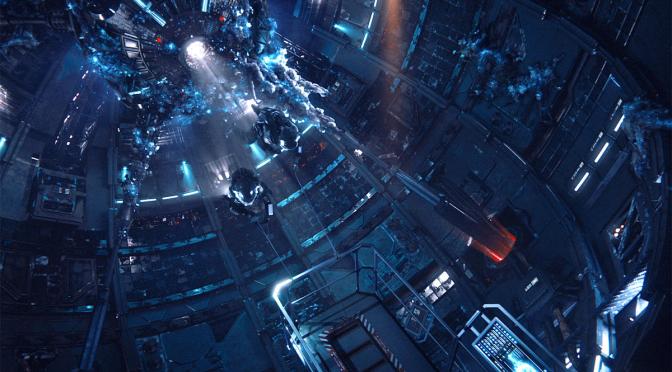
The largest amount of time this week is spent with the crew of the Rocinante. When they reach the asteroid where the Anubis is supposed to be, they at first think they’ve been misdirected before they finally discover a stealth ship hidden in a crevasse on one side of the giant rock. Though the ship appears to be dead, Naomi points out that the intact hull suggests that there could still be air (and possibly survivors) inside. As everyone but Alex slowly explores the Anubis, they realize that the ship is not damaged at all, but has been deliberately turned off and vented—and a short range shuttle is missing. The most significant discoveries on the Anubis, however, are that it was at Phoebe Station and that there’s some kind of mysterious blue, glowing space goo that seems to be alive and gunking up the ship’s reactor. Fully freaked out, everyone hightails it back to the Rocinante so they can continue on towards Eros in search of the missing shuttle and Lionel Polanski, but not before destroying the stealth ship.

As a great lover of the mysterious space goo trope in science fiction, I have a deep appreciation for this segment, but I would have loved to see it portrayed more as it was in the books, with recognizable human parts embedded in the goo. In hindsight, however, I’m forced to admit that showing it that way on screen would have definitely spoiled the next big revelation of the episode. When the Rocinante arrives at Eros, Holden and company are able to relatively quickly make their way to the Blue Falcon, where Lionel Polanski is booked into room 22. Avasarala’s spy has set them up to be murdered, presumably on Errinwright’s instructions, but they are saved from that fate by the timely arrival of Miller.

The now-ex-cop recognizes Holden right away, but he’s more concerned with finding Julie as soon as possible. Unfortunately, when they all finally make it to Julie’s room, it’s clear right away that things are not right. All of the devices and lights in the room have been turned off, and it smells of “sweat, sick, and ozone” (a wonderfully evocative phrase that helps to convey the horror that the characters are experiencing). When they finally find Julie, she’s in the shower, covered all over with—you guessed it—space goo, which seems to have been fatal.

It’s a great way to end the episode, and perhaps the best possible lead-in to next week’s two-hour finale. “Salvage” manages to squeeze a lot of story into its running time, but it’s still an episode that is capable of pausing for interesting moments and continuing world building. It’s a wildly fast-paced episode that only builds momentum as it goes on, but it never feels rushed. Now it just remains to be seen how much story is going to be crammed into the finale, since this episode managed to somehow push all the way to the moment where I thought the show was going to be at the end of episode ten. I didn’t think it was going to be possible, but it now seems rather likely that this first season is going to make it to the end the source material in Leviathan Wakes, or very nearly so.

I can’t wait.

Miscellaneous thoughts:

  • The broad shot of the Nauvoo, with the trumpeting angel in gold, is incredible. Like, yes, of course that’s what a bunch of religious whackos are going to drive out into space. It’s gorgeous.
  • Fred Johnson is surprised by something in the data from the Donnager, but we don’t learn yet what it is.
  • “I kinda wanna blast it.” Good instincts, Amos.
  • The music at the Blue Falcon is amazing.
  • “Shit just follows you around, don’t it, kid?” Pretty much.

The Shannara Chronicles: “Reaper” is a morass of upsetting writing choices

**Trigger Warning: Discussion of Rape**

Right, so I kind of love this silly show in a way that makes me inclined to forgive quite a lot of its faults, but this episode is a mess of bad storytelling, poor decision-making, absurd dialogue, rape threats for shock value, and just general time-wasting. All of these (except the rape threat stuff—that’s new) are problems that existed in the first four episodes of the show, but never enough to completely bog the whole thing down the way we see in “Reaper.”

The disaster starts right out of the gate with an extended pre-credits flashback that does nothing to further the story. It does finally give us a look at the gnomes (cool-looking, in a vaguely steampunk-y way) and offers us some new insight into Amberle by showing us a glimpse of her relationship with her father, but it’s altogether just too long a break in the action. We’ve been waiting for weeks to see this quest actually get started. Last week’s episode, “Changeling,” was actually a step backward, with the whole party returning to Arborlon, but the final scene saw our heroes finally going somewhere. It was extremely frustrating to have to sit through a lengthy flashback before we even get to see what Amberle, Wil and Eretria are up to. It does introduce the gnome, Slanter, who looks to be playing a significant role going forward, but this could have been done in some other way that would be a less irritating diversion from the main plot.

Speaking of diversions from the main plot, perhaps the worst example of time-wasting this week was all of the stuff with Bandon. I wasn’t entirely sold on this character before, but now I kind of hate him. His trying to learn how to control his powers might be interesting if it was the focus of a whole show of its own, but here it’s simply a distraction, and a fundamentally boring one. This is compounded by pairing him with Catania, another character created for the show and who has no discernable reason for existing at all. I suppose mentoring Bandon might give Allanon something to do, but he could be advising Eventine, mending fences with Arion, or just not be taking up screen time that could be better spent elsewhere.

When “Reaper” finally does focus on the quest plot that should be driving the show, it’s still a wreck of, well, notably less than epic proportions. Less than a day out of Arborlon, our heroes find themselves under attack by Rovers, although calling what ensues a battle would be highly dishonest. Before the elves can do anything whatsoever, Cephalo has swords to their necks, and he and his band quickly tie up Wil and the elven guards but make off with Amberle. This is where things go very wrong, on multiple levels.

Honestly, this is just shoddy on a storytelling level. Unless something has changed since the last time Wil and Amberle were captured by Rovers, there’s no reason to feel like they’re in any real danger this time around. Logically, you’d think that they’d be even better positioned to defeat Cephalo once and for all with at least a half dozen fighters with them, but they’re neutralized so early they don’t come into play at all. Instead, the show’s writers decide to introduce an entirely new element of peril by having Amberle separated from the rest of her group, ostensibly to be sold into slavery. This may indeed be Cephalo’s ultimate aim, but first he’s going to try and rape her, which is a thing he’s done plenty of before, if we’re supposed to judge him by the way he talks about how he’s raped other women. This is a huge problem.

First of all, it’s just plain tiresome to see yet another young woman in yet another fantasy show being subjected to an ultimately senseless (in every sense of the word) attempted rape as a way of (supposedly) raising the stakes. It’s not even successful at that in this case, since it’s basically a foregone conclusion that Eretria is going to come back and save the day—which she of course does. This is just the beginning of this cornucopia of awfulness, though.

The worst part about this all is the differences in the way the show treats the characters and the narratives that are created around them. Amberle has been presented for almost two full episodes now as unreasonably paranoid, irrational, and haughty, and it would be easy to see her abuse and degradation at the hands of Cephalo as Amberle being “put in her place.” This is further supported by the fact that she has to beg Eretria for help, and the other girl lets Amberle believe that she’s been abandoned before swooping in at—literally—the last possible moment to effect a rescue. At the same time, while the episode seems to try and frame Eretria as a hero for rescuing Amberle, it’s explicitly stated more than once that the reason Eretria came back was for the promise of riches from the elf girl’s grandfather.

Cephalo is the character who is treated the best in all of this, but it’s completely undeserved. Up to this point, he’s been presented as a ruthless but charming rogue, and while he’s threatened Eretria’s life and freedom several times, his threats have been shown to be toothless time and again. This week he goes far beyond threats with Amberle. He actually sexually assaults her, brutally, and is stopped only moments before completing his intended—explicitly so—rape. He also has plenty of dialogue that tells us that this isn’t his first rape; this is habitual behavior for Cephalo, clearly. I might have been able to tolerate this if this attack was finally the thing that gets Cephalo killed, or even if he was left tied up for monsters to get the way he left Wil and the rest of the elven party. That would have been something like narrative justice for a character who has, since the beginning, been pretty irredeemably bad. Cephalo had already been shown to be abusive, misogynistic and a slaver, which is pretty far outside of what can really be classified as “lovable scoundrel” behavior, so knowing that he’s also an actual rapist should seal the deal. Instead, and in lieu of any resolution to this mess that would make sense, Cephalo gets a sort of mini redemption arc before the end of the hour when he’s given the opportunity to save the group when they face the Reaper that gives the episode its title.

So, to recap: Amberle has to be humbled because she’s been so bitchy about this whole quest thing, Eretria is totally willing to abandon another woman to be raped unless she can gain personally from a rescue, and Cephalo is…misunderstood? I guess?

There’s some other stuff that happens this week, but I don’t care much about it since I’m still seething over the Cephalo crap, which basically ruined the whole episode for me. I know that this show has been billed as Game of Thrones for teens, or whatever, but that’s no reason for The Shannara Chronicles to emulate some of GoT’s worst qualities. Part of what I’ve enjoyed about this series so far is that it is so very different from the other, more grimdark shows that are so popular these days. The lighter tone and more straightforward heroic quest adventure story of Shannara has its own sort of appeal, but “Reaper” unravels some of that appeal by making things darker and more convoluted than they need to be.

The X-Files: “Founder’s Mutation” focuses on what has always been good about the show

My favorite thing about this reboot so far is how unceremoniously the show has dumped Mulder and Scully right back into the same kinds of stuff they’ve always done. It was announced at the end of “My Struggle” that the X-Files were being reopened, and this episode finds our agents back in the field investigating the suicide of a scientist who killed himself under strange circumstances. “Founder’s Mutation” is a genuinely twisty episode, though, and things quickly turn out to be much bigger than the bizarre suicide that it begins with.

Scully and Mulder barely even seem like the same characters they were in the new season’s first episode. Mulder in particular is transformed into an official silver Fox, benefiting from a good shave and a suit, but Scully too seems invigorated by her return to the Bureau. Gillian Anderson is always a perfect angel, but she turns in a much livelier performance in this episode, full of arch looks and wry comments. She’s complemented by a David Duchovny who seems much more comfortable in his Mulder skin than in the previous episode, and the show’s decision to essentially just hand wave the whole process of how and why the X-Files were reopened works to everyone’s advantage. The X-Files’ premise has been dodgy from the very beginning; there’s no sense in trying to adequately explain anything now.

“Founder’s Mutation” is in many ways a classic monster of the week episode, which is an area where the show has always shined. It stands alone well, and the mixed resolution—part satisfying punishment for the bad guy and part ambiguous conclusion for everyone else—is classic X-Files. Even the themes and motifs of the episode are well within the continuity of the original series. Children with weird medical conditions and seemingly supernatural abilities, unusual pregnancies, the exploitation of the young and innocent (especially young mothers), sinister doctors performing mad science, and the relationships between estranged family are all things that should be familiar to longtime fans of the show. In that sense, there’s very little new here, and the mystery unfolds in an interesting but largely predictable fashion.

Where this episode departs from the more traditional monster of the week format is in tying it, pretty explicitly, to the overarching plot of season ten’s six-episode arc. This is particularly notable regarding Mulder and Scully’s emotional journey, and “Founder’s Mutation” even included a couple of rather extended daydream sequences as Scully and Mulder each imagined what their lives might have been like if they had kept their son, William. It’s only moderately interesting, and not terribly entertaining, to get to see each of their hopes and fears for their son played out this way, but I suppose it beats some kind of long, awkward conversation about it. Presenting it like this also shows that Mulder and Scully’s thoughts on the matter only partially overlap and highlights how they’ve chosen to mostly process their grief and guilt separately from each other. In this way, it provides deeper context and a broader understanding of the current state of their relationship. Basically, without the X-Files to tie them together, they each retreated into more solitary pursuits as a way of managing their disappointments. I’m not totally in love with these dream sequences, but I have to admit that they are effective.

Overall, this is a strong entry to the show’s canon. If “My Struggle” proved that The X-Files has retained its unique identity, “Founder’s Mutation” goes on to prove that The X-Files is still good. I wouldn’t say this is the show at its best, but it’s certainly an improvement over the uneven first episode of season ten. I’m glad to see the show trying some new things, and so far it’s being largely successful at doing so, smartly and without trying to reinvent the wheel.

Miscellaneous thoughts:

  • Hello, Aaron Douglas from Battlestar Galactica!
  • Mulder’s encounter with Gupta was just…weird.
  • The open head on the autopsy table was a nice bit of blink and you’d miss it gore.
  • Good to see that Mulder and Scully still can’t find the light switch in anywhere, ever. Some things should never change.
  • The birds looked cool, but felt unnecessary.
  • “I blacked out after Goldman’s eyes popped out of their sockets. Believe me, you can’t unsee that.” Hands down the best line of the episode.

Lucifer: Are charm and good looks enough to make this watchable? (Meh. Maybe?)

I’m honestly a little surprised that this show even got made, much less on Fox, and I have to admit that I’m very concerned about that network’s commitment to the project, which has apparently faced some opposition from concerned religious people with no sense of humor. Lucifer’s original start date was pushed back several months, and promotion for it has been nearly non-existent, which I heavily suspect does not bode well for the continued existence of the series. While this doesn’t quite fit Fox’s usual pattern of self-sabotaging their own shows, it’s not encouraging. All I’m saying is let’s not get too attached to it.

That said, the pilot was a mostly fun piece of television. Not good, mind you, but fun and with no deficit of charm, mostly because of the devil himself, played by Tom Ellis, who is really, really, ridiculously good-looking and seems to be playing this role with exactly the level of seriousness it deserves—not much. Unfortunately, the star’s charisma and absurd handsomeness are not going to be enough to carry this highly flawed series long term without the rest of the show stepping up its game.

What I’m mostly concerned with here, however, is the sexism on display in this first episode. It’s primarily targeted toward lady cop Chloe Dancer (Lauren German) and mostly played for laughs.

Chloe is a detective, following in the footsteps of her father, who was also an officer. She’s also divorced and a mother of one of the most adorable children I’ve seen on television in ages. However, a huge running joke throughout this episode is that lots of people (well, men, anyway) recognize her but can’t quite place her. Because—get this—she was an actress as a teenager, and she did a nude scene in a movie that is compared to Fast Times at Ridgemont High (a reference that almost no one under the age of thirty will even get). That’s it. That’s the whole joke. That a bunch of dudes recognize her because they’ve seen her boobs.

It’s suggested early on that maybe she’s a woman that Lucifer has had sex with and doesn’t remember, and then it’s implied that maybe she was a porn actress. It’s as if we’re supposed to feel relieved to find out that she isn’t actually a slut or a sex worker—she only committed a youthful indiscretion that has, you know, continued to affect her life as people shame and mock her for it, apparently just straight to her face. It’s also made clear that her actress past has made it difficult for her to progress in her chosen career and contributed to her marginalization on the police force. Obviously, this is hilarious. Ha. Ha. Ha.

Also, all women secretly want to bang Lucifer. And there’s a gold-digging woman marrying the episode’s murderer guy for his money. And every single woman in the show so far looks like a model (I know it’s L.A. but still). Perhaps the crowning moment of grossness in the episode, however, is when Lucifer, an adult man, tells a seven-year-old that her name—Trixie, short (adorably so) for Beatrice—is “a hooker’s name.” I get that he’s the actual devil, but yuck. Again, we’re supposed to laugh at how very, very funny and edgy this is. Ha.

Listen, Lucifer isn’t the worst, and I have actually read that the Chloe nude acting history stuff got scrapped between the pilot and being ordered to series, so I will be giving it another chance or two over the next few weeks. However, it’s not great. The concept could be interesting, but it seems a little too close to other odd couple police procedural shows. Lucifer is way too powerful for crime fighting to be anything like a challenge for him, so I don’t see how that’s going to be very interesting. The pilot has some laughs, when it’s not just mocking the female lead for showing her tits one time or making fun of a child’s cute nickname, and it’s got an interesting premise and a slightly silly and manic energy that I found endearing, but it remains to be seen if this will develop into a show worth coming back to watch every week. With several other genre shows airing on the same night, competition seems stiff, but we’ll see.

Supergirl: “Strange Visitor from Another Planet” is a smartly written hour of character development

“Strange Visitor from Another Planet” is one of Supergirl’s most thematically consistent and successfully resonant episodes to date, although it’s a somewhat sharp change of pace from last week’s fairly silly episode. It’s nice, though, to see the show’s disparate parts work more or less in harmony for once. Often, the themes explored in the DEO scenes are just at odds with the tone of Kara’s scenes at CatCo, but this week that two-faced quality works to the show’s advantage as the episode focuses less on Kara and more on developing Hank Henshaw and Cat Grant. While the two major storylines are wildly different from each other, they manage to complement each other nicely instead of fighting with each other for audience investment and attention.

The episode opens with the arrival of Cat Grant’s estranged son, Adam. We learn that Cat often drafts letters to him that she never sends, and Kara—incorrigibly Pollyannaish meddler that she is—finished and mailed one. This story is actually surprisingly well done, and Kara’s lack of boundaries doesn’t go uncommented upon, even if she is forgiven in the end. She’s even rewarded with a date with Adam, which is actually the thing that I found least believable about the whole situation. Kara is consistently oblivious to male attention, is still (in this episode, even) hung up on James Olsen, and is still dealing with the fallout of the stuff that happened with Winn last week. The last thing Kara needs is another guy vying for her attention and affection, especially when it’s obviously a terrible idea—even by Supergirl standards—to go out with your domineering boss’s estranged son. Honestly, I’d much prefer to see Kara have a better sense of herself before being pushed into any romantic entanglements, much less this one.

On the bright side, we get quite a lot of Cat Grant time this week, both with Kara and with Adam, and even a scene with all three together that is surprisingly well-done. While I was appalled to start with that Kara would even write to Adam in the first place, it ultimately leads to a new closeness between Kara and Cat, and it provides new opportunities for Kara to show off some of her less super-powered skills. You’d think that the adorkable shtick might wear thin, but Melissa Benoist plays Kara as so sweet and good and kind that I never get tired of watching her.

The other major plot of the episode deals with the kidnap of a cartoonishly (think Trump-like) anti-alien Senator, Miranda Crane, by one of the White Martians who, we learn, are responsible for the extermination of Hank’s entire race on Mars. It’s good to see Hank getting some greater depth and more interesting material. The conflict with the White Martian is very personal, and there are some nicely integrated flashbacks in this episode that show us more of Hank’s history back on Mars so that we really understand how big of a deal this is. I’m not sure about the heavy-handed Holocaust allusions in the Mars stuff, which I thought were strange, but having never read the comics I don’t know if that’s a source material issue or not. I guess I just think that they could have conveyed Hank’s trauma without so clearly linking it to real tragedies like that, especially when the event is treated as shallowly as it is this episode.

Fortunately, Hank’s feelings are not treated shallowly, and he’s given a lot of screen time this week. It’s interesting to see how quickly this show burns through story, though. I’m enjoying to new timbre of Hank’s relationship with the Danvers sisters—particularly with Alex who gets some good material this week—but the dynamic has evolved almost ridiculously quickly. It works well in this episode, though, and the final bonding moment between these three was well-earned.

Both of this weeks’ stories deal with family issues and how to move on after mistakes and loss, but the real strength of the episode is that it continues to highlight Kara’s deep and radical commitment to love, forgiveness, mercy, and hope for the future. I love a kickass heroine, and Supergirl can certainly fight when she needs to, but I have even more love for a heroine who wants to heal the world around her rather than just beating it into submission. Supergirl may seem overly optimistic at times, and our post-post-modern world tends to mock that sort of thing, but in spite of its many flaws this show continues to be refreshingly fun, hopeful, and above all a necessary light in a largely cynical entertainment landscape.

Miscellaneous thoughts:

  • I’m so confused, still, about who this show’s intended audience is. When I watched it this morning on CBS’s website, I was subjected to multiple Viagra commercials.
  • “It’s worth it. Family always is.” Awww. Kara thinks of Cat as family.
  • I hate the frequency with which fictional bigots are cast as black people. Like, right, I get that it’s a metaphor for real-world oppression or whatever, but it seems like that shit is always put into the mouths of black people these days. Just an observation.
  • Senator Crane wants to build a dome around the Earth to keep the aliens out.
  • We never do find out much about Adam. Why did he drop out of college? Also, on a related note, what happened to Cat’s other kid?
  • Melissa Benoist and real-life husband Blake Jenner have a nice chemistry on screen. I don’t love the idea of Kara being pushed into a relationship, but this pair is awfully cute.