Lucifer: “Wingman” is another strong episode with some smart writing

I’m starting to think Lucifer might really be hitting its stride. “Wingman” proves that last week’s solid showing wasn’t a fluke, and it’s another strong episode with some great character work as we pass the midpoint of the season.

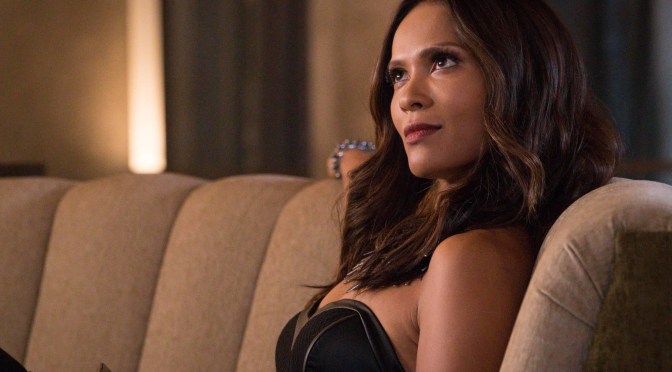
This is the first week that I really, really buy the burgeoning friendship between Lucifer and Chloe. The parallel development of their characters and their growing mutual affection seemed more organic this week than it has up to this point, and the dynamic between Lucifer, Chloe, and Dan was natural and, refreshingly, free of much bullshit male posturing. There’s definitely some jealousy there, but Dan is more concerned with sorting out his and Chloe’s relationship problems—which have nothing to do with Lucifer—and Lucifer has finally stopped being sexually aggressive with Chloe like he was in the first few episodes and is learning how to be a real friend.

For her part, Chloe got a huge dose of character development this week. The Palmetto case—Chloe is certain that it’s a case of a dirty cop—has been mentioned before, and it’s the reason why Chloe has problems with the other detectives at the precinct. In “Wingman,” we finally get to learn more about the situation, and there’s even a sort of resolution to it. I really enjoyed seeing Chloe struggle to balance her desire for truth at all costs with Dan’s argument that truth doesn’t always mean justice. Proving that Malcolm was dirty would deprive his family of the pension that they would normally get for an officer killed in the line of duty, and perhaps cause real hardship for them. Still, I loved the way that this conflict played out. Dan respects and supports Chloe, in spite of their disagreement, and when Chloe has a fresh idea about the case, it’s Dan who she shares her moment with. Their relationship is complex in some very interesting ways. I can see why their marriage is on the rocks, but there are also a lot of reasons to root for them to get back together.

The best thing about “Wingman,” however, is seeing Lucifer and Amenadiel work together. This is the first time these two have spent this much time with each other to date, and it’s excellent. They have a great on screen chemistry, and their dysfunctional familial dynamic is fascinating. This week, the show really digs into the divine aspects of that, setting up some clear consequences for both Lucifer and Amenadiel and taking a look at the wider-reaching effects Lucifer’s dereliction of duty might have. It also offered a much better and more philosophically sophisticated explanation for Lucifer’s decision to leave Hell in the first place. Last week, the show highlighted the “rebellious son” angle, but this week shows us both that Lucifer had something real to rebel against and that it didn’t come without some deep personal cost to himself.

Tom Ellis and D.B. Woodside were both at the top of their game in “Wingman,” and both of their characters got big injections of pathos that give them much more complexity than they had, say, two weeks ago. Amenadiel’s shock and sorrow when Lucifer burns his wings was a powerful moment, as was the anger that came on the heels of that pain. It’s tempting as a viewer to think that Lucifer deserved every punch, but his own lack of fighting back suggests that he thinks so, too, and only adds to the sense of tragedy here. The psychological, theological, and philosophical complexities of the show are slowly building up, and they’re being worked in in some smart and subtle ways, and if the show can keep it up it might turn into something really special and unique.

Miscellaneous thoughts:

  • This show’s episode titles have been very hit-or-miss, but this is a good one—an amusing play on words with multiple layers of meaning. Excellent job, person in charge of picking it.
  • Dr. Martin doesn’t appear this week, and I think the episode is actually better for it. Too many of her interactions with Lucifer are uncomfortable, and her lack of ethics makes her ability to be an effective therapist questionable.
  • It seems pretty heavily telegraphed that the downed officer’s partner is the guy who shot him, which is a bummer. I’d like a little more mystery, to be honest. We’ll see, though.
  • Who else suspects that Lucifer might have only burned the fake wings?
  • I feel like the show isn’t really quite sure what to do with Mazikeen. She’s an interesting character, but she doesn’t interact much with anyone besides Lucifer, and I hate that she seems to be so motivated right now by jealousy of Chloe.
  • Finally, if I have one major ongoing general criticism of the show, it’s that none of Lucifer’s female characters talk to other women at all. There’s been so much other stuff to criticize that I’ve never gotten around to it before now, but it would be great if Chloe had a girlfriend or two that she could talk with about things. It might be tough to work in friends for Maze or Dr. Martin, but Chloe could definitely do with a girls’ night out every once in a while.
Book Review: Archivist Wasp by Nicole Kornher-Stace

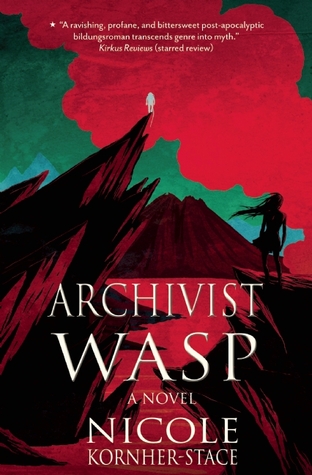
Archivist Wasp is a strange and beautiful story that still managed to be somewhat disappointing to me. I liked it quite a bit, but I didn’t love it the way I thought I would and I’m not sure exactly why except that I feel somewhat misled by an enormous amount of good reviews that were terribly vague about what this book is. At the same time, I do like that Archivist Wasp defies any neat genre categorization. It’s a book that is many things, but mostly it’s hard to describe without giving away the whole story. In any case, I’m not sure exactly what I expected from this book, but what I got wasn’t it, and I can’t say that my expectations were challenged or unsettled in any positive way. I just feel weirdly neutral about the whole thing.

After about a week of trying to figure out why this book just didn’t sit right with me, I think it’s largely because, while it’s a thematically strong work—dealing with issues of identity and choice and the ways in which people can be susceptible to bad ideas—there’s just not a whole lot of actual story. The whisper thin plot might have worked if Nicole Kornher-Stace made up for it with particularly beautiful prose or great characters or a good sense of the setting, but that’s not the case. Kornher-Stace’s prose is just workmanlike; Wasp is kind of a wonderful character, but she’s not enough to carry a whole novel; and the setting seems to be shooting for almost mythic—a journey through an underworld—but fails, and at the same time is a post-apocalyptic dystopia of sorts—but without any details to give it any specificity or to ground it in a plausible future.

It seems to be somewhat in vogue these days for authors to skirt the line between science fiction and fantasy, and genre-bending is a common buzzword of recent years that I’d heard used to describe Archivist Wasp. That may be the case, but to me it felt more noncommittal than purposeful in its failure to decide what it wanted to be. Wasp’s abilities seem to be mystical in nature, and this isn’t entirely at odds with a world that appears to have been shattered by a human-caused apocalypse, but there’s really no explanations for either of these things. Certainly, there isn’t nearly enough explanation given to even begin to explain how the world shifted from the one that produced the super soldiers whose ghosts Wasp interacts with to the world in which Wasp has been raised.

It’s not always necessary to explain this stuff, and sometimes it’s actually better if authors don’t bother—too many potentially good books have been ruined by over-explaining—but the society that Wasp is part of is so alien that it’s difficult to imagine how it happened at all. If I’m being very generous, I could say that this makes the book original, and it is, as far as that goes, but in the absence of any common genre tropes, it becomes the responsibility of the author to make sure that the reader has all the information they need to grok the book.

I suppose that in the end, though, it’s not so much that Archivist Wasp is hard to understand; it’s just deeply unsatisfying. While I can appreciate what I suspect is the author’s aversion to holding the reader’s hand, just a little more explanation would have gone a long way towards making this a much more enjoyable read.

Weekend Links: March 5, 2016

March is here, and we’re now really getting into good new fiction season. Even though there are far more new releases than I’m even capable of keeping up with, I wrapped up two final novels from 2015 this week–Archivist Wasp and Barsk: The Elephants’ GraveyardBarsk was nominated for a Nebula, and Archivist Wasp has been getting a good amount of awards buzz as well, so I thought I’d check them out in time for Hugo nominations. Over the next week or two, I’ll be reading a bit of short fiction and one more 2015 novella, and then I will be making a short-ish list post or two before I send in my final lists.

The John W. Campbell Award can be a little trickier to nominate for, but this year it’s being made somewhat easier by Bad Menagerie’s Up and Coming anthology, with collects some representative short stories from many of the currently eligible authors. Up and Coming: Stories by the 2016 Campbell-Eligible Authors is out now and will be available as a free download through March 31.

The nominees for this year’s Spectrum 23 Awards were announced this week.

If you’re a fan of classic sci-fi, all of IF Magazine–176 issues from 1952 through 1974–is now available for free download.

io9 has a great list of all the books we should all be looking forward to in March.

But, wait! Fantasy Faction has a list of small press titles to keep an eye out for as well.

The American Gods adaptation finally has its Wednesday–and it’s Ian McShane, which is pretty exciting.

Gene Roddenberry’s son has been hired as an executive producer for Bryan Fuller’s new Star Trek series.

Meanwhile, over at the Wertzone is the first post I’ve come across so far talking about Star Trek‘s impending 50th anniversary.

At The Toast, three adults have a serious conversation about The Hero and the Crown.

The final installment of Catherynne M. Valente’s Fairyland series–The Girl Who Raced Fairyland All the Way Home–came out this week, and Valente was on the Once & Future Podcast to talk about it.
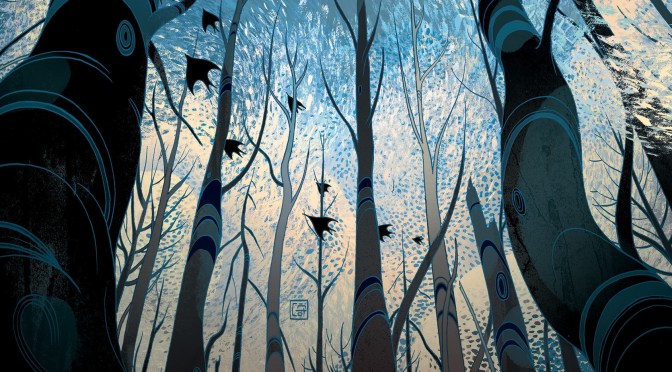
Mary Robinette Kowal has a new novella coming out on Tuesday from Tor.com, Forest of Memory, and she was on Midnight in Karachi to discuss it. If you can’t wait for the new book or don’t know who she is, you can read her wonderful novelette, “The Lady Astronaut of Mars” online for free right now.

Alex Marshall’s identity was revealed this week when he was interviewed by Kameron Hurley over at Medium.

This month’s Clarkesworld has a great interview with Charlie Jane Anders.

I loved Victor LaValle’s The Ballad of Black Tom, and he’s still doing some interviews to promote it. This week, he showed up at Vice and on NPR to talk about his book, Lovecraft, and racism.

In a similar vein, Jim C. Hines has a great piece in this month’s Uncanny Magazine about “men of their times.” 

Fandom Following has a great piece on women in Middle Earth–and how bad being one would be.

Lady Business has a must-read post about the tyranny of the “do it yourself” mentality that so often characterizes responses to complaints about lack of representation.

This new Van Gogh biopic–animated with oil paintings by over a hundred artists–looks amazing:

Brain Pickings collects a whole bunch of Arthur Rackham’s illustrations for Grimm’s Fairy Tales.

Pamela Anderson stars in this incredible new short sci-fi film, “Connected”:


Book Review – Barsk: The Elephants’ Graveyard by Lawrence M. Schoen

Lawrence M. Schoen’s Barsk: The Elephants’ Graveyard is a wonderfully original masterpiece of a novel, and I am so glad that I got to it in time for Hugo Award nominations. Somehow, I’d thought it was a 2016 book because it came out so late in the year (December 29). Fortunately, it showed up on the Nebula shortlist before I missed out on it entirely. You guys, this book is so good. If you are a Hugo voter, I highly recommend reading this book before you finalize your nominations. 2015 was an amazing year for genre fiction in general, but this novel is definitely at the top of the heap of amazingness.
The concept of Barsk is fascinating. Thousands of years in the future, spacefaring anthropomorphic animals of numerous species have colonized the galaxy. A pair of species collectively known as the Fant (descended from Asian and African elephants) inhabit the titular planet, Barsk, where they have been left more or less undisturbed for hundreds of years due to the other (all furred) species’ dislike of them. They might be left alone entirely if the Fant weren’t the only manufacturers of a drug called koph that, in some people, awakens a rare and highly desirable ability to Speak to the dead. Needless to say, after eight centuries of depending solely on the Fant for the drug, not everyone is happy with the current state of affairs.

What makes Barsk such a joy to read is that, while it may technically be a flaw, it has a tendency to meander, and there are all kinds of small flourishes that have little to do with the actual plot but that are nice to see as they really work to make the world of Barsk come alive. Sometimes, as well, Schoen includes material that isn’t strictly necessary in order to lighten up some of the story’s darker moments or simply to add some depth to a minor character. In every case, these detours and seemingly extraneous details are naturally integrated with the main story, whether it’s a solitary chapter from Tolta’s point of view or the brief story of the unexpected reunion of two Fant men who were able to have a few days of joy together at the end of their lives.

The portrayal of the animal cultures is fascinating. Schoen has clearly done a lot of research, and he does an excellent job of balancing an imagination of what the racial cultures and traits of his anthropomorphized animals might be with a wonderful instinct for character that prevents the animal characters from being too stereotypical. Certainly some of the background groups—especially the Badgers and Pandas—are a little too homogenous-seeming, but even that can be more safely attributed to the fact that the Pandas we see are soldiers and the Badgers are torturers, which accounts for their seemingly monolithic natures. The named characters, however, are, by and large, all unique and compelling individuals. Their species certainly informs who they are, but they aren’t defined by it.

The exploration of racism, genocide, and marginalization may seem a little on the nose, and I’m generally not a fan of exploring these themes through fantasy races and cultures, but it works here. The political situation between Barsk and the rest of the colonized worlds is fraught in realistic ways that recall some real-world scenarios but never copy any exactly. This allows Schoen to take a look at some common structures of oppression and exploitation without stepping on the toes of any real people. It’s not the most thorough look at these themes, but it’s well done without being heavy-handed or preachy and the ending of the story is messy and ambiguous enough to keep Barsk from every being called simplistic.

If I have any criticism of Barsk, it’s that there’s just not enough of it. I’m thrilled that it’s a standalone title, but I would love to read more stories set in this world. I want to know how Lirlowil turns out or what Pizlo grows up to be like or whether Jorl ever notices the girl in the bookstore or if Tolta ever finds love again. I’d even take a book about what Bish gets up to now that he’s got a fresh start. Barsk is a story that I never wanted to end, and I can’t wait to see what Lawrence M. Schoen writes next.

Book Review: Genrenauts #2, The Absconded Ambassador by Michael R. Underwood

When I read the first of Michael R. Underwood’s new Genrenauts series, I compared it to the pilot of a television show—it was a solid introduction to the series, but it had a lot of pilot episode problems. The Absconded Ambassador is a rather shaky second outing for the series, and it just didn’t work for me. This time the genrenauts travel to science fiction world, which was exciting, but Underwood didn’t really do anything particularly new or interesting with the setting. The Shootout Solution had a sort of twist that, while obvious, was an interesting exploration of western adventure tropes. There’s nothing like that here, which was a little bit of a letdown.

On the bright side, there was more character development for the main characters this time around, and Leah and the rest of the genrenauts are starting to feel a little more like real people. That said, Leah isn’t a particularly likeable character, but she’s also not unlikeable in any particularly interesting ways. She also shares a lot of screen time on this outing with other characters, but none of them are very memorable, either.

If you don’t have compelling characters, a great plot is a must, but the actual plot here is whisper thin. Very few things actually happen, and those that do aren’t very interesting. The peril caused by the kidnapping of the ambassador never feels very high stakes, and the more general danger of what could happen in the real world if a genre world breaks never manages to feel, well, real.

These issues may simply be due to the limitations of the short length of these novellas and the serial nature of the story, but it’s already hard to muster up any excitement for the next installment at this point. I’ve so far compared this series to a television show, but the problem with serial novella-length installments is that they don’t come out a week apart. The next one won’t be out until months from now, and that’s a long time to wait for mediocrity.

The Shannara Chronicles: “Ellcrys” is a mostly solid finish to a wildly inconsistent season

The most frustrating thing about The Shannara Chronicles, all along, has been that its occasionally really great, which only makes its failures more glaringly obvious. “Ellcrys” is—surprisingly, after a half dozen increasingly terrible hours—mostly excellent. Only mostly, though, and where it fell short, it fell really short.

The first problem occurs right out of the gate this week. Because the show spent so long getting to the events of “Safehold,” that left our heroes, at the beginning of the season finale, at their farthest point away from Arborlon and the Ellcrys, but still with their quest only halfway done and a whole army of demons between them and their goal. So things are kind of necessarily rushed, with Wil resurrecting Eretria, Eretria reopening the portal that Amberle had disappeared through, and then all three frantically racing back out of Safehold. Of course this is when the trolls finally wake up—possibly stirred by all the noise from last week’s fight with a couple of shrieking witches—and come out to play, giving Eretria the chance to be a big damn hero and save her friends.

On the one hand, I kind of love this bit. Eretria has gotten a relatively coherent character arc this season, and we’ve seen her go from being a self-serving opportunist out to free herself from her enslavement to Cephalo to being part of a team of friends and willing to sacrifice herself for a greater good. Even if not every step of Eretria’s character growth has been fully realized, I think her heroic moment was mostly earned. It also doesn’t hurt that Eretria’s fighting with the trolls is a nicely executed action scene that was great fun to watch. On the other hand, Eretria’s apparent self-sacrifice neatly serves to cut her entirely out of the story for the rest of the hour, which sucks. Oh, and not only is Eretria cut out of all the action and excluded from the final completion of the quest, she ends up captured by the trolls, and the season ends on a cliffhanger as she sees someone she recognizes, which is awful cryptic for a show that doesn’t have a confirmed second season yet.

Amberle and Wil’s actual journey back to Arborlon is mostly uneventful and includes like two straight minutes of them riding horses on a beach at sunset with their hair streaming gloriously behind them. It’s probably the cheesiest sequence the show has done to date, but I kind of loved it, lens flares and all, because it was so entirely unironic. When the pair finally get back to the woods around the elven (I am not spelling that with an “i”) capital, though, the find the area already overrun with demons. Amberle leads Wil to a cave where they hole up until dark.

While they wait, Amberle tries to confide in Wil about what she learned at Safehold about her role in saving the Ellcrys, but she’s not ready yet for full disclosure. Instead, she confesses that she loves him, and they share a passionate afternoon of lovemaking. When they finally move on after dark, Amberle is now content and prepared to go meet her fate, although Wil still doesn’t know about what she’s got to do until the last moment. Poppy Drayton and Austin Butler turn in some of their best performances in this finale, but their sex scene is the opposite of sexy. It’s not that they don’t have any chemistry, either. The scene is very short, and it’s basically just blurry writhing bodies with a fade to black. It’s not very visually interesting, and this lessens any emotional impact it might have had. If they were going to just fade it to black and have the pair wake up later in the evening, they could have spent less time showing any of the actual sex. If they really felt the sex was important to explicitly include, they ought to have shown a little more. It’s definitely not the worst thing this show has ever done, but it stood out like a sore thumb in an otherwise nicely shot episode.

The biggest surprise of the episode was the big battle scene in the woods outside where the Ellcrys is kept. I was fairly certain that we’d get a pretty epic battle in the finale, and I wasn’t disappointed. Certainly it wasn’t on as grand a scale as anything on Game of Thrones, but it looked good. There was a big enough crowd of extras to add some sense of size, and the fighting is well-choreographed in low key, naturalistic sort of way. It didn’t feel real, but it did feel like just the sort of good epic fantasy battle that I would have liked to see a little more of over the course of season. Unfortunately, both of the battle’s climactic moments were deeply flawed.

Before the actual fighting starts, Ander and Commander Tilton have a sweet moment where they seem to rekindle their romantic relationship. It’s a brief scene, but it was nice. Both of these characters have been grieving the loss of Arion, and this scene gives us some hope that with time they will heal and have a future together. Nope. Turns out that Arion has been possessed by the Dagda Mor and forced to fight in the demon army. He kills Tilton, then begs Ander to kill him, which is sad, I guess? I was kind of shocked by Tilton’s death, if only because it seemed so wasteful—the character was sadly underdeveloped—and such a betrayal of the expectation built by the earlier scene between Tilton and Ander. It’s also pretty shitty that the only significant woman of color on the show just got fridged.

It was surprising to see Arion come back, as well, since it wasn’t really foreshadowed or anything. Sure, we never did technically see his cold, dead corpse, but we also haven’t seen hide or hair of him since he got himself stabbed by the Dagda Mor. Mostly, though, this just speaks to the fact that we have no idea how the Dagda Mor’s magic works or what he’s capable of. Without even a basic knowledge of the Dagda Mor’s capabilities, there was never any reason to expect something like this, so when it happens, it feels random and, well, not meaningless, but a cheap ploy to elicit an unearned emotional response from the audience.

Speaking of the Dagda Mor, the other major climactic moment involves him. Namely, his fight with Allanon, which was a letdown to say the least. It was just as solidly produced as the rest of the fighting in the episode, but it just didn’t feel like the final boss battle that it ought to have. Instead, Wil distracts the Dagda Mor with the elfstones, and Allanon chops the Dagda Mor’s head off. Easy peasy, and by this time Amberle has become the new Ellcrys and all the rest of the demons just vaporize, putting a swift end to any further combat. This all occurs depressingly quickly after Tilton’s death, as well, so if only everyone had moved just a little faster she could still be alive. In any case, this one final fight should have stood out a lot more than it did. It was mediocre at best, and thus anticlimactic.

The final, if not biggest, problem with “Ellcrys,” of course, is (once again) Bandon. Whereas the other major invented-for-the-show character, Commander Tilton, was just sadly underutilized and had her potential squandered by poor writing, Bandon is an invented character that just doesn’t work. His descent into darkness is poorly thought out and executed in a shoddy fashion. His continued victimization of Catania (another terribly implemented character) is uncomfortable and unpleasant to watch. Overall, we just don’t learn enough about Bandon to become attached to him, so his turning evil isn’t particularly emotionally impactful. To top it all off, this week Catania blames herself for “failing him” and Allanon doesn’t contradict her; he just replies that they “both” did. Which is infuriating.

Still, I was happy that they kept the ending of the book, with Amberle becoming the new Ellcrys. I wasn’t at all sure they would, since it’s intended to be an ongoing series, and by the end of last week I was somewhat concerned that they were going to replace Amberle with Eretria. The battle scenes were suitably grand, though not as much as one might wish. Even the cliffhanger-y ending is tolerable, as it shows confidence that the show will be getting a second season—although if “you” turns out to be Cephalo I will lose my shit.

All in all, though, “Ellcrys” is a solid finish to a wildly inconsistent season of television. It had all the things that I loved about this show in the beginning and very little of its worst tendencies on display. I won’t make any promises, but I could see coming back for season two if nothing else better comes along between now and then.

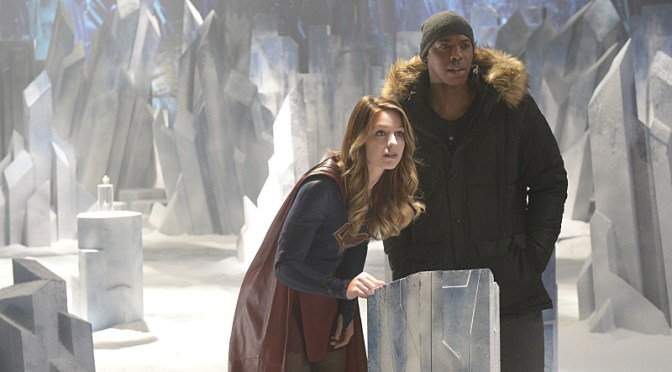
Supergirl: “Solitude” is a scattered, ineffective mess of mediocrity

“Solitude” is one of Supergirl’s worst episodes, objectively, but it has one of my personal favorite moments in the series so far. It’s an episode that is overstuffed, with a nonsensical villain of the week and far too many moments that tried and failed to be emotionally impactful. The only thing that really worked was the end of the episode, with everything else being varying degrees of bad.

First, the villain of the week, Indigo, is absurd. She’s apparently some kind of living computer program who wants to destroy humanity. For reasons. Okay, it’s because Non cheated on her and then left her for Astra, I guess, and so now she’s going to take over the world by hacking everyone’s Fake Ashley Madison accounts and then nuking National City. Indigo looks like a second rate Mystique, except when she’s actually being an incorporeal computer being, which is actually a pretty neat effect. Regardless, she’s definitely one of the silliest villains this show has given us yet.

The most inexplicable side plot of the episode was the burgeoning romance between Cat Grant’s new assistant, Siobhan, and Winn. Both of these characters are totally unnecessary at this point, and they have very little to do in “Solitude” except have a sort of awkward hook-up. Winn does do some computer stuff, but it’s just his normal sort of magical tech wizardry, so it’s boring. Siobhan is actively unlikable, even abusive, towards Winn, in a way that isn’t fun or funny to watch. Even a sob story about how the reason Siobhan acts like such a monster is because her dad cheated on her mom isn’t enough to generate many positive feelings about her.

The major emotional event of the week is Lucy breaking up with James, who has been kind of terrible to her for a while now. The final straw is when James blows off a date with Lucy to travel to the Fortress of Solitude. Kara makes excuses for James and tries to talk him up to Lucy, but in a way that tips Lucy off to James and Kara’s feelings for each other. James’s attempt to let Lucy in on the secret of Supergirl’s identity is too little, too late, and it would have only exacerbated the problem anyway. It’s a relief in a way, to have this stuff over with. Lucy is better off, frankly, and now James and Kara are free to do their thing if they want to.

The best moment of the episode was its final one. I have mixed feelings about the way this show rushes through story material, but sometimes its impatience is a good thing. I knew the show wasn’t going to let Alex keep a secret from her sister for too much longer, so it wasn’t surprising to see Alex come clean about Astra’s death before the end of the hour. What was a surprise, especially in an otherwise lackluster and very disjointed episode, was the way the moment played out. Kara’s instant forgiveness of her sister (and Hank!) was probably the most perfect scene this show has ever produced. It doesn’t make the whole mediocre hour beforehand worth it, but it does help redeem “Solitude” a little bit.

Lucifer: “Favorite Son” finally lives up to some of this show’s potential

Lucifer has struggled for weeks now to bring its world to life, but with “Favorite Son” the show finally seems to be realizing some of its potential. It’s still not a perfect episode, but it is the first episode of the show that is actually unequivocally good. At the very least, it’s enough of an improvement over the first few episodes to make it worth coming back to see what happens next week.

While “Favorite Son” still adheres somewhat to the case of the week format, there’s almost no attention actually paid to the murder mystery. Most importantly, there’s a minimal amount of Chloe and Lucifer interrogating people, which means a minimal amount of Lucifer smirking at folks and creepily asking about their desires. This only happens once this week, actually, and it’s been toned down a good deal. It was nice to not feel like I needed to take a shower after the scene in question, to be honest. In any case, this tempering of some of Lucifer’s signature moves (he also manages to go a whole hour without propositioning Chloe once) is indicative of a broader shift in tone that seems to take place this week. Things took a darker turn, for sure, and it’s a hopeful sign that the show is maturing enough to be watchable.

Shoving the murder mystery to the back burner leaves plenty of room for actual themes to be developed, and “Favorite Son” is by far the most thematically compelling episode yet. Lucifer’s issues with his father have been simmering just under the surface since day one, so it’s nice to see them finally being articulated. Lucifer’s problems are cleverly highlighted by showing them in contrast to Dan—a flawed human who is at least trying to be a good father—and to the head of a criminal biker gang who has an eye on retirement but has to deal with his own rebellious subordinates. It’s a level of sophistication that I wouldn’t have expected from this show, but it’s exactly what has been needed all these weeks, and this episode was overall well-conceived and nicely executed.

Miscellaneous thoughts:

  • I would definitely watch a straight hour of Tom Ellis just playing piano and singing.
  • I hated when Dan called Maze Lucifer’s “pet on a leash.” It was a really casually degrading and dehumanizing thing to say and that meanness wasn’t really warranted by the situation.
  • I’m still not sold on Dr. Martin, though her character worked better this week than she has previously.
  • D.B. Woodside is ridiculously good-looking. That smile!
  • I also don’t love Lucifer’s violence. He seems to have increasingly abusive tendencies the more he digs into things during his therapy sessions. It might be realistic for him to have these sorts of outbursts as he works through his issues and processes things, but when he’s menacing a woman half his size it’s actually frightening and I could see it becoming very difficult to watch if that behavior continues too long.

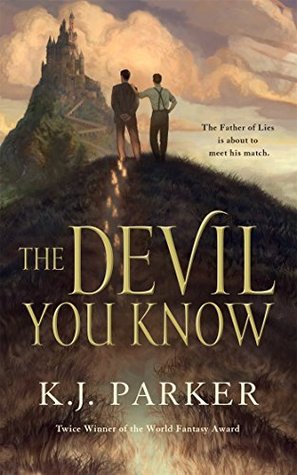
Book Review: The Devil You Know by K.J. Parker

Alright, so I loved this book, but I kind of hate that I did because it’s actually, objectively, a lot of things that I hate. Mostly, The Devil You Know is just not nearly as clever an idea as the author seems to think it is. Still, I just ate it up, and I tore through this little book in the space of an afternoon, it was so much fun. K.J. Parker has taken an idea that has been done before and freshens it up just the right amount, but without making it overly precious or smugly faux-intellectual.

The Devil You Know takes the unreliable narrator trope and multiplies it by two, telling its story from the twin perspectives of an actual (if unnamed) devil and the great philosopher, Saloninus. While there are a couple of point of view shifts that were easily missed—to the point I had to go back and reread once or twice—this mostly works. Saloninus in particular is a wildly clever and funny character, and the contrast between his confidence and the increasingly worried tones of his devil servant is consistently hilarious enough to make up for some of the story’s shortcomings.

The biggest problem that I had with The Devil You Know was the way that women were treated in the narrative. For one thing, there are no actual female characters in this book. There are hordes of nameless prostitutes, shipped in to entertain the menfolk, and there is the woman presumed to be Saloninus’s ex-wife. The sheer lack of agency and importance of these women isn’t particularly surprising, but the way in which both Saloninus and his devil callously use women makes it difficult to truly root for either of them. It’s one thing to have a story with few or no women, but it’s something else entirely to have two essentially misogynistic point of view characters and expect them to be universally appealing.

Regardless, I rather found myself liking both Saloninus and his devil in spite of myself. Saloninus is a wonderfully wicked and manipulative character, but he is only human. The devil has the air of a sort of harried bureaucrat. His anxiety about the contract with Saloninus is palpable, and it’s highly entertaining to experience the devil’s warring feelings about the philosopher. Neither character is particularly compelling, and they definitely aren’t breaking any new ground, but they are both better-than-middling examples of their types.

While the story’s ending is somewhat telegraphed and certainly not very original, Parker manages to mostly make it work. It wraps up a little too quickly and neatly, if anything, and it would have been nice to see things go down in a way that was a little less expected. However, it’s a solidly entertaining story that one doesn’t have to think too hard about. Sometimes, that’s good enough, and this is one of those times.

This review is based upon a free advance copy of the book received through NetGalley.

Weekend Links: February 27, 2016

Awards season continues this week, with several new nomination/short lists announced:

For those who are planning to nominate and vote on the Hugo Awards this year:

There’s a bunch of new Game of Thrones character posters, but they don’t tell us anything useful or interesting about the upcoming season.

Ava DuVernay is going to be directing a new adaptation of A Wrinkle in Time for Disney.

Marvel and Netflix cast a white dude (GoT‘s Finn Jones) in the lead role for Iron Fist. This isn’t particularly unexpected, but it is a missed opportunity, for sure.

I’ve known since last year that Margaret Atwood was writing a retelling of Shakespeare’s The Tempest, but now it’s got a title and cover. Hag-Seed will be out on October 11.

There’s a new illustrated limited edition of Daniel Polansky’s The Builders available for pre-order.

The radio adaptation of Neil Gaiman’s Neverwhere is currently available to listen to for free.

I’m super excited about this new anthology from Apex Publications, Upside Down: Inverted Tropes in Storytelling. A $5 pledge to the Kickstarter will get you a digital copy of the final product.

Fantastic Stories is planning some special issues to focus on discovering and amplifying diverse voices. First up: Queers Take Over.

At Motherboard, a look at how The X-Files might have accidentally become right-wing propaganda.

I love this piece at The Verge about the diversity of SyFy’s The Expanse.

Blastr reminds us that everybody ships.

This week saw several great interviews with some of my current favorite authors:

Finally, io9 debuted this gorgeous trailer for a new French animated steampunk film, April and the Extraordinary World:

https://youtu.be/8FP0lzeCJEs