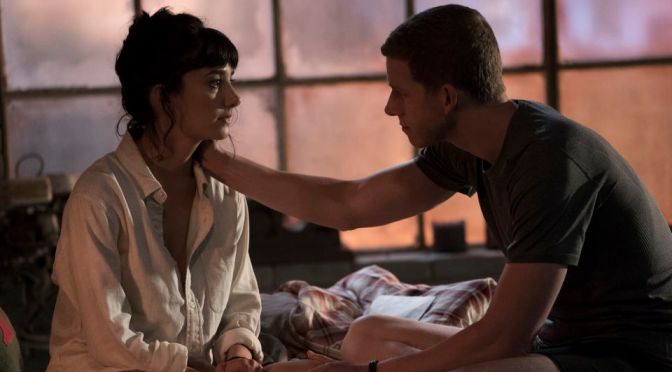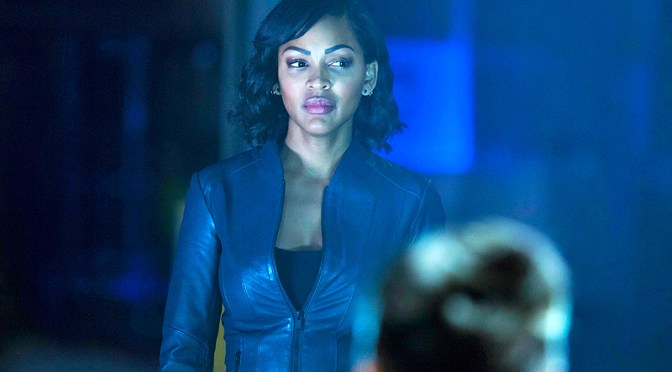
Minority Report: “The Present” is mostly about delving into the past

I’m increasingly feeling very, very alone in my affection for this show, but even this big old mess of an episode hasn’t turned me off entirely. In fact, I think part of my loyalty to the show is exactly because it’s such a disaster, and “The Present” has unfortunate writing and story decisions in spades.

Up until now, Vega has remained a fairly undeveloped character, but this is her episode. It’s been strongly hinted at since the beginning that the reason Vega got into police work and the reason she was so interested in pre-crime was due to a personal tragedy, and this is the week that we finally learn all about it. Yes, “The Present” is Lara Vega’s origin story.

The episode opens with a flashback to a rainy night in 2048, where a different Officer Vega is patrolling a dark alley (called “the Sprawl” of all things) on foot, by himself, whistling and checking his pocket watch, in the pouring rain, (ominously) eight months before pre-crime. His body cam badge flickers off and he starts to get scared–because, really, there is absolutely no way this perfectly cliche scene was ever not going to end with him getting murdered–then turns around and gets shot. After, we see a guy with no eyes walking away.

As ridiculously over-the-top comic book-like as this is, it wouldn’t stand out nearly so much if the rest of the episode supported this kind of melodrama, but it doesn’t. Instead, most of the rest of “The Present” is just Vega being awful to pretty much every single person she comes in contact with because apparently she and her dad shared a birthday, and she’s got feelings about it. Add in some serious ethics violations and straight up police brutality, and Vega comes off here as extremely unlikable at best. At worst, she’s an absolute monster who should have her badge taken away and never be allowed near a firearm ever again.

There was just so much in “The Present” that doesn’t make sense.

  • Why would a police officer be walking on patrol in the rain through an uninhabited dystopian wasteland alone in the first place?  I mean, what legit police business could he have there all by himself?
  • Is it really necessary for Vega to be so unilaterally terrible to everyone? It’s really grating, and not even a little bit endearing, especially since she’s actually pretty self-aware about it. If she’s aware that she’s being so awful, couldn’t she have even the tiniest bit of self-control? Instead, she just spews her feelings on everyone.
  • Vega doesn’t seem like a big enough sports fan to really want a 45-year-old team jersey. It’s older than she is, for goodness’ sake.
  • Also, even if the Washington team did change its name, and even if they did for some reason only make 500 fan jerseys that year, they would be rare collectibles. You wouldn’t wear them (and certainly wouldn’t let a young child wear one), as they would be fairly expensive pieces of memorabilia.
  • Are Vega and Akeela really such good friends that Akeela would spring for such an expensive birthday gift? I mean, we keep being told that they’re friends, but we only get to actually see it in rare flashes.
  • Why does Arthur even bother acting all cool and in control and putting up a fight? Five episodes in, and it’s very clear that he’s a total pushover for his brother and, rather inexplicably, Vega.
  • If Agatha is wrong about Vega, why aren’t Dash and Arthur a little more proactive in figuring out what Agatha is actually right about? We know that all three of the precogs have visions, and those visions are demonstrably real. It just seems to me that ensuring their continued freedom ought to be more of a priority.
  • Why does Wally have so much equipment? Yes, he explained how he got it, but that explanation made no sense.
  • I think it’s great that ex-criminals can be reformed and stuff, but it seems unlikely that one would be put in charge of a rehabilitation center. And why would she keep a trophy from the time she murdered someone for drug money out in plain sight?
  • And “make it look like a mugging” is all well and good, but who mugs an on-duty police officer?

I’m sure there was more, but I’m really feeling a little overwhelmed by how much sense this episode didn’t make. There were a few cool things, but they all seem inconsequential in comparison to the incredible amount of nonsense going on in “The Present.”

  • Love the body cam integrated into the badge. This actually seems like a useful and sensible invention.
  • Washington Red Clouds could work, although 2019 might be a little too optimistic as a date for the name change.
  • Dash presenting Vega with birthday flowers was adorable.

Until next week. I don’t watch previews for this show, so I have no idea what’s going to happen next. Probably something absurd. I’m still enjoying this show, but it’s firmly in guilty pleasure territory now. I hate to say it, but I think Fox made the right call in cutting their order for it. Only five episodes to go!

Doctor Who: “The Girl Who Died” is more of what I suppose is the show’s new normal

I think the thing that is bothering me the most about this season of Doctor Who so far is that people seem to be generally enjoying it, and it appears to be receiving largely favorable reviews in spite of being, objectively, pretty bad. It’s a sign of how much Steven Moffat’s tenure as show runner has damaged the show that we’re all looking at these last few episodes like, “Wow, that was alright. That was fun.” I feel like our collective expectations for the show have just gotten so low that basically anything remotely coherent that’s not overtly offensive just blows us away. It’s pretty sad.

And that’s how I feel about “The Girl Who Died.” Like every other episode so far this year, it’s not terrible. It certainly makes a good deal more sense and relies on much less deus ex machina than last season. It even has a couple of moments where it feels like a proper episode of Doctor Who instead of Steven Moffat’s Mediocre Doctor Who Fanfic Hour. But it’s not good. (So why these sort of breathless puff pieces?)

“The Girl Who Died” commits two major sins, in my book. First, it continues the shows recent tradition of giving Clara almost nothing to do aside from cheerleading for the Doctor. Second, it shoves literally every point it’s trying to make down the viewers’ throats, explaining it all as if we’re all very, very stupid. The worst part of all of this is that the show has been doing this every week now, for five weeks straight, spoon-feeding us every plot point and straight up telling us how to feel about it. This episode, especially in its epilogue, is the absolute pinnacle of this kind of insufferable hand-holding. Before I get too far into that, though, let’s look at what Clara got to do this week.

Things actually started out promising, albeit with a cold open that apparently has nothing whatsoever to do with the rest of the story other than to give Clara an excuse to spend half the episode wearing a space suit. The real story starts when Clara and the Doctor find themselves captured by vikings and taken to the vikings’ village, where the Doctor tries to trick their kidnappers into thinking he’s Odin. Someone else has beaten him to it, though: a warlike alien, who beams all the best warriors in the village–along with Clara and a viking girl named Ashildr (guest star Maisie Williams)–up to his spaceship.

On the spaceship, the warriors are unceremoniously vaporized, while Clara and Ashildr manage to escape that immediate danger. When they find out that the warriors were harvested for testosterone (okay…), Clara gets one legitimately hilarious line and then manages to almost talk a way out of the situation for herself and Ashildr, only to have Ashildr start an actual war with the alien. They’re then beamed back to earth where they have to explain the the farmers and craftspeople that are left that they now have to fight a bunch of terrifying space people.

For the rest of the episode, Clara is relegated to nearly silent emotional support for the Doctor as he works through his feelings about saving people and possibly changing time or whatever. In the final fight against the alien, Clara gets to take a cell phone video and then pose with it a la Vanna White while the Doctor threatens to take it viral if the alien doesn’t leave earth alone. It’s actually kind of disturbing just how quiet Clara gets in the back half of the episode. Even though she gives all the appearance of being present, she’s little more than a prop for the Doctor’s angst to reflect off of.

Maisie William’s Ashildr fares little better, to be honest, and never manages to become a truly fleshed out character though Williams does her best with the weak material she’s given to work with. Ashildr and the other vikings barely react to the loss of all their village’s warriors, which makes no sense considering that everyone supposedly loves this community so much that they’d rather get killed by aliens than leave. There’s also just not much substance to Ashildr herself. Though we’re told that she feels sort of like an outcast (which again belies her attachment to her village) and that she likes stories and makes puppets, we’re not shown any of it, just told it, and then only when the plot demands a character with a strong attachment to the town and a penchant for puppets and storytelling.

The all around lack of subtlety in this episode would be astounding if it wasn’t so characteristic of the show these days. The (frankly extremely belated) revelation of why the Doctor “chose” his current face would have been nicer if it hadn’t served as such a great reminder of the show’s better days. A perfectly passable and sense-making ending–with the Doctor reviving Ashildr and leaving the extra dose of space magic healing for her–was ruined with a long sequence of heavy telegraphing about what next week’s episode is going to be about. Worst of all was that lengthy spinning shot of Ashildr with the Doctor talking in voice over. That was just downright silly.

The thing about Moffat-era Doctor Who that was re-emphasized in this episode is that Steven Moffat just doesn’t know how to quit while he’s ahead. Over and over again, he fails to create mystery, using foreshadowing that is so heavy-handed that there’s no such thing as spoilers for his episodes anymore. He comes up with ideas that are interesting and works with themes that ought to be compelling, only to have his stories consistently devolve into masturbatory self-congratulation as he wastes three quarters of an episode telling-not-showing us all just how clever he is.

I’ll be watching and writing about next week’s episode because I like Maisie Williams and I hate to leave a thing half-finished, but I’m not sure how much longer I can keep going with this show. I’m already exhausted, and I’m not even halfway through the season. Week after week, I have the same complaints, and the biggest one is Steven Moffat, who is quickly running this show right into the ground. I might keep watching the trainwreck happening, but I don’t know if I have it in me to keep writing a thousand words about it each week.

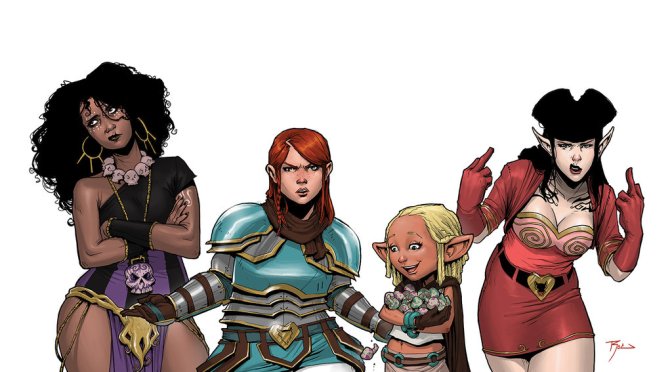
Book Review: Rat Queens, Volume 2: The Far-Reaching Tentacles of N’Rygoth + Braga #1

If possible, I think I love Rat Queens even more now than I did after finishing Volume 1. Volume 2 addressed the few quibbles I had with the first collection, and the Braga special issue tells the story of one of my favorite secondary characters from the comic.

When I read the first volume, I lamented a little that there wasn’t a whole lot of backstory for most of the characters. A friend assured me that this was something I could look forward to in the second volume, and he was absolutely right. I won’t say that there was as much backstory as I could ever want, but it’s definitely enough to both partially satisfy my desire for more information about the characters and whet my appetite for the series.

The character who was least developed in Sass and Sorcery was Dee, and we learn a lot more about her here. What I love, however, is the way Dee’s background is revealed here, in slow stages, while continuing to maintain a sense of mystery about her. I’ve got a much better sense of who Dee is, but I don’t think we’ve got the full measure of her yet.

The stand-out characters here, though, are Violet and Hannah. Violet’s backstory is great, with just the right amount of humor, properly deployed to lighten it up. It introduces a couple of really excellent minor female characters as well. For Hannah, we get some of her personal history as well as some new information that helps explain her difficult relationships with secondary characters Sawyer and Tizzie. I love that we get to see a little bit of softness and depth for both Hannah and Violet, which prevents them from slipping too comfortably into any Strong Female Character tropes. Instead, and this is particularly true for Hannah, they are pleasantly complex, with sometimes surprising depths.

Unfortunately, this isn’t true for Betty, who remains woefully unexplored in comparison. Her relationship with Faeyri is touched upon, but overall Betty has rather little to do. I hope that means the next arc will include more of Betty’s background, as she’s a potentially interesting character who so far is still a little one-note which becomes glaringly obvious as other characters gain more and more dimension.

The Braga special issue is excellently done, and it’s refreshing to find a story about a transgender character whose transness is almost incidental to her story. I have a particular love for stories about orcs in general, and this one is wonderfully different while still being very classically orc-story-like. It’s numbered, so I’m looking forward to more Braga stories in the future.

I only wish I’d read this all in the same afternoon as I read the first book, which I highly recommend doing for those who’ve just started the series. Do it. Just read it all in one go. You know you want to.

Weekend Links: October 17, 2015

Tor.com has revealed another new round of novella covers for us to drool over. I’m probably most excited about Mary Robinette Kowal’s Forest of Memory. I loved her novelette, “The Lady Astronaut of Mars” when I read it earlier this year, though I haven’t gotten around to reading her Glamourist Histories yet.

At Blackgate, Tor.com’s Mordicai Knode explains, “Why novellas?” This confirms a lot of my own feelings about the current sort of renaissance in short fiction and how ebooks are a perfect format for short novels and novella-length work.

For the 10th anniversary of her book, Twilight author Stephenie Meyer published a gender swap AU of it to, I guess, prove that it’s not sexist. Feministing has a great rundown of how this proves just the opposite.

A bunch of folks from Nightmare Magazine’s Queers Destroy Horror! issue did a Reddit AMA.

At Publisher’s Weekly, Ann Leckie gives us her list of 10 best science fiction books, and it’s a good one, a mix of some old standards and some unexpected titles.

Speaking of Ann Leckie, she’ll be appearing in Microsoft’s Future Visions collection, along with Elizabeth Bear, Greg Bear, David Brin, Nancy Kress, Jack McDevitt, Seanan McGuire, and Robert J. Sawyer. It will be available for free on all ebook platforms on November 17.

There’s a new Ken Liu story, “Crystal”, available now at Daily Science Fiction.

Mythcreants writes about five dualities that can replace good and evil in fiction.

Brain Pickings has collected a bunch of things smart people have said about artificial intelligence.

In These Times interviews Margaret Atwood.

Rich in Color lists six of their favorite 2015 SFF books.

Tor.com hates Pan, but this review describes so much failure that it actually makes me want to go see the film.

MTV’s Shannara Chronicles gets a full length trailer and an air date. I feel like I’m much more excited about this show than I ought to be.


Book Review: Binti by Nnedi Okorafor

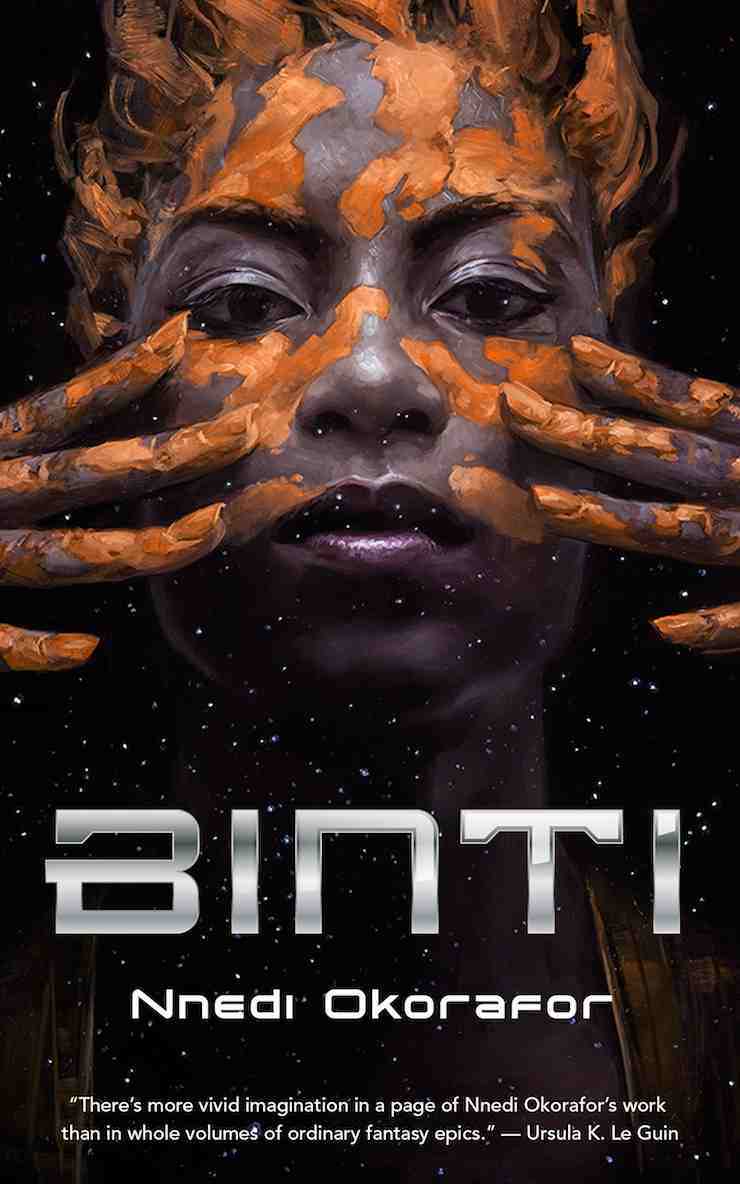
binti-book-coverBinti is the first of the Tor.com novellas that has turned out to be slightly disappointing to me, but I think that’s because my expectations were so very high after reading Nnedi Okorafor’s previous work over the last few years. It was always going to be hard for this story to live up to the power and beauty of Lagoon or Who Fears Death or The Book of Phoenix.

This isn’t to say that I didn’t like Binti. Indeed, there’s a lot to love about this little book, although probably my first complaint about it would be that it is so very little. Of the Tor.com novellas I’ve read so far, Binti has by far the lowest page count, which is a shame if for no other reason than I never want any book by Nnedi Okorafor to end.

My second complaint, and a more substantive one, is that Binti relies a little too much on magic in order to move the story along. Okorafor has always created worlds with a synthesis of magic and science, but here the magic becomes too much of a deus ex machina. Considering the book’s hefty messages about colonization, racism, and the nature of humanity, this excessive mysticism may be intentional, but I found it a bit much at times.

Binti‘s greatest strengths, on the other hand, lie in Okorafor’s gift for crafting characters and cultures. Binti herself is a wonderful heroine, if perhaps a little unrealistic in her lack of any real flaws, and her Meduse counterpart Okwu is excellently conceived and nicely-written. The Meduse people in general are fascinating, although their grievance was resolved a little too neatly in the end.

The very best part of the book, though, is the way Okorafor weaves in Binti’s personal history and shows the complicated feelings Binti has about her people, her culture, and her sense of self. There’s something rather melancholy about the ways in which Binti’s journey changes her, but I quite like the idea that every journey–no matter how much we start on our own terms–is a journey into an unknown and uncontrollable future. What I like even more, however, is the idea that we can always save something and take it with us. I love the idea of something as culturally and regionally specific as the Himba people’s otjize lasting long enough in time and space for someone to wear it to college on another planet, and in Binti otjize becomes a perfect symbol of resistance, endurance, and connection to the past.

I just wish there was a little more plot happening. There’s just not much going on, and the novella ends up feeling both uneventful and overstuffed with meaning. Without a strong story to support all of the big ideas Okorafor is weaving together, Binti starts collapse under its own weight. It’s a shame, because Binti herself is a great character that I’d love to see more of.

iZombie: “Zombie Bro” is a return to most excellent form for the show

I think I almost one hundred percent loved this episode, which I was looking forward to with some trepidation after the racist mess that was the season premier. Everything about “Zombie Bro” worked, though. There were lots of “bro” puns, some interesting revelations, and a gut punch at the end that promises some serious drama in the future.

The murder victim of the week is stabbed to death at a frat party, which kicks off an investigation that has a couple of parallels with and tonal similarities to last week’s mystery. It’s interesting to me that they would do two such thematically similar episodes back to back, but I like the confidence that shows. It seems obvious that the writers aren’t worried about the audience getting bored and are certain that the other elements of the show will keep people coming back. In light of how heavily I criticized last week’s episode, I also kind of like that this episode felt sort of like a do-over of that shitshow, and I know that if I ever rewatch this series in the future I’ll be pretending that this was the season premiere.

Highlights of “Zombie Bro” include:

  • “E tu, bro-te?” (Have I mentioned how much I love puns?)
  • The guy with the same name as the murder victim.
  • Liv’s inappropriate laughter.
  • Furries.
  • Liv’s police tape dress, which is a miracle of handicraft that I wish I thought I could pull off for Halloween. (Sadly, I think I’m just too busty for that look.)
  • Princess Sparkles.
  • Major not knowing how to buy drugs. Because of course he doesn’t.
  • Ravi not knowing how to take drugs.
  • Seriously, all of the banter between Major and Ravi in this episode was great. I’m really starting to love these guys together, and I want more of this dynamic.
  • Liv’s is still Major’s in case of emergency number.
  • Ravi dancing shirtless. Thank you, iZombie writers.
  • Major falling asleep in Liv’s lap. I don’t care for Major that much, but I’d have to be a monster to not be affected by this scene.
  • Ravi trying to make sense of his messages to himself the next day. You can really see the moment when he gives up.
  • We get to meet Blaine’s dad, and it’s probably the best Blaine scene to date. This makes so much sense.
  • That whole ending, which was just heartbreaking.

As much as I loved “Zombie Bro” it’s not without its flaws.

  • Peyton is still missing in action, and this week she didn’t even get a mention. By the time she comes back, we’re going to have straight up forgotten what she even looks like.
  • Liv dragging Gilda to the frat party could have been really fun, but instead Gilda just came off as a wet blanket and Liv came off like some kind of weirdo with a case of arrested development who dragged her new roommate to a frat party. It was a completely wasted opportunity, and Liv and Gilda barely even interacted with each other. Considering how much both Liv and I are longing for Liv to have a friendship with another woman, I was pretty disappointed by this.
  • Everything Major-related that doesn’t directly involve Liv or Ravi. When he’s with other characters, Major is great, but by himself he’s just a big beige bore, especially since Liv and Ravi are both people who Major could talk to about the stuff he’s going through and he just sort of stubbornly refuses to.

Overall, though, this was great episode, and I’m very much looking forward to the rest of the season and trying to pretend that “Grumpy Old Liv” never happened.

Book Review: Sunset Mantle by Alter S. Reiss

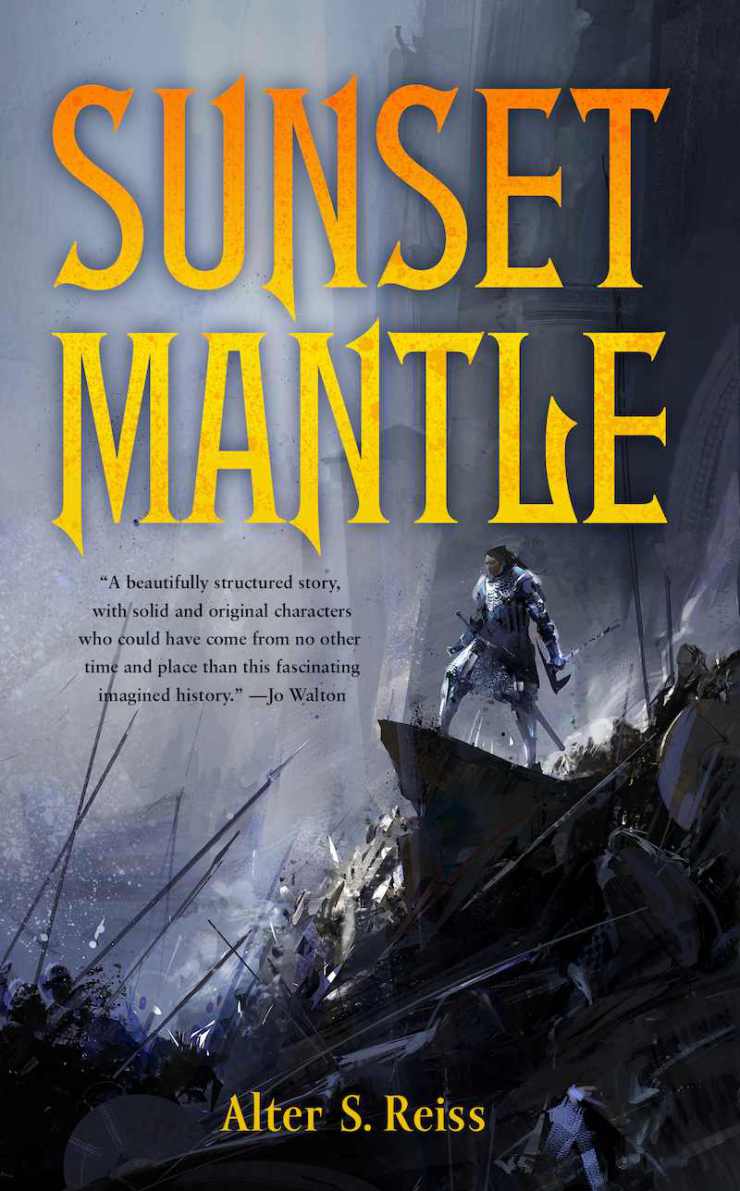
sunset-mantle-coverSunset Mantle is a sort of strange little book. It’s an interesting mix of things that I love (epic fantasy, low key romance, a huge battle scene) and things that I usually hate (military stories, few women characters, overly stoic and maladaptively principled hero), and I’ve kind of fallen in love with it.

Cete is exactly the sort of outcast slightly grizzled warrior character that would normally bore me to tears, but the first thing we learn about him is that he appreciates and longs for beautiful things. This is a simple, honest desire, and it’s a small aspect of the character of a man whose only business and skill is death, but who loves art. It’s this desire that is always at the core of the story in Sunset Mantle, and its frankly miraculous that Alter S. Reiss manages to make this novella work without it becoming mawkish and trite, but he does.

Marelle, the artisan who created the titular sunset mantle, is kind of a fascinating character to me. I really appreciate the first physical descriptions we get of her which are pleasantly unsexual and focus on qualities that are representative of her experiences and the unique ways she exists in the world. Her age is unstated, though it’s clear that she’s a young-but-mature woman, and her beauty or lack thereof is never remarked upon, though it’s shown amply later in the story that Cete at least finds her desirable. In the beginning, though, we learn about the way she carries herself, the ways that hard work has marked her, and the way she smiles directly at Cete–“the smile of one man to another, rather than that of a woman to a man.”

This particular passage is one that Reiss handles with delicate precision, establishing Marelle as a character who is both comforting and challenging to Cete and establishing Cete as a man who (sadly unusually in the epic fantasy genre) respects Marelle in a way that is refreshingly unpatronizing. The first two pages of this novella might be my favorite thing I’ve read in the fantasy genre in years, and they are the key to understanding and appreciating the rest of the book. It’s a great cold open that, while light on action, deftly and economically introduces the two most important characters in the story and makes them interesting and likable without resorting to any hackneyed or offensive tropes.

The world-building in Sunset Mantle is similarly superb, although there was a stretch between the opening scene and the end of the first third of the book where I wasn’t entirely sure I understood what was going on. This might have been intentional, to build suspense or something, but I found it just confusing, and I would have preferred a more straightforward explanation for how some of the political structures of this world are organized. All the same, when I finally got my bearings, I was impressed by the depth of detail Reiss has packed into such a short book. I’ve read 800-page novels with less world-building than Reiss packs into just over one hundred pages, and this world could easily support a much bigger story than the one told here.

Perhaps the greatest strength of Sunset Mantle is that it’s just plain well-written (aside from the above-mentioned early confusion about the political situation). It’s tightly plotted, generally easy to follow, contains an excellent battle at its climax, and has a satisfying ending that feels natural and earned. It’s a small and personal story that still manages to feel epic, and it has enough darkness and high stakes to be compelling but stops well enough short of being grimdark that the word “fun” can still be reasonably used to describe one’s Sunset Mantle reading experience.

Minority Report: “Fredi” offers character development, but not much else

To be fair, the character development in “Fredi” was both much-needed and refreshing after three weeks of heavily plot-focused story-telling. However, as nice as it was to learn a little more about Akeela and see Dash get a bit more to do, it wasn’t enough to carry an episode with such a hackneyed (albeit technically well-executed) case of the week.

The biggest problem I have with Minority Report at this point, though, is that I don’t think the writers really know how to embrace the aspects of the show’s concept and source material that could really set it apart from the pack of similar procedural programs. The pilot episode was a promising mess, with too many, too-conflicting ideas, but it also had a distinctness and specificity that has been largely missing in subsequent episodes. Most significantly, the major problem and moral conflict that was introduced in the pilot–essentially, how to deal with damage caused by pre-crime–seems to have been entirely abandoned, and it hasn’t really been replaced with any similarly weighty conflict.

“Fredi” opens with the official commencement of the Hawk-Eye program as the civilian analysts graduate their training and move on to working with their assigned officers. Right at the end of this opening scene, Dash has his vision of the week, helpfully warned about it by the device Wally gave him last week.  This vision is even less helpful than useful, but the mystery this week gives Dash some good opportunities to show off what he’s capable of doing on his own as he goes “undercover” to date the woman, Fredi, that he thinks is going to be murdered.

This is actually a tough story to squeeze into one episode. It’s not that there’s a lot that happens; on the contrary, there are relatively few events going on in “Fredi.” It’s just that the emotional arc of the episode, with Dash’s romance with Fredi, the revelation of Fredi’s search for the truth about her sister’s death, and the final “twist” ending, feels so rushed that it becomes unbelievable. I liked seeing this side of Dash explored, and it’s good to know that he’s not as helpless socially as he’s seemed the last few weeks, but I’ve never been a fan of these sorts of whirlwind fictional romances. It’s the right emotional trajectory, but it happens so quickly that the impact of it all is too diminished to be truly effective.

Still, there were some parts of the episode that worked.

I was thrilled to see Akeela get a little more screen time. I liked her meeting with Wally, and I thought her scenes with Vega worked well. I’m starting to feel like these two women are actually friends, and I hope we get to see some more of them doing things together in the future, hopefully a little less focused on Dash-voyeurism.

Another pairing that I liked? Dash and Arthur. Arthur’s willingness to drop whatever he is doing in order to be available for his brother is actually a sort of fascinating piece of characterization. It shows that Dash isn’t the only one with some issues with codependency, but it also shows just how deep their bond really goes. Dash’s reliance on Arthur for assistance can be a little tiresome, and I’d like to see Arthur’s area of expertise be a little more specifically defined and limited, but I will forgive it this week because I thought the eyeball printer was awesome even though I’m not sure how Arthur knows that guy.

Finally, Agatha might be the most interesting character on the show, and the mystery of exactly what she’s up to is genuinely intriguing. She sent Charlie to get her a schematic for the milk bath that she and the twins were kept in during pre-crime, and I honestly have no idea what she might need that for–which is a feeling I love having about shows. This secondary plot could stand to be a little more tonally connected to everything else, but it’s the last vestige of some of the big ideas that were introduced in the pilot.

Mostly, “Fredi” is notable as the first episode of the show that felt more like a straightforward procedural.

When I watched the pilot, the thing that I found most interesting was that question of what to do with the survivors of the pre-crime system, both precognitives and pre-criminals; the contrast between those two experiences; and the ethical and moral questions presented by Dash’s return to law enforcement. The pilot was, as I said, a mess, but I had high hopes that this could be a smart, timely show to address some important topics. Even the shift in the last couple of episodes to a less substantive case of the week format didn’t faze me because the institution of the Hawk-Eye program was on the horizon, and that should present a ton of ethically grey material to explore. Then we get “Fredi,” which basically ignores Hawk-Eye altogether after the first few minutes, as if the whole Hawk-Eye thing was just a way to give Dash and Vega a cover for working together. It’s disheartening that the first case they work on after getting the official go-ahead is one that isn’t related to Hawk-Eye at all.

Fox has already cut their series order for this show from thirteen episodes to ten, and while this is a normal pattern for the network, I’m having a hard time seeing why they should keep this show around longer than that. I’m probably going to give it a couple more weeks at least because I’m still enjoying it, but it’s sad to see what I think could have been a winning premise and excellent source material being squandered like this. Minority Report could have been something really special if it had embraced the cerebral concepts it originally introduced, but instead it’s spent the last three weeks distancing itself as far as possible from them.

Random thoughts:

  • I’m not sure how I feel about the explanation for Akeela’s face tattoos. I thought facial recognition software was already more advanced than that.
  • I had the strongest feeling all through the episode that I recognized the actress playing Fredi, and I did! She’s Sheila Vand, who played The Girl in A Girl Walks Home Alone at Night. She just looks very different in color.
  • If you haven’t seen it yet, go watch A Girl Walks Home Alone at Night immediately. It’s on Netflix, and it’s wonderful.
  • I love Rizwan Manji, who played the guy with the eyeball printer.
  • Seriously, that eyeball printer is pretty cool.
  • But how did that eyeball not get squished just rolling around in Fredi’s purse?

“Before the Flood” is Doctor Who at its most mediocre and frustrating

This most recent episode of Doctor Who wasn’t completely awful, but it just felt a bit ho hum, to be honest. I hate being condescended to, and I hate watching characters I like being condescended to, so I kind of hated “Before the Flood” in spite of its not being a particularly bad episode.

It really just rubbed me wrong right out of the gate, with a quick explanation of the bootstrap paradox. You know, just in case there’s anyone watching Doctor Who or interested in science fiction who isn’t at least somewhat familiar with one of the most common concepts of how time travel might work. We might not know it by this name, but we’re all pretty familiar with the idea. And, frankly, this explanation seemed patronizing enough that it ought to irritate folks even if they find it informative.

So, that happened.

We’re then launched into an episode that cements, in my mind anyway, Peter Capaldi’s Doctor as the most unlikable iteration to date. The Doctor has always been inconsiderate, self-absorbed, and somewhat manic, but in the past his actions have generally been governed (and his worst tendencies have been tempered) by a deep-seated basic decency, a reverence for life, and a real desire to help people. That’s not so much the case these days.

And this new Doctor isn’t just cavalier with people’s feelings, he’s cavalier with their lives, and there are basically no consequences for the Doctor at all. Indeed, he seems entirely unaffected at the end of this episode. The worst part, though, is that it seems that in order to protect the Doctor from criticism by the audience, all of the characters’ emotional reactions feel weirdly muted, and “Before the Flood” ends with the Doctor giving a whiz-bang explanation of how clever he was to have figured out what was going on. Considering how many people died–and at least one was clearly preventable–you’d think the mood might be a little more somber. The Doctor’s self-congratulatory tirade here is grating.

This season’s rather depressing treatment of Clara continued this week, with the companion once again sidelined with little to do and nothing to actively contribute to solving the week’s problem. She did talk to the Doctor on the phone, which gave him the information he needed to figure out what he needed to do, but Clara didn’t actually get to have any ideas of her own or take any actions that helped move the plot along.

I’m entirely convinced that Steven Moffat has no idea what the Doctor’s companions are for, and that Clara is the culmination of Moffat’s successful campaign to turn the companion into a piece of pretty furniture who occasionally makes nurturing noises. Clara seems to only exist now in order to be an object that the Doctor is ostensibly very passionate about rescuing.

The treatment of women in general has been pretty awful in this most recent pair of episodes. I wanted to scream when the Doctor (half-heartedly, really) tried to get O’Donnell to stay in the Tardis for protection. The Doctor seemed to deliberately imply that his solicitude was vaguely sexist, which of course prompted a feisty rejoinder from O’Donnell about how she’s not going to stand for that sort of nonsense. So she leaves the Tardis and is promptly killed by the Fisher King. I’m not sure there are even words to fully convey just how much I hate this particular, highly insulting and misogynistic trope.

For all the promise Cass showed as a character last week, she has just as little to do this week as Clara, and in the end is reduced to a romantic reward for the guy who is only alive in the first place because of Cass stopping him from seeing the words carved into the spaceship. Also to make Bennet look emotionally intelligent so we can see how much O’Donnell’s senseless death helped him to grow as a person. O’Donnell and Cass deserve so much better than this.

I said, though, that the episode was mediocre. It was, objectively, in spite of the many things about it that really pissed me off.

It had a genuinely creepy monster in the Fisher King, who looked really cool, although his taunting of the Doctor sounded a little too reminiscent of, well, a bunch of other enemies of the Doctor in previous episodes. And Paul Kaye as the Tivolian undertaker, Prentis, is an absolute treasure, if almost unrecognizably made up. In the end, the Doctor’s solution to their predicament was actually pretty clever, although it would have been more surprising and less grating if it wasn’t for that absolutely insufferable opening monologue.

Like many episodes in the Moffat era, “Before the Flood” is a mix of some of the best and worst of Doctor Who. The last two seasons of the show have more than demonstrated that it really, really could have been worse.

Book Review: Witches of Lychford by Paul Cornell

Witches of Lychford is every bit as beautiful as its truly lovely cover (somewhat reminiscent of the posters for my favorite ’90s teen witch flick, The Craft) suggests. Like its cover, Witches is a story painted in subtle tones to develop its themes with both a clear sensibility for small town life and a gentle humor that makes it a joy to read.

The story deals largely with themes related to the disruption and destruction of small towns by corporate interests. The villain here seems to me a pretty thinly veiled reference to Walmart (or Asda, I suppose, in the UK), and we learn that what’s at risk is not just destruction of the expected small town community virtues but also the destruction of the border between two worlds.

The really standout aspect of this novella, though, is its characters. The three women around whom the story revolves all have their own separate and unique personalities and character arcs, which unfold at a pace that is both tightly managed to fit inside just 144 pages but also leisurely enough to be enjoyable reading. Judith, Lizzie, and Autumn are exactly the sorts of women that I love to read about: smart, funny, brave, resourceful, flawed enough to feel real and with just the right amount of magic. They’re also supported by a cast of small-town characters that feel familiar without the use of any tired tropes and have enough depth to make me care about them and become even more invested in what happens to their town by making Lychford feel like a real place.

The plot is simple and straightforward, which is ideal for novella length works. It’s never too complicated and Paul Cornell has a real gift for knowing just how best to develop his story and characters. While the urgency of the story builds throughout the book, events never feel rushed, and emotional moments happen exactly when they need to. The ending is satisfying, but it isn’t too tidy or trite, and it’s open-ended enough that I could easily see this story being continued in another novella or novel.

Recommended reading for a lazy Sunday afternoon in fall. I’d suggest making a day of just reading and watching stuff with witches in it. Combine with Practical MagicHocus Pocus, and something pumpkin spice flavored.