Category Archives: Television

Supergirl: “Manhunter” has a lot going on, leaving me with a lot of mixed feelings

“Manhunter” picks up more or less where last week’s episode ended and deals primarily with the fallout from the revelation that Hank Henshaw has been an alien in disguise for the last ten years. It’s good to see that the events of “Falling” aren’t going to be dealt with quickly, and at this rate it seems likely that we won’t be seeing a proper resolution to things until the season finale. Unfortunately, “Manhunter” falls apart a bit at the end, with some weird shuffling around of things and a couple of revelations, all of which I have some mixed feelings about.

While the episode is ostensibly dealing with the immediate consequences of last week’s episode, most of the hour is actually spent in flashbacks, with mixed results. The Martian Manhunter flashbacks weren’t actually that interesting and don’t tell us anything in particular that wasn’t already shown in previous flashbacks or couldn’t have been summed up in a line or two of dialogue. It also didn’t help that the interrogator, Colonel Harper, is supposed to have some kind of personal connection to Hank Henshaw—they’re best friends, apparently—but we’ve literally never seen him before, so there’s no context for his feelings of hatred and betrayal. This might have worked better if these things were intended to add some nuance or gray areas to the situation, but Harper is just a cardboard villain who ends up fairly easily defeated in the end.

The Alex flashback—where we learn that she was basically an unmotivated party girl (with a doctorate, I guess) before being recruited to the DEO—was good in theory, but the execution wasn’t great. I really appreciate that Hank didn’t rescue her from a date rape or mugging or something like that, but rescuing her from being busted for public intoxication doesn’t quite make the case for how adrift and struggling we’re supposed to believe Alex was during that time, either. It’s just mildly humiliating, not a total crisis.

The final flashback belongs to Kara, as she finally tells Lucy Lane about her identity. I like the material shared in this flashback best, as it actually gives us new insights into Kara and her childhood as an alien trying to fit in on Earth, her relationship with Alex, and her relationship with her adoptive father, Jeremiah Danvers. Unfortunately, the thematic connections between this little saga, J’onn J’onnz’s decision to impersonate Hank Henshaw, and Lucy’s own desire to fit in just don’t work. These are all very different situations, and the extremely superficial similarities aren’t enough to tie things together in a satisfactory way.

This thematic dissonance is further complicated this week by Siobhan’s storyline, which just keeps happening for some reason. While Kara is out of the office, Siobhan sneaks in and sends a nasty email to Cat Grant from Kara’s computer, but Cat—with Winn’s help—sees right through it. Winn tries to comfort a distraught Siobhan, but she breaks a heel and falls off a roof, screaming, only to have the power of her screams stop her fall. WHAT. After doing some reading about it this afternoon, apparently, this is because Siobhan is the Silver Banshee, a comic book villain I know nothing about, but who is apparently a pretty significant player in the Supergirl story. Siobhan makes a lot more sense now, and I figure we can expect her to show up as a villain of the week sometime before the season finale, but still. Her whole storyline seems like an awful lot of work for another villain of the week, and I don’t think there’s enough substance to her—especially to her interactions with Kara—to carry more than an episode.

The biggest real development in “Manhunter,” though, is the change in leadership at the DEO. While I’m not totally happy with the way they got there, I’m thrilled to see Lucy Lane take it over, mostly because I see this going one of a couple different directions. Either Lucy takes over the DEO and we see much less of it because of Jenna Dewan Tatum’s guest star status, which could be a good thing since the multiple disparate settings of the show have always been to its detriment OR Lucy takes over the DEO and she and Kara work together to protect the planet and become best friends, which would be excellent, since this episode just proved that they can work really well together—even if the stealth bikes were kind of silly. Either way, I think I’d be pleased.

It’s hard to believe there are only three episodes left in the season, to be honest. There are an awful lot of stories going on—Lucy at the DEO, Kara and James’s romance, Siobhan and Winn, Alex and Hank going after Project Cadmus and Jeremiah Danvers, whatever Non is up to these days, plus that much-hyped crossover with The Flash—that need to be at least partially sorted out by the end of the season, and I’m curious to see which ones the show does justice. We’ll see!

Miscellaneous thoughts:

  • I also have mixed feelings about how kind of sexy chubby Dean Cain is.
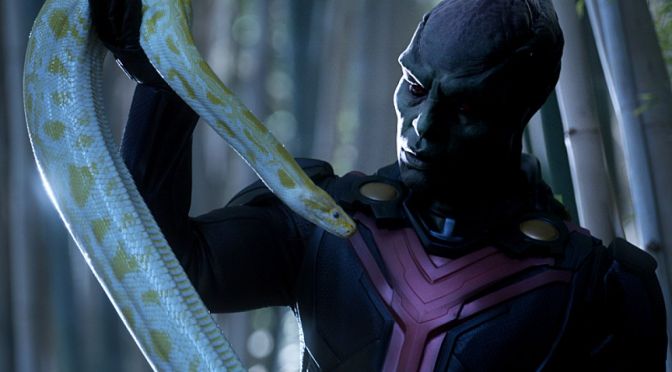
  • That poor boa. Just minding its own business when some dude thinks he needs to manhandle it.
  • When did Hank get better at wiping memories? Who has he been practicing on? And what happened to his ethical concerns about doing it at all?
  • I can’t be the only person who gets more of a romance vibe than a father-daughter vibe from the relationship between Alex and Hank, right?
  • Lucy’s face when she learns that Kara is Supergirl is priceless. Because of course. Poor Lucy.
  • Jeremiah Danvers is still alive, supposedly trapped at this Project Cadmus thing, but I’d give even odds that he’s actually the mastermind behind it. I guess we’ll find out in the next couple of weeks, with Hank and Alex going after him.
  • Also even odds on Siobhan somehow corrupting Winn and turning him into Toyman 2.0 or something.
  • Lucy stepping into her place at the DEO was #ICONIC.
Lucifer: “A Priest Walks into a Bar” is this show’s best episode yet

I’m so glad I didn’t give up on this show in the very shaky first half of the season, because it’s really gotten good in the last few weeks. “A Priest Walks into a Bar” is Lucifer’s best episode yet. Lucifer is always at its best when it doesn’t focus too much on its cop show elements, and in this week most of that is pushed well into the background in favor of working on Lucifer’s character growth.

Spoilers ahoy!

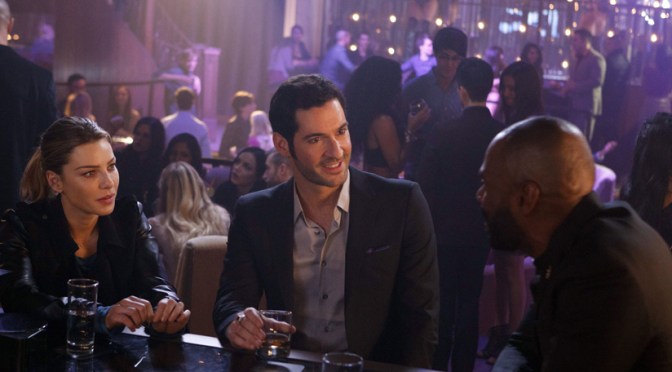
Much of this is due to guest star Colman Domingo as Father Frank Lawrence, a Catholic priest with a complicated past. When Father Frank seeks out Lucifer for help with extracting a teenage boy from a drug ring, Lucifer is hostile, mocking the priesthood and what Lucifer perceives as either hypocrisy or stupidity. Just when Lucifer reaches the height of his pathological obnoxiousness, though, there’s a breakthrough of sorts when Lucifer realizes that Father Frank isn’t what Lucifer thought he was. The growth of their friendship over the course of the episode is excellently written and nicely acted, and it feels organic and earned without being cloying.

There are a great number of wonderful moments with Father Frank and Lucifer, including a charming piano duet, but the real importance of this relationship is the opportunity for exploring some of the theological underpinnings of the show’s premise. Fortunately, the writers did not disappoint. While some of the parallels drawn between Father Frank’s relationship with his teenage charge and Lucifer’s relationship with his father are a bit of a stretch, it’s good for Lucifer to see unconditional love and faith at work, and Father Frank’s life and tragic death have certainly given Lucifer something to think about as we move into the final few episodes of the season.

Lucifer’s arrested development might be a central aspect of his characterization, and I think it’s unlikely that this is a major turning point for him, but it’s good to see him open up a little and, between Lucifer’s short conversation with Dr. Martin at the start of the episode and his experience befriending Father Frank, it seems like there is some real progress made this week. The narrative reward for this, of course, is a deepening of Lucifer’s friendship with Chloe, and the episode ends with the pair having a sweet moment of connection when Chloe shows up to comfort her friend after Father Frank’s death. It’s a little frustrating to see Chloe’s attention being set up so clearly as a sort of “reward” for Lucifer’s good behavior, but if a central story being told on the show is about Lucifer’s journey to earning Chloe’s trust and love (whether platonic or romantic), I suppose this is a necessary step.

After a couple of weeks very focused on Chloe’s concerns, this episode leaves her largely in the background, both literally and figuratively. In many scenes, she exists as an observer of Lucifer, around whose growth this episode revolves, but to the show’s credit this serves more to put the viewer in Chloe’s point of view than to cut her from the action. It’s an interesting tactic that straddles a weird line between marginalizing the show’s most significant female character by removing her from being a direct agent in the story action and making her the character with whom we the audience are most intended to identify by putting her in a position of objective witness to something mythological.

That said, the evolving remains of the Palmetto storyline take a decided back seat this week, and even Chloe’s thawing feelings towards Dan are pushed off to be dealt with in the future. The biggest news on this front, to be honest, is the further confirmation from a conversation between Dan and Malcolm that Dan is indeed a dirty cop who only shot Malcolm to protect Chloe—an excuse that likely isn’t going to make Chloe more inclined to forgiveness when this all inevitably comes out sometime in the next two or three weeks. We also learn what Amenadiel is up to with resurrecting Malcolm, but the ideas introduced there are still waiting to be further developed, again in the next two or three weeks.

With just four episodes left in the season, things seem to be on track for some major developments in time for a dramatic finale. The show has managed in the last few episodes to achieve a solid foundation on which to build the rest of its story, but I still haven’t forgotten that less than a month ago I was ready to quit it altogether. Here’s hoping that Lucifer can stick its landing. If it does, I think it will definitely have earned a second season.

Supergirl: “Falling” sets the bar very high for the rest of this season

I’m not sure if I love or loathe this most recent episode of Supergirl. Partly this is because it turned out to be absolutely none of the things that I thought it might be based just on the title. I don’t watch previews for the individual episodes, believe it or not, so I (probably naively, now that I think about it) thought that maybe this week would be centered on Kara’s budding romance with James now that Lucy Lane is out of the picture. So. Needless to say, my expectations were not met at all, and I’m not entirely sure what to make of what the episode actually turned out to be.

Objectively, I suppose, “Falling” does a lot of things right. It’s a structurally sound episode, for sure, with Kara’s descent into badness acting as a grand unifying event and theme for the whole hour. This works really well to bring the DEO and CatCo portions of the show into a kind of harmony with each other that it’s seldom accomplished before. I’d be really pleased if I thought the show would be able to maintain this cohesiveness, but that seems highly unlikely considering this is the first episode (Episode 16!) that they’ve managed it. That said, it was still very nice to see all of Supergirl’s moving pieces working in concert for once, even if it does feel almost out of place after I’ve gotten so used to the ordinary way the show is run.

I also really like the way Kara’s turning bad is presented. While it does touch on a lot of the expected good-girl-gone-bad tropes, Bad Kara is much more than just evil. The red kryptonite essentially turns off Kara’s ability to give a fuck about what other people think of her, and Bad Kara is a creature of pure id, spewing all her worst feelings all over everyone she comes in contact with this week. There’s a little bit of mixed messaging, like when Kara showing up in full on femme fatale mode to a club with Demi Lovato’s “Confident” plays—I guess ironically—in the background, but for the most part I think it works.

The best part of the episode, though, was that there are real consequences for Kara’s actions, and she’s forced to be really accountable for what she does while under the influence of red kryptonite. It’s not fair, because of course I love Kara and only want good things for her, but the fallout we see here is something real-seeming. Hank Henshaw is forced to out himself as Martian Manhunter, which jeopardizes his position at the DEO—he ends the episode locked in a cell there like any other alien. James is still reeling from being dumped by Lucy, only to have Kara act like a monster about it—things are not okay between them now, and he asks Kara for some space right as she’s finally about to declare her feelings for him. I’m not a huge fan of this romance, but this is a real impediment that makes sense and is legitimately compelling.

The heroes of the episode, of course, are Alex, who loves Kara unconditionally, and Cat Grant, who has a different, but similarly unconditional, kind of love for Supergirl. When Kara wakes up after being cured of the effects of the red kryptonite and Alex was there to forgive her, I thought my heart might break. And when Supergirl goes to Cat for comfort and advice at the end of the episode, and Cat was also forgiving, I think my heart grew at least two sizes. These relationships are so important, and I wish the show would cut out all of Kara’s boy troubles and just focus on this. Supergirl isn’t always as revolutionary as it aspires to be, when it comes to women’s issues, but these scenes were absolutely perfect.

“Falling” was a great way for the show to shake up the status quo. As a viewer, it definitely surprised me, and the way things are left at the end of this episode should make for some excellent episodes in the coming weeks. My biggest concern going forward is that the show is going to move too quickly through Kara’s journey to redemption and miss out on the resonance that this story should have. It’s the sort of thing that ought to take til the end of this season, but Supergirl has a worrisome tendency to rush through story. I’d hate to see it miss this opportunity for greatness.

Miscellaneous thoughts:

  • Probably an unpopular opinion, and I know it’s shameless cross-promotion for another CBS show, but I kind of loved Cat Grant’s appearance on The Talk.
  • Is there any possible way that Cat really doesn’t know that Kara is Supergirl? We’re supposed to believe that Cat is highly intelligent and perceptive, so is there any chance that she doesn’t notice her assistant’s bizarre behavior?
  • If Kara burned all her clothes, where did she get her final outfit of the episode?
  • So I guess Siobhan is gone for good? That was anticlimactic.
  • Senator Crane was back this week! I love her, but I hope she doesn’t become an antagonist.
  • I feel like the show might still be trying to make Alex and Maxwell Lord happen, and OH MY GOD PLEASE NO DON’T. He is the literal worst.

Lucifer: After two steps forward, “Et Tu Doctor?” is a decided step back

After two very good, though decidedly not great, episodes, this week Lucifer falls back into the tired cop show trap it’s struggled in all season. Of the show’s more procedural type episodes, “Et Tu, Doctor?” is among the better ones, and there were a couple of developments that I really liked, but the reality is that Lucifer has a tendency to be dragged down by its procedural elements rather than elevating them. What made the last couple of episodes better than the first half of the season was their heavier focus on the mythology that ought to make Lucifer fresh and interesting, but this episode is mostly back to a humdrum case of the week that even guest star Al Madrigal can’t rescue.

When a therapist known for advising couples to cheat on each other (Is this a real thing?) turns up dead, Lucifer manages to get his own therapist in on the case because he’s convinced that Chloe’s consistent rejection of him and his jealousy over her relationship with Dan is a sign of a problem with Chloe. This whole bit—that Lucifer is so used to getting what he wants that he just can’t wrap his head around the idea that someone doesn’t want to bang him—is one of my least favorite things about this show, to be honest. Lucifer’s fixation on Chloe isn’t cute or endearing; it’s unhealthy and his level of selfish entitlement is slightly frightening. Occasionally the show manages to make this whole mess work, and the last couple of weeks saw some of Lucifer’s worst behaviors subsiding. However, this episode brings all of it back with a vengeance, and there’s not much more infuriating to see than Chloe’s patient indulgence of Lucifer’s nonsense.

However, I complained just last week that none of the women on the show ever get to talk to each other, and this week was actually mostly them talking to each other. Well, not mostly, but Lucifer himself did take a bit of a back seat in this episode. Chloe and Dr. Martin actually have a somewhat fun dynamic as they work the case of the murdered therapist together, and I think this episode finally manages to pass the Bechdel test. Dr. Martin also gets to meet Maze, though that interaction is less interesting, as the show still seems determined to write Maze as more of a very jealous, possessive, catty girlfriend of Lucifer’s than anything else. Still, and sadly, having these women interact with each other at all is a kind of progress for this program, even if it doesn’t entirely pay off.

In better news, this episode addresses Dr. Martin’s unethical behavior—which I’ve criticized before as highly unbelievable—more or less head on. Considering how little Lucifer’s sexual relationship with Dr. Martin has really figured into either of their characters’ development so far, I’m not sure why it was bothered with at all, but I’m happy to see that chapter of their interactions come to a close. Dr. Martin is a potentially very interesting character, but it’s been frustrating to watch her be mostly flustered by Lucifer and engaging in such clearly problematic behavior with a patient when she could be much better used as, well, Lucifer’s actual therapist. The idea of the Devil working through his feelings in talk therapy isn’t a bad one, but the running “joke” of Lucifer banging his hot therapist has made it difficult to take any of his sessions very seriously. Also, it’s not funny. Hopefully the change in their arrangement this week means that we’ll see some real improvements over the last few episodes of the season.

The other major development this week concerns the Palmetto case, which Chloe and Dan are still investigating together. Amenadiel, for some reason, resurrected Malcolm right as his life support was being disconnected, and this week Malcolm confronts Chloe about her investigation, claiming that he also wants to know who the dirty cop is who shot him. Their conversation gives Chloe the idea that Malcolm’s partner must have been the shooter, and this seems to be proven when the partner turns up dead of an apparent suicide, accompanied by a note confessing. Before the end of the hour, though, we learn that this is all a red herring meant to stop Chloe’s investigation. We also learn that it wasn’t Malcolm’s partner who shot him—it was Chloe’s ex, Dan. This is a legitimately surprising development, and promises some serious drama to come.

Miscellaneous thoughts:

  • No Amenadiel this week, though Lucifer did figure out some of what his brother is up to—as well as Maze’s betrayal.
  • Thematically, this episode worked, for the most part, as an exploration of jealousy, but I don’t think Lucifer really grew or learned anything about himself, which is a disappointment.
  • I think I would have an easier time buying into the Lucifer/Chloe will they or won’t they thing if these two characters had any discernable romantic chemistry or sexual tension.
  • The show has implied that Lucifer is not that choosy about the gender of his sexual partners, so is there a reason that every person he needs to fuck in order to get stuff has to be a beautiful woman? (A reason besides sexism and/or homophobia, that is.)

Lucifer: “Wingman” is another strong episode with some smart writing

I’m starting to think Lucifer might really be hitting its stride. “Wingman” proves that last week’s solid showing wasn’t a fluke, and it’s another strong episode with some great character work as we pass the midpoint of the season.

This is the first week that I really, really buy the burgeoning friendship between Lucifer and Chloe. The parallel development of their characters and their growing mutual affection seemed more organic this week than it has up to this point, and the dynamic between Lucifer, Chloe, and Dan was natural and, refreshingly, free of much bullshit male posturing. There’s definitely some jealousy there, but Dan is more concerned with sorting out his and Chloe’s relationship problems—which have nothing to do with Lucifer—and Lucifer has finally stopped being sexually aggressive with Chloe like he was in the first few episodes and is learning how to be a real friend.

For her part, Chloe got a huge dose of character development this week. The Palmetto case—Chloe is certain that it’s a case of a dirty cop—has been mentioned before, and it’s the reason why Chloe has problems with the other detectives at the precinct. In “Wingman,” we finally get to learn more about the situation, and there’s even a sort of resolution to it. I really enjoyed seeing Chloe struggle to balance her desire for truth at all costs with Dan’s argument that truth doesn’t always mean justice. Proving that Malcolm was dirty would deprive his family of the pension that they would normally get for an officer killed in the line of duty, and perhaps cause real hardship for them. Still, I loved the way that this conflict played out. Dan respects and supports Chloe, in spite of their disagreement, and when Chloe has a fresh idea about the case, it’s Dan who she shares her moment with. Their relationship is complex in some very interesting ways. I can see why their marriage is on the rocks, but there are also a lot of reasons to root for them to get back together.

The best thing about “Wingman,” however, is seeing Lucifer and Amenadiel work together. This is the first time these two have spent this much time with each other to date, and it’s excellent. They have a great on screen chemistry, and their dysfunctional familial dynamic is fascinating. This week, the show really digs into the divine aspects of that, setting up some clear consequences for both Lucifer and Amenadiel and taking a look at the wider-reaching effects Lucifer’s dereliction of duty might have. It also offered a much better and more philosophically sophisticated explanation for Lucifer’s decision to leave Hell in the first place. Last week, the show highlighted the “rebellious son” angle, but this week shows us both that Lucifer had something real to rebel against and that it didn’t come without some deep personal cost to himself.

Tom Ellis and D.B. Woodside were both at the top of their game in “Wingman,” and both of their characters got big injections of pathos that give them much more complexity than they had, say, two weeks ago. Amenadiel’s shock and sorrow when Lucifer burns his wings was a powerful moment, as was the anger that came on the heels of that pain. It’s tempting as a viewer to think that Lucifer deserved every punch, but his own lack of fighting back suggests that he thinks so, too, and only adds to the sense of tragedy here. The psychological, theological, and philosophical complexities of the show are slowly building up, and they’re being worked in in some smart and subtle ways, and if the show can keep it up it might turn into something really special and unique.

Miscellaneous thoughts:

  • This show’s episode titles have been very hit-or-miss, but this is a good one—an amusing play on words with multiple layers of meaning. Excellent job, person in charge of picking it.
  • Dr. Martin doesn’t appear this week, and I think the episode is actually better for it. Too many of her interactions with Lucifer are uncomfortable, and her lack of ethics makes her ability to be an effective therapist questionable.
  • It seems pretty heavily telegraphed that the downed officer’s partner is the guy who shot him, which is a bummer. I’d like a little more mystery, to be honest. We’ll see, though.
  • Who else suspects that Lucifer might have only burned the fake wings?
  • I feel like the show isn’t really quite sure what to do with Mazikeen. She’s an interesting character, but she doesn’t interact much with anyone besides Lucifer, and I hate that she seems to be so motivated right now by jealousy of Chloe.
  • Finally, if I have one major ongoing general criticism of the show, it’s that none of Lucifer’s female characters talk to other women at all. There’s been so much other stuff to criticize that I’ve never gotten around to it before now, but it would be great if Chloe had a girlfriend or two that she could talk with about things. It might be tough to work in friends for Maze or Dr. Martin, but Chloe could definitely do with a girls’ night out every once in a while.

The Shannara Chronicles: “Ellcrys” is a mostly solid finish to a wildly inconsistent season

The most frustrating thing about The Shannara Chronicles, all along, has been that its occasionally really great, which only makes its failures more glaringly obvious. “Ellcrys” is—surprisingly, after a half dozen increasingly terrible hours—mostly excellent. Only mostly, though, and where it fell short, it fell really short.

The first problem occurs right out of the gate this week. Because the show spent so long getting to the events of “Safehold,” that left our heroes, at the beginning of the season finale, at their farthest point away from Arborlon and the Ellcrys, but still with their quest only halfway done and a whole army of demons between them and their goal. So things are kind of necessarily rushed, with Wil resurrecting Eretria, Eretria reopening the portal that Amberle had disappeared through, and then all three frantically racing back out of Safehold. Of course this is when the trolls finally wake up—possibly stirred by all the noise from last week’s fight with a couple of shrieking witches—and come out to play, giving Eretria the chance to be a big damn hero and save her friends.

On the one hand, I kind of love this bit. Eretria has gotten a relatively coherent character arc this season, and we’ve seen her go from being a self-serving opportunist out to free herself from her enslavement to Cephalo to being part of a team of friends and willing to sacrifice herself for a greater good. Even if not every step of Eretria’s character growth has been fully realized, I think her heroic moment was mostly earned. It also doesn’t hurt that Eretria’s fighting with the trolls is a nicely executed action scene that was great fun to watch. On the other hand, Eretria’s apparent self-sacrifice neatly serves to cut her entirely out of the story for the rest of the hour, which sucks. Oh, and not only is Eretria cut out of all the action and excluded from the final completion of the quest, she ends up captured by the trolls, and the season ends on a cliffhanger as she sees someone she recognizes, which is awful cryptic for a show that doesn’t have a confirmed second season yet.

Amberle and Wil’s actual journey back to Arborlon is mostly uneventful and includes like two straight minutes of them riding horses on a beach at sunset with their hair streaming gloriously behind them. It’s probably the cheesiest sequence the show has done to date, but I kind of loved it, lens flares and all, because it was so entirely unironic. When the pair finally get back to the woods around the elven (I am not spelling that with an “i”) capital, though, the find the area already overrun with demons. Amberle leads Wil to a cave where they hole up until dark.

While they wait, Amberle tries to confide in Wil about what she learned at Safehold about her role in saving the Ellcrys, but she’s not ready yet for full disclosure. Instead, she confesses that she loves him, and they share a passionate afternoon of lovemaking. When they finally move on after dark, Amberle is now content and prepared to go meet her fate, although Wil still doesn’t know about what she’s got to do until the last moment. Poppy Drayton and Austin Butler turn in some of their best performances in this finale, but their sex scene is the opposite of sexy. It’s not that they don’t have any chemistry, either. The scene is very short, and it’s basically just blurry writhing bodies with a fade to black. It’s not very visually interesting, and this lessens any emotional impact it might have had. If they were going to just fade it to black and have the pair wake up later in the evening, they could have spent less time showing any of the actual sex. If they really felt the sex was important to explicitly include, they ought to have shown a little more. It’s definitely not the worst thing this show has ever done, but it stood out like a sore thumb in an otherwise nicely shot episode.

The biggest surprise of the episode was the big battle scene in the woods outside where the Ellcrys is kept. I was fairly certain that we’d get a pretty epic battle in the finale, and I wasn’t disappointed. Certainly it wasn’t on as grand a scale as anything on Game of Thrones, but it looked good. There was a big enough crowd of extras to add some sense of size, and the fighting is well-choreographed in low key, naturalistic sort of way. It didn’t feel real, but it did feel like just the sort of good epic fantasy battle that I would have liked to see a little more of over the course of season. Unfortunately, both of the battle’s climactic moments were deeply flawed.

Before the actual fighting starts, Ander and Commander Tilton have a sweet moment where they seem to rekindle their romantic relationship. It’s a brief scene, but it was nice. Both of these characters have been grieving the loss of Arion, and this scene gives us some hope that with time they will heal and have a future together. Nope. Turns out that Arion has been possessed by the Dagda Mor and forced to fight in the demon army. He kills Tilton, then begs Ander to kill him, which is sad, I guess? I was kind of shocked by Tilton’s death, if only because it seemed so wasteful—the character was sadly underdeveloped—and such a betrayal of the expectation built by the earlier scene between Tilton and Ander. It’s also pretty shitty that the only significant woman of color on the show just got fridged.

It was surprising to see Arion come back, as well, since it wasn’t really foreshadowed or anything. Sure, we never did technically see his cold, dead corpse, but we also haven’t seen hide or hair of him since he got himself stabbed by the Dagda Mor. Mostly, though, this just speaks to the fact that we have no idea how the Dagda Mor’s magic works or what he’s capable of. Without even a basic knowledge of the Dagda Mor’s capabilities, there was never any reason to expect something like this, so when it happens, it feels random and, well, not meaningless, but a cheap ploy to elicit an unearned emotional response from the audience.

Speaking of the Dagda Mor, the other major climactic moment involves him. Namely, his fight with Allanon, which was a letdown to say the least. It was just as solidly produced as the rest of the fighting in the episode, but it just didn’t feel like the final boss battle that it ought to have. Instead, Wil distracts the Dagda Mor with the elfstones, and Allanon chops the Dagda Mor’s head off. Easy peasy, and by this time Amberle has become the new Ellcrys and all the rest of the demons just vaporize, putting a swift end to any further combat. This all occurs depressingly quickly after Tilton’s death, as well, so if only everyone had moved just a little faster she could still be alive. In any case, this one final fight should have stood out a lot more than it did. It was mediocre at best, and thus anticlimactic.

The final, if not biggest, problem with “Ellcrys,” of course, is (once again) Bandon. Whereas the other major invented-for-the-show character, Commander Tilton, was just sadly underutilized and had her potential squandered by poor writing, Bandon is an invented character that just doesn’t work. His descent into darkness is poorly thought out and executed in a shoddy fashion. His continued victimization of Catania (another terribly implemented character) is uncomfortable and unpleasant to watch. Overall, we just don’t learn enough about Bandon to become attached to him, so his turning evil isn’t particularly emotionally impactful. To top it all off, this week Catania blames herself for “failing him” and Allanon doesn’t contradict her; he just replies that they “both” did. Which is infuriating.

Still, I was happy that they kept the ending of the book, with Amberle becoming the new Ellcrys. I wasn’t at all sure they would, since it’s intended to be an ongoing series, and by the end of last week I was somewhat concerned that they were going to replace Amberle with Eretria. The battle scenes were suitably grand, though not as much as one might wish. Even the cliffhanger-y ending is tolerable, as it shows confidence that the show will be getting a second season—although if “you” turns out to be Cephalo I will lose my shit.

All in all, though, “Ellcrys” is a solid finish to a wildly inconsistent season of television. It had all the things that I loved about this show in the beginning and very little of its worst tendencies on display. I won’t make any promises, but I could see coming back for season two if nothing else better comes along between now and then.

Supergirl: “Solitude” is a scattered, ineffective mess of mediocrity

“Solitude” is one of Supergirl’s worst episodes, objectively, but it has one of my personal favorite moments in the series so far. It’s an episode that is overstuffed, with a nonsensical villain of the week and far too many moments that tried and failed to be emotionally impactful. The only thing that really worked was the end of the episode, with everything else being varying degrees of bad.

First, the villain of the week, Indigo, is absurd. She’s apparently some kind of living computer program who wants to destroy humanity. For reasons. Okay, it’s because Non cheated on her and then left her for Astra, I guess, and so now she’s going to take over the world by hacking everyone’s Fake Ashley Madison accounts and then nuking National City. Indigo looks like a second rate Mystique, except when she’s actually being an incorporeal computer being, which is actually a pretty neat effect. Regardless, she’s definitely one of the silliest villains this show has given us yet.

The most inexplicable side plot of the episode was the burgeoning romance between Cat Grant’s new assistant, Siobhan, and Winn. Both of these characters are totally unnecessary at this point, and they have very little to do in “Solitude” except have a sort of awkward hook-up. Winn does do some computer stuff, but it’s just his normal sort of magical tech wizardry, so it’s boring. Siobhan is actively unlikable, even abusive, towards Winn, in a way that isn’t fun or funny to watch. Even a sob story about how the reason Siobhan acts like such a monster is because her dad cheated on her mom isn’t enough to generate many positive feelings about her.

The major emotional event of the week is Lucy breaking up with James, who has been kind of terrible to her for a while now. The final straw is when James blows off a date with Lucy to travel to the Fortress of Solitude. Kara makes excuses for James and tries to talk him up to Lucy, but in a way that tips Lucy off to James and Kara’s feelings for each other. James’s attempt to let Lucy in on the secret of Supergirl’s identity is too little, too late, and it would have only exacerbated the problem anyway. It’s a relief in a way, to have this stuff over with. Lucy is better off, frankly, and now James and Kara are free to do their thing if they want to.

The best moment of the episode was its final one. I have mixed feelings about the way this show rushes through story material, but sometimes its impatience is a good thing. I knew the show wasn’t going to let Alex keep a secret from her sister for too much longer, so it wasn’t surprising to see Alex come clean about Astra’s death before the end of the hour. What was a surprise, especially in an otherwise lackluster and very disjointed episode, was the way the moment played out. Kara’s instant forgiveness of her sister (and Hank!) was probably the most perfect scene this show has ever produced. It doesn’t make the whole mediocre hour beforehand worth it, but it does help redeem “Solitude” a little bit.

Lucifer: “Favorite Son” finally lives up to some of this show’s potential

Lucifer has struggled for weeks now to bring its world to life, but with “Favorite Son” the show finally seems to be realizing some of its potential. It’s still not a perfect episode, but it is the first episode of the show that is actually unequivocally good. At the very least, it’s enough of an improvement over the first few episodes to make it worth coming back to see what happens next week.

While “Favorite Son” still adheres somewhat to the case of the week format, there’s almost no attention actually paid to the murder mystery. Most importantly, there’s a minimal amount of Chloe and Lucifer interrogating people, which means a minimal amount of Lucifer smirking at folks and creepily asking about their desires. This only happens once this week, actually, and it’s been toned down a good deal. It was nice to not feel like I needed to take a shower after the scene in question, to be honest. In any case, this tempering of some of Lucifer’s signature moves (he also manages to go a whole hour without propositioning Chloe once) is indicative of a broader shift in tone that seems to take place this week. Things took a darker turn, for sure, and it’s a hopeful sign that the show is maturing enough to be watchable.

Shoving the murder mystery to the back burner leaves plenty of room for actual themes to be developed, and “Favorite Son” is by far the most thematically compelling episode yet. Lucifer’s issues with his father have been simmering just under the surface since day one, so it’s nice to see them finally being articulated. Lucifer’s problems are cleverly highlighted by showing them in contrast to Dan—a flawed human who is at least trying to be a good father—and to the head of a criminal biker gang who has an eye on retirement but has to deal with his own rebellious subordinates. It’s a level of sophistication that I wouldn’t have expected from this show, but it’s exactly what has been needed all these weeks, and this episode was overall well-conceived and nicely executed.

Miscellaneous thoughts:

  • I would definitely watch a straight hour of Tom Ellis just playing piano and singing.
  • I hated when Dan called Maze Lucifer’s “pet on a leash.” It was a really casually degrading and dehumanizing thing to say and that meanness wasn’t really warranted by the situation.
  • I’m still not sold on Dr. Martin, though her character worked better this week than she has previously.
  • D.B. Woodside is ridiculously good-looking. That smile!
  • I also don’t love Lucifer’s violence. He seems to have increasingly abusive tendencies the more he digs into things during his therapy sessions. It might be realistic for him to have these sorts of outbursts as he works through his issues and processes things, but when he’s menacing a woman half his size it’s actually frightening and I could see it becoming very difficult to watch if that behavior continues too long.

iZombie: “Eternal Sunshine of the Caffeinated Mind” takes some very dark turns

“Eternal Sunshine of the Caffeinated Mind” has the best case of the week so far this season, which is good because it’s able to carry an otherwise overstuffed and scattered-feeling episode. It’s not a bad episode. In fact, it’s quite good. It’s just that there’s an enormous amount of story here and several big developments, not all of which are satisfactorily resolved by the end of the hour. What’s most interesting about this episode, though, is how overall dark it is. It’s not uncommon for a comedic case of the week to lighten up the show, but this week’s case is as grim as anything else in the episode.

This was a week for adventurous camera work, which is neat. iZombie has always been a show with a distinctive visual style, and it’s good to see it trying some new things. The murder that kicks off the case of the week happens outside a coffee shop, and it’s filmed from inside where we can just see the air conditioner drop like an anvil on top of Leslie when she walks outside to see some chalk art. Later, while Clive and Liv are investigating the murder, the discovery of a clue is filmed from inside a toilet, which is another very cool shot, subtly funny (because toilet) but not too clever and not silly, either.

For most of this season, the cases of the week have seemed to fade into the background while Liv dealt with other things going on in her rather hectic life, but this episode finds Liv pretty much fully engaged in an actual investigation, and most of her time (until about the last five minutes of the episode) is spent actually working on solving the mystery. It’s the most she’s interacted one on one with Clive in ages, and I’d forgotten how much I love them together. They’re complemented in “Eternal Sunshine” by a great guest cast that includes Kacey Rohl (Hannibal and The Magicians) as the daughter of the murdered woman and Oscar Nunez (The Office) as Leslie’s ex and the owner of a much grumpier coffee shop across the street from Positivity. The only black mark on this little saga is that one of the first persons of interest in the case is Pam, Liv’s cellmate from her brief stint in jail earlier this season. Sadly, Pam is still basically a borderline racist caricature who is used primarily for comic relief in a way that is just uncomfortable to watch now as it was a few months ago.

The actual murder mystery, as it unravels, isn’t particularly complex, but that’s a good thing. What’s really important about it is the way it supports the thematic tone of the rest of the episode and seems to foreshadow darker times ahead for Liv and company. Liv and Clive are a great team, but sometimes the bad guy gets away—or, in this case, gets her boyfriend to take the fall for her. This case of the week isn’t breaking any new ground or upending any expectations, but it’s a good piece of solid storytelling, and it’s one of the most compelling cases Liv has worked on in a while and it just manages to hold together the rest of this episode which works at varying degrees of less well than the murder mystery.

Blaine is making good on his agreement to pay back Stacey Boss the eighty grand Boss said he owes, but things change when Boss’s henchman remembers Blaine’s old nickname, “Chinatown”—and more importantly, how Blaine earned that moniker. Boss is understandably furious and decides to take Blaine out once and for all, which ends with Blaine’s throat slit and his lifeless body buried in a shallow grave. Of course, this isn’t the end of Blaine, who has been exhibiting zombie symptoms for a little while now, and we don’t even have to wait until next week to see Blaine burst from the ground and terrify a group of birdwatching girl scouts. I can’t wait to see Boss’s face when he finds out Blaine is still alive.

Meanwhile, Drake turns out to be an undercover cop, which is something I did not see coming. On the one hand, I’m happy to know that Liv’s new love interest isn’t really one of the bad guys. On the other hand, I’m now concerned that he’s going to end up going the way of Lowell—especially in light of Major’s continued presence (and newfound commitment to honesty) in Liv’s life. I also hate that so much of the episode was spent dealing with Drake stuff. This could have been about a two-minute-long reveal, but instead it was dragged out over much longer than that, and several scenes. It’s not the worst use of time this show has ever exhibited, and I’ve seen a lot of folks excited because Drake’s handler is played by the guy who I guess played the dad on Veronica Mars. Having never gotten into that show, though, I didn’t even make that connection until I read it elsewhere, and I still can’t bring myself to care enough about it to make it worth all the screen time this stuff was given.

The penultimate scene of the episode starts with Major showing up at Liv’s place with the intention of telling her all about the Max Rager and Chaos Killer stuff, but he bails when Gilda/Rita shows up—but not before calling her Rita, which tips Liv off to her roommate’s identity. Although Liv doesn’t know about Rita’s relationship to Vaughn Du Clark, yet, it’s still a small catharsis to see Liv punch Rita in the face and kick her out of the house. I’m not thrilled that this essentially amounts to them fighting over a boy, especially when that boy is Major, and especially when it had started to look like Liv might be moving on, but (and maybe, probably, I’m being overly optimistic) maybe this means that Peyton will move back in with Liv and we’ll get to see more of her in the future.

Miscellaneous thoughts:

  • “…the crown jewel of our empire…” Oh, Ravi, you beautiful man.
  • There was a piece of sidewalk in Leslie’s brain.
  • Gary Derryberry.
  • I love Don E.’s reaction when he sees Candy eating brains, but Candy’s reaction to his reaction is equally hilarious.
  • David Anders needs to sing more often on this show. Total sploosh.
  • Stacey Boss is a genuinely scary villain, and his D&D speech to Blaine was amazing.

The Shannara Chronicles: “Safehold” is this show’s most unintentionally hilarious episode yet

This week, as indicated by the episode title, we finally see our heroes make it to Safehold, which is a relief after several weeks of almost no forward progress. Unfortunately, the lack of silly side quests, ridiculous obstructions and unnecessary meandering on the part of Amberle and company doesn’t mean we get an episode free of boring and unimportant nonsense. Indeed, Amberle, Wil and Eretria feel shoved almost to a back burner this week as the show focuses on goings on at Arborlon, where new King Ander is struggling to hold onto his crown and Bandon is being possessed by the Dagda Mor.

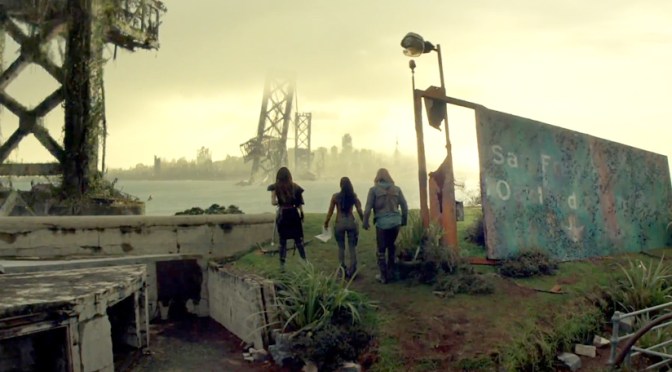
Safehold, it turns out, is named for the letters that are left on an ostensibly ancient sign next to the ruins of the Bay Bridge that connects San Francisco and Oakland. I have very mixed feelings about this, to be honest. Remains of something as large as the Bay Bridge might last hundreds of years, but most of the other detritus of human society would not, and the sheer amount of stuff that seems to have survived in the onscreen Shannara world is simply unbelievable. The show should definitely have stuck with a less-is-more approach to this sort of thing, but instead they’ve opted for an unfortunate mash-up of fantasy and post-apocalyptic aesthetics that works less and less well the deeper they delve into the world. This week continued to have some nice porn-y wide shots of scenery, especially of Arborlon (although it does seem like they’ve started to recycle the aerial views of the city), but in close things are a mess.

The biggest problem for Amberle, Wil, and Eretria this week is that for once they don’t really have any problems. After weeks of contrived random encounter bullshit, they’re basically able to just walk right into San Francisco. Eretria’s tattoo is a deus ex machina and a half, and they don’t even disturb the trolls. When they get to the actual Bloodfire, the two banshees or whatever that are guarding it are laughably weak. All they can do is say some mean things to the heroes, and they’re quickly dispatched with Wil’s elfstones. The “cliffhanger” ending, with Amberle disappeared into the Bloodfire and Eretria seemingly dead (but obvs just passed out from blood loss), isn’t actually very cliffhanger-y at all since the show has done a piss poor job of creating a sense of actual danger for the characters.

Even the emotional stakes are remarkably low. Amberle and Eretria are besties now, which leaves Wil feeling henpecked, and there’s no hint of romance for any of them this week which makes one wonder why the show even bothered with the love triangle business in previous weeks. All of their interactions and epiphanies feel hollow and soulless. The only one of the trio who seems to have any real, authentic feelings this week is Eretria, who is exhilarated by the rush of magic when her tattoo turns out to be a map to exactly where they need to go, because fate or something. There are some other things hinted at, such as Eretria’s abandonment issues, and she and Wil almost have a moment of bonding over their desire to find someplace to belong. However, it’s spoiled by the fact that Wil’s claim of outsider status is a glaring case of telling-not-showing and feels insincere.

At Arborlon, Ander’s decision to claim his father’s throne has had some consequences as the head Councilor, Kail, has decided to lead a coup. This storyline actually has a lot of potential, but there’s not enough context for it to work as a single-episode arc. For one thing, Kail hasn’t even had any lines before this week, so it’s uncertain who she is and why we’re supposed to care about her opinion so much. Apparently Ander had promised her that he wasn’t going to take the throne, but that must have happened offscreen, which makes the implied betrayal of trust much less impactful. Without any foreshadowing or setup or seeding of the plot points here—the show didn’t even introduce the major characters involved in this plot before this week—it just feels like a distraction, and the eventual acceptance of Ander as King is aggressively uninteresting.

The other major happening at Arborlon this week is Bandon’s continued druid training under Allanon’s tutelage. Mostly, this amounts to Allanon trying to force Bandon into revealing that he’s possessed by the Dagda Mor, and Manu Bennett gets some of his worst lines yet in a season that is just full of poorly written dialogue. When Allanon is unsuccessful at (I guess?) exorcising the Dagda Mor from Bandon’s mind, Bandon goes to hang out with Catania, who definitely wants to bang him. Unfortunately for her—and for the viewer, because this scene is legitimately unsettling to watch—boners are apparently the thing that really wakes up the Dagda Mor in Bandon, who sexually assaults Catania. She’s able to escape/get rescued by Allanon, but not before being pretty brutally attacked. It’s a super gross scene, and I don’t think there are words to describe how disgusted it makes me that sexual violence is such a cheap way for shows to try and be “dark” and “gritty.”

The episode finally (mercifully) ends with the last leaf falling from the Ellcrys and unleashing the Dagda Mor and his demon army. Earlier in the season, I had rather thought that there would be some kind of epic battle in episode nine, but we’re going to have to wait until the season finale. This episode does seem to promise such a battle, but considering this show’s track record so far I wouldn’t be surprised if Amberle gets back with the Ellcrys seed just in time to stop anything actually interesting from happening. We’ll see.

Miscellaneous thoughts:

  • Holy lens flare, Batman! Enough is enough, show.
  • At one point Eretria exclaims in exasperation, while talking about Cephalo saving her, that “It doesn’t make any sense!” and this made me laugh so hard I almost choked, which was very distracting, but also the funniest thing that has happened on this show to date.
  • “You’re no King; you’re just what was left” is a genuinely excellent line.