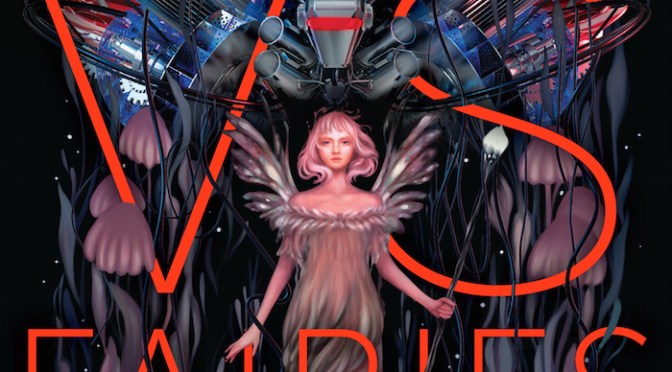
 Robots vs. Fairies is my first reading disappointment of 2018. I loved Dominik Parisien and Navah Wolfe’s first anthology, 2016’s The Starlit Wood, so I was very hyped for this one when it was announced. Unfortunately, Robots vs. Fairies is a bit of a sophomore slump for the editing pair, with a theme that feels more questionable the farther one reads into the collection, stories that largely feel a little too written to spec, and not enough that’s new and interesting to recommend it on those scores. It might work as sort of comfort reading for those who find its table of contents—filled with some of the hottest short fiction writers currently working in SFF—appealing, but if you’re looking for exciting, fresh, innovative work, there’s not much of that here.
To be fair, anthologies in general tend to be a mixed bag, and one’s enjoyment of any collection is heavily dependent on the degree to which the reader’s taste’s overlap with the editors.’ However, the concept for Robots vs. Fairies is both too specific to generate a lot of variation in styles and themes between stories in the collection and broad enough (or, rather, bifurcated) to inhibit a true sense of cohesiveness. If it wasn’t for the book’s introduction and the explanations following each story of which “team” (fairies or robots) the authors chose and why, it would be easy to mistake this for a somewhat random collection of mostly-middling stories about robots and fairies. The choice to bookend the collection with stories (by Seanan McGuire and Catherynne M. Valente) that feature both is smart, but it’s not quite enough to tie the whole thing together.
It seems that every story included here was solicited for this anthology, and this has allowed the editors to collect a veritable dream team of most of my favorite writers of short fiction. However, it’s also produced an anthology where many of the stories feel more like begrudgingly-finished assignments for a high school creative writing course than the sort of vibrant and challenging work that many of these authors have built their careers upon. It’s all just on the uninspired side. There’s not much here that’s ambitious or surprising, plots and prose are just workmanlike, and there’s nothing in these pages that surprised or excited me overly much. Perhaps it’s a shift in the reasons and ways I read short fiction these days—I’m often reading short fiction on the search for new authors and ideas—but I don’t think I’m the only one who will be disappointed by the overall lack of novelty here.
Still, none of this is to say that Robots vs. Fairies is entirely devoid of good, or at least enjoyable stories. The opening tale by Seanan McGuire, “Build Me a Wonderland,” is an interesting take on how fair folk might survive and carve out a place for themselves in a changing world. Tim Pratt’s “Murmured Under the Moon” features a heroic librarian and a sentient book, which are both things that are relevant to my interests. “Just Another Love Song” by Kat Howard has a banshee, a brownie and women helping women. In “Work Shadow/Shadow Work,” Madeline Ashby uses fairies and robots in a way that’s more heartwarming than particularly compelling, but is still a pleasant read. It’s a silly story, and admittedly a little trite, but John Scalzi’s “Three Robots Experience Objects Left Behind from the Era of Humans for the First Time” was the first story in the collection that truly delighted me; I laughed aloud at it more than once. Alyssa Wong’s bittersweet “All the Time We’ve Left to Spend” is the singular really superb story in the collection, but no one writes fairies like Catherynne M. Valente, whose “A Fall Counts Anywhere” may be a bit of a lowpoint for her but would still register as a standout piece of work from almost any other author.
It’s not that Robots vs. Fairies is a terrible anthology. It’s alright, and I’m sure if I did the math and compared it to most other anthologies I read, it’s within a standard deviation of the norm for anthology quality. Perhaps it was unreasonable to expect Wolfe and Parisien to knock one out of the park twice in a row, but I still can’t help but feel a little disappointed that they didn’t after I got so excited about the possibility. If you want some easy-ish comfort reading for a cold winter’s night and find that that this volume has all your favorite authors in it, be sure to check it out. If you’re looking for something new and exciting, perhaps think about looking for something from a smaller press or look to see what’s currently crowdfunding, as that’s where you’ll find innovation.


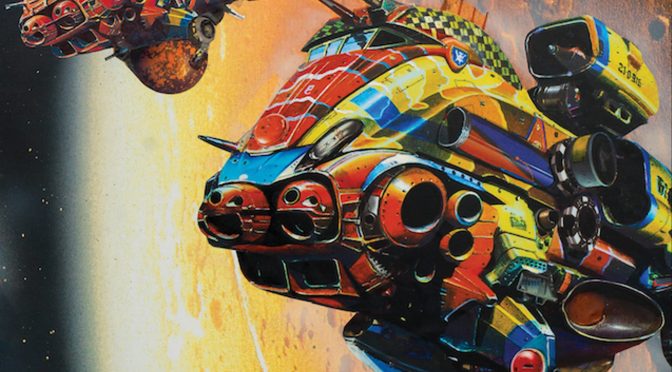
 The new John Joseph Adams-edited anthology, Cosmic Powers, is the first great anthology of the year, jam-packed with smart, entertaining sci-fi adventure stories that bring a nicely modern sensibility to old ideas and tropes. There are several recurring themes throughout the anthology. Religion figures largely in many of these stories, and several of the stories deal with gods or with beings who have amassed nearly godlike power with the aid of time and technology. Artificial intelligences of various kinds make several appearances, as do post-humans of multiple kinds. Examinations of families both biological and found are significant as well, and several stories look at the responsibility of people to each other, personally, and to humanity as a whole; it’s “the personal is political” writ across space and time. It’s a remarkably cohesive collection that nonetheless contains a wonderful variety of stories by a diverse group of authors to offer a well-rounded perspective on the idea of stories that take place on a cosmic scale.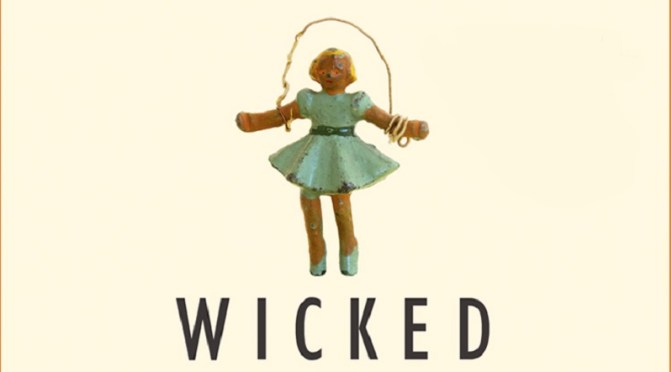
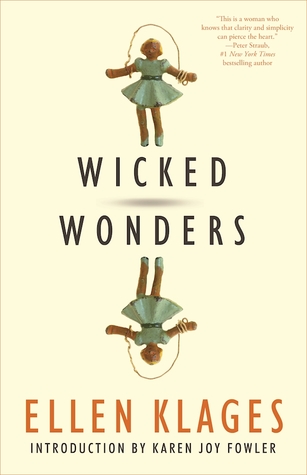 Ellen Klages is having a good year, which is also a boon for those of us who love good short fiction. Klages’ Tor.com novella, Passing Strange, is sure to be among the best of 2017, and it was a fortuitous discovery for me as I hadn’t read anything by Ellen Klages before. When I saw that she had a new collection of short fiction coming out from Tachyon just a couple of months later, I was thrilled. I was even more thrilled when I got approved for the ARC on NetGalley, and my excitement turned out to be totally warranted. Wicked Wonders is, with one significant and honestly baffling exception, full of consistently thoughtful, clever, affecting stories, all overlaid by a sort of gently reassuring feeling of nostalgia.
 Listen. It’s almost impossible for any collection of twenty-one short stories to please everyone all of the time, but with Difficult Women Roxane Gay comes closer than most to nailing it. The stories in this volume are, from start to finish, thoughtful, clever, funny, tragic and hopeful in turn. These stories are a rage-filled paean to the strength and resilience and weakness and fragility and everything in between of women. This is an ugly, heart-wrenching, beautiful book, and if Roxane Gay wrote three hundred forty-four more stories like this I would treat them like a devotional and reread them every year for the rest of my life.
 “The Super Ultra Duchess of Fedora Forest” by Charlie Jane Anders
 “Can You Tell Me How to Get to Paprika Place?” by Michael R. Underwood
 “Red Dirt Witch” by N.K. Jemisin
 SF Bluestocking