Love is the Drug wins the Andre Norton Award for Young Adult Science Fiction and Fantasy
Nick Offerman was the toastmaster for this year’s Nebula Awards, which was excellent and his songs and his Three-Body Problem joke made it well worth it to deal with livestreaming the show on a shaky internet connection. Even though I about choked on my drink when he made a Left Hand of Darkness joke as well.
The Solstice Awards went to feminist author and critic Joanna Russ (posthumously) and Analog Magazine Editor Stanley Schmidt.
The biggest winner of the night is probably Alaya Dawn Johnson, who won the Andre Norton Award for Young Adult Science Fiction and Fantasy for her novel, Love is the Drug (alas, still on my to-read list), as well as the Nebula Award for Best Novelette for “A Guide to the Fruits of Hawai’i.”
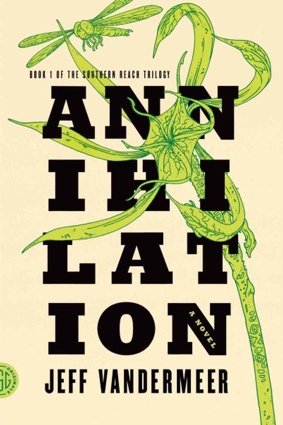
Annihillation wins the 2015 Nebula for Best Novel.
None of my picks for Best Novel won. I’d read three of the six nominees so far this year, and I was envisioning the award as a sort of Sophie’s choice between The Three-Body Problem and Ancillary Sword, which are both superb. The other nominee I’d read, The Goblin Emperor, was also excellent but such a love it or hate it sort of book that I didn’t think it had a real chance. However, the award went, in the end, to Jeff VanderMeer’s Annihilation, which I’ve been planning to read this summer, but which has now definitely increased in priority. Probably will get started on the Southern Reach trilogy in the next few days.
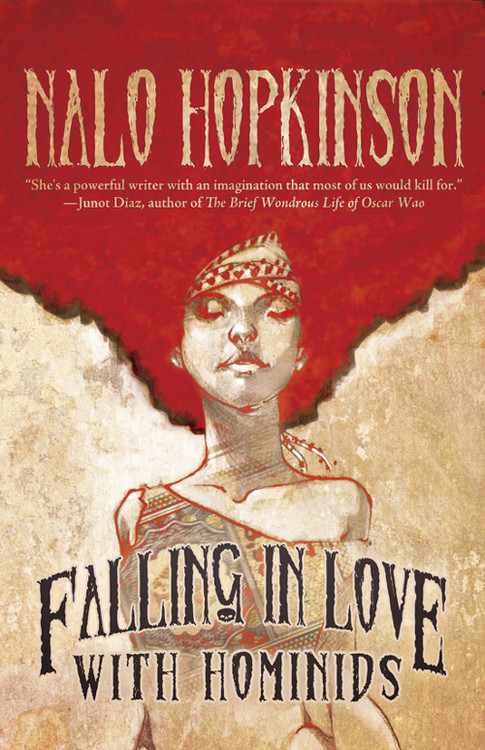
I read Nalo Hopkinson’s Sister Mine a couple of years ago after enjoying some of her short work in the anthologies After (ed. by Ellen Datlow and Terri Windling) and Unnatural Creatures (ed. by Neil Gaiman), but I’ve just never quite managed to get around to reading more of her novels. When I saw that she had a new collection of short fiction coming out this year, though, I was ecstatic.
Falling in Love With Hominids doesn’t disappoint. It opens with “The Easthound,” which was originally published in After and is the first story I ever read by Nalo Hopkinson, and even though I was anxious to move along to some stuff I hadn’t read it was nice to reread something I liked so well the first time I read it. Besides this first story, though, everything else in the collection was new to me.
As with any story collection, especially this type of story collection, where the stories are simply a selection of the author’s work in recent years rather than written on purpose with a theme in mind, not every story speaks to everyone, which is the case for me here. However, there are several standouts that I look forward to rereading in the future:
“Message in a Bottle” – a charming and surprising time travel story
“Left Foot, Right” – twins and shoes and a fairy tale sensibility
“Old Habits” – a ghost story
“Delicious Monster” – orchids and Garuda
“Blushing” – a retold fairy tale that I won’t spoil for you
While I didn’t love the longer piece, “Ours is the Prettiest,” I do think it’s inspired me to check out the Bordertown books. I’m not always into that sort of modern faerie stuff, but I feel like I would have loved this story if I was more familiar with the shared world it was written in.
Overall, Falling in Love With Hominids is, I think, a great introduction to Nalo Hopkinson. There’s a nice variety of stories here both in subject matter and length, and I actually found some of the shorter stories to be the strongest pieces in the lot. Hopkinson’s introduction is nice, and I like the little paragraphs at the start of each piece. It’s a common thing in story collections, but I always feel like these bits of extra info give better context for the stories and let me get to know the author a little. Here, it helps that Nalo Hopkinson seems to be someone eminently worth knowing.
This review is based on an ARC received through NetGalley.
In Chapters 51-54, Jonathan Strange spends some time with the Greysteels, but mostly he spends his time obsessing over his quest to summon a fairy servant. He’s become fixated on the idea that fairies are attracted to madness, and so his primary goal at this point is to find a way to become mad himself.
Strange’s Letters
I love epistolary works, and I think a complex pastiche like Jonathan Strange & Mr. Norrell would be incomplete without some homage to that form. Fortunately, we don’t have to do without. Chapter 51 consists, in part, of several letters from Jonathan Strange to his friends in England in which Strange describes his travels. It’s an excellent way to reveal a bit more of Strange’s character, which is where the epistolary form really shines. Through these letters, we get some sense of Jonathan Strange’s feelings about the Greysteels, we see his remarkably philosophical response to Norrell’s response to The History and Practice of English Magic, and we learn how Norrell’s act of censorship leads to Strange’s reconciliation with Lord Byron.
All in all, these short letters make for an amusing read without the author overdoing it. Especially this late in the book, I think it would have been a mistake to do a lengthy epistolary section. This small bit feels just right to me, though.
Summoning
Right at the end of Chapter 51, Jonathan Strange has his first success in summoning a fairy, although he doesn’t know it. The gentleman with the thistledown hair shows up, Stephen Black in tow, only to remain stubbornly invisible to Strange. The gentleman, once so eager to “assist” Norrell, is positively abusive now towards Strange, and absolutely not inclined to work with any magician now.
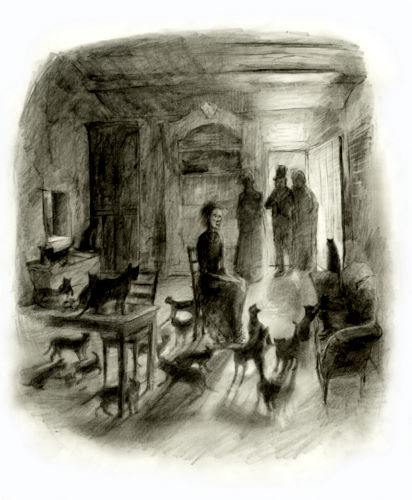
Mrs. Delgado, her cats, and the Greysteels.
The Cat Lady
While Jonathan Strange is consumed with his work, the Greysteels pay a charitable visit to an old woman living in a Jewish neighborhood in Venice. Her name is Mrs. Delgado, and the Greysteels find her entirely alone, unresponsive, and surrounded by a great many cats. Mrs. Delgado seems to barely eat, having more in common with her cats than with any human visitors she may have.
The old woman is quite mad, as Flora Greysteel later communicates to Jonathan Strange. She wants to know if he could cure Mrs. Delgado by magic. Unfortunately, he cannot, but he soon comes up with a new plan on how he might finally ensnare a fairy.
Tincture of Madness
Strange goes to visit Mrs. Delgado, who remains nearly as unresponsive to him as she was to the Greysteels. He wants her to teach him to be mad, and he’s willing to give her something she wants in exchange. Shortly, Mrs. Delgado has been turned into a cat and Jonathan Strange has obtained a dead mouse, which he grinds up and makes into drops which he can take in order to induce insanity.
The Color of Heartache
While his tincture works quite well in giving Strange the experience of madness, it takes a few days before he achieves his end goal. Finally, though, Strange manages to not just summon a fairy, but see and speak to one. Unfortunately, what with the effects of the tincture, he’s not in particularly good shape to deal with the gentleman with the thistledown hair very well.
Strange’s second meeting with the fairy goes somewhat better. The gentleman, for his part, has determined that in order to get the magician to leave him alone he will just make Strange some gift of something that will sate his desire for fairy assistance. Rather than asking for anything material or monetary, however, Strange requests that the fairy bring him something that was gotten in the fairy’s last dealing with an English magician.
What Strange receives, that very evening, is a small box “the color of heartache” (a phrase that I love because it’s both incredibly non-descriptive and amazingly evocative at once) that contains a small, severed finger that the reader knows belongs to Lady Pole but which is baffling to Jonathan Strange:
“I thought that if I had a fairy to explain everything to me, then all the mysteries would become clear. But all that has happened is that I have acquired another mystery!”
I would say that in these chapters the shit hits the fan, but I feel like at this point in the book there’s no way for me to divide up the chapters in a way were I don’t feel that way about every section I read. The last quarter of the book is just absolutely riveting as Susanna Clarke’s juggernaut of a plot continues to pick up speed and gain force.
Wildness and Madness
While still working on finishing his book, Jonathan Strange is looking for students, although his friends, Sir Walter and Lord Portishead, are a little skeptical when they learn that not all of the prospective students are wealthy gentlemen. Indeed, the most promising of Strange’s first three students is Tom Levy, who is Jewish and a dancing master, but is also the only one of the three to have actually done magic.
While Strange is definitely interested in educating other magicians, what he is mostly consumed with these days is summoning a fairy servant. However, his friends are worried about him. They are certain that Strange is much changed since Arabella’s death, that he is falling into bad habits, and they are positively appalled when Strange suggests that perhaps madness is the way to catch a fairy and proposes going wandering for a while in search.
Sir Walter and Lord Portishead are somewhat mollified when Strange admits that he doesn’t actually intend to go live as a vagrant, but they are still concerned about him. Meanwhile, Mr. Norrell is very upset about, well, everything Jonathan Strange does. Especially upsetting to Norrell is that Strange continues to be commissioned for government work and has even branched out so far as to do some work for the East India Company.
While Strange is definitely more open to teaching new magicians and sharing his knowledge than Norrell ever was, it soon becomes clear that he’s not necessarily any better suited to the task than Norrell was:
…whereas Strange had had Norrell’s evasiveness to contend with, [Strange’s students] were continually thwarted by Strange’s low spirits and restlessness.
By summer of 1816, Strange has determined to go abroad for some time, leaving his students entirely, although with the promise that their studies will continue when he returns.
Strange and Byron
In one of my favorite allusions to actual history in the novel, Strange’s travels through Europe follow basically the same path as did Lord Byron, Percy Shelley and Mary Shelley in 1816. Even, better, we get to read some of Jonathan Strange’s letters to his friends in England, in which he complains about what an asshole Byron is, which is a nice bit of comic relief at this point in the book. Because of course these two guys don’t get along well (although they do patch things up later).
The Greysteels
The Greysteels are introduced in Chapter 51. These are an English family that Jonathan Strange meets while traveling, and among their number is Miss Flora Greysteel, a charming young lady who takes a lively interest in Jonathan Strange.
Mr. Norrell’s Rebuttal
Jonathan Strange’s book, The History and Practice of English Magic, is published while he is abroad, and Norrell’s response to it is possibly the most important thing to happen in the whole novel so far.
The day of the book’s publication, copies of The History and Practice of English Magic sell like hotcakes. Then things get weird. People start coming back and buying second and third copies. Then people start complaining that their books are disappearing. The publisher, Murray, is very upset and confused and desperately trying to figure out what is going on when he comes upon John Childermass in a bookstore.
Mr. Norrell is “just buying some books” he informs the publisher, and communicates Norrell’s offer to compensate Murray for the whole printing. However, it’s also made clear that Norrell is prepared to keep magicking away people’s copies of the book if his demands are not met. Murray asks about his profits, to which Childermass responds that he’d have to ask Norrell about it.
In the meantime, Murray learns that even the copies of the book left in the warehouse have had their pages erased. He goes to Strange’s students, who have ideas for how they might combat Norrell’s magic, but this turns out to be in vain. The students just don’t have the skill to do anything.
In the end, Murray refuses Norrell’s money on principle, hoping instead to make Norrell pay in the future for a new edition of the book and the promotion of it. Childermass thinks this is unlikely, but he leaves Murray with the knowledge that the book is not entirely lost:
“I will tell you this,” he said. “The book is not destroyed however it may seem at present. I have dealt my cards and asked them if there are any copies left. It seems that two remain. Strange has one and Norrell the other.”
Norrell’s censorship of Strange’s book leaves him with fewer friends than ever before (Norrell’s allies are now just Lascelles and Childermass) and actually negatively impacts the reputation of magicians in general as people don’t take kindly to having their books stolen from them by magic. With Strange abroad, though, and distracted by Miss Greysteel and his struggle to summon a fairy servant, there is really no one in England capable of doing anything about Mr. Norrell whatsoever. Aside from a new batch of magical schools and shops popping up, of which Norrell deeply disapproves, and some muttering in Parliament about how something ought to be done, Norrell faces no real consequences for his actions.
It’s very clear as we enter the fourth quarter of Jonathan Strange & Mr. Norrell that the two magicians are truly each other’s only peers. No matter how many friends they accumulate and no matter how many interesting personages Susanna Clarke manages to populate her novel with, Jonathan Strange and Mr. Norrell are always the suns around which everything else revolves. Their relationship is the most important one, and the primary purpose of the book is to explore that.
In these chapters, the story continues to move along nicely. We also get our first glimpse of Jonathan Strange since Arabella’s death; he’s not doing well, but he’s not doing well in a very highly functional manner.
The Madhouse
Following her attempt on Mr. Norrell’s life, Lady Pole is being packed off to a madhouse, accompanied on her way by Stephen Black. The place is Starecross Hall, which John Segundus has turned into a country asylum following Norrell’s sabotage of his school of magic. Lady Pole is Segundus’s first patient, and she, surprisingly, seems to think Starecross may be a good place for her. I suppose it couldn’t be much worse than any other place would be for poor Lady Pole.
The Blue Man
Stephen Black begins is on his way back to London when his horse breaks its back and he’s forced to hitch a ride. There is already another hitchhiker in the cart with Stephen and it turns out to be Vinculus, who the cart driver described as “blue” as Stephen is black. This isn’t the case, Stephen learns. Vinculus tells him the prophecy of the nameless slave, who will become a king of a strange country, and Vinculus also reveals that he isn’t really blue at all–he’s covered with dense writing, like tattoos, all over his body.
The Wolf Hunt
Stephen is unsettled by his meeting with Vinculus and still not quite recovered when the gentleman with the thistledown hair comes for him a few days later. This time, they are off to watch a wolf hunt.
Stephen asks the fairy about the prophecy Vinculus delivered, and the fairy responds that it’s a prophecy about the Raven King, so it’s already been fulfilled. I think the fairy gentleman might really believe this, but it seems like a misinterpretation. However, it’s not really clear in the book at the point if the fairy knows about the rest of the prophecy, that which concerns the two magicians. From some things he said very early on in the novel, I would think so, but it’s not mentioned here.
The Famulus
In Chapter 48, we finally get to see how Jonathan Strange is doing these days. Surprisingly well, apparently, though not quite himself. Since Arabella’s death, Strange has really thrown himself into his work. His book is coming along nicely, and he’s even begun his own periodical, The Famulus, to compete with Norrell’s Friends of English Magic. He’s also gotten some somewhat famous engravers to do the illustrations for his book, and this has created some buzz around it.
Norrell, of course, is appalled by this development, convinced that Strange is out to destroy him and increasingly frantic to know what is in Jonathan Strange’s book. As always, when Norrell needs dirty work done–like spying–he sends Childermass to do it.
A Bargain
Childermass catches up with Jonathan Strange on a gloomy day in late winter, Childermass hiding as a shadow in a doorway across a street to watch as Strange goes about his business. Strange notices him almost immediately, but he isn’t displeased. Indeed, he’s been expecting Childermass for days, and he’s anxious for news of Norrell.
Strange and Childermass at the engravers’.
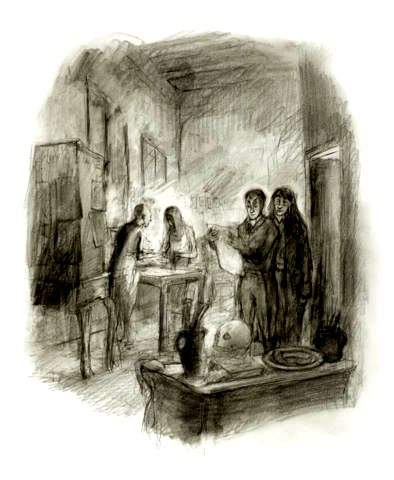
Strange takes Childermass with him to visit the French engravers who are doing illustrations for The History and Practice of English Magic, and Childermass is dutifully impressed, asking intelligent questions about the engravings and about Jonathan Strange’s magical travels. Strange is only too happy to oblige, answering Childermass’s inquiries and explaining the magic he’s used so that Childermass could duplicate it if he wishes. He even offers to take Childermass on as a pupil and assistant, at which Childermass laughs.
Throughout the book it’s been pretty clear that Childermass is something more than just a simple servant to Norrell. He’s a magician in his own right, for all the Norrell chooses not to acknowledge it, and he doesn’t always agree with his master. It becomes clear that Childermass isn’t a Norrellite partisan–he has plenty of his own ideas and opinions on magic–but he’s not about to sign up to be a Strangeite, either. Instead, he makes a promise to Jonathan Strange:
“If you fail and Mr. Norrell wins, I will indeed leave his service. I will take up your cause, oppose him with all my might and find arguments to vex him–and then there shall still be two magicians in England and two opinions upon magic. But, if he should fail and you will win, I will do the same for you.”
Strange is pleased with this answer, and Childermass is sent back to Norrell with Strange’s compliments. The chapter ends with Strange reiterating his own opposition to secret-keeping and his optimism about the publication of his book:
“I really cannot see that there is any thing Mr. Norrell can do to prevent it.”
I love these sort of chapter endings, personally. I know that it heavily telegraphs what will happen next in a way that goes well beyond simple foreshadowing, but I almost never get tired of anything like this that elicits the response from me of, “well, we’ll see about that.“
The last two chapters of Volume II find Mr. and Mrs. Strange finally getting a chance to settle back into life at their home in Shropshire. Then something goes terribly wrong.
Ashfair
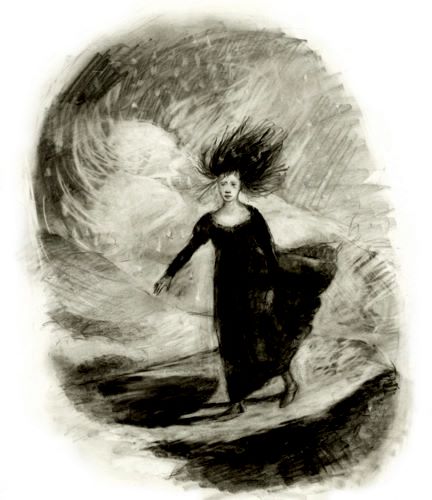
Jonathan Strange is interrupted from his work one day when his neighbor, Mr. Hyde, stops by to tell him that he saw Mrs. Strange wandering around outside in a black dress. It’s the dead of winter, though, and snowing, and Mrs. Strange has been safely inside the house all this time.
This is somewhat quickly forgotten when Arabella’s brother, Henry Woodhope, comes to visit. After several years in London, Arabella is saddened to learn that she no longer has much in common with Henry, who is a country clergyman. For his part, Henry finds much to criticize in the Stranges, who are not at all what he thinks a good country family should be like. Even the house is viewed by Henry with a critical eye.
The descriptions of Jonathan Strange’s house, Ashfair, are wonderful. While they are somewhat reminiscent of the descriptions of Norrell’s Hurtfew Abbey, this is only because the two places are similarly weird. However, they are also as different as their owners. By far my favorite line about the house, though, is that it’s “an old-fashioned house–the sort of house in fact, as Strange expressed it, which a lady in a novel might like to be persecuted in.” It’s a really lovely idea that works as a bit of characterization for Strange–so wry, so witty–and as a piece of rather funny meta-commentary in a book that is so clearly a pastiche of several genres of literature, including the Gothic novels that were so popular in the early 19th century.
One thing I will say about rereading this book in my thirties is that I appreciate this sort of thing much more now than I did in my early twenties. It’s definitely a style of book that is much better enjoyed the more one has read of other English literature. This is definitely a book that benefits from rereading, and I’m now very much looking forward to reading it again ten years from now.
Mrs. Strange?
Who was lost and what was found
Volume II ends with a heartbreak and a mystery that will define the last third of the novel.
One night, Jonathan Strange is awoken and sees Arabella, dressed, at the foot of the bed. Thinking that he’s only dreaming, he goes back to sleep and no one notices anything amiss until after breakfast, when Mr. Hyde arrives again to say that he saw Mrs. Strange only an hour before, wandering in the nearby hills. Jonathan Strange at first dismisses this again, but becomes alarmed when one of the household servants informs him that Arabella actually is not in the house, has actually been gone all morning.
Jonathan Strange immediately begins using magic to search for her, although Henry Woodhope doesn’t understand the purpose of this, thinking they should just go out and look themselves. This, in the end, is what they end up doing, as Jonathan Strange’s scrying is ineffectual–Arabella isn’t in England, Scotland, Wales, or France, which is confusing to Jonathan but not to the reader.
When Arabella is finally found, she’s wearing a black dress, covered in black mossy water, and saying weird stuff that sounds much more like the ramblings of a traumatized piece of wood than anything a real woman would say. Probably because this is not actually Arabella, but the piece of wood that Stephen Black and the fairy gentleman dug up several chapters ago.
On the third day after her “return” Arabella dies, and this is one part of the book that I wish I could read for the first time again. I know that a careful reader should know exactly what is going on here, as everything has been explained to the reader pretty thoroughly through our views of other characters. However, just the line, “On the third day she died,” is marvelous. It’s a shocking end of a chapter, and it’s a shocking end to the second volume of the book.
It’s an amazing cliffhanger, and a perfect use of it. Even though the reader should have a pretty good idea of what’s going on here, this ending still manages to shock, and I think it is very difficult to not keep reading after this just to see how the characters react.
Prologue to The History and Practice of English Magic
Possibly the best thing Susanna Clarke could have followed this cliffhanger with is the thing she actually follows the cliffhanger with. It’s not, however, the reactions of Jonathan Strange or Henry Woodhope to Arabella’s death. It’s not a scene confirming that Arabella is in fairy land. Nope. It’s the prologue to Jonathan Strange’s book.
In this prologue, we learn more of the history of the Raven King, John Uskglass, and how he came to England in the first place. We also learn a little more of fairies. Mostly, though, we learn about Jonathan Strange’s opinions on John Uskglass and fairies.
Childermass at work.
All Magicians Lie
When we return to the actual story in Chapter 46, it’s still not to see how Jonathan Strange is getting along. Instead, this chapter is centered around Childermass’s point of view.
In Mr. Norrell’s library, Childermass is writing letters of business when he starts feeling very weird and slipping into a sort of dreamy trance where he sees strange and disturbing visions that the reader may recognize as connected to the book’s larger themes of the Raven King and fairies and the magic of England–and especially reminiscent of Vinculus’s prophecies.
Childermass quickly recognizes these visions as magical, and he tries to figure out whose magic it is. When he finds out that Norrell is not at home, Childermass becomes consumed with tracking down his master, and he reaches Norrell just in time to save him from being shot by Lady Pole, who is distraught over Mrs. Strange and holds Norrell responsible.
As Norrell, acting much put upon and aggrieved, discusses these events with Childermass, the chapter ends with Childermass recalling Vinculus’s words about Norrell:
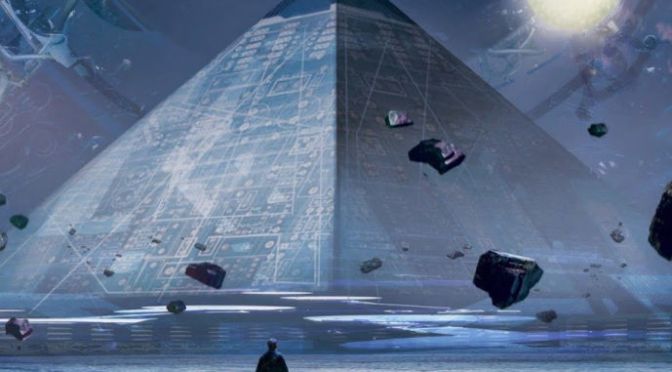
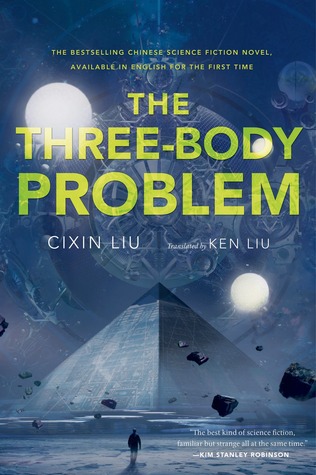
The Three-Body Problem was first published in Chinese several years ago, and this is the first time it’s been available in English. Translated by Ken Liu (author of The Grace of Kings), it’s highly readable and I honestly hope that this is only the beginning of a huge influx of Chinese SF if this is the sort of wonderful stuff we are missing. Lack of translated works is a problem in general, but it’s especially notable with genre fiction, which is too bad, because literally every culture has its own traditions of speculative fiction and, goodness knows, we could use as many perspectives as we can get.
This book begins during the Cultural Revolution, of which I was sadly ignorant before I read this book. White middle class Mid-Western girls weren’t taught much Asian history to speak of back in the 1990s. Fortunately, there is enough explanation in the book, between the text itself and some very useful footnotes, to help historically illiterate Americans muddle through, although I would suggest reading at least a few Wikipedia articles if you’re as clueless as I was about this part of history. I actually expected to spend a lot more time Googling historical and cultural references than I did, and I probably would have spent a lot less time on it if I didn’t have a tendency to get sucked into Wikipedia for hours at a time. So if the intention of the author and translator was to make the book easily accessible to US readers, I think the footnotes, which were smartly chosen and concisely written, were well done and didn’t distract too much from the story.
The story itself takes some time to unfold, and it’s only towards the end of the book that I felt a real sense of urgency and momentum in the plot–only to find myself waiting for the next book in the trilogy. This would annoy me a lot more if the second book wasn’t coming out so soon (The Dark Forest – July 7, 2015), but as it is I’m just eaten up with anticipation for it.
The characters in The Three-Body Problem were interesting, and I loved Ye Wenjie in particular. Wang Miao was much less fascinating, but was a perfectly serviceable protagonist. The supporting characters were excellent, and I would go learn Chinese immediately if I learned there were any books about the adventures of Shi Qiang.
Something that is maybe not that big a deal in China but that I really appreciated was the overall gender parity. Women are present throughout the book and fill a variety of roles without being reduced to any recognizable stereotypes or boring sci-fi tropes. They felt real, and didn’t seem to be marginalized on account of their gender at all. My only quibble with the treatment of women in the book is that I would have liked to learn a little more about Wang Miao’s wife, who seemed to be completely forgotten about when she wasn’t literally in the room with Wang.
Most SF is as much, or more, about ideas than it is about just telling stories, and The Three-Body Problem is definitely heavy on ideas, but it never feels preachy. It examines a rather ugly part of Chinese history, it talks about environmentalism, and it considers the role of scientific thought in culture.
Ultimately, though, it’s a book about what would happen if we really did make contact with extraterrestrial life, but there’s no happy Star Trek vision of the future here. Humanity can be nasty, and there’s no guarantee that aliens would be any better than we are. I can’t wait to find out how humanity comes to terms with this knowledge in the rest of this series.
The second half of the book continues to pick up its pace, or at least it feels as if things are moving along faster now, even though I don’t think each chapter actually contains any more events than previous chapters. Definitely, though, it’s starting to feel like we’re getting close to some kind of climax.
A Most Uncomfortable Number
Jonathan Strange expects that Norrell will be infuriated by the review, but when the two magicians finally meet, Norrell is only, for once, honest. Norrell understands Strange, and in a way that perhaps no one else can, and he only ever meant, he says, to prevent Strange from making the same youthful mistakes that he made himself. Norrell apologizes and practically begs Jonathan Strange not to leave him, and it’s probably the most human he’s been in the book so far. Norrell’s pleas are not enough to convince Strange to continue their association, although Strange nearly gives in.
After Strange takes his leave, Lascelles questions Norrell about the magicians’ conversation. Norrell seems crushed by sadness with Strange gone, but Lascelles is quick to use this opportunity to try and poison Norrell against the younger magician:
“…two of anything is a most uncomfortable number. One may do as he pleases. Six may get along well enough. But two must always struggle for mastery.”
By the end of Lascelles’ speech, Norrell is persuaded of, well, something. Certainly, he is prepared to leave London with great haste, and within two hours of the breakup with Strange.
For his part, Jonathan Strange is also preparing to leave London. He and Arabella plan to return to their home in Shropshire, but first they must take their leave of their friends the Poles. As they are saying goodbye, Arabella says something that it seems likely she may later regret.
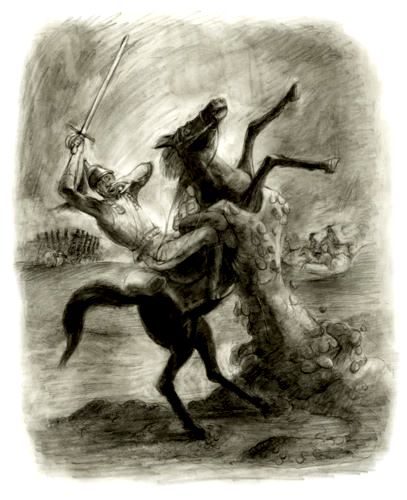
Jonathan Strange animates the mud at Waterloo to pull men from their horses.
In Brussels
A quiet life in the country is not to be for Jonathan Strange, unfortunately. When Napoleon escapes his prison, Strange soon finds himself back on the continent, where Lord Wellington is administering a new war effort from Brussels. Once again, Jonathan Strange’s magic is instrumental in England’s success, although he commits acts using magic that he’s not proud of and sees an enormous amount of death. Chapter 40 ends after the Battle of Waterloo, with a dinner for dozens that only three men have survived to attend.
Segundus’s Fortunes
Meanwhile, back in England, John Segundus has finally been forced to look for employment, which he quickly finds tutoring young people in magical theory. Things seem to be looking up for him when he is approached by a wealthy widow who wants him to run an actual school for teaching magic. Before long, though, the planned school attracts the attention of Mr. Norrell, who sends Childermass to shut it down. When Segundus refuses to shut it down willingly, he soon finds that Norrell has managed to arrange things so that the school no longer has any support. Although Segundus writes to Jonathan Strange for relief, Strange doesn’t reply.
The Gentleman’s Plan
This section of the book closes with another meeting between Stephen Black and the gentleman with the thistledown hair. This time, the gentleman whisks Stephen away from Sir Walter’s house to a nearby coffeehouse where they sit down at an absolutely magical sounding feast. Here, the gentleman tells Stephen that Lady Pole is no longer holding the gentleman’s interest as she used to do, that, indeed, another young woman has caught the gentleman’s eye. He has a plan, he says, to bring the young woman to Lost-hope forever, but first he needs to obtain a piece of wood. From a bog.
These chapters are busy ones, but less with action than with characterization. Peacetime gives Mr. Strange in particular plenty of time to analyze his relationships with the other characters, especially Mr. Norrell.
The Painting
I’ve mostly avoided writing about the footnotes in this book, but Chapter 35 contains an important one regarding a painting that Mr. Strange and Mr. Norrell posed for in late 1814. I love the description of how the two men sat for the portrait, with Norrell fidgety, worried that the painter might somehow be stealing magical secrets, and Strange relaxed, indulgent and patient with Norrell’s neuroses. It’s an excellent sketch of their relationship up to this point, and it provides a starting point from which we begin, in these middle chapters of the novel, to see things degrade rather quickly between the two magicians.
Gentleman’s Magazine
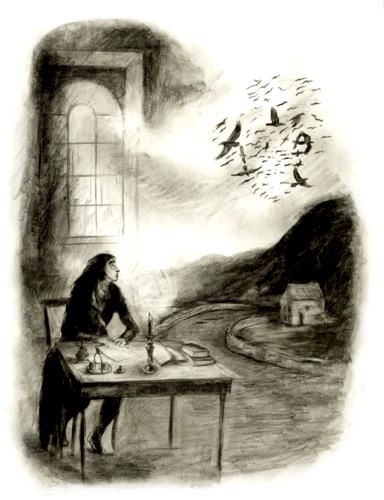
While Drawlight and Lascelles attempt to sow discord between Strange and Norrell, chiefly by reminding Strange that he’s still never been allowed in Norrell’s library at Hurtfew Abbey, Norrell irritates Strange by nagging him about writing. In particular, Strange is supposed to write a piece for Gentleman’s Magazine, and Norrell expects him to only write what Norrell would agree with, and Strange chafes at this restriction, although he doesn’t relish the idea of confronting Norrell about it. Instead, he goes home, ostensibly to write, and complains to Arabella about it.
Drawlight’s Business
Arabella Strange has been listening to her husband’s complaints about Norrell for years, and she has her own very decided opinions on Norrell and Norrell’s friends. She wants, instead, to talk to her husband about a Miss Gray that she’s heard of who claims to be paying Jonathan Strange–to the tune of four hundred guineas–for magic lessons. Jonathan, however, dismisses the story and rather ignores his wife’s concern over the matter, even joking about it. It’s a moment of Jonathan Strange actually being kind of a dick, which I appreciate. Susanna Clarke does a good job, I think, of demonstrating that both of the magicians are kind of insufferable in very different ways. Conversely, she also balances this with including endearing and sympathetic qualities in her characters as well, which make them feel real and three-dimensional.
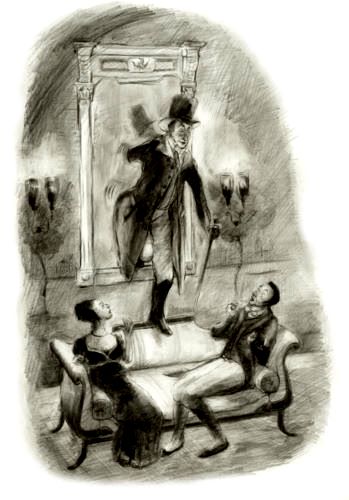
In any case, Strange doesn’t think of Miss Gray again until a few days later, when he’s at a club and is confronted with a pair of farmers who also claim to be receiving magical instruction from him even though they have never met. When finally introduced to Mr. Strange, the two gentleman farmers are quite understandably upset, but it soon comes out that they were paying a middleman who supplied them with instructional materials based on things Strange had said in conversation with Mr. Norrell–and overheard by the ever present Drawlight. To prove to the two defrauded gentleman that he is who he claims to be, Jonathan Strange steps into a mirror and disappears.
Strange surprises Drawlight and Mrs. Bullworth.
Mrs. Bullworth
When Jonathan Strange emerges from the mirror, it’s a different mirror entirely, in a very different place, some five miles from his own home in Soho. He surprises Drawlight at the home of one Mrs. Bullworth, yet another person who has been paying “Jonathan Strange” for magical services. Mrs. Bullworth has been giving Drawlight money to pay Mr. Strange for using black magic against her many enemies, not the least of which is Lascelles, who is the man who seduced and ruined Mrs. Bullworth, promising to marry her and then abandoning her when she was cast off by her husband.
Obviously, if you’ve read this far in the book you’ve known for some time what kind of men Drawlight and Lascelles are, but it’s kind of nice to see Drawlight, at least, get a bit of a comeuppance. By the end of Chapter 37, he’s banished from Norrell’s society (Norrell actually wants to reinstitute some draconian old laws so Drawlight could be hanged for his crimes) and ends up in a debtors prison. Lascelles manages to avoid a similar fate only because he has actually become truly interested in and invested in Norrell and magic–and because he cuts Drawlight out of his life immediately and completely to avoid any punishment by association with him.
The Strange’s Bargain
Regarding Jonathan Strange’s travelling through mirrors, he finds opposition to his further experimentation with this trick from both Mr. Norrell and Arabella. Although Strange is excited to explore this new power, he eventually promises Arabella that he won’t do it again until she says he may. She, in turn, promises that she will grant her permission as soon as she is convinced of the safety of mirror travelling. I adore their marriage, so much, and this is a lovely compromise.
Lord Portishead’s Book
The final matter of importance that occurs in these chapters is the publication, by Lord Portishead, of a book on modern English magic, to which both Norrell and Strange have contributed. However, when Jonathan Strange reads the published manuscript, he finds himself incredibly disappointed and feeling misrepresented by the final text in spite of his own contributions.
Borrowing a copy of the book from Norrell, Strange goes home and promptly writes the scathing review of it that makes up Chapter 38. It’s the first time that Strange has put himself so directly in opposition to Norrell’s peculiar agenda regarding English magic, and it’s not going to go over well. At all.
With the war now over, Strange and Norrell aren’t quite sure what to do with themselves. Strange’s experiences on the continent and his long absence have both made it somewhat difficult to just slip back into their old student-teacher relationship.
A Bad Place for Kings
Fortunately, the two magicians aren’t left to their own devices for long. King George is in the midst of a period of madness, and several of his children ask the magicians to see if there is anything they can do to help the king. While Norrell dismisses the idea, Jonathan Strange is at least willing to meet the man and see if any ideas come to him.
The first challenge Strange has to overcome is just getting to the king in the first place. King George is being kept basically locked up by the Willises, a pair of brothers who own a madhouse and who are apparently the only people consistently able and willing to actually deal with the king’s madnesses. However, when the king is in their custody, they control every aspect of his life and permit no visitors at all if they can help it.
“This is a bad place for kings!”
Using magic, Strange manages to arrange a meeting with the king, who is certainly mad but also oddly lucid about certain things. It’s clear the king is unhappy as well, which Strange learns more by overhearing the king speaking to an invisible guest (whom the reader should recognize as the gentleman with the thistledown hair) than by conversing with the king himself. Indeed, the king seems to hardly see Jonathan Strange at all, and has frustratingly little to say to him throughout the visit.
The Song of Strange’s Life
Strange takes the king outside to walk through the garden, much against the desires of the Willises, and things just keep getting weirder. The king begins to wander off into a strange wood, and Strange feels himself being lured that direction as well, hearing strange music. The king tells him that “he” is playing for Strange, and Strange hears that the song does indeed describe his life, although he doesn’t know who “he” is. Realizing that something is amiss, Strange suddenly has the idea to use an ancient sort of spell to resist the fairy magic he’s found himself entranced by, and he manages to cancel the enchantment and save himself and the king.
Fairies and Madmen
When Strange returns to Norrell, he asks straightaway about fairies, and Norrell is unhelpful and rather evasive on the subject. Apparently, the affinity of fairies for the insane has been written about at length, and this is what initially guides Strange’s line of questioning. However, Norrell seems eager to put an end to the topic by suggesting that fairies no longer live in England at all anyway, and certainly he and Strange would never be so reckless as to summon one even if they did.
To Crush Their Spirits
Finally, Chapter 34 is a short one, in which the gentleman with the thistledown hair takes Stephen Black on a trip to Africa so they can discuss what to do about the two magicians. These sort of conversations with the gentleman are some of my favorite parts of this book just because he’s so irrational and unbalanced. Still, there is a method to his madness, and he still intends to make Stephen Black the King of England. First on the agenda, though, is to destroy or otherwise thwart the two magicians who seem so dedicated to impeding the gentleman’s plans. “We must make them wish they had never taken up the practice of magic!” he announces at the end of the chapter.






 SF Bluestocking