All posts by SF Bluestocking

Weekend Links: August 29, 2015

Godzilla

These gorgeous Godzilla posters by illustrator Laurent Durieux have already sold out over at Darkhall Mansion, but you can see more of his work at his website. (h/t io9)

Probably the biggest news of the week has still been Hugo Awards stuff. I said my last piece on it (previous pieces are on my personal Tumblr) the day after the awards, but there have been a lot of other great pieces published this week:

In other, less frustrating, news:

Finally, if you’ve already read N.K. Jemisin’s The Fifth Season, go read her most recent blog post about it. If you haven’t read The Fifth Season, what on earth are you doing reading anything else?
 

2015 Hugo Awards – The Year of the Best Case Scenario

The lead up to this year’s Hugo Award ceremony reminded me a little of the 2012 election. All the polls and buzz at the time (and for months in advance) seemed to indicate that inveterate slimeball Mitt Romney was going to lose, but Mitt and Fox News seemed so convinced that they were going to win that I found myself in a knot of stress until Ohio was called for the President. In much the same way, the majority of reaction and community response to this year’s Puppy slates has been decidedly not in the Puppy’s favor, but they’ve seemed so certain all along that they were going to prove, well, something. Like the jerkwads at Fox News, they seemed certain that they were going to win–certain enough that they had everyone else on edge.

Even streaming the Hugo Award ceremony, the tension in the room felt palpable Saturday night, and it wasn’t until the announcement of the winner of the first major award that the atmosphere began to lighten. Anyone following the Puppy mess very closely knew that the John W. Campbell Award was going to be the bellwether, and as soon as non-slate nominee (the single non-slate nominee for that award) Wesley Chu’s name was read, it was as if everyone there breathed a collective sigh of relief and started to actually have fun.

The rest of the ceremony went off without a hitch. There were a couple of very nice acceptance speeches–Wesley Chu’s was notable, as well as Julie Dillon’s, Ken Liu’s (accepting for Cixin Liu’s The Three Body Problem), and those from the editors of Journey Planet and Lightspeed Magazine. David Gerrold and Tananarive Due were excellent once the mood in the room loosened up. Connie Willis was wonderful.

There were a couple of real surprises in store, which was nice. Unsurprisingly, No Award was the big winner of the night, taking five categories in which the Puppies had managed to secure all of the nominees. In more interesting news, though, Orphan Black won in Best Dramatic Presentation (Short Form), which is excellent. It’s a great show, and it’s nice to see it finally getting some awards recognition (although Tatiana Maslany’s Emmy nomination this year is promising). In Best Graphic Story, Ms. Marvel took home the rocket, which was surprising to me, at least–I was fairly certain it would go to Saga.

Perhaps the biggest upset of the night, though, was in the Best Novel category. I LOVED The Three Body Problem, but it seemed to be considered a long shot to win. Most of the speculation I saw leading up to the awards seemed to agree that Best Novel would go to either Katherine Addison’s The Goblin Emperor or Ann Leckie’s Ancillary Sword, and the reaction to The Three Body Problem‘s win seemed to be generally pleasant surprise, but surprise nonetheless. It’s the first ever translated novel to win a Hugo Award, which makes the win historic as well. And if that wasn’t enough to hammer home the point that the Hugo Awards are about progress and change and forward thinking, the Best Novel winner was literally announced from space.

The full list of 2015 Hugo winners:

  • Best NovelThe Three Body Problem by Cixin Liu, translated by Ken Liu (Tor Books)
  • Best Novella – No Award
  • Best Novelette – “The Day the World Turned Upside Down” by Thomas Olde Heuvelt (Lightspeed, April 2014)
  • Best Short Story – No Award
  • Best Related Work – No Award
  • Best Graphic StoryMs. Marvel Volume 1: No Normal (Marvel Comics)
  • Best Dramatic Presentation (Long Form)Guardians of the Galaxy
  • Best Dramatic Presentation (Short Form)Orphan Black: “By Means Which Have Never Yet Been Tried”
  • Best Professional Editor (Short Form) – No Award
  • Best Professional Editor (Long Form) – No Award
  • Best Professional Artist – Julie Dillon
  • Best SemiprozineLightspeed Magazine, edited by John Joseph Adams
  • Best FanzineJourney Planet, edited by James Bacon, Christopher J Garcia, Colin Harris, Alissa McKersie, and Helen J. Montgomery
  • Best FancastGalactic Suburbia Podcast
  • Best Fan Writer – Laura J. Mixon
  • Best Fan Artist – Elizabeth Leggett
  • The John W. Campbell Award – Wesley Chu

Probably the best general piece published this weekend about the Hugo Awards was over at Wired: “Who Won Science Fiction’s Hugo Awards and Why it Matters”.

io9 gives us an idea of the Hugo Awards we would have had if it wasn’t for the Puppies’ slates.

If you’re into that sort of thing, you can just read the full 2015 Hugo voting stats for yourself.

Black Gate is succinct in saying “Dear Puppies: Your Taste Sucks”.

And Foz Meadows’ piece is worth a read, “Hugos and Puppies: Peeling the Onion”.

I’m not naive enough to think this mess is going to be laid to rest after this, especially not when Vox Day has already published like eight posts since Saturday night threatening that he’s going to keep trying to destroy the awards. However, just looking at this year’s voting stats, it seems to me that his claim of 400 voters is actually somewhat exaggerated. I’d guess there were closer to 275-325 dedicated Puppy voters, and so I’m also guessing that Day’s claims that there are many more where those came from can be largely chalked up to Day’s delusions of grandeur.

I expect that there will be a Puppy slate or two next year, but I don’t expect they will be as successful as they were this year. We certainly aren’t going to be free of the Puppy whining and pouting (when they aren’t insisting that they were wildly unsuccessful on purpose) for some time, but I imagine they will lose interest after 2016. Surely, by 2017, someone, somewhere will have done something to earn a harassment campaign from these assholes that will direct their attention elsewhere.

Weekend Links: August 22, 2015

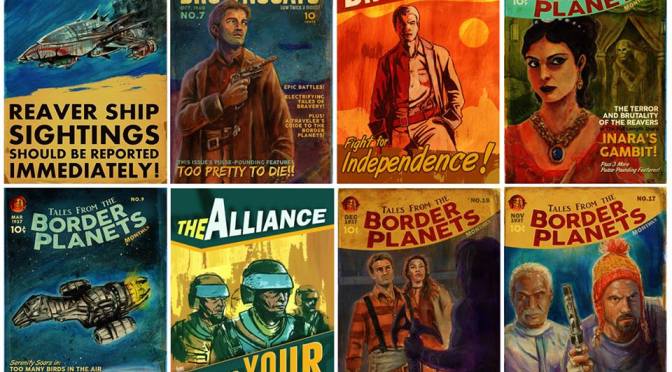
Robert Jimenez’s art for a new set of Firefly trading cards is excellent.

The big news this weekend is going to be the Hugo Awards at Sasquan, but before that happens there are a few last minute pieces to read on the controversy:

In other, less frustrating news:

Aliette de Bodard’s The House of Shattered Wings hit shelves this week. I haven’t gotten a chance to read it yet (still savoring The Fifth Season), but there’s been plenty of other stuff to read about it in the meantime:

Notable interviews this week:

This week, my internet reading seemed to largely focused on just a couple of themes. The first one? Diversity:

The second major theme in my internet reading this week was nostalgia:

Miscellany:


Book Review: Empire Ascendant by Kameron Hurley

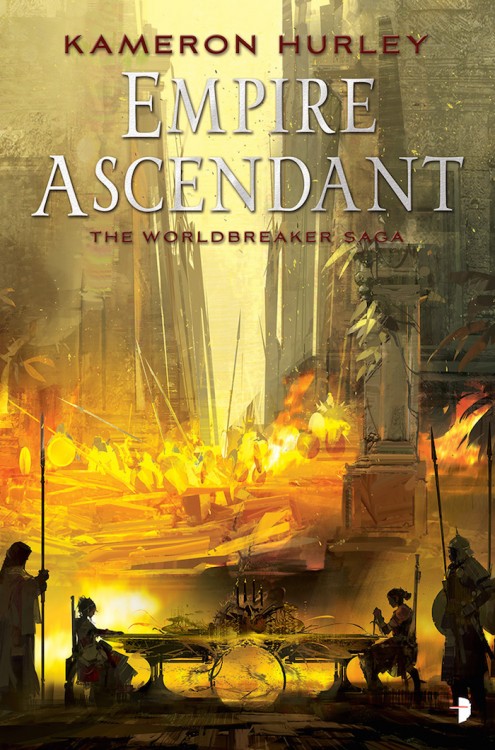
empire-ascendant-by-kameron-hurley-495x750[This review is based on an advance copy of the book received through NetGalley.]

Empire Ascendant is a brutal read, which is somewhat to be expected from Kameron Hurley in general, and certainly to be expected in the follow-up to The Mirror Empire. The world of The Worldbreaker Saga is a harsh one, and this second book in the series turns the grimdark up to eleven.

Unfortunately, I’m just not loving this series the way I did Hurley’s God’s War trilogy. I liked The Mirror Empire well enough, but it took me about a third of Empire Ascendant to get my bearings and figure out what was going on. In addition to the increased blood and higher body count, there are several new POV characters who I had a hard time placing in the narrative, which was confusing. Additionally, though it’s been less than a year since I read the first book, it turns out that it wasn’t actually all that memorable.

Except for Zezili, a character I adored in the first book but whose page time in Empire Ascendant is greatly reduced, I found myself barely recognizing most of the characters until partway through the novel. I did enjoy Anavha’s parts, but his story line seemed to move at a painfully slow pace. Ahkio spends most of the book being ineffectual, as does Lilia. The invading empress from the other world is somewhat humanized, but we don’t see much of her except near the beginning and end of the book. For basically all of the characters, everything just goes from bad to worse to worst for some five hundred pages, and by the end of the book I found myself just unable to engage with that level of darkness any longer.

The thing is, this isn’t a technically bad book. Quite the opposite, actually. It’s a technically brilliant book that I just don’t know if I’m capable of appreciating right now, which is sad because it’s a book that I’ve been eagerly anticipating for months. There’s still a lot going on in this series that I think is fascinating, and I have no doubt that I’ll go on to read the third book in the series when it comes out as well.

I think, though, that the reality is that this is not a series for the faint of heart. The role reversal and the interrogation of gender and the implicit (so implicit they actually become explicit) criticisms of genre mainstays are well worth checking out, but I think that it’s the very subversiveness of this series that makes it such difficult reading. Empire Ascendant isn’t a book that can be read lightly. It demands (and deserves) all of the reader’s attention, but it’s, frankly, so  concerned (and rather self-consciously so) with subverting tropes and challenging expectations that it becomes weighed down with it’s own seriousness and self-importance.

In the end, I want to love everything about this series as much as I loved Zezili in the first book or as much as I loved all of the God’s War books, but I think I’m going to have to settle for only being able to objectively know the value of them and recognize the excellence of Kameron Hurley’s craft–which has certainly improved since her God’s War days. Empire Ascendant shows Hurley’s growth as a writer, but I feel like it also shows a notable lack of joy or humor when compared to her earlier work–which translates directly to me finding this new series increasingly unenjoyable.

Book Review: Sorcerer to the Crown by Zen Cho

[This review is based on an advance copy of the book obtained through NetGalley.]

If you loved Jonathan Strange & Mr. Norrell, you owe it to yourself to read Zen Cho’s Sorcerer to the Crown. At the same time, though, I’m not sure I’d compare it to Jonathan Strange & Mr. Norrell if I hadn’t just recently read the older novel.

Sorcerer to the Crown really has much more in common with the works of Jane Austen in both style and tone. While Jonathan Strange & Mr. Norrell is a broad-ranging pastiche that pays tribute to many genres while being very much its own thing, Sorcerer to the Crown is something simpler and purer–more earnest in its adherence to old-fashioned language and storytelling conventions. That said, Sorcerer to the Crown is a wildly original and deeply unconventional twenty-first century novel and a great deal of fun.

The book opens with a very young black boy named Zacharias being shown off to a bunch of white men to prove his (and his race’s) magical capabilities. While the ominous tone of the prologue is somewhat at odds with much of what follows in the novel, I think it’s a pretty excellent way of infusing the rest of the book–which would not be inaccurately described as a “romp”–with an undercurrent of darkness that keeps things grounded and provides a sort of baseline for the exploration of POC experiences in the rest of the story. It’s a prologue that shows the reader immediately what kind of book this is, which is the perfect sort of prologue if an author really must include one.

The rest of the story takes place after Zacharias has managed to find himself in the position of being the most eminent sorcerer in England. We quickly learn that his high office has earned Zacharias no shortage of enemies and is more a nuisance than anything else. He’s not even certain he wants the office at all, but there’s no way for him to give it up. Instead, he determines to make the best of it and try and enact what change and bring what progress he can while he still has time. To that end, Zacharias has to deal with magical school girls, Malaysian vampires. scheming racists, and angry dragons.

It’s a wild ride.

The characters in Sorcerer to the Crown can all be a little one-dimensional at times, and I didn’t always find Zacharias to be particularly likable, although I absolutely loved Prunella. Some things seemed a little too tidy at the end, and I’m not sure I entirely buy the romance, which was so restrained as to be almost nonexistent. Although it is kind of refreshing that the book isn’t overly focused on the romance, I would have preferred a more gradual growth of affection over time. As it was, the resolution of the romance felt somewhat tacked on and less earned than it could have been.

Still, Sorcerer to the Crown is a thoroughly enjoyable read. From beginning to end, it hits all the right notes that I look for in a book. It’s a very different perspective than we’re usually offered in Regency-set fantasies. It’s fast-paced and interesting enough that even though a great deal happens it never feels overstuffed or overlong. It’s whimsical without being precious and clever without being pretentious. Best of all, it’s a downright funny book, and I found myself chuckling aloud more than once. Definitely in my top ten books of the year so far.

Weekend Links: August 15, 2015

Orc Nouveau at Orcward Development Blog

Listicles:

About Authors:

On Writing and Stuff:

For Funsies:


Why I’d rather see a Dragonlance trilogy than a Forgotten Realms movie

So, probably everyone has by now heard that Warner Brothers has a Dungeons & Dragons movie in the works now that they’re out of litigation over the rights to it. Reportedly, there’s even a script already written based on the Forgotten Realms setting. I just can’t get myself too excited about it, though, because I, frankly, think filming Forgotten Realms is a bad choice.

  1. Forgotten Realms is problematic as shit.
    So, obviously fantasy in general is problematic as all get out, but the big issue with Forgotten Realms is the drow elves. People are already speculating about the possible appearance of Drizzt Do’Urden in the movie, which makes sense since he’s probably the most popular and recognizable character in the Forgotten Realms, what with having over two dozen books just about him, plus a couple of tangentially related projects dealing with the drow within the setting. I just don’t see how there is any possible way for the drow to be done in a film at all without it being incredibly racist.
    Their whole thing is that they are black and evil, and I can’t imagine that any halfway intelligent filmmaker would want to even step into the minefield of trying to figure out casting, costuming, and makeup for them. Oh, and did I mention that part of the way that we know the drow are evil in the books is that they have a radically and brutally matriarchal society? The only solution, I think, is to just avoid the dark elves altogether.
  2. Forgotten Realms doesn’t have any really iconic characters.
    Aside from Drizzt and company, that is. And I think it’s extremely unlikely that we’ll be getting that story. In some ways, this could be a benefit, as it means that the setting is ripe for new ideas and the film will have a lot of freedom to tell a wholly original story. However…
  3. Forgotten Realms is really pretty generic.
    Of the D&D settings that exist, Forgotten Realms is the closest to the basic game setting. All of the races and classes are pretty strictly (and simplistically) designed, and magic swords are far more common than seems prudent for good storytelling.
    There’s a reason why these books are mostly popular with the under-14 crowd. There’s just not a lot of complexity or ambiguity within the Forgotten Realms world, and trying to inject some darkness and grit to it would warp it beyond recognition. The thing that makes Forgotten Realms so attractive to adolescents is that it’s bright and shiny and simple. Without any overarching story line or epic saga associated with it, it’s a great setting for playing D&D in because it always leaves room for the player characters to be the heroes of the story. Plus, everyone gets to have a +1 sword by like level 5!
    However, it struggles to have any specific personality of its own, and this increases the likelihood that a Forgotten Realms movie–especially absent any recognizable character from the series–will just end up being a boring, derivative, Tolkien-inspired fantasy trope-filled mess.

dragons of autumn flameThe good news is that there’s a better option.

Full disclosure: part of the reason I would rather see a Dragonlance adaptation than Forgotten Realms is just that I read Dragonlance first and have liked it best for almost twenty-five years. That said, there are some real reasons that I think Dragonlance is far superior and would make for an objectively better movie than anything the guy who wrote The Conjuring 2 is going to come up with in the Forgotten Realms setting.

  1. Dragonlance already has a great story.
    Well, maybe not great exactly, but it’s a story, and it’s pretty epic, and I am confident that it could be whittled down to a really excellent trilogy of films. Hell, someone really ambitious could easily do three 10-episode seasons of television that could include all the more rambly parts of Dragons of Winter Night, and it would give Game of Thrones a run for its money. But I’d settle for a movie trilogy.
    Even more than a story, the Dragonlance series has a very strong sense of place. While there’s a good deal of magic in the setting, magic is (compared to Forgotten Realms, at least) relatively rare and difficult enough to use that it’s not a solution to every problem. The heroes in Dragonlance have to solve problems using their wits and ingenuity, mostly, and they face enough challenges and hardships to make for a compelling tale.
  2. Dragonlance is a perfect candidate for the dark and gritty treatment.
    While it’s at heart a pretty kid-friendly series, Dragonlance has a lot of grimdark potential without being actually grimdark. The heroes in Dragonlance have real flaws and face real moral dilemmas, but they are still, for the most part actually heroes. Even Raistlin is sort of the exception that proves this rule, a character who is truly villainous but not so self-serving that he wants to watch the world burn. In terms of plot points, Dragonlance has some dark parts–the first encounter with the black dragon Khisanth in Xak’Tsaroth, Matafleur’s sacrifice, the nightmare in Silvanost, Kitiara’s attack on High Clerist’s Tower, Godshome–that would be amazing to see on screen.
  3. Dragonlance is full of dragons.
    Fantasy movies that do dragons well are few and far between, and they often end up being ironically well-loved rather than really appreciated for their merits. However, Game of Thrones is currently showing us just how far we’ve come with the ability to make CGI dragons in recent years, and I’d love to see some of Dragonlance’s dragons brought to life that way.
  4. Dragonlance has some great female characters.
    Well, again, maybe not great, but they definitely have a lot of potential. Kitiara is a pretty fascinating villain, and she could be written to be less creepily obsessed with sad sack Tanis. Goldmoon and Tika could both be adapted fairly easily. And Laurana is perhaps the most consistently heroic character in the books. She definitely has one of the most significant character arcs in the series as she grows from a spoiled, sheltered elven princess into a tough warrior, revered military leader, and canny politician.
  5. Dragonlance offers a lot of opportunities for diverse casting.
    Goldmoon and Riverwind are canonically people of color. Most of the elves in the series are described as tan to brown, and casting Laurana as a woman of color would be awesome. Kitiara is described in a way that could (and should, in my opinion) be interpreted as her being mixed race, and Tanis is explicitly so. If it was up to me, I’d cast Tika, Sturm, Caramon and Raistlin white, but probably none of the other main characters. And there are a lot of main characters.

Dragonlance isn’t a perfect series, not by a long-shot, and I do think it’s getting a little long in the tooth, but it would be so much better and more interesting than a Forgotten Realms movie. I’ll still be following the news on this project to see how it shapes up, but I expect that it’s going to disappoint a lot of Forgotten Realms fans by not including Drizzt, and it’s going to disappoint fantasy fans in general by being a generic, derivative turd. I guess we’ll find out if the project ever moves on to actually be produced.

Pretty stoked about this new Lovecraftian women anthology

She Walks in Shadows is edited by Silvia Moreno-Garcia and Paula R. Stiles, and all of the writers and artists involved in this anthology are also women. It’s been probably 10 years since the last time I was this excited about something even remotely Lovecraftian.

I mean, look at this table of contents:

“Bitter Perfume” Laura Blackwell
“Violet is the Color of Your Energy” Nadia Bulkin
“Body to Body to Body” Selena Chambers
“Magna Mater” Arinn Dembo
“De Deabus Minoribus Exterioris Theomagicae” Jilly Dreadful
“Hairwork” Gemma Files
“The Head of T’la-yub” Nelly Geraldine García-Rosas (translated by Silvia Moreno-Garcia)
“Bring the Moon to Me” Amelia Gorman
“Chosen” Lyndsey Holder
“Eight Seconds” Pandora Hope
“Cthulhu of the Dead Sea” Inkeri Kontro
“Turn out the Lights” Penelope Love
“The Adventurer’s Wife” Premee Mohamed
“Notes Found in a Decommissioned Asylum, December 1961″ Sharon Mock
“The Eye of Juno” Eugenie Mora
“Ammutseba Rising” Ann K. Schwader
“Cypress God” Rodopi Sisamis
“Lavinia’s Wood” Angela Slatter
“The Opera Singer” Priya Sridhar
“Provenance” Benjanun Sriduangkaew
“The Thing in The Cheerleading Squad” Molly Tanzer
“Lockbox” E. Catherine Tobler
“When She Quickens” Mary Turzillo
“Shub-Niggurath’s Witnesses” Valerie Valdes
“Queen of a New America” Wendy N. Wagner

If you pre-order the book now, you’ll save $2 off the cover price. It’s officially being released on October 6, and a $5 ebook will be available a few weeks later.

Weekend Links: August 8, 2015

Probably my favorite thing I’ve found on the internet this week is J.R.R. Tolkien reading aloud from The Hobbit, which I’d somehow never heard before.

I know I post a lot of stuff about Ursula K. LeGuin, but a week doesn’t go by but that there’s at least a couple of interviews, profiles, or blog posts by/about her. This week in LeGuin Watch:

Other interviews and profiles of note this week:

Barnes & Noble’s Sci-Fi and Fantasy Blog presents Dune at 50: A Newbie’s Guide, which reminds me that there really is no good reason why I’ve never gotten around to reading it. Meanwhile, someone has made a 3-hour long fan cut of the movie, which I have likewise never seen. I guess I know what I’m going to be doing sometime relatively soon.

The B&N blog also wrote about one of my favorite pieces of sci-fi history trivia this week: “How One Misunderstanding in the 1870s Created an Entire Sci-fi Subgenre”

The Atlantic asks “Why Aren’t There More Women Futurists?”

S. Andrew Swann lists 7 Things in Every SF/F Story.

Target stores are phasing out their heavily gendered toy aisles in favor of something more neutral. . . literally announced the same week that my 12-year-old got rid of basically all of her non-Lego toys.

Jim C. Hines has 10 Hugo Predictions now that Hugo voting has come to a close. We’ll find out how accurate these are in a couple of weeks, but I’m guessing they’re pretty right on.

Clarkesworld published a story that I can’t tell if I love or hate but that I think is fascinating either way: “Security Check” by Han Song (trans. by Ken Liu)

And Lexus has made a hoverboard. What a time to be alive: