“The Sons of the Harpy” is another mixed bag of an episode. There’s a lot of story here, but there’s also a lot of exposition, and I think the greatest strengths of this episode are in its quieter moments. That said, this episode is one of the bloodiest of the series so far as shit hits the fan in King’s Landing and Meereen while Jaime and Bronn arrive in Dorne, and the bloodshed we see here promises to be just the beginning of the violence in store for us this season.
The show is doing a lot of interesting stuff and a lot of infuriating stuff, and there’s a lot to talk about, and, as always, spoilers are under the cut for both last night’s episode and book related discussion.
The episode picks up where the last one ended, as Ser Jorah steals a boat and absconds with Tyrion from Volantis.
Elsewhere, Jaime and Bronn are sailing south. I loved that we got a shot of Tarth (Brienne’s birthplace), although it’s brief. The conversation here between Bronn and Jaime sets up the first of several interesting narrative disagreements that are showcased in this episode, in which the central theme seems to be a meditation on the different ways in which we frame stories. In the story Jaime wants to tell, they are going to rescue his “niece,” Myrcella, although Bronn refers to it as “stealing” Dorne’s princess and seems to be well aware that Myrcella is actually Jaime’s daughter. Bronn also asks Jaime if it was Jaime who freed Tyrion, to which Jaime responds that it was Varys who did it–another difference between reality and the story that Jaime wants to tell, even though it’s obvious to Bronn (and the viewer) that this journey to Dorne is an atonement of sorts for Jaime, who can’t seem to shake his guilt no matter what story he tries to tell himself and no matter how much he wants to avenge Tywin’s death by killing Tyrion.
In King’s Landing, Cersei continues to whittle away at the Small Council. The Iron Bank is calling the crowns debts, so she sends Mace Tyrell to Braavos to negotiate better terms–with Ser Meryn Trant for protection. With Arya in Braavos and Meryn Trant still on her list, this could get interesting in the next couple of weeks.
Next up, Cersei meets with the High Sparrow, who is now the new High Septon. The High Sparrow is definitely one of the most interesting new characters introduced in this season, and Jonathan Pryce continues to knock it out of the park in this role as a seemingly mild-mannered and reasonable man who nonetheless jumps at the chance of reviving the Faith Militant, a martial arm of the faith of the Seven that was disbanded hundreds of years ago.
The reinstatement of the Faith Militant immediately results in gangs of armed religious fanatics rampaging through the streets of King’s Landing, smashing stuff and beating and arresting people, culminating in the ransacking of Littlefinger’s brothel and then the arrest of Loras Tyrell.
While Cersei at least nominally had to have Tommen sign off on the Faith Militant, we find out that Tommen has no idea what is going on when an enraged Margaery confronts him about her brother’s arrest. This begins one of the show’s most fascinating departures from the books so far, as we see Tommen go immediately to Cersei to demand Loras’s release. Cersei, of course, disclaims responsibility and denies having any power to do anything about it, which sends Tommen himself to the Sept to seek an audience with the High Sparrow. Members of the Faith Militant bar Tommen’s entry, but Tommen refuses to let his Kingsguard kill the men, even as cries of “bastard!” and “abomination!” and “born of sin!” ring out in the background. A disheartened Tommen returns to his chambers, where he has to give Margaery the bad news: not only has he not managed to free Loras, he doesn’t even have a clear plan yet. Frustrated, Margaery leaves to be with her family, and she’s going to write to her grandmother about this.
I actually find this whole plot surprisingly compelling. I’ve never loved the way GRRM handled Cersei and the King’s Landing plot in A Feast for Crows and A Dance With Dragons, and I’ve been very concerned about how this would be done on the show, especially with an older Tommen and more mature and involved Margaery. In the books, Tommen is a very young child, so he’s not a player at all, and book!Margaery, at just sixteen herself, is much more vulnerable to Cersei’s machinations than the more adult Margaery of the show. I didn’t like the way the show handled Tommen’s marriage to Margaery, but I think I might love where things are going now. This Tommen is still very young (Have I mentioned how young this actor looks? My goodness, he’s like a baby!), but he’s starting to realize how fucked up his situation is. His mother is power mad and making terrible decisions, the city is turning against him, his wife is unhappy, and he’s just a kid that no one seems to take very seriously. I’m finding myself really looking forward to seeing how Tommen develops.
My only reservation (and it’s, admittedly, a major one) is that I’m now worried that Cersei’s storyline is going to be sacrificed in order to expand Tommen’s character and make the story all about him. I feel like there is a reason that characters like Joffrey, Tommen, and Robb Stark weren’t given POV chapters in the books while their mothers were, and I worry that the writers of the show might be missing the point of that by spending so much time focusing on Tommen. We already got to see Catelyn Stark’s story turned into Robb’s, and Catelyn was completely discarded by the show following Robb’s death, in spite of the thematic significance of Lady Stoneheart in the books. I’m torn between really enjoying the direction the show is taking and being unhappy at the prospect of Cersei being similarly sidelined in favor of her son’s character development.
All that said, I am unequivocally thrilled about Olenna Tyrell’s impending return, which is the only good news in this whole sequence.
Also, a note on costumes: the fabrics on this show are amazing. I always loved Joffrey’s outfits, and Tommen’s are very similarly gorgeous. Also, did everyone else notice that, while Cersei seems to have given up her armored look this season–I imagine because she feels more secure in her position as she’s weeding out her opposition–Margaery’s dress in this episode featured a metal overlay on the bodice that is definitely reminiscent of some of Cersei’s earlier looks.
Up at Castle Black, Selyse Baratheon is basically awful, hating on Jon Snow and on her own daughter, Shireen. Selyse suggests that Jon Snow is just a bastard of Ned Stark’s by some tavern wench, but Stannis insists that that wasn’t Ned’s way–the first tiny piece of this episode’s R+L=J preparatory exposition. Melisandre shows up to remind Selyse that Shireen is still Stannis’s daughter, which seems ominous. It’s interesting to see Stannis questioning Melisandre a little. He might need her, but it seems he might not entirely trust her, either.
Elsewhere in the castle, Jon Snow is writing to the lords of the North to ask for men and supplies. He’s not happy about asking Roose Bolton for help, but Sam sensibly reminds him that Lord Bolton is the most powerful of the northern lords, and Jon angrily signs the letter after all. He’s still stewing about it when Melisandre pops in to try and convince him to come south with them to Winterfell. Failing that, she tries to seduce him (probably to make another shadow baby, maybe to kill Roose Bolton) which he also rebuffs. So she settles for just freaking Jon out with a “You know nothing, Jon Snow” as she leaves the room.
Meanwhile, Stannis is busily doing paperwork when a bored Shireen comes in looking for validation. We get even more back story about Shireen’s greyscale, which makes me increasingly certain that we’ll be getting greyscale and not the Pale Mare in Meereen later on. Mostly, though, I think this is a great humanizing scene for Stannis, who is often cold and detached, even if he’s not evilly so like Roose Bolton. It’s nice to seen Stannis thaw out a little, and I audibly “aww”-ed when Shireen hugged him. This is probably my second favorite scene of the episode, and it continues the theme of different stories–Selyse may see Shireen as weak and deformed, but Stannis loves her and is proud of her regardless.
Next, we travel to the crypts below Winterfell, where Sansa is lighting candles and visiting her dead family. She’s in front of Lyanna Stark’s statue when Littlefinger shows up to take his leave before heading back to King’s Landing. Before leaving, however, Littlefinger provides the second part of this episode’s R+L=J exposition. He tells Sansa the story of Lord Whent’s tourney at Harrenhaal, where Rhaegar Targaryen passed over his own wife, Elia of Dorne, to choose Lyanna Stark as Queen of Love and Beauty. Sansa replies that Rhaegar might have chosen Lyanna, but then he kidnapped and raped Lyanna–Lyanna didn’t choose him back. Judging from Littlefinger’s sad, knowing look at Sansa, the story the Starks and Robert Baratheon have been telling about these events might not be the whole or correct story. The subtlety of Littlefinger’s look might fly over the heads of viewers who haven’t read the books, but I think everyone who has read ASOIAF got the message loud and clear.
Before leaving, Littlefinger apprises Sansa of the situation in the North and Stannis’s impending attack. He predicts that if Stannis is succesful, Sansa will be made Wardeness of the North in her own right. If Stannis fails, Littlefinger advises Sansa to secure her position by manipulating Ramsay. And of course Littlefinger can’t leave without creepily stealing a last kiss from Sansa, which felt gratuitous to me if the show expects us to believe that Sansa is anything more than Littlefinger’s pawn and completely in his power, but I don’t know why I would ever expect this show to not do the worst things possible with Sansa every chance they get.
In Dorne, Jaime and Bronn have finally arrived at their destination. Breakfast is a snake, and we get a lovely little chat about what the best way to die is. The start on their way, and as Bronn points out the flaw in Jaime’s plan to sneak into Dorne (paying off the ship’s captain), they are almost immediately spotted by a group of four Dornish riders that they have to fight.
Somewhere else in Dorne, Ellaria is riding a really pretty horse (SO pretty) along a beach on her way to meet the Sand Snakes. Of course, the captain of the ship that Jaime and Bronn were on has already spilled the beans (and gotten a face full of scorpions for his trouble). This is the only part of the episode that I think I seriously hated. It just didn’t work for me. Ellaria in the books didn’t want to avenge Oberyn at all, and while Arianne Martell and the Sand Snakes did, they were much smarter about it than they seem to be being here. Declaring Myrcella as Queen of Westeros in the books was an amazing, elegant, vicious plan that made a lot more sense than the plan these women seem to have on the show, which is apparently just killing Myrcella to start a war. I might be in a minority as a true lover of the books’ Dornish plot, but even if the show couldn’t put it on screen exactly the way it was in the books (which I agree would be basically impossible) I think they could have come up with something better than this.
The show also seems determined to flatten all these characters into nearly indistinguishable bloodthirsty martial types, which is absolutely infuriating. One of the strengths of GRRM’s books is that he showcases a wide variety of different female characters, and the Sand Snakes are no different. In the show, however, it seems like the writers really want to squeeze all of GRRM’s myriad multifaceted women into two boxes, labeled “badass warrior type women” and “inept politician type women.” Gone are the vastly different suggestions that Tyene, Obara, and Nymeria have for avenging their father. Gone is Ellaria’s sensible desire to protect her own children and live in a peaceful land. Gone is Arianne’s ambition and resentment of her father’s reticence, because Arianne is gone altogether. Basically, gone is all the depth and nuance that made the Dornish plot such an interesting addition to the books. I’d started to come to terms over the last few weeks with the omission of Arianne Martell from the show, and I’d even started to think that expanding Ellaria’s role was a good solution to some of the problems with introducing a whole new setting and cast of characters this late in the series, as it offered some interesting ways of handling the Dornish plot, but it looks like I’m just going to be disappointed. At this point, I’m no longer going to get my hopes up about it at all.
Back in Essos, Jorah and Tyrion are well on their way. Tired of hearing all the annoying noises Tyrion is making, Jorah finally removes the gag from Tyrion’s mouth. Except it turns out that Tyrion is just going to make some even more annoying mouth noises now. When he learns that Jorah is taking him to Daenerys, not Cersei, Tyrion can’t resist insulting and mocking Jorah until Jorah knocks him out to shut him up. While this scene moves things along and is thematically consistent with the rest of the episode, again picking up the idea of the duality of reality and the stories we tell ourselves, it’s hands down the most boring thing going on this week.
In Meereen Daenerys is talking with Ser Barristan, which starts my favorite part of this episode. Through Ser Barristan, we learn some more about Rhaegar Targaryen in a direct counterpoint to the discussion between Sansa and Littlefinger earlier. The kind, charming Prince Rhaegar that Barristan describes, who loved to sing in the streets of King’s Landing, doesn’t sound like the sort of guy who would kidnap and rape anybody, and he certainly doesn’t sound very much like what Viserys told Dany about their brother. This pleasant interlude is interrupted by Hizdahr zo Loraq returning to pester Daenerys some more about reopening Meereen’s fighting pits.
While Hizdahr is waxing eloquent about the joys of blood sports, the Sons of the Harpy have coordinated a massive attack on Daenerys’s Unsullied forces in the streets of Meereen. Grey Worm and his group are in dire straights when Ser Barristan, now walking through the town, hears the commotion and comes to help. Together, Barristan and Grey Worm manage to defeat the remaining Sons of the Harpy, but the episode ends with both men gravely, possibly mortally, wounded. I loved finally getting to see Ser Barristan in a real fight, as he’s one of my favorite characters from the books, but my question is why are the Unsullied so easily defeated? They’re supposed to be these amazing super soldiers, and the show has already told us that most of the Sons of the Harpy are common men. The Unsullied should have a significant edge, being far better equipped and trained than the Sons, and yet they drop like flies. In the books, the Sons of the Harpy are restricted to sneak attacks and nighttime assassinations–they’re basically terrorists–but here they are engaging in full on guerrilla warfare in broad daylight with what looks like significant help from the regular people of Meereen.
It just seems weird to me, like the show is telling us one thing but showing something entirely different, which is ironic in light of this episode’s overarching theme about storytelling.
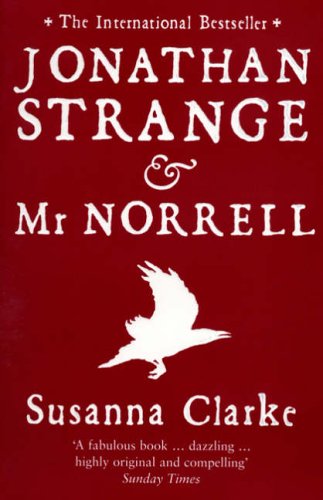 I read Jonathan Strange & Mr. Norrell for the first time in 2004 and absolutely fell in love with it. Since then, I’ve probably read it over again half a dozen times more, but it’s been at least five years since I last opened my now rather shabby and dog-eared paperback. Now, though, as the air date for the BBC miniseries based on this most wonderful novel approaches, I feel compelled to reread it again. Over the next several weeks, I will be blogging my reread, with new posts Monday through Friday each week. I plan to cover three to five chapters each day and should be finished just in time for the US air date (June 13) of the miniseries’ first episode.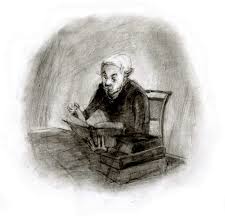


 SF Bluestocking