State of the Blog and Weekend Links: September 3, 2017 (Belated)(Whoops!)

I’d love to say that last week was a turning point in SF Bluestocking productivity, but obviously it hasn’t been. Honestly, I still haven’t even finished writing about the season finale of Game of Thrones because, you guys, it was so bad.  That said, I’m actually writing tonight, and I plan to keep on writing tomorrow and through the rest of the week with a new system in place to help me stay on task and accountable, even if it’s only to myself.

So, I’m not making promises, but I’m hopeful that I’ll be getting things back on track here, especially with just under a month left before I have a busy schedule of television coverage planned. This year, the plan is to cover Star Trek: Discovery (airing Sundays starting Sept. 24), Lucifer (Season 3 airing Mondays starting Oct. 2) and The Shannara Chronicles (Season 2 airing Wednesdays starting Oct. 11). I’d love to do The Good Place (Season 2  on Thursdays starting Sept. 28), but I think I’ll be busy enough as it is; I think I’ll skip writing about it unless I think of a good angle on it.

I still haven’t forgotten about the Gormenghast project, and I’m currently working up a tentative schedule to get that finished by the end of this year, which I still think is possible if I can make a plan and stick to it. I’ve got several other book reviews and essays on the docket as well, and though I’m trying hard to not be overly optimistic about my new routine I’m nonetheless hopeful that I’ll be getting them up on the blog sooner rather than later.

Finally, in more personal-ish news, I got a rad black unicorn mount in WoW this weekend, and it made me happy. After all these years, that silly game still brings me a lot of joy sometimes.

So, last weekend it was big news that an unscrupulous author had tried the game the New York Times’ YA Bestseller List. This week, Claribel Ortega actually read that garbage book, and it sounds awful.

You can now see the cover and table of contents for Uncanny Issue 18. The first half of the issue will be online tomorrow.

It’s the beginning of the month, and that means a new post at the B&N Sci-Fi and Fantasy Blog of September’s SFF new releases.

All of Terry Pratchett’s unfinished work was run over with a steamroller.

N.K. Jemisin did a Reddit AMA, and LitHub has the highlights.

Some dipshits thought it was a good idea to greenlight a Lord of the Flies remake with an all-girl cast–written by men. Libba Bray already wrote something like that years ago, and she’s got a good breakdown of why this movie is a bad idea.

At the Book Smugglers, Sarah Kuhn writes about women who lust.

Kelly Robson has a novella coming out in March–Gods, Monsters and the Lucky Peach–and you can pre-order it now.

Jaym Gates talked about the Big Idea in her new kickstarted anthology, Strange California. I’m a little bummed that physical book rewards are out and I’m still waiting on my ebook version, but I’m still pretty excited about it.

The Fandomentals is doing a Classic Sci-Fi Book Club, and the first title they covered is William Gibson’s Neuromancer.

Sarah Gailey’s serial at Fireside, The Fisher of Bones, has a new installment: Chapter Three: Increase. (Chapter One: Naming | Chapter Two: Cycle)

State of the Blog and Weekend Links: August 27, 2017

Welp, this week wasn’t nearly as productive as I’d hoped it would be. It turns out depression is still a cold, hard bitch, and willpower isn’t enough to beat her entirely.

I still remain hopeful, however, and this week I’ve got a plan in place for a new exercise and healthy eating routine. Tonight was the season finale of Game of Thrones, which means the end of weekly semi-binge drinking during the episodes, and it looks like this is going to be a long break between seasons. It’s probably for the best. The next big things coming up are the new seasons of Lucifer and The Shannara Chronicles, both in early October, so my plan, at least right now, is to work on getting caught up on other projects between now and then.

This week will see the start of a new fitness and calorie-counting regime from me, in the interests of getting healthy again, but at the same time ALL of my teenage daughter’s extracurricular activities start this week, with several auditions and after school meetings. Still, I should have plenty of time to write, and I’ve got several things I hope to read this week, having come nowhere near to my reading goals for the weekend. I think I’ll finish The Stone Sky tonight, but only if I don’t pass out first, which is looking very iffy at this point. Regardless, I’m hoping a new routine will help.

Silvia Moreno-Garcia is crowdfunding her first novella, Prime Meridian, on Indiegogo, and there’s still 8 days left to help her reach her goal.

There’s a trailer and episode titles for the next season of Black Mirror. There’s nothing that looks as incredible as “San Junipero,” but that piece of cinematic perfection is a hard act to follow, and I’m still looking forward to the new season.

James Cameron embarrassed himself with his garbage opinion on Wonder Woman, but Patty Jenkins shut that shit down fast.

Book Riot rounded up some Chinese SFF in translation.

At Nerds of a Feather, the G sat down for an excellent chat with Jonah Sutton-Morse from Cabbages a& Kings.

Annalee Newitz was interviewed for Lightspeed.

Spencer Ellsworth shared his favorite bit of his [excellent] new short novel, Starfire: A Red Peace.

At Fantasy Faction, Ada Palmer was interviewed about Seven Surrenders.

At Long Reads, Adrian Daub wrote about losing oneself in the geography of fantasy worlds.

At Tor.com, Jack Heckel took a critical look at Prince Charming.

Mari Ness examined Anne Thackeray Ritchie’s The Sleeping Beauty in the Wood.

A garbage book managed to, momentarily, scam its way onto the NYT Bestseller list.

You guys. This book is REALLY bad. It popped up on NetGalley for a minute, but it was removed quickly enough that I’ll never get a chance to mock it firsthand, since I can’t see myself actually spending money on it.

There’s a new Kai Ashante Wilson story at Tor.com: “The Lamentation of Their Women.”

“Avi Cantor Has Six Months to Live” by Sacha Lamb is the latest and last story in the Book Smuggler’s Gods & Monsters series, and it’s wonderful. Gay trans boys and queer families and Judaism and the demon Lilit, you guys. Probably you will tear up at least a couple times, at least a little bit.

Read about Sacha Lamb’s inspirations and influences.

Game of Thrones Recap/Review: Season 7, Episode 6 “Beyond the Wall”

This penultimate episode of season seven continues the storytelling trends that we’ve already seen in the last five episodes, and it manages to be boring, to boot. After last week’s constant jumping around between characters and storylines, which all seemed to be increasingly spread apart from each other, “Beyond the Wall” is all about bringing storylines back together (with the season finale looking to do so even more). Unfortunately, the show continues to be plagued by the same pacing issues and the same bizarre character work that has been emblematic of the season so far. If I didn’t know it was in earnest, I’d think “Beyond the Wall” was a cruel, absurdist experiment to see how far audiences are willing to follow this show as it descends into complete nonsense.

However, Benioff and Weiss still profess to be writing this pablum in good faith, so let’s dig in.

**Spoilers below, obv.**

At Winterfell

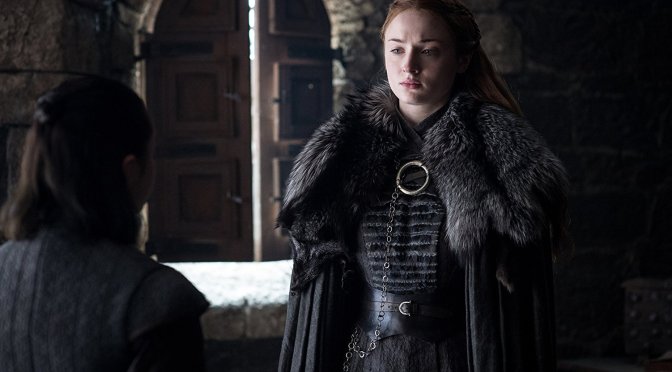
We’ll start at Winterfell, with Sansa and Arya, though the episode doesn’t begin with their story. The other two major storylines in “Beyond the Wall” are intertwined enough to make them worth looking at together, but this one is self-contained and almost entirely separate from anything else that happened this week. It’s also profoundly stupid and deeply, infuriatingly misogynistic, just an absolute quagmire of hot garbage from start to finish.

So, last week Arya found the letter that Sansa wrote way back in season one asking her mother and brother to come to King’s Landing and bend the knee to then-King Joffrey Baratheon, and it wasn’t clear exactly what Arya might (or even could) do with it, since it was pretty clear at the time that it was written under heavy duress by a traumatized child being kept as a prisoner and being lied to by her captors. Everyone who read the note at the time basically agreed that Cersei had dictated it to Sansa and that Sansa shouldn’t be blamed for cooperating under the circumstances. Now, to be fair, Arya wasn’t in on any of those conversations, and her own memory of Sansa at the time was of Sansa standing with Cersei while Joffrey gave the order to have Ned Stark beheaded, and that’s something that could be fodder for conflict between the sisters. However, that’s only an aside in this week’s storyline, which is almost entirely focused on Arya’s general hatred of and resentment towards Sansa and more specifically on Arya’s grievance over this note and Arya’s threats of violence towards her sister. It’s nonsensical, and there’s not an honest motivation or compelling emotional beat in the whole episode.

It’s not hard to imagine that Arya and Sansa’s different experiences along their wildly divergent paths over the last several seasons of the show might set them up for conflict. The two girls have extremely different temperaments and skill sets, and it makes sense that they would have disagreements among themselves on how to deal with their current situation. However, the story being shown on screen doesn’t suggest any understanding on the part of the show’s writers of girls, sibling rivalry, normal human interactions or even just basic logic. Instead, all this episode’s so-called drama at Winterfell is a boring, tedious rehash of the show’s longstanding commitment to pitting women against each other at every turn while devaluing and vilifying femininity, often in hopelessly sophomoric fashion.

First up, we get Arya confronting Sansa with the letter and blaming Sansa for their father’s death. When Sansa protests that she was a child and frightened and that she thought cooperating would help Ned, Arya taunts her for being “stupid” enough to believe the Lannisters and mocking her with comparisons to Lyanna Mormont. But the whole “not trusting Lannisters” thing only makes sense at all with the benefit of hindsight; while obviously smooth political operators, and with the taint of Jaime’s kingslaying on the family, the Lannisters haven’t, prior to this generation, had a reputation as particularly devious. Indeed, the popularity of the saying “a Lannister always pays his debt” suggests that Lannisters are in fact generally viewed as trustworthy, even if not always as forthright. Certainly, they are no less untrustworthy than any of the other great houses of the Seven Kingdoms, and Sansa, as a sheltered child with romantic ideals, can’t reasonably be called “stupid” for believing them—especially when Cersei herself was acting in good(-ish) faith with Sansa; Joffrey’s decision to execute Ned Stark surprised his mother as well, and this impolitic action was even the reason Tywin sent Tyrion to King’s Landing to act as Hand of the King in Tywin’s stead. And on the note of Sansa being sheltered, it’s equally ridiculous to compare Sansa to Lyanna Mormont. Lyanna Mormont has been the opposite of sheltered, in many ways, and is much worldlier than Sansa was at that age, largely because Lyanna has never had the same privileges of wealth and station and intact nuclear family that Sansa had. As a result, Lyanna has also never had to endure the misfortunes and hardship Sansa did; she’s had different challenges to face just like Arya has had different challenges, and this is the thing that Benioff and Weiss don’t seem to grasp. Sansa, Arya and Lyanna are three different individuals with different upbringings, skills and hardships, and it’s both absurd and wildly unfair for them to be pitted against each other in this way.

From a more practical standpoint, what exactly is Arya’s motivation here? Her strongest grievance against Sansa seems to be less related to their father’s death or even to Arya’s suspicions that Sansa could be disloyal to Jon Snow. Instead, it’s Arya’s perception of Sansa as weak and girly that comes up again and again in their conversations and from which Arya’s other resentments stem. Several times now, Arya has mentioned Sansa’s “pretty dresses,” and she’s been straightforward in accusing Sansa of greed, materialism and shallowness, projecting these qualities onto Sansa as possible motivations for Sansa to betray her family every chance she gets. Arya isn’t attacking Sansa’s actions, none of which realistically suggest any kind of malfeasance on Sansa’s part (in fact, literally the opposite); she’s attacking Sansa as a woman, assigning to Sansa negative qualities and motivations based on misogynistic stereotypes of the type of conventionally feminine woman Sansa is. There’s never been any inkling of Sansa as the shallow, frivolous, image-obsessed, devious, grasping figure Arya imagines, and there’s literally no evidence of it on screen at any point in seven seasons of the show, and yet all of this contrived conflict treats Arya’s accusations as if they have more weight than the spiteful, petty imaginings of a traumatized girl dealing with her own survivor’s guilt and cruelly lashing out at the sister she never was very close with to begin with.

In the end, Arya doesn’t make any specific demands on Sansa, even when Arya finds Sansa snooping around her chambers (where Sansa finds a bag of comically terrible severed face props). In a well-written story, it would be clear what Arya wants from her sister, even if all Arya wants is to punish Sansa for her perceived wrongs. Here, though, there’s no telling. Arya’s driving motivation for years has been revenge, symbolized by her list of names even as many of those characters have died while she was off training, so it was moderately surprising when Arya turned north instead of heading to King’s Landing to kill Cersei. The show has completely squandered all the potential of this turn of events, though, and much of that is because there’s no longer any obvious motive for anything Arya does. Arya’s suspicion of Sansa is so unfounded as to be almost deranged, but even if that wasn’t the case Arya’s lack of conditions for Sansa to meet makes this situation especially untenable and puts Sansa in the position of becoming rather justifiably paranoid about her sister’s intentions, which ends up leaving Sansa vulnerable to manipulation by Littlefinger, who has engineered this whole thing. For someone who is very quick to judge others for their stupidity, Arya sure has lapped up every bit of what Littlefinger has fed her.

This storyline finishes out the episode with Sansa sending Brienne away to serve as her representative in King’s Landing (although it’s also implied, poorly, that Sansa sends Brienne away out of a sense of self-preservation, believing that Brienne could side with Arya over her) and Arya threatening to cut Sansa’s face off and wear it.

At Dragonstone

Daenerys likes Tyrion because he’s not a Hero, which is mildly insulting, but he magnanimously gets what she’s trying to say. They talk a little bit about power and ethics, which ends with Tyrion calling Daenerys impulsive (she’s demonstrably not, in most situations) and then badgering her about the succession, even though she hasn’t even successfully won the Iron Throne yet. It’s a new low of paternalistic, sexist condescension from Tyrion, no matter how much the show tries to portray Daenerys as paranoid and irrational.

North of the Wall

Jon and company spend half the episode trudging through the snow and the other half fighting an extremely ill-conceived battle against zombies on a frozen lake while they wait for Gendry to send a text raven to Daenerys for help. These conversations, like all conversations on this show, are a mix of boring, bafflingly silly, and offensively bad, so I’m just going to list them here.

  1. Gendry complains to Tormund and Jon about the cold and asks how they stay warm. Fighting and fucking, apparently, according to Tormund, who them makes a rape joke implying that Gendry might not be safe, which is a great way for the show to treat a character who has already been actually sexually assaulted.
  2. Tormund criticizes Jon’s unwillingness to bend the knee to Daenerys, comparing it to Mance Rayder’s refusal to kneel to Stannis and pointing out that Mance got a lot of people killed. These aren’t exactly the same thing, but okay.
  3. Gendry is still mad at the Brotherhood Without Banners for selling him to Melisandre, who sexually assaulted him and wanted to kill him. Sandor Clegane totally dismisses Gendry’s anger and trauma and tells him to quit “whinging.”
  4. Jon and Jorah talk about their respective dads and daddy issues. Jon tries to give Longclaw to Jorah, but Jorah refuses because he feels unworthy. Jorah’s assertion that it should belong to Jon and Jon’s children reads as Jorah endorsing Jon’s relationship with Daenerys. Thank goodness Jon and Daenerys have Jorah’s blessing.
  5. Tormund and Sandor talk about Brienne. It’s gross, and it takes a weird homophobic turn partway through.
  6. Beric tells Jon that Jon doesn’t look like Ned Stark, which might be the dumbest thing said in this episode. Jon looking like a Stark—resembling Ned, to start with, and Arya, but also his mother Lyanna Stark—is a genuinely significant thing that is mentioned over and over again in the books. It did get somewhat short shrift in the show, but this is the first time it’s been so completely dismissed. Jon and Beric go on to have a talk about faith and purpose and the value of fighting for life even though the enemy is death and you’ll always lose. This conversation could have worked in a better show, but here it comes off as a little too serious and self-righteous.
  7. As the snow thickens and visibility gets worse, the group is attacked by a zombie polar bear. Some redshirts die and Thoros is injured. The whole thing would have been cooler if it was easier to see what was happening. Just because the characters are experiencing low visibility doesn’t mean the audience should as well. Not really a conversation, but just as meaningless as the conversations that surround it.
  8. Jorah and Thoros talk about some battle on Pyke where Thoros committed some act of drunken heroism. I think this might have been mentioned once before on the show, or maybe I just remember hearing about it in the books, but there’s no reason for this conversation to take place at all. I guess it shows that Thoros’s injury isn’t doing so great.

Eventually the weather clears up a little, and the group sees a small group of zombies with one of the Others marching through a narrow space between hills and decide this is there chance to catch a zombie. This goes alright at first, and they discover (albeit too conveniently) that killing one of the Others destroys all the zombies they have personally animated. They end up catching their zombie, since it’s the last one left after killing the Other, but not before it shrieks loud enough to wake the dead, or at least to draw the whole rest of the army of the dead down on them. Gendry is sent back to Eastwatch to send a raven to Dragonstone for help, even though it feels as if the group had been marching for days north of the Wall, Gendry doesn’t know his way around, and a raven would take at least several more days to get to Dragonstone and Dany would take some time as well to get back north, even on dragonback. The show has always played fast and loose with travel times, and there’s a certain amount of fudging the numbers that is acceptable for plot convenience or thematic reasons, but this is laughably awful.

While they wait for Daenerys to rescue them, Jon and company run across a frozen lake and are momentarily saved from the zombie horde when the ice starts to crack and about a three-foot line of water appears in almost a perfect circle around a large rock in the middle of the lake. Apparently, zombies can’t jump, so they all stop in a ring, trapping Jon and company in the middle of the lake, where they hunker down to wait for morning and, hopefully, Daenerys. Thoros dies in the night and is unceremoniously burned, which is disappointing since there are no other major human character deaths this episode. It’s not that I’m anxious for anyone else to die (and there is one brief moment in the fighting where it seems like Tormund might be in real danger), but this all still feels very low stakes for the main characters, especially with redshirts dropping like flies. Thoros’s death just isn’t enough to make the situation feel really dangerous or impactful. He’s not a big enough character, we weren’t attached enough to him, and in the moment it’s treated as no big deal.

Once there’s full light, or at least as close to full light as this poorly lit monstrosity of a show ever gets, the Hound starts tossing rocks at the zombies, and that’s about when they realize that the ice has refrozen during the night and start charging the group on the rock. They fight valiantly, the last redshirt or two die in the battle, Tormund almost gets ripped in half, and they realize that they’re completely surrounded and trapped in a moment that hilariously seems as if Jon Snow is truly only just now noticing this fact. And that’s when Daenerys ex machina happens. Although Tyrion warned her against it, Daenerys brings all three of her dragons North in order to rescue Jon Snow. Only she doesn’t manage to rescue Jon, just the rest of the men, and she’s forced to flee on Drogon after the Night King uses an ice spear to take down one of the other dragons, Viserion. Jon is left to fight his way out of the situation on his own, though he is in turn saved by his uncle Benjen, who appears almost magically and certainly too-fortuitously. Jon eventually makes it back to Eastwatch, where Daenerys has been waiting for him, and they have the first interaction where even a glimmer of true mutual attraction or affection is apparent between the two of them. However, even that moment is cut short as Daenerys quickly exits the scene as soon as she has an emotion, and Jon is left alone as they travel south towards King’s Landing.

The episode ends back north of the Wall, where the Night King has a bunch of zombies pulling on chains to drag Viserion out of the frozen lake so he can get turned into an ice zombie dragon. It’s meant to be ominously foreboding, but it’s honestly just silly and predictable.

Recent Reads: Summer Magazines and Short Fiction

One of the few New Year’s resolutions I’ve kept this year was to read more short fiction, and I’ve been doing that largely through magazines. It’s a great way of discovering new-to-me authors and catching on early to new trends in genre publishing, and after many years of not reading much short fiction I’ve been having a great time rediscovering  all the things I loved so much about short fiction in the first place. Here’s what I’ve been reading and loving lately:

Apex Magazine #99:
A Celebration of Indigenous American Fantasists

I’m generally not a cover-to-cover reader of Apex Magazine, instead reading whatever sounds good when their content shows up online for free, but I recently subscribed to it,. It turned out to be the perfect time to do so. #99 was the first issue I got, and it’s one that’s definitely worth reading cover-to-cover. Guest-edited by Amy H. Sturgis, it’s got non-fiction by Daniel Heath Justice and Daniel José Older and four wonderful short stories by indigenous women. The highlights, however, are “Welcome to Your Authentic Indian Experience” by Rebecca Roanhorse, an absolutely gutting near-ish future sci-fi story about Native identity and the harm caused by cultural appropriation, and “Skinny Charlie’s Orbiting Teepee” by Pamela Rentz, which tackles some similar themes with a lighter, more humorous touch in a very different sci-fi setting.

FIYAH Literary Magazine, Issue 3: Sundown Towns

FIYAH continues to do exactly what it promised when the project was announced, delivering a solid collection of black speculative fiction in a gorgeously packaged quarterly publication. In fact, though it may just be the bright, warm colors on this one, but I think Geneva Benton has delivered the best cover art to date on this issue. I was hoping for a vampire story, which the issue did not deliver, but Sundown Towns nonetheless offers a great selection of takes on its theme. If you only have time for one story from the issue, though, be sure to make it Danny Lore’s “The Last Exorcist.” “Toward the Sun” by Sydnee Thompson and “Cracks” by Xen are also excellent, but “The Last Exorcist” is the story I continue to find myself thinking about weeks later. Also, I don’t know of another publication that’s sharing issue playlists with each issue, and if there is I know it can’t be as good as the ones from FIYAH. Check this out.

Uncanny Magazine, Issue 17: July/Aug 2017

Issue 17 of Uncanny is, for Uncanny, pretty middle-of-the-road, but Uncanny is an unusually and consistently excellent publication. There’s a good interview with Maurice Broaddus, whose fictional contribution to the issue, “The Ache of Home,” is also well worth reading. I loved “A Nest of Ghosts, a House of Birds” by Kat Howard and “Packing” by T. Kingfisher (I always love a T. Kingfisher story). Mary Robinette Kowal’s “The Worshipful Society of Glovers” is an interesting and surprisingly dark fairy tale in the mode of “The Elves and the Shoemaker,” while Seanan McGuire offers a charming origin story for Maine Coon cats in “How the Maine Coon Cat Learned to Love the Sea.” Sarah Gailey’s essay, “Why Millennials Yearn for Magical School,” fell a little flat with me, likely because I’m just old enough to not really identify with it, like, at all, but I saw it floating around Twitter enough to know that it hit its mark with those less crotchety than me. If you like poetry, I thought “Domovoi” by Rose Lemberg and “Questions We Asked for the Girls Turned to Limbs” by Chloe N. Clark were the standouts this issue.

Beneath Ceaseless Skies #232

I’m an infrequent reader of Beneath Ceaseless Skies, but I always read issues that feature work by authors I like. The major draw for me in #232 was a new story by Benjanun Sriduangkaew. “No Pearls as Blue as These” is a gorgeously clever queer romance with a great setting, a fascinating protagonist and a nicely hopeful message that makes it pretty much exactly the sort of thing I want to read these days. “Red Bark and Ambergris” by Kate Marshall turned out to be a nice bonus, a well-conceived and fresh take on a story of a lady poisoner that works well as a thematic complement to Sriduangkaew’s story. At the website, though it’s not in the ebook version of the issue, BCS recommends the courtly romance/quest story “Y Brenin” by Cae Hawksmoor, which is always worth a reread (or a first read, if you haven’t read it yet, you barbarian).

Fireside Fiction

The most important thing I’ve read recently in Fireside is actually non-fiction. Their second annual #BlackSpecFic Report came out last month, and it’s a must-read for anyone working in publishing or with more than a passing interest in the genre. Don’t miss the extra articles and interviews that go along with it.

I’ve still been slowly making my way through Infomocracy by Malka Older, but I loved her short story in that same universe, “Narrative Disorder,” and her follow-up essay about it.

“The Witch in the Tower” by Mari Ness is a short, smart reimagining of “Rapunzel.”

Finally, Fireside is publishing a new serial story by Sarah Gailey, The Fisher of Bones, and the first two chapters (“Naming” and “Cycle”) are available now.

Tor.com

I’m about to start never shutting up about J.Y. Yang’s Tor.com novellas, The Black Tides of Heaven and The Red Threads of Fortune, now that we’re getting closer to the publication date (9/26) but in the meantime you should read Yang’s Tor.com short story, “Waiting on a Bright Moon.”

Cassandra Khaw recently released the perfectly delightful urban fantasy novella Bearly a Lady at The Book Smugglers, and she’s got another Lovecraftian novella, A Song for Quiet, coming out this coming Tuesday (8/29) from Tor.com, but if you’re getting antsy for another Cassandra Khaw story, “These Deathless Bones” just came out a couple weeks ago.

A new Kai Ashante Wilson story just came out yesterday. You should go read “The Lamentation of Their Women” as soon as possible, and, while you’re at it, read (or re-read) his 2014 story, “The Devil in America.” It’s only getting more and more timely and important.

State of the Blog and Weekend Links: August 20, 2017

So, let’s just say right up front that this wasn’t a great week for me. I’m depressed, which sucks, and last weekend saw literal fucking Nazi’s marching in the streets of America, which isn’t surprising but is nonetheless upsetting and disheartening. I’m having a hard time dealing with the fact that we’ve got more than three years of this shit to go. At least.

On the good news front, my daughter is back in school; she started 9th grade on Wednesday, which means I’ve got a good deal more theoretically productive alone time coming my way now. Tomorrow, we’re heading to Bowling Green, Kentucky to see the eclipse slightly better than we would see it here in Cincinnati, but after that it’s back to school for my daughter and back to work for me. As shitty as this past week has been, it’s managed to be kind of inexplicably restful as well, and I’ve got some stuff to work on this week that I’m excited about.

This week, my Game of Thrones post was very late (like, today late), but I hope to have it out either late tomorrow or sometime on Tuesday. After that, I’ve got a review post on recent magazine and short fiction reads in the works. I’m also hoping to get back on track this week with Let’s Read! Gormenghast. I haven’t forgotten about the project, though I have taken an extended break from it, and I’m determined to finish it. Right now, I’m not making any promises about what I’ll be publishing, but I’m hopeful that I’ll be able to get back to a two or three posts a week schedule now that I have more time to myself during the day. It’s a weird balance, this trying to be productive while also trying to be kind to myself (which in turn makes it easier to be productive than wallowing in self-loathing).

If you’re feeling fatalistic, I saw this neat piece the other day about how Earth’s final total solar eclipse is less than a billion years away.

Speaking of the apocalypse, N.K. Jemisin’s The Fifth Season is being adapted for television.

Jemisin discussed the Broken Earth trilogy at the Barnes & Noble Sci-Fi and Fantasy Blog.

Jemisin was also interviewed for Playboy, where she disclosed that her next series will be based on her Tor.com short story, “The City Born Great,” and will take on the Lovecraftian Mythos.

Becky Chambers’ next Wayfarers book, Record of a Spaceborn Few, has a cover blurb. I am excited.

Chapter Two of Sarah Gailey’s new serial at Fireside, The Fisher of Bones, is out. Read Chapter One here.

The newest Book Smugglers novella, Temporary Duty Assignment by A.E. Ash, is out now. There’s five days left on the paperback giveaway,, and you can read about Ash’s inspirations and influences here.

The Wertzone’s Cities of Fantasy series continues with Golgotterath, from R. Scott Baker’s Second Apocalypse series.

Black Gate is signal boosting the Kickstarter for the first English translation of a Brazilian solarpunk anthology. Intriguing.

I am in love with these adorable PRONOUNS enamel pins.

Silvia Moreno-Garcia is crowdfunding a novella!

In new that should surprise no one, Joss Whedon’s ex-wife called him out today as a hypocritical faux-feminist. That does sound like him.

Game of Thrones Recap/Review: Season 7, Episode 5 “Eastwatch”

After the excitement of last week, it was too much to hope for this episode to maintain that same level of energy, and, indeed, “Eastwatch” is the first episode of the season so far that was actually boring. While there are a lot of things happening in this episode, they all tend to run together into a giant, messy series of generally ill-conceived scenes that make up a plot that’s both increasingly convoluted and wildly (and occasionally hilariously) stupid.

On a more irritatingly personal level, this ridiculous lack of structure is starting to make it difficult to figure out how to organize these recap/review posts. The last few weeks, I managed to get things loosely grouped under setting headings, but there’s enough character movement and enough crossover between storylines in “Eastwatch” that this is no longer an effective organizational method. Instead, this recap is going to follow each of the focal/POV characters of the episode. I’ll be talking about it more in depth in the individual sections, but something that’s been fascinating and frustrating to observe this season has been the way in which—in a complete reversal of last season’s “women on top” philosophy—nearly every female character in the show has now been reduced to a character in the story of the male characters. Every episode this season has worked to systematically reorient all the most important stories around men, and it’s really obvious in “Eastwatch” just how much that has been at the expense of women (you know, if it wasn’t obvious to you already, obv).

**Spoilers ahoy!**

Jaime Lannister, Bronn and Cersei

Jaime has always been part of the show’s main cast, and he ought to have one of the more compelling character arcs if the show had followed the books more closely. Unfortunately, even as he’s emerging as one of the most important characters in season seven—to the point that Cersei is now mostly relegated to being a secondary character in Jaime’s story—Jaime is increasingly a character that doesn’t make any sense whatsoever. Previous avenues of growth and character development and sources of narrative tension in his story have been abandoned, and it’s not at all clear what the show is going for with him this season, but with the amount of screen time he’s getting and the number of scenes from his point of view, it’s obvious that Jaime is important. For some reason.

“Eastwatch” opens with Jaime and Bronn having escaped from the main battle by, I guess, swimming down and across the river they fell into when Bronn rescued Jaime at the end of last week’s episode. As unlikely it might seem if you think about the weight of their clothing and armor and their lung capacity and the amount of distance they’re supposed to have traveled downriver, they’re not too out of breath to have a chat. After two seasons of the show’s writers not really knowing what to do with Bronn, he’s playing a bigger role this year as something of a, well, not a conscience, but some kind of voice of reason or something for Jaime, who is as much in need of a voice of reason as ever. This might work better if the show had done a better job of developing this pair’s friendship over time, but having been neglected for so long, this relationship feels hollow, and the character beats in this episode are without the true depth that would have come from that more thorough development. Also, it’s patently silly to have Bronn inform Jaime that “dragons are where our partnership ends” literally moments after Bronn threw himself in front of a dragon to save Jaime’s life.

Nearly as absurd as Jaime’s relationship with Bronn is his relationship with Cersei. The big reveal this week is that she’s pregnant, and this is a game-changing turn of events for the Lannisters. Unfortunately, the show doesn’t manage to really sell us on the impact of it, either personally or politically for these characters. In the books and in much of the middle seasons of the show, the story of Cersei and Jaime’s relationship has been a story of the deterioration of an unhealthy codependency, and it seemed at the end of season six, when Jaime returned just in time to watch, stone-faced, as Cersei was crowned queen after Tommen’s suicide, that this conflict was finally coming to a head. Instead of furthering that compelling storyline, this season has walked back pretty much all the Jaime-Cersei conflict in favor of treating their relationship like nothing so much as a forbidden romance, framing them as star-crossed lovers fighting against an unjust world that threatens to tear them apart instead of continuing to explore the parallels between Cersei and the Mad King, the strain that puts on her relationship with Jaime, and Jaime’s internal conflict as he has to choose between his beloved sister and his honor as a knight. The show has struggled since at least season four to properly deal with this storyline, but this year the Cersei-Jaime story has finally been entirely stripped of its major conflict, robbed of its thematic value and reduced to a tawdry incestuous-for-shock-value romance in which both Cersei and Jaime have transformed into characters that it’s basically impossible to root for.

Sidenote: I guess they’re just forgetting about that whole three children prophecy thing that Cersei’s been obsessed with and living her whole life by, huh?

Tyrion Lannister, his feelings and Daenerys

Since Tyrion’s story connected with Daenerys’s, it’s been more and more his story than hers, and this week took that shift to a new level as it showed the aftermath of last week’s battle completely from Tyrion’s point of view and then gave him a lot more screen time to process his feelings and day drink/plot with Varys about how to control Daenerys. I’m not sure there are really words adequate to convey how infuriating it is to see Tyrion’s hypocrisy and self-righteousness exalted like this over and over again in the show, and always, these days, at Daenerys’s expense. Tyrion, who unleashed wildfire on Stannis’s fleet in “Blackwater” (something we’re explicitly, albeit weirdly jokingly, reminded of by Davos later in the episode), is undone by the devastation wrought by dragon fire and the Dothraki and consumed with guilt or shame or maybe just upset by the realities of war. It’s hard to tell, frankly, because this season has an awful problem with failing to adequately convey character motivations.

Regardless of what we’re supposed to understand about Tyrion’s post-battle state of mind, the show is at some pains to portray Daenerys as a potential villain here. She burns Randyll and Dickon Tarly when they refuse to bend the knee, and one could write a whole essay just on whether or not that was their choice or an act of tyranny on her part, but the truth is that the answer to that question is outside the scope of what can effectively be explored in a world like Westeros. Tyrion and Varys, during their day drinking conversation, both seem to believe that they are the right advisers to make Daenerys into a good ruler, but it’s not clear what that would look like. Though Varys, in particular, fancies himself a sort of voice and defender of the common people, both of these men are supporting a destabilizing revolution that will, nonetheless, only affect a change in the head of the monarchy. What they are advancing isn’t the kind of sweeping and sustainable societal and governmental change that will produce the positive outcomes they claim to desire; it’s a simple (albeit fiery and bloody) regime change.

This is highlighted best in the single moment of the episode that is Dany’s alone, where she’s standing in front of Drogon and gives a nonsensical speech about how she’s come to Westeros to “break the wheel” that has been oppressing the rich and the poor and that only benefits “the Cersei Lannisters of the world.” It’s the stupidest, most tone deaf “we are the 99% and All Lives Matter” speech I’ve ever seen on television, and it’s not how anything works. Now, I increasingly suspect that Daenerys is not one of Westeros’s endgame leaders, seeing as how her story is mostly no longer her story anymore and seeing how the show seems to be priming the audience to want Jon Snow as king (though they could still surprise me and have Jon marry his aunt and rule jointly), but the way this whole conflict is playing out is ridiculous. While the use of monarchical governmental systems in fantasy can be useful for examining what the qualities of a good monarch might be, this is a perfect example of how the fantastical monarchy is a poor framework for examining complex real-world political and ethical ideas. Daenerys may frame herself as a liberator, but her use of force (and this would be true even without the dragons, which are perhaps best understood as a metaphor for nuclear or other weapons of mass destructions) eliminates any meaningful power of choice among her subjects. She gives the Lannister army survivors and the Tarlys the option of obedience or death, but that’s not an unconstrained choice of the kind that is necessary for true freedom.

Tyrion and Varys seem to recognize this, but their solution is both shortsighted and self-serving. They still intend that Daenerys will sit on the Iron Throne, but safely controlled by themselves. They do stop (just) short of calling Daenerys hysterical, but the ugly sexist and grossly paternalistic undertones of this narrative—in which two men plot to install Daenerys as a puppet queen under their control—just get more unpleasant all the time. There’s a certain pragmatism to this idea of how a fantasy monarchy might work—a flawed monarch influenced by others towards a better way of ruling—but there’s no evidence that either Tyrion or Varys is a true representative of the people of Westeros. Indeed, Tyrion’s motives are muddled with his daddy issues and still-split loyalties, both of which come up in his conversation with Jaime, though none of that conversation is as affecting as it would be if the show hadn’t inexplicably ignored the fate of Tyrion’s first wife, Tysha, and Jaime’s role in that debacle. If Tyrion’s motivation to support Daenerys is personal, as vengeance against his family and others he thinks have wronged him, then he’s no great champion of the people. If Tyrion’s motivation is more selfless than that, there’s very little evidence of it.

Meanwhile, there’s really no accounting for Varys’s seeming passion for helping the people of Westeros. He’s foreign, childless and without property in the country; though he’s addressed sometimes as Lord Varys, he doesn’t hold any traditional title or lands, and his position isn’t hereditary. He could just be a remarkably nice guy, but there’s little evidence of that, either. He seems to personally gain and lose very little with the change in leadership in Westeros, and his actions—low key fomenting (or at least contributing to fomenting) the wars that have devastated the country—are rather at odds with his claims to desire stability. And on that note, what constitutes “stability” in this situation? Can any monarch, even with the best possible advisers and policies, provide meaningful and sustainable peace and stability to a nation that still uses a feudal system? It’s some kind of nonsensical Bernie Bro bullshit to believe that’s the case, which is pretty much in line with everything we know about this show and its writers at this point, but that doesn’t make this entire situation any less laughably absurd.

Jon Snow, Drogon and Ser Friendzone

Listen, I want to pet a dragon as much as the next person who was first drawn to the genre by great dragon-riding heroes (Kitiara Uth’Matar and Lessa of Pern, in my case), so there’s something magical about a woman riding a beautifully animated dragon. There’s even something magical about that dragon having a moment with a bastard boy who’s secretly a prince, though the show plays all of these tropes completely straight in a way its source material never did. Completely out of context and uncritically, the scene where Jon gets to pet Drogon is a great moment, and it’s proof that Game of Thrones is still capable of producing those every now and then. In context, it’s still a mess. Jon and Daenerys have no chemistry, for all that the show runners insist that there’s a romance brewing between them, and their dialogue is robotic and nonsensical. Ser Jorah’s return is boring and under-emotional, and the suggestion that this could create a love triangle—at least I think that’s what we’re supposed to get from the shot of Jon’s dismayed (I think that’s what that expression is supposed to be) face while Dany greets Jorah—is stupid. Jon’s decision to go back north of the Wall and Jorah’s decision to go with him in order to catch a white walker to show to Cersei is even stupider. Worse, after several episodes of escalating action, switching back to a cold war situation between Daenerys and the Lannisters is extremely anticlimactic.

Bran’s Ravens, the Citadel’s Response, and Sam and Gilly

At Winterfell, Bran is using ravens to do some reconnaissance to remind the viewer of the vastness of the army of the dead. It would be scarier if the army of the dead wasn’t as slow as molasses. Everyone else on this show can traverse continents in the blink of an eye, but these guys have been slowly shambling south for years. Bran sends ravens to the Citadel, where the highest ranking maesters in the world decide to do nothing with the news, even though the Archmaester himself has met Samwell Tarly and believed his stories about what’s north of the Wall. Sam witnesses the maesters’ inaction firsthand and in a fit of frustration decides he’s going to leave the Citadel and return to the Wall to help his friends there. In the midst of Sam’s snit, Gilly discovers the biggest secret in Westeros, just written down in some random maester’s journal: Rhaegar had his marriage to Elia of Dorne annulled and married someone else (Lyanna Stark, obviously) the same day.

Here’s the thing, though. Do the writers of this show even know what an annulment is? As far as I know, there’s no mention of annulment in any of the show’s source material, at least not by that name, and it doesn’t make sense here for Rhaegar’s marriage to Elia to have been annulled at all. For one thing, there are no grounds for an annulment; by the time in question, Rhaegar and Elia had been married for several years, and she’d given birth to two children, one of them a son, so the marriage was neither unconsummated or infertile and not even without a male heir. For another thing, setting aside Elia would almost certainly have been an unwise political move if the Targaryens were relying on Dorne to support them during Robert’s Rebellion. Finally, the Targaryens are canonically polygamous as it suits them, so there would be no legal or religious conflict in Rhaegar simply taking Lyanna as a second wife if that was what he wanted to do. Also, maesters aren’t religious figures in Westeros; they’re teachers and doctors and advisers to secular leaders, so why would a maester perform either a marriage or an annulment?

None of this even matters, though, since Sam was too busy talking over and ignoring Gilly to hear her. Because of course he was. Naturally, this is played for laughs instead of pointed out in the text as Sam being an asshole.

Davos and Gendry

The big news before this episode aired was that Gendry was coming back, and he did. When Davos has to “smuggle” Tyrion into King’s Landing (In broad daylight! On a deserted beach! Within sight of the walls of the city!) for a meeting with Jaime, Davos takes a side trip to the Street of Steel, where he finds Gendry working at a forge, again in broad daylight, completely openly as if there never were gold cloaks hunting down and murdering all of Robert Baratheon’s bastards. Not only is Gendry right there and easily found, he’s also already packed and ready to go with Davos more than a little too enthusiastically. Gendry’s apparently turned into some kind of Robert Baratheon superfan while he was gone, even crafting himself a beautiful Baratheon-themed war hammer, because it makes total sense for an orphaned boy to idolize his deadbeat dad who practically bankrupted seven kingdoms. Davos wisely counsels Gendry to keep his parentage on the down-low, but literally the first thing Gendry says to Jon when they meet is basically, “I’m Robert Baratheon’s bastard. Let’s be best friends since our dads were.”

This might be the single worst-written development in the show to date, and it’s a shame because there is potential in this situation to elicit a genuine emotional investment and reaction from the audience if they had developed this friendship over time and worked in symbols like Gendry’s Baratheon hammer in a subtler manner with a more impactful reveal of Gendry’s parentage and the connection between the two young men. Instead, every bit of symbology is forcefully spoonfed to the audience in scenes that almost literally tell us how we’re supposed to feel about what we’re seeing. It’s stupid, and it’s insulting, and it’s a shamefully missed opportunity. A better show with better writers and less desire to rush to the end of things would have let Jon and Gendry connect first over their shared experiences as bastards, allowed their friendship to grow over some time, and then revealed Gendry’s hammer and parentage in a key moment, perhaps having him rescue Jon or perform some heroic deed in Jon’s service.

Instead we get Jon and Gendry as insta-bros, and they’re all going north together to find a white walker for Cersei because what could possibly go wrong?

Arya at Winterfell

This week’s Winterfell storyline is mostly about Arya. Sansa is busily working, still, to maintain the coalition between the Northern Lords and the Lords of the Vale, all of whom are starting to get pretty pissed off that the man they proclaimed King in the North has gone south for specious reasons instead of staying in the North and ruling them like they wanted. To keep the peace, Sansa is doing the politic thing and listening to the various Lords’ concerns and trying to smooth ruffled feathers while still being explicitly—in very clear words—supportive of Jon and clear that she is only acting in her brother’s place. This isn’t good enough for Arya, however, who accuses Sansa straight to her face of being materialistic (for using their parents’ old rooms, which Sansa was encouraged by Jon to do) and of trying to usurp Jon’s position. Sansa patiently explains that this isn’t the case, pointing out that it’s her job to listen to these crusty old dude’s complaints, but Arya suggests that maybe they should be murdering dissidents, or at least Sansa would be if she really loved Jon and supported him as King in the North. Poor Sansa looks pretty put upon, since she’s stuck dealing with unhappy Lords all day and her siblings all went on journeys and came back as total assholes, but the way this scene is framed, one gets the distinct feeling that we’re supposed to think that, even if Arya isn’t totally right, she does have kind of a point. Even though Arya’s accusations are just, factually, one hundred percent without merit. There’s literally no evidence that Sansa has any designs on Jon’s throne at all, and there’s every evidence that Sansa is doing exactly what she’s supposed to be doing: holding down the fort until her brother gets back. Even Arya’s accusation that Sansa is thinking about what would happen if Jon didn’t come back doesn’t make much sense. Of course Sansa must be thinking about that, at least a little bit. That’s a wise thing to be thinking about and a distinct possibility that it’s worth having a plan in place to deal with, just in case. That Arya (and the show) are trying so hard to paint this as a sign of disloyalty in Sansa is ridiculous.

Later in the episode, we find Arya snooping around Winterfell, mostly following Littlefinger, who, it quickly becomes obvious, is almost certainly manipulating Arya in order to, I guess, sow discord between the newly reunited Stark siblings. We find out that Arya has picked up some spying skills from somewhere—What can’t Arya do?—as she follows Littlefinger around the castle, eventually going into his room and finding a piece of information that he left there for her to find. We know he left it for her on purpose because he is watching her the whole time and because this show has, apparently, zero interest in building any suspense or tension about anything at all anymore. The thing that Arya finds is Sansa’s letter from season two, the one that Cersei dictated to her when she was a prisoner of the Lannisters and in which Sansa implores her brother to come to King’s Landing and pledge fealty to Joffrey. It’s not clear what Littlefinger means to accomplish by leaking this information to Arya, and we don’t find out this week. Is Arya supposed to be angry that Sansa was coerced as a child into writing this letter? Is she going to be upset because she thinks Sansa was hiding it, even though that letter had pretty much no effect on anything and even Robb and Catelyn knew when they received it that it was Cersei’s words? Will Arya use this information against Sansa to try and paint her as a Lannister loyalist and end up fracturing the increasingly fragile accord between the Northern and Vale Lords? All these ideas are terrible, which probably makes them all about equally likely. Goodness knows, Arya isn’t going to talk to Sansa like a reasonable adult or anything, because that’s not how this show rolls.

Eastwatch

For being the title of the episode and everything, Eastwatch plays a tiny part in the hour’s proceedings, and we don’t actually make it there until the very end when Jon, Davos, Jorah and Gendry show up. Tormund is surprised and skeptical of the capture a white walker plan, but he has news as well. Thoros, Beric and the Hound made it to Eastwatch and are convinced it’s their destiny to go beyond the Wall. After some obligatory and very perfunctory posturing—Gendry is still mad at Beric and Thoros, no one trusts each other, and the Hound wants to just get going—Davos decides to stay behind at Eastwatch while the rest of the men go forth to catch a zombie. Ostensibly, this is because Davos is too old and not a fighter, but I’m pretty sure it’s so that the group—Jon, Tormund, Jorah, Gendry, Beric, Thoros, Sandor—can be compared to the Magnificent Seven. Next episode, we find out how this awful plan pans out. Whee!

State of the Blog and Weekend Links: August 13, 2017

So, the big news of the week was the Hugo Awards. I didn’t make it to WorldCon this year; it turns out Helsinki is far away from Cincinnati and expensive to travel to when one is poor. However, I’ve been vicariously enjoying the Con for days, and I did tune in to find out if SF Bluestocking won the award for Best Fanzine. It did not, but Lady Business did, and I honestly don’t think I would be happier if I had won. The ladies at Lady Business are wonderful, and you should be reading their stuff. Hearty congratulations and well-wishes all around.

You can see the full list of winners and nominees at the Hugo Awards website.

If you’d like to geek out a little over the nominating and voting data, be sure to check out the Hugo Administrator’s Reports. I did. Math is fun.

Remember No Man’s Sky? It got a big update this week, with the long-promised multiplayer functionality. I know I’ll be giving the game another look.

Ava DuVernay is adapting Octavia E. Butler’s Dawn for television.

Meanwhile, you can read about Octavia E. Butler’s unfinished plans for her Earthseed series at Electric Literature.

I couldn’t properly articulate all of what I didn’t like about last week’s Game of Thrones, but fortunately Adrienne Keene at Native Appropriations could. She explains what was off about that Western-inspired loot train battle.

Princess General Leia was also a doctor.

Book Riot is giving away 10 copies of N.K. Jemisin’s The Stone Sky until August 17.

At Fantasy Literature, Theodora Goss has 4 Misconceptions About Victorian Women and a giveaway for her novel, The Strange Case of the Alchemist’s Daughter.

At Queership, Ada Palmer wrapped up her series on gender in Terra Ignota. (Part 1 | Part 2)

When I read Fran Wilde’s The Jewel and Her Lapidary, my major complaint about it was that it needed to be a longer series or a proper novel. Wish granted: she’s got two novellas coming out next year from Tor.com.

The newest Cooking the Books at The Book Smugglers features Yoon Ha Lee.

A.E. Ash’s novella, Temporary Duty Assignment, is out Tuesday from The Book Smugglers, but you can read a prequel story right now.

Transcendent 2: The Year’s Best Transgender Speculative Fiction, edited by Bogi Takács, is available for pre-order.

At Electric Literature, Anna Sheffer breaks down the epilogue of The Handmaid’s Tale.

At Tor.com, Anise K. Strong makes the case for divorce in fantasy.

“Welcome to Your Authentic Indian Experience” by Rebecca Roanhorse will break your heart. The whole current issue of Apex MagazineA Celebration of Indigenous American Fantasists, is worth your time.

Game of Thrones Recap/Review: Season 7, Episode 4 “The Spoils of War”

This week, we’re back to inoffensively bad with “The Spoils of War.” It’s by far the most entertaining episode of the season so far, if only because we finally get to see some of the dragon fire action that we’ve been waiting seven years for, but the rest of the episode is still a mix of silly dialogue, baffling emotional beats, and just generally poor writing. The visual effects, specifically for Drogon, balance some of this out, but “The Spoils of War” is still by no means a triumph of craft.

Spoilers ahead, natch.

In the Reach, Part 1

“The Spoils of War” is bookended with scenes taking place in the Reach (basically the lands near Highgarden and between there and King’s Landing), and in the first one Bronn is back, and he has lines again (!) as he helps Jaime oversee the looting of Highgarden. Jaime gives Bronn a huge bag of gold—nice job, show, on at least trying to convey just how heavy gold is—but Bronn wants to know where his castle is. You know, the one he was promised back in like season three. He points out that Highgarden is currently free, but Jaime responds with, basically, “Mo’ money, mo’ problems,” to which Bronn replies, essentially, “I’ll take my chances, rich boy.” Then, Bronn gets a little critical of Cersei, which makes Jaime uncomfortable, or maybe pissed off or something. It’s hard to tell, because what even is Jaime’s relationship with his sister, right? It might even just be that he’s offended at Bronn getting above his station since Jaime quickly seizes the first opportunity to reassert his power over Bronn. Randyll Tarly wants to flog some of the stragglers at the end of the wagon train or whatever, because it’s important that we know what a bad guy he is, so Jaime commands Bronn, kind of rudely, to go make sure Lord Tarly at least gives people a warning before flogging them.

In King’s Landing

Our only King’s Landing scene this week involves Cersei day drinking and being flattered by Mark Gatiss, the name of whose character I cannot for the life of me remember. Not that it matters, because Mark Gatiss is just playing Mycroft Holmes. His flattery of Cersei reads as incredibly insincere, and it’s delivered with Gatiss’s omnipresent smirk, but at the same time the tone of the scene still seems to suggest that we, the audience, are intended to see Cersei as competent—a strong ruler with a string of wins, a new powerful ally and strong prospects—as opposed to evil and foolish. Honestly, at this point, either way could work, but it would be nice if the show’s writers would just pick one conception of Cersei and be consistent with it.

Bran at Winterfell

We first see Bran this week being wooed by Petyr Baelish, who still has the Valyrian steel dagger that, in a way, started this whole mess. Littlefinger gifts the dagger to Bran, who asks if Littlefinger knows who the dagger belonged to (nope, at least ostensibly) and then freaks Littlefinger out by repeating part of the “chaos is a ladder” speech from season three. Littlefinger’s perpetual creeping on every Stark child he can get his hands on is getting tiresome, but it seems likely that the primary function of this short scene is to reintroduce this dagger into the narrative. In the books, the dagger is supposed to have been given to the assassin by Joffrey, but it had originally belonged to Littlefinger himself, for all that he claims no knowledge of it here. Considering the amount of attention paid to the dagger in this episode, however, it seems like this is being set up to be a significant mystery of the season. It just seems like too little, too late. Joffrey is long dead, and it seems silly for Bran to toy with Littlefinger if he knows the dagger was his, especially since Bran has come back from the wall devoid of any human feelings or passion. If that’s truly the case, then it’s genuinely out of character for Bran to be manipulating in that fashion.

Speaking of Bran being devoid of human feelings, the very next scene finds Meera Reed popping in to say goodbye to Bran before she leaves to go back to her family, presumably because this character has been tortured enough and the show is trying to pare down its cast. Generously, we could interpret this scene as further confirmation of how Bran was changed by his time beyond the Wall and his new role as the Three-Eyed Raven. The truth is that he’s not Bran Stark now—“not really, not anymore.” Poor Meera is heartbroken, having lost her brother, Hodor and Bran’s dire wolf Summer along the way, but Bran himself has nothing to say to her aside from a simple, not-very-heartfelt “thank you.” In keeping with the show’s long tradition of abusing this poor woman and denying her any kind of joy, hope or satisfaction in her fictionalized life, Meera leaves unhappy, and Bran doesn’t give a shit.

Neither of these Bran scenes are particularly interesting, and there’s no new information conveyed in either of them, so it’s not clear what their function is supposed to be. Again, generously, I suppose the Littlefinger scene could be interpreted as establishing or escalating some narrative tension; Littlefinger is so predatory towards the Stark children, and he has been trying and failing to cultivate each of them as… something, I guess? At this point, I don’t even know what his big picture plan is, and I’m not sure he knows, either, anymore. The Meera scene was just a sad, perfunctory tying up of a loose end, and I feel like we should probably just be happy she didn’t get the Osha or Ros treatment. Meera never got to be a dynamic character in her own right, and most of her time was spent selflessly sacrificing and suffering to protect and aid Bran, only to go completely unappreciated for it in the end. If anything, I’m glad for the actress to be done with this mess so she can hopefully move on to bigger and better things than this garbage show.

Arya at Winterfell

Confusingly, our first shot of Arya this week comes right after Meera left Bran, so it’s not obvious at first what we’re seeing. Initially, I thought the lone rider looking over Winterfell from a distance was Meera taking her leave of the place, and I only realized my mistake after it cut to the next scene where Arya has inexplicably ditched her horse and come the rest of the way to Winterfell on foot. It’s not a huge deal, and I may even be in a minority of people who had this problem with this scene transition, but Arya’s grey horse looks very different from behind than it does from the side, so I didn’t find it instantly recognizable, and two dark-haired girls from kind of far away, on horseback, from the rear, wearing vaguely similar-looking clothing (darkish, ratty and mismatched) are easy to mistake. As a consequence, Arya’s homecoming didn’t have the emotional impact it might have had if this transition had been clearer.

This lack of initial emotional impact is compounded by having the first people Arya encounters at Winterfell be a pair of rather bumbling asshole guards who don’t want to let her in at all—weird, since it seemed last week that the castle was being prepared to accept refugees from all over the North—and then waste some time arguing over which of them is going to tell Lady Sansa, during which time Arya slips away from them. At first it seems as if Arya may have changed her mind about Winterfell after all, which would have been an interesting and unexpected choice in keeping with the theme introduced in this scene that Winterfell has changed and is no longer a place that Arya recognizes or that recognizes or welcomes her. Considering that just last week she was planning to go to King’s Landing and kill Cersei, this wouldn’t be entirely out of character, and it would have been an interesting subversion of viewer expectations. In a show that used to be much touted (though unfairly, in my opinion) for these sort of twists, it would have been a nice change of pace after seasons of adhering to hackneyed genre tropes and pedestrian storytelling conventions.

However, as soon as Sansa hears that Arya is back, she knows exactly where Arya has gone—the crypts, where Sansa easily finds her, standing in front of their father’s statue. Sansa’s realization and joy when learning that Arya had come home was a surprisingly emotional moment, but their actual physical reunion in the crypt didn’t quite stick the emotional landing. To the degree that this reunion did capture something of the awkwardness of the Stark sisters, who never were very close or had much in common, coming back together, it’s a testament to the skill of the actors, who are close friends in real life. Their conversation is somewhat short, complicated by time and distance and the gulf of experience that now separates them as much as they ever were before, and it would have been nice to see them have either a little more intimacy and vulnerability or to see them fully commit to playing up the strangeness of their new roles and their discomfort with each other after so many years apart.

Things get even weirder and more awkward when Sansa takes Arya to see Bran in the godswood. Bran is still positively robotic, and he passes on the Valyrian steel dagger to Arya, which highlights the significance of the item for the second time in this episode. Arya seems somewhat discomfited by Bran’s oddness, but we quickly move along after this so that we can see the Stark children (or, rather, young adults) being observed as they go back inside. Brienne and Podrick are happy to see the children reunited, but Littlefinger is inscrutably creepy. The audience, as well, is invited to observe the Starks together, but there’s such an emotional flatness and deadness to the scene that one has to wonder what the point is. Are we supposed to feel happy that they’re back together, in their home? Are we supposed to be apprehensive about what the future holds for them? Should we be focusing on the mysteries of their pasts? Should we be reading the seeds of conflict in the tenuousness and tentativeness of their connections with each other? Who knows?

At Dragonstone, Part 1

Missandei and Daenerys are having some girl talk about Grey Worm, one snippet of which per season is (I guess) what passes for a depiction of female friendship on this show, when they’re interrupted by Jon Snow, who has something very important to show Daenerys. He’s found the dragonglass under Dragonstone, and he wants her to see it before he destroys it, which is kind of sweet, but it’s so dark in the cave that it’s hard to see how pretty it’s supposed to be. Having watched the scene twice now on different screens, I still have to mostly use my imagination to guess what a mountain full of obsidian looks like under all the gloom that makes of about 75% of the Game of Thrones aesthetic.

The main event, however, and (fortunately) better lit, is a deeper part of the cave where Jon has found a bunch of cave art/paintings left there by the Children of the Forest and depicting how the Children and the First Men fought together against the Night King and the army of the dead. Hilariously, there are several different anachronistic art styles on the walls of the cave, from simple pictographs and mystical-looking abstract designs to the relatively realistic sketches of the Night King, complete with inlaid blue gems for his eyes. It’s profoundly silly and jarring, especially with the “reveal” of the final image of the Night King done so dramatically. The silliness doesn’t stop there. Daenerys, it turns out, is willing to come help Jon deal with the North’s zombie problem, but only if he, personally, will bend the knee to her, and he, absurdly, continues to refuse out of whatever misguided principle is supposed to be guiding him. He’s not even swayed by Daenerys’s dead-eyed attempt to sexily walk towards him and intimidate him with her hotness, though Benioff and Weiss insist in the Inside the Episode featurette that this is Jon and Daenerys starting to be attracted to each other.

Fortunately, we’re all rescued from this nonsense by Tyrion and Varys arriving with some bad news about how things went at Casterly Rock. Daenerys rages a little and threatens to take her dragons right now and burn down the Red Keep in King’s Landing, which is honestly not the worst idea anyone’s had this season, but Tyrion and Jon talk her down from this idea. Also, even though Tyrion’s plans have literally all failed, spectacularly, this season, it still feels like we’re intended to think Daenerys is an unreasonably monster for being angry at him. Sure, the suggestion that he might be working to undermine her because he’s secretly still promoting his family’s interests seems cruel, but it’s the kind of theory Tyrion or Varys might think up themselves, and Tyrion couldn’t be much more successful at fucking things up for Dany if he was trying. Her anger and her desire to use the dragons is framed as irrational in contrast to Tyrion’s contriteness and Jon’s calmness, and no one on the beach in this discussion is on Dany’s side. Her anger and frustration are fully justified and her suspicions aren’t entirely illogical in light of the evidence she has, which is that Tyrion’s plans have gotten her allies killed, her ships burned, and the Unsullied hopelessly separated from her with only a strategically unimportant (though symbolically valuable to Tyrion—hmmmm…) castle to show for it.

Brienne at Winterfell

Back at Winterfell, Brienne is still “training” Podrick by beating up on him and giving him curt, unhelpful and contradictory criticism. He hasn’t improved much since the last time we saw this going on. That’s okay, though, because Arya pops up, in a brand new snazzy costume, because she wants to train with Brienne. This could have been an interesting bonding moment for these two women, and in the ensuing sparring scene we get glimmers of what might have been that intent, but we quickly cut away to Sansa and Littlefinger, who are observing the proceedings. I have no idea what feeling Sansa is supposed to be having here, but she makes a weird unhappy face and walks away as if maybe she’s jealous of Arya bonding with Brienne. But she also might be alarmed at how Arya has changed. Or she could be worried and paranoid about something. Or she could be sad and reflecting on her own lack of martial skill. Or she could have painful gas and need to rush inside to a chamber pot just in case. There’s truly no way to know, just based on what is put on screen here.

The worst thing about this scene, though, incoherent character motivations aside, is that when Brienne asks Arya who taught her to fight, Arya replies “No One.” Has she forgotten Syrio Forel?! I think I’m going to choose to believe that Sansa is angry at Arya’s failure to give credit where its due.

At Dragonstone, Part 2

Back at Dragonstone, Jon and Davos are having a boys’ talk that mirrors Missandei and Dany’s discussion earlier. Jon is definitely not interested in Daenerys (but obviously really is, or would be if he had any discernible emotions), but Davos definitely ships it. The two men run into Missandei, around whom Davos is still very weird, and we all get to learn together what a bastard is and how in Naath, there’s no such thing as a bastard because they have no marriage there. Nice. Right as Missandei has shifted into telling Davos and Jon the gospel of Daenerys—though “the queen we chose” rings a little false when that queen bought many of her subjects, subdued some through war and impressed the rest with the threat of dragonfire—Theon makes it back to Dragonstone.

Things are weird between Theon and Jon, who tells Theon, “What you did for [Sansa] is the only reason I’m not killing you.” This actually seems like a totally good reason not to murder someone, especially someone like Theon, who’s already faced so much cosmic justice for his crimes, so I don’t get why Jon is so aggressive about it. It just smacks of faux, exaggerated drama when there’s so many other things Jon could be worrying about. In any case, Theon has come back to Dragonstone hoping that Daenerys will help him rescue Yara, but Daenerys is already gone. Dramatic pause.

In the Reach, Part 2

Somewhere between Highgarden and King’s Landing, Jaime and Bronn are still supervising the wagon train carrying gold and food to King’s Landing. Somehow, the fighting at Highgarden was Dickon’s first battle ever, even though he’s, what, like thirty-five? Whatever. My favorite* thing about this scene is when Jaime pulls his “calling Dickon by the wrong name” power move and then Bronn giggles like a schoolboy about Dickon’s name having “dick” in it. Hurray for toxic masculinity, which is also extremely stupid. Jaime and Bronn aren’t completely awful to Dickon when they get into talking about battle, and they do seem to care (in an appropriately masculine way, of course) about Dickon’s psychological health after the trauma of battle, but they don’t spend much actual time on this because they can hear the rumble of distant hoofbeats and the screams of Daenerys’s Dothraki riders. Oh, shit!

I have so many questions about this turn of events—How many boats does Dany still have? How did she move an army with no one noticing? How did they know where they needed to go to engage the Lannisters’ main force? Since they’re just teleporting around, why didn’t they try to get there before the gold was all inside the gates of King’s Landing? Why is Tyrion watching from the top of a hill, and why isn’t he on horseback in case he needs to make a quick getaway? Why does Dany have Drogon destroy so much food if she’s so concerned about the plight of the common people? Why does Dany think she’s going to single-handedly yank a huge barbed ballista bolt out of Drogon’s shoulder?—but I know none of these questions will ever be answered by the show. In fact, I’m certain that I have, just in this paragraph, put far more thought into it than the show’s writers did.

All in all, this lengthy battle sequence is entertaining to watch, however, so long as you don’t think about any of it at all. It’s nice, after all these years, to finally get the payoff of seeing a jet-sized dragon burninating some stuff, and the effects department went all out with the pyrotechnics. The way they’re filming Dany on Drogon’s back now looks a lot better than it did back when she flew him out of the pit in Meereen, so I didn’t feel like I was flashing back to The Neverending Story and Bastian’s ride on Falcor this time around. There were three horses running loose after the fighting starts, who I’m pretty sure are the best actors in the episode. Bronn’s horse gets its leg chopped off, which some viewers have said is gratuitous, but I disagree, though I thought it was slightly gratuitous when there was a longish shot of a guy later on with his face burning off. Bronn survives, which was good because I’ve gotten surprisingly invested in this dude’s future; if he doesn’t get his castle in the end, I’m gonna riot. Jaime heroically tries to ride down and spear a small, distracted woman, which is probably about the max level of fighting skill and chivalry we should expect from him at this point, I guess. Bronn rescues Jaime from his Leeroy Jenkins moment, they fall in the river, and roll credits.

I mean, it’s all fine. It’s the sort of big, expensive, absurdly-silly-if-you-think-about-it-for-half-a-second spectacle that has become characteristic of these later seasons of the show. If I have one major complaint about this battle, it’s that it doesn’t have any truly unifying aesthetic. Parts of the battle feel about on par with stuff out of Excalibur, other parts are a little more Braveheart, while still others seem more influenced by Monty Python and the Holy Grail. It’s a battle that doesn’t know if it wants to be gritty and realistic, dark and dramatic, or heightened and fantastical, and the overall effect ends up being sort of sheepish, as if the sequence itself is apologizing for how silly it is. It’s a pretty obvious case of a director who had many influences (which isn’t necessarily a bad thing) but didn’t have the skill or vision to distill those influences into a cohesive whole. Also obvious is that HBO is willing to spend a shitload of money on this stuff without asking too many questions, and the lack of financial oversight or restrictions may also contribute to the bloated, confused mess they’re putting on screen. Sure, it’s got plenty of entertainment value, but that only goes so far. It’s fun, but it’s not good.

*Least favorite.

State of the Blog and Weekend Links: August 6, 2017

I’m slowly getting back to normal after a pretty nasty bout of depression, which is good. Last night, my WoW raid group finally dropped Kil’jaeden, and I’m getting close to finally collecting 250 mounts, which makes me a little sad that I still care so much about it, but, honestly, WoW is one of the few things I still consistently enjoy in a relatively uncomplicated fashion. Plus, I’m still kind of riding the high of finally getting that gorgeous fox mount last week that I’ve been wanting since before this expansion began. I’m pretty stoked about it.

This week I’ve  been slowly working my way through The Cooking Gene by Michael W. Twitty, which is an excellent but difficult read. There’s a weird lull in my TBR list this month, though, so if I’m going to read something challenging this is a good time to do it. Today, however, was less reading and WoW playing and more moving a bunch of things in my living room around so I could vacuum  and dust more properly than I normally feel up to. This was followed by cooking two meals worth of food–delicious chicken tacos and a chicken tortilla soup–so I don’t have to cook the next couple of days, with a bottle of Riesling and Game of Thrones as my “reward.”

I have high-ish hopes for this coming week in terms of productivity. After taking a longer-than-intended break from Titus Groan, I’m hoping to get back into that in the further hopes of finishing the trilogy by the end of the year so I’ll be reading to start The Book of the New Sun right off in January, but I’m not making any promises just yet. This is my daughter’s last full week of summer break, so I’ll be getting her ready for high school over the next few days, which will almost certainly take more time and impact my productivity more than I hope it will. One has to be realistic.

It’s the beginning of a new month, so Tor.com has got you covered for this months new releases:

If you’re as unenthused as I am about the new iteration of The Great British Bake-Off on Channel 4, you might be heartened to learn that Mary Berry is getting a cooking show of her own at BBC One.

Just in case you were feeling sad about how inferior the US is to the rest of the world, some dingbats in Norway hilariously mistook empty bus seats for women in burqas.

This piece on the politics of pockets is neat.

Jon Oliver is still being sued by that Bob Murray guy, and the amicus brief just filed in the case is a thing of beauty.

So is this look at our new reality of living in the land of large adult sons.

Beloved and influential editor Judith Jones has passed away.

I won’t be making it to Worldcon in Helsinki this year, but I will be watching the live coverage of the Hugo Awards Ceremony. You know, just in case.

The winners of the 2017 Mythopoeic Awards have been announced.

The shortlist for this year’s Dragon Awards was released, and it is definitely a list of things. Cora Buhlert takes a closer look at it.

Book Riot listed 100 Inclusive YA SFF Books. I haven’t been reading much YA in the last year or so, but there’s some great stuff on here if that’s your jam.

Yoon Ha Lee wrote about gender and sexuality in the Hexarchate setting (in which his novels Ninefox Gambit and Raven Stratagem take place) for Omnivoracious.

At Queership, Ada Palmer wrote about the way she uses gender in her brilliant, ambitious Terra Ignota series: Part 1 | Part 2. Part three should be forthcoming next week.

Book covers are important, and I liked this essay by Anna Solomon about the covers of women’s books in particular.

Skiffy and Fanty reviewed Moonshot Vol. 2, which reminded me that I need to hurry up and make time to read this. I loved the first volume, so it’s pretty unconscionable that it’s taken me so long to get around to reading the second.

Likewise, this Smart Bitches, Trashy Books review of that French Beauty and the Beast movie from a couple years ago reminded me that I love Vincent Cassel and European cinema and am garbage for not watching this yet.

Ta Nehisi Coates broke down some of what’s so fucked up about HBO’s Confederate series that’s currently in development.

Elsa Sjunneson-Henry wrote about building her own goddamn castle.

Jim C. Hines explains, more patiently than I ever could, why we can’t/shouldn’t all just write about whatever we want.

Mari Ness continued her series on fairy tales with a piece about “The Nightingale.”

Nisi Shawl’s Expanded Course in the History of Black History returned with a look at The Spook Who Sat By the Door by Sam Greenlee.

I have been telling pretty much everyone I know about J.Y. Yang’s Tensorate novellas, coming out September 26 from Tor.com, and now you can read excerpts from both of them online:

There’s a new story by Ashok K. Banker at Lightspeed: “Tongue.” With an author spotlight here.

Fireside Fiction published the first part of a new serialized story by Sarah Gailey this week.

Fireside also has released their new #BlackSpecFic Report, which I haven’t gotten all the way through yet, but is every bit as important and informative as last year’s.

Podcastle has new fiction from A. Merc Rustad: “What the Fires Burn.”

The second half of content from Issue Seventeen of Uncanny hit the web. My faves:


Recent Reads: Comics and Graphic Novels

Victor LaValle’s Destroyer
Issues 2 and 3
by Victor LaValle and
Dietrich Smith

The first issue of Destroyer was all promise, with it’s compelling and timely premise and gorgeous artwork. Issues 2 and 3 deliver on a lot of that promise. There’s a lot more action in these issues as well as a lot more depth of feeling as we delve into the real meat of the story. The literary allusions are a little on the nose, especially in a work that’s a little too serious to fall under the category of pastiche, but as the story gets darker I find these humorous nods to the book’s inspirations to be a welcome bit of lightheartedness. Also, and probably because I’m not a great reader of comic books, my favorite thing about this series so far is Victor LaValle’s essay at the end of Issue 3 where he writes about how the two different endings of Mary Shelley’s Frankenstein led him to write this comic.

Kim & Kim Vol. 1
by Magdalene Visaggio, Eva Cabrera, Claudia Aguirre, Zakk Saam, and Katy Rex

Full disclosure: Kim & Kim was an impulse buy because I happened to see someone mention it on Twitter right when I was looking for something to put me over the $25 threshold for free shipping. It sounded cute, but it turned out to be even more fun than expected, a nice balance of sci-fi bounty hunting adventures and character-driven drama with a bright, punk rock aesthetic. The only downside of the book is that Issue 4 ends on a little bit of a sad note, and it’s not clear if/when there’s going to be an Issue 5. In the meantime, however, Kim & Kim creator Magdalene Visaggio is currently offering free pdf copies of Volume 1 to anyone who donates at least $20 to The Trevor Project or Trans Lifeline through Friday, August 4, 2017:

https://twitter.com/MagsVisaggs/status/892926247076081664

Monstress Volume 2: The Blood
by Marjorie Liu and Sana Takeda

The second trade paper installment of Monstress is, like the first, a true thing of beauty. Every page is filled with Sana Takeda’s sumptuous artwork, which is in turn full of gorgeous details, erudite flourishes that reference numerous artistic inspirations, and subtly lovely colors that marvelously convey setting and mood. With a title like “The Blood” I was rather expecting more of the same unflinching brutality as in the first book, but that’s not so much the case. Instead, this volume combines Maika’s continued search for answers about her identity, the increasing danger posed by the Monstrum that lives inside her, and a seafaring journey with a fascinating and visually distinctive new cast of minor characters.

Angel Catbird, Vol. 3:
The Catbird Roars
by Margaret Atwood, Johnnie Christmas, and Tamra Bonvillain

Angel Catbird has never been more than a light, fun likely-vanity project of Margaret Atwood’s, and it didn’t suddenly transform to something more profound in its final volume. The Catbird Roars has the same deliciously silly verbal puns and visual gags that characterized the first two volumes, the same occasional side-barred cat facts encouraging readers to keep their pets indoors, and the same fast-paced absurdist plot that has our heroes dealing with the evil rat army once and for all. The biggest thing that sets this volume apart from the rest is the excellent foreword by Kelly Sue DeConnick, which tells us more of the inspirations and thought process behind Angel Catbird and to put it into a historical context that explains some of its quirks. As someone who is only lately getting into reading comics and doesn’t have a wide knowledge of the longer and broader history of the form, this information really helped me to understand and enjoy the book more fully.

Sci-fi and Fantasy books, tv, films, and feminism