Category Archives: Television

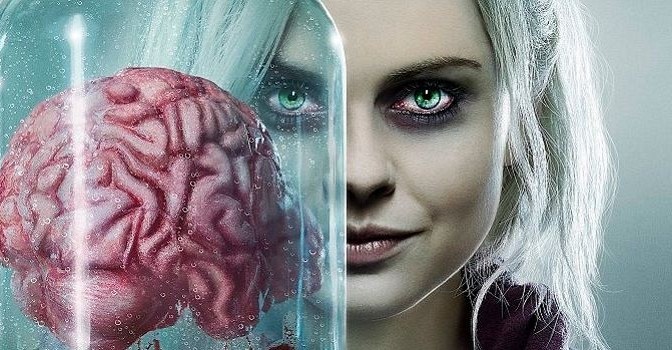
iZombie is back, and things have gotten weird

So, I loved the first season of iZombie, but I’m already struggling a little to get into the new season. It wasn’t bad, but I think I was just so excited about it, especially in a year of otherwise pretty lackluster programming, that there was no way I wasn’t going to be disappointed. And “Grumpy Old Liv” was such a disappointment, on multiple levels.

  1. I’m not a huge fan of time skips, and I especially hate them when they’re used poorly.
    And the time skip between the end of last season and the opening of this episode sucks. It’s not that it’s disorienting. Indeed, it’s not that very much has happened at all. There seems to have been almost no movement forward for any character except Blaine, who has started a new business (albeit as a front for taking back up his old business). It’s supposed to be three months since the events of last season’s finale, but it could just as well be three days for all the change in the characters’ statuses.
  2. Peyton is still missing in action.
    If there was one story thread from last season that I was hoping for an update on, and if there was one character who I was hoping to see done more justice this season, it was Peyton. She did at least get mentioned this week, but only to say that she’s still gone. Still, it’s more presence than she got in most of last season’s episodes. I’m just so concerned for her. And, as a feminist and a woman who loves (read: craves) stories about female friendship, it’s more than a little frustrating that this show just seems determined not to provide that story.
  3. I feel like Ravi’s entire life revolves around Liv and to a lesser degree Major.
    This is sort of an addendum to the Peyton thing, but only because Ravi’s apparent total lack of concern about Peyton’s disappearance is kind of appalling, and it was the thing about this episode that really hammered home the idea that, aside from his relationships with (and usefulness to) Liv and Major, Ravi has nothing else going on as a character. He has no family that we know of, no other friends that we’ve seen, no interests that he doesn’t share with either Liv or Major, no career ambitions that he’s stated aside from finding the zombie cure. It’s too bad.
  4. The whole “zombies are super secret thing” is wearing a bit thin.
    Frankly, I just don’t see how there isn’t some kind of public awareness about this problem. There don’t even seem to be any urban legends about it yet. I also don’t understand how Liv in particular, but also zombies in general, are so easily able to hide this from their friends and families. Liv’s behavior is so erratic that I feel like, at the very least, people around her would think she’s gone bonkers.
  5. Major is still so very boring. 
  6. The casual racism in this episode was the worst.
    Like it makes me almost not want to watch anymore. I know that it was supposed to be a part of the “grumpy old man” persona that Liv got from the brains she ate, but it sucked. It wasn’t funny, and it wasn’t insightful, and it feels really, really unnecessary. I know that the brains change Liv’s personality, but she seemed much more out of control than usual this week. In the past, she seemed to have some self-awareness about the bad qualities she got from brains, enough that she didn’t have to give in to the worst aspects of the identities she gets saddled with. I have a hard time, now, buying that she just completely lost her filter the way she is supposed to have here.

Still, there are a few interesting things going on in “Grumpy Old Liv. The scenes with Blaine were good, and Liv’s new roommate was an interesting surprise. The actual murder mystery this week was nicely done, and Steven Weber as the evil Max Rager CEO (or whatever) was delightfully wicked.

Overall, however, this episode just felt a little uninspired, and it felt more like a recap than a continuance of previous story. The time jump felt awkward and Liv’s brains-induced racism was so unpleasant and unlikable that it’s actually tainted the show for me a little.
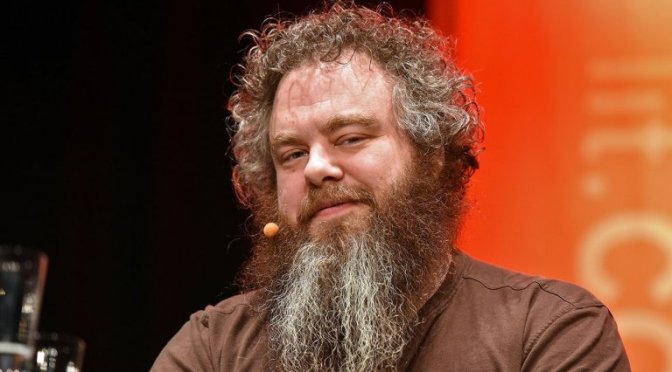
Lionsgate will be adapting Patrick Rothfuss’s ‘The Kingkiller Chronicle’

Patrick Rothfuss’s epic story of one boy’s struggle to pay his student loans will soon be made into, apparently, both a television series and a movie (or four, probably, since that’s how movies are made these days). Also video games. And the deal also includes rights to Rothfuss’s other work in the same universe.

Hollywood Reporter broke the news a couple of days ago, and the author has a lengthy post on his blog with much more actual information.

I’m actually moderately excited about this. I sort of love to hate the books, which are technically good and highly readable even though the treatment of women both by the main character, Kvothe, and by the author in the narrative is highly questionable. Can’t wait to write thousands of words about any movies or shows that get made.

Minority Report fixes some problems but then introduces a few more

I said last week that Minority Report wasn’t going to work until they managed to get Dash onto the police force in some kind of official capacity, and that was the first order of business in “Hawk-Eye.” The D.C. police are rolling out their new high tech super surveillance program, and Dash is going to be the civilian consultant partnered with Detective Vega. The good news is that they now have a legit reason to be hanging out together, but there’s some bad news wrapped up in here as well. Namely that none of this makes a lick of sense.

First, Vega and Dash have to bring Akeela in on the secret of Dash’s identity–apparently Akeela is the one who will be interviewing, selecting, and assigning the civilians who will be involved in the Hawk-Eye project. That’s an awful lot of responsibility for one individual in an enormous police force, especially for one individual who is low enough on the totem pole that she’s as terrified of losing her job as Akeela is. It just seems like this sort of very high stakes experimental program would have a little more oversight than this, but okay.

Second, they have to tell Arthur about it because Dash needs an identity. That makes sense, since no one is supposed to know who Dash is, but it doesn’t make sense that the government just released all of the precogs out into the world with no identities of their own. I mean, it just seems like there would need to be some way for the government to keep tabs on them. Also, we can already see in 2015 how increasingly difficult it’s becoming for people to just exist in the world without extensively documenting their lives–IDs, credit cards, mobile devices, social media, shopping and so on. We are all pretty incredibly connected. Already, almost everything we do requires a login. Minority Report is showing us a world where this is even more true–one major plot point in this very episode depends upon the obsolescence of cash, for example–so how has Dash been surviving without an identity?

Which all kind of leads into the biggest issue that I’m having with this show, which is the cognitive dissonance of it all. There are just too many contradictions, and they’re starting to be glaringly obvious enough that they are getting in the way of the story and garbling whatever message the show is trying to get across.

For example, this episode’s theme was, ostensibly, that everyone has a dark side. That’s a little obvious, especially for this kind of show, but it’s not the worst idea. It could have been a solid concept to build the story around, and there were some parts of the episode that worked perfectly in service of this theme, specifically the scenes with Agatha, who got really interesting this week. However, much of the episode was taken up with trying to deal with issues that I’m just not sure this sort of show is well-equipped to handle.

One major contradiction in this episode was Vega’s apparent (and entirely out of nowhere) distaste for pre-crime and her exaggerated skepticism of the Hawk-Eye program. In previous episodes, Vega seemed to be generally nostalgic for the pre-crime days. Although she recognizes some of the problems with the program, she also longs for the ability to prevent crime instead of just reacting to it. In fact, this is sort of her whole thing, and it’s the reason why she’s willing to risk her career (and her friend’s career!) in order to utilize Dash’s precognitive abilities. So why is she so disdainful about this new program that offers exactly the opportunity that she claims to want? Oh, because she’s some kind of loose cannon who doesn’t like to follow the rules? Enough that Blake asks Dash to keep an eye on her and tattle on her? Oh, okay.

Here’s the thing. Vega is a dirty cop. She has, so far, consistently engaged in behavior that is ethically questionable at best and downright frightening at times. In three episodes, we’ve seen a pattern of irresponsible use of an unapproved (and admittedly inaccurate!) information source, excessive force and brutality, misappropriation of and misuse of police resources, giving police-issue weapons to a civilian, and covering up crimes (both her own and others’). But, as in many (if not all) police shows, we’re supposed to see her as the hero because her intentions are pure.

This episode even calls that into question, though, with the (actual, not subtextual) suggestion that both Vega and Dash are less good-hearted and principled fighters for justice and more unethically abusing Vega’s station as a police officer to exorcise personal demons as a way of dealing with undiagnosed mental illnesses as a result of childhood trauma. Because that’s healthy and safe for society.

I don’t know about this show right now. There are still a ton of good ideas about policing, surveillance, civil liberties, and the justice system that I think Minority Report is trying to handle in a nuanced fashion. But I’m not sure this show, or maybe any show, is up to the task. There’s a real conversation to be had here, about the trade offs that we make in order to be safe, about the relative values of security and freedom, about the ethics and efficacy of predictive policing and surveillance, but whatever message the show is trying to have just gets garbled when it’s trying to talk out both sides of its mouth on every aspect of the issue.

Doctor Who: “Under the Lake” was good-not-great, but an improvement on the last two weeks

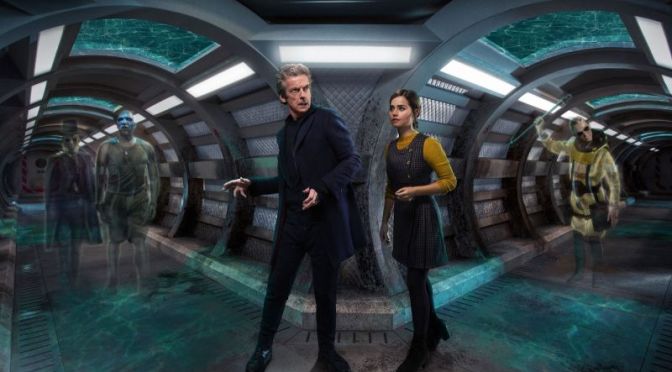
“Under the Lake” was a good, creepy episode. It wasn’t great, but it was good enough–and enough better than the last two weeks’ episodes–to highlight just how low my expectations for this show have fallen.

Peter Capaldi continues to shine as the Doctor, and it feels like we’re starting to see him really hit his stride in the role. The constant mean-spirited digs at Clara that were so unpleasantly characteristic of last season continue to be absent, which goes a long way toward making Capaldi’s Doctor actually likable and fun to watch. That said, he struggled a little in this episode. I understand not wanting to make the Doctor warm and fuzzy and lovable, but I’m concerned that he’s become too much a version of Steven Moffat’s obnoxious, abrasive Sherlock–only less clever, though about the same level of unfunny.

I rather liked the group of people that the Doctor and Clara found inside the underwater oil-drilling base. Some of Doctor Who‘s best episodes include these kind of ensemble casts, and this one is excellent support for Peter Capaldi.

It’s nice to see a deaf actor (Sophie Stone) playing a deaf character, and Cass is kind of a badass in general as the person in charge on the base, faced with some tough decisions as things go from bad to worse. The Doctor’s inability to understand sign language was played for laughs in a sort of cringeworthy way, but the interactions between Cass and the Doctor–mostly headbutting–were some of my favorite parts of the episode.

The only sour note with the guest ensemble was Steven Robertson’s Pritchard, who was a totally one note corporate jerkwad. He works for the oil company, and he dies early. Doctor Who has utilized similar characters before, and to similar effect, but I don’t think Pritchard works here. It’s not that I don’t love a good morality play where the evil corporate tool dies because of his own greed and/or stupidity, but this character just wasn’t stupid and/or greedy enough for me to feel like his death was really deserved. I think this is because his death was just way too obviously a punishment in the narrative. Usually these sorts of characters’ deaths are somehow a direct result of their bad qualities, but that wasn’t the case here. It also didn’t help that the character barely got any actual speaking time. It’s a well-chosen trope, but poorly executed.

The biggest problem with the episode, however, is that Clara still has pretty much nothing to do. Companions often do sort of fade into the background when there are a lot of other characters around, but rarely so completely as this, and I’m not sure I’ve ever seen it be called out as overtly within the episode as Clara’s irrelevance is here. After an action sequence where Clara and a couple of other characters were in mortal danger, the others are being greeted and fawned over by their friends while Clara literally says that she’s safe, too, if anybody cares. And, of course, no one does care, except perhaps the audience, but I think I mostly just felt bad for Clara.

It’s a particularly depressing sort of self-awareness to see from the show, and it makes me think that things for Clara are not going to get better. If the rumors are true and Clara is going to die when Jenna Coleman exits the show, that may be a merciful end to a character that has consistently been under- or poorly utilized.

Overall, though, I liked this episode a lot. It’s the first episode so far this year that I’ve felt was actually good rather than just “good for what the show is now.” It’s telling, though, that it’s also the first episode of the season not penned by Steven Moffat. There were still a few Moffat-esque flourishes to the script, but “Under the Lake” was a solid episode, with a great supporting cast and a pretty creepy monster mystery. I didn’t love the “cliffhanger” ending, but I’m looking forward to seeing the other half of this story next week.

Minority Report has some cool ideas, but it’s too busy showing off its future tech to develop them

“Mr. Nice Guy” was weird. I really want to love this show, and for that I need it to succeed, but last night’s episode was a big step backwards when the show desperately needs to improve upon its shaky start.

The show almost lost me with an early scene of people playing at a park with some kind of clear glass-looking ball thing. Then the camera swoops around and there’s a baby with a big touch screen on the front of its stroller. And some other ridiculous stuff that is less “cool and futuristic” and more “boring and impractical.” And can we talk about how literally every near-future sci-fi seems to really think all the phones and tablets and computers of the future are going to be made of clear glass and what a terrible idea it is? And even if it’s not the worst idea ever, I know for a fact that this has been a sci-fi standard for at least my entire lifetime, and it’s still not nearly as cool as prop makers seem to think it is.

Also, can we talk about the perennial sci-fi insistence that technology is going to drive people apart and diminish human interactions? The singles club that Vega and Dash go to in this episode, where people just touch armbands to calculate their compatibility (I guess, since it’s never really explained exactly what the % on the bands represents) is absurd, and the show takes itself a little too seriously for it to be funny. The biggest problem here, though, is that this matchmaking tech completely undermines the big idea of the episode, which is ostensibly concerned with toxic masculinity and pickup artistry and male entitlement. In a world where people can connect (or not) by just touching their armbands at a club, how is there still room for either pick-up artistry or the type of Nice Guy™ mentality that leads to the explosion of violence that Dash and Vega spend the whole episode trying to prevent?

It’s not that I don’t think these things will still exist in forty years–pick-up has been going strong since the 70s, and Nice Guys™ are probably eternal–but you can’t imagine a future in which these things logically shouldn’t exist (or at least shouldn’t exist the same way they do today) and then still use them as a major part of your television show. Unfortunately, this means that this week’s case of the week just didn’t work at all, and in this sort of procedural show that’s a very bad thing.

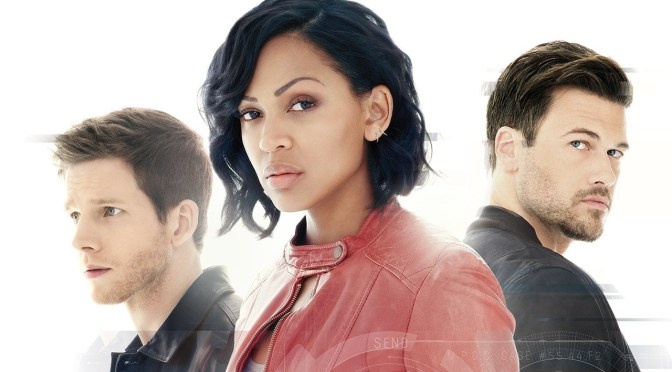
The other thing that didn’t work in this episode was the dynamic between Dash (Stark Sands) and Vega (Meagan Good). I still stand by my initial statement last week that our two leads have a nice chemistry, and the actors certainly work well together, but the relationship between their characters is starting to get, well, weird. In an episode that deals so heavily with male entitlement, the most striking display of it comes from Dash, whose drive to stop the murders that he sees is feeling increasingly self-centered as he continuously pushes Vega to bend rules and work outside the boundaries of her role as a police officer.

These characters are supposed to be partners, but I’m not buying it yet, and I don’t think that can truly happen until they are working together in a legitimate fashion. I don’t see what the benefit is to Vega in the current situation. She’s relying on an informant whose information is spotty and possibly inaccurate. They have to keep Dash’s existence and identity secret, which means that they don’t have the support and resources of the police department. Vega is already taking actions that could jeopardize her career–turning off her body cam, giving a police-issue weapon to a civilian, selling police reports–and her other relationships–especially with Blake (Wilmer Valderrama) and Akeela (Li Jun Li), who both seem to sincerely care about Vega. It just seems to be all very one-sided, with Dash getting to do work that helps him feel better about his visions and Vega taking on all the risk and responsibility. We’re two episodes into the show, and it’s already obvious that Vega’s apprehension of criminals in this way is raising a ton of questions from higher up in the police organization.

It’s a problem, and the simple way to solve it is to bring Dash in to the police force through legitimate channels as a consultant or something. This would allow Vega and Dash to work more closely together, create more opportunities for interactions with the show’s truly excellent supporting cast, and it would cut straight to the meat of the story, which pretty much has to be “what happens when people find out about Dash?”

The show is doing some great set-up for that eventuality, and the best scenes in this episode were in service of that bigger plot, but the episode was dragged down with a nonsensical case of the week that felt more like an advertisement for awful future technology that no one in their right mind wants than an actual story with real human people in it. I want more of Arthur, Agatha, Wally, Akeela, and Blake. And I want less silly future technology. They can keep Vega’s lenses, though. Those are actually pretty cool.

“The Witch’s Familiar” is a great episode for Capaldi’s Doctor, kind of ‘meh’ for everyone else

Steven Moffat’s track record with two part episodes is dodgy at best, but “The Witch’s Familiar” manages to be a decent and mostly inoffensive, if largely expected, follow-up to last week’s “The Magician’s Apprentice.”

From a storytelling standpoint, the episode isn’t great. The plot is slim, and the episode spends most of its time trying to make its ostensibly high stakes feel real. Unfortunately, there’s never any real sense of danger, and the single major unanswered question of the episode–what happened with baby Davros on the battlefield in the past?–is answered at the end of the episode in a typically (for Moffat’s Doctor) Pollyannaish way.

The biggest problem I had with both this episode and the last one is that Clara and, albeit to a lesser extent, Missy have very little to actually do, and yet they do it very, very noisily–both figuratively and literally. Neither Missy nor Clara truly contributed anything to the Doctor’s story in these two episodes, and Clara’s job in “The Witch’s Familiar” was entirely to exist as an object for the Doctor to have feelings about. Missy, of course, exists to torment Clara, presumably for our amusement, but her shtick is already wearing thin. Missy is also a veritable fount of useful but clunky exposition that could have easily been left out if Moffat was simply willing to go with a less absurd plot.

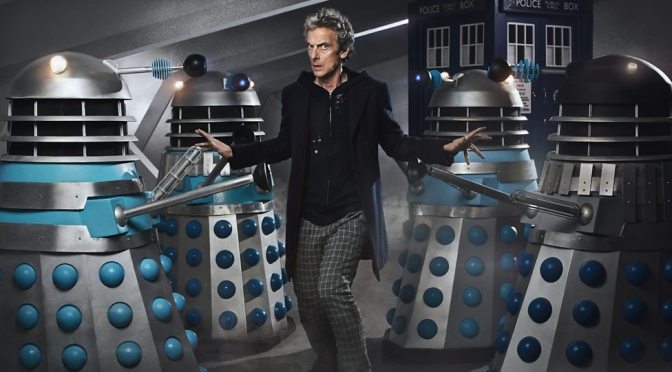
This episode, though, even more than last week’s, is really the Doctor’s show, and Peter Capaldi gives a virtuoso performance. His interactions with the elderly and ostensibly dying Davros are well-written, and their centuries-old rivalry was believable enough that the flashback scenes with young Davros feel kind of unnecessary and only serve to further show how amazing the Doctor is. Moffat continues to tell us that the Doctor has a dark side or whatever, but the Moffat era of the show has seen a sort of systematic stripping of the Doctor of any and all moral ambiguity. It’s too bad, really, because these Davros flashbacks provided a perfect opportunity for the Doctor to do something dark. No such luck, however.

That said, this is still the most interesting the Doctor has been in a good while, and it was nice to see Peter Capaldi given some decent material to work with. I only wish Missy could be less of a caricature and Clara could be less of a piece of furniture.

I’m so embarrassed for everyone involved in Heroes Reborn

Oh, man. So that happened.

Wow.

I know we all loved the first season of Heroes back in 2006, but we also all remember that seasons two through four were pretty terrible. And I know, I know, writer’s strike or whatever, but you can’t reasonably attribute all of the show’s problems to that. Mostly, it was just three-quarters badly written.

But regardless of the reasons for the original show’s issues, Heroes Reborn is a reboot/sequel that literally no one was asking for. It’s pretty obviously a cynical attempt on the part of NBC to capitalize on what little goodwill people had retained for the original show. But I watched it anyway, because I’m a sucker.

Heroes Reborn is bad.

It’s an ill-conceived idea in the first place, burdened as it is with the history of the original show, but Heroes Reborn takes its badness to the next level in several ways.

  1. Noah Bennet (Jack Coleman) is the only main character from the original show, and his story line in Reborn is boring. After some kind of obviously staged terrorist attack in Odessa, Texas, Noah has some of his own memories erased, and so far all he’s done is find this out. Neither he nor we, the audience, have any idea what is going on, but we also don’t have much reason to care, either. He’s kind of trying to find out what happened to his daughter or something, but even he doesn’t seem to care that much.
  2. New teenaged hero Tommy (Robbie Kay) has a kind of cool power, but his story is weighed down with a bunch of mind-numbingly dull teen angst bullshit. We spend most of the first two episodes learning about Tommy’s high school bully and Tommy’s crush on the bully’s girlfriend.
  3. Married couple Luke (Zachary Levi) and Joanne (Judith Shekoni) are on a revenge quest that is both evil and stupid. This is complicated by the increasingly obvious fact that these two characters absolutely loathe each other. I don’t understand how this couple ever made a child together, and I don’t know what they think they are going to accomplish by murdering every mutant they can find. I suppose it makes sense that Joanne might just be completely unhinged after her son’s death, but I don’t know why Levi sticks around since he isn’t totally on board with all the murder they’ve been doing. Which brings me to…
  4. It’s hard to buy the idea that people with super powers are an oppressed minority being hunted and killed/imprisoned with impunity. I mean, sure most of the super powers are probably not world-changing, but enough are that you’d think it would be pretty easy for these folks to take care of themselves. Even if I accept the idea that the government or some kind of shadow organization might be able to mess with mutants, I think a couple of middle class suburbanites with some small arms would have a tough time against a room full of super heroes.
  5. Everything in Japan is the worst. Both Miko (Kiki Sukezane) 0and Ren (Toru Uchikado) look like anime characters, which is just plain silly, but the major sin here is the whole thing with Miko’s father’s video game. This doesn’t even remotely make any kind of sense, even in a world with super heroes. It’s totally cut off from all the rest of the story so far, and after two episodes there’s still no hint as to how this part ties in to everything else we’re seeing. The very worst part, though? The piss poor computer graphics for the game world. It’s just sad.

There’s some other stuff going on with some people at a casino or something and a guy with a luchador mask, but these story lines are actually so boring that I don’t have anything to say about them. Also, there’s some girl being mysterious and ominous with the Northern Lights and a hole in the sky. That can’t be good.

I just can’t bring myself to care.

Unpopular Opinion: I kind of liked Minority Report.

I wasn’t making this show a priority because I just couldn’t get excited about the premise, but I finally watched it on Hulu this morning, and it was surprisingly enjoyable.

Here’s the thing, though. I’m still not sold on the premise of the show. In a world where there are increasing concerns about government surveillance and violations of privacy as well as serious problems with police overreach, corruption, and excessive force, Minority Report‘s nostalgia for pre-crime actually might be dangerously tone deaf. I mean, the entire point of Philip K. Dick’s book and the 2002 film was that the whole pre-crime thing was pretty irredeemably evil. The show, as was evident from its trailers, seems to be going with “but maybe it wasn’t?” (And I hope you are reading that in the Eli Cash voice I thought it in.) It’s a tough premise to sell, but after watching the pilot episode of the show I’m at least slightly encouraged that they might be handling things with a bit more nuance than I expected.

The good parts of the pilot are really, really good. The cold open, where we see ex-precog Dash (Stark Sands) running through future Washington, D.C. trying to stop a murder is excellently done and really hammers home the idea that, for Dash, his visions create a moral imperative that drives him back into the world to find a way to do some good with his gift. This might be hopelessly naive of him, in light of his own history as a formerly enslaved child, but the show seems prepared to address this issue. Both of the other precogs appear in the pilot and opinions on the moral imperative thing seem to be mixed. It also looks, based on the pilot’s epilogue, like the precogs’ ongoing fears of imprisonment and exploitation may fuel a longer story arc, which could get interesting and lead to an interested dilemma for Dash later on.

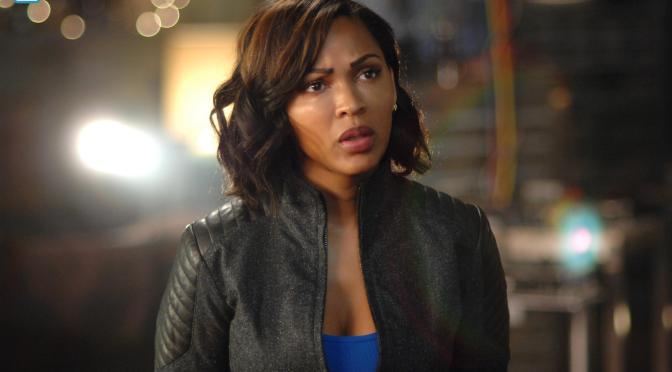
Meagan Good plays Lara Vega, the obligatory no-nonsense police officer, and I like her. She’s kind of a stock character, reminiscent of Sleepy Hollow‘s Abbie Mills, Castle‘s Kate Beckett, iZombie‘s Clive Babineaux and enough similar characters that there’s nothing about Vega that stands out. However, I love this particular collection of character tropes, and I rarely get tired of watching them in action. Aditionally, Meagan Good is likable and has an easy chemistry with both co-star Sands and Wilmer Valderrama, who plays her slightly slimy-seeming boss, Will Blake. This gives Vega’s interactions with other characters a natural feel that works in the show’s favor.

The only exception to this is in a couple of scenes between Vega and Dash where the show’s writers seem determined to hit the viewer right upside the head with exposition and shove some character motivation right in our faces. It’s too heavy handed in this first episode, and it ends up being jarring and distracting from the story. That said, television pilots often try to cram as much of this as possible in, so I can forgive it for now. The true test will come next week when we find out if this kind of ham-fisted hand-holding is just a pilot episode tic or if it’s going to be characteristic of the whole series.

The world-building is fairly pedestrian, with the usual near-future stuff in evidence, but the production values are slick and professional. The costumes are alright, and I actually kind of love Vega’s look, even if she does have a cleavage window. Minority Report continues the trend of more diverse casting in sci-fi television, which is nice to see as well. In general, while some of the show’s visual effects are a bit silly (the robots that look like someone chromed a bunch of golden snitches, for example) and there’s not much new or interesting in terms of the setting, the show’s future D.C. feels plausible enough that I can see myself spending a lot of time watching it if it can overcome some of the writing missteps of the pilot.

All in all, Minority Report turned out to be a pleasant surprise. I was expecting a disaster, and what I got instead was a well-cast show with some genuinely interesting ideas. The execution so far isn’t great, but it’s passable, and I think there’s a lot to work with here. I don’t know if it will ever be a great show, but it wouldn’t be hard for it to be a good one. In the meantime, it’s definitely enjoyable enough for me to come back to it to see if it improves.

I watched Scream Queens so you don’t have to

Seriously. If you haven’t watched Scream Queens yet, don’t bother.

It’s the worst sort of unfunny, “ironically” racist, tacky crap that I’ve seen in ages, and I’m so disappointed by basically everything about it. I didn’t expect this to be a good show (I mean, Ryan Murphy is also responsible for perennial turdpiles Glee and American Horror Story), but I did expect it to be entertaining and fun (in the vein of Glee and AHS). Mostly, it’s just cringe-inducing.

The thing about horror comedy is that it has to be funny in order to work, and the biggest problem with Scream Queens is that it’s just not, so it doesn’t. While there are a couple of amusing scenes in the first two episodes–most notably security guard Denise (Niecy Nash) explaining how to notify her in case of an emergency and, surprisingly, Chanel #2’s (Ariana Grande) death–it’s mostly just a constant stream of hatefulness or stupidity (and hateful stupidity) from all of the characters except for good girl Grace (Skyler Samuels), who is just boring.

Sorority leader Chanel (Emma Roberts) is a caricature of a rich bitch sorority girl, but she’s just so over-the-top vile that it’s hard to stomach. A conversation between Chanel and Dean Munsch (Jamie Lee Curtis) suggests a sort of self-awareness about this, and Dean Munsch’s assertion that “out in the real world, people just don’t talk that way to other people. It’s not normal,” seems to be a wink to the audience to show that writer Ryan Murphy knows how awful his characters are. However, the Chanel/Munsch conversation doesn’t herald any character development for Chanel, and we later find out that Munsch is just as awful in her own way.

I was ready to turn the show off the first time I heard the phrase “white mammy,” but I didn’t. It turns out that it only gets more racist from there. Chanel’s blatant and incredibly hateful and mean-spirited racism seems intended to be amusing, but it’s not. It’s just a drag. Even worse is the stereotyping of Zayday (Keke Palmer), the show’s token black girl. The biggest disservice done to Zayday, though, is that she’s sidelined from the majority of the action, only appearing to show how nice and not-racist Grace is and popping up occasionally later on to exclaim colorful lines like “Y’all’s ratchet!” Zayday is, so far, less a character than a prop or a background decoration in a story that’s really about the white girls.

While I suppose good for Ryan Murphy for casting a deaf actress (Whitney Meyer) to play “Deaf Taylor Swift,” I feel like the progressiveness of that decision is undone by the choice to use the character’s deafness as the punchline of her jokey death.

The show also shortchanges Sam (Jeanna Han), a character who is still alive (for now) but just doesn’t make sense. The “Predatory Lez” moniker is as aggressively and offensively unfunny as any of the other nicknames on the show, and I just will never understand why the trope of the obviously hostile radical feminist lesbian sorority pledge even exists. I also don’t understand why Ryan Murphy would utilize that trope for comedy only to play it entirely straight. Apparently the joke here is that this character exists. Also, that feminism is hilarious.

Speaking of making fun of feminism, Jamie Lee Curtis deserves so much better than Dean Munsch. I feel like as second wave feminists get older, this type of character–the dreary, failed feminist with nothing to show for herself in middle age except a divorce and a job she despises–gets more popular. I hate it so much, and it just seems to reinforce that Ryan Murphy can’t stand women or feminism. Even the “best case scenario” feminism depicted on the show–Grace’s dream of a sorority as a real sisterhood where she can connect with her mother’s memory–is shown as silly, childish, and naive.

I have no desire at all to keep watching a show where the biggest “joke” seems to be about how stupid feminism is and how awful women are.