Weekend Links: October 10, 2015

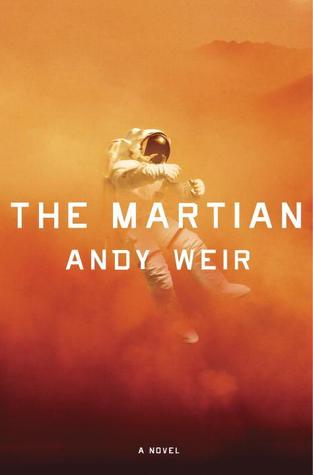
I went and saw The Martian last Sunday. It was excellent. The important thing, though, is that I’m still giving away a paperback copy of the book to celebrate both the release of the film.

At The Guardian, George R.R. Martin talks about our collective literary obsession with Mars. It’s a great read, as Martin is incredibly well-read and has an amazing memory for sci-fi history.

Here’s an interesting discussion about some sexism you can find in The Martian. Personally, I think this is some pretty nitpicky stuff, but I don’t think it hurts to point it out in the hopes that future writers will do better.

It’s October, and in addition to being Pumpkin Spice Season it’s also Let’s Talk About Racist Halloween Costumes Season. I can’t wait until we don’t have to keep having this discussion, but hear it is in the meantime.

In the Halloween spirit, the Hairpin has a list of 32 Horror Movies That [Probably] Aren’t About Women Being Sex-Murdered.

At the London Film Festival, Geena Davis shined a spotlight on gender inequality in children’s and family entertainment. I’ve been thinking about this a lot this week, actually, with the release of a new trailer for Pixar’s The Good Dinosaur, which doesn’t seem to have any female characters whatsoever.

That said, this piece at io9 about the making of The Good Dinosaur is pretty intriguing. I’m still thinking I might skip it in the theater, but it sounds like Pixar is doing some really innovative stuff with the animation. It certainly looks like a beautiful piece of work, though that’s never been part of my reservations about the film.

Mattel’s new super hero dolls kind of make me wish my daughter was young enough for me to buy them for her so I could play with them. I’m not sure I really understand why girls can’t just play with regular action figures instead of fashion dolls, though.

It looks like Minority Report is already headed towards cancellation, which sucks. I’ve actually been mostly enjoying the show, and I do plan to keep writing about it, but I really don’t know why I bother with any sci-fi shows on Fox anymore.

Twilight turned 10 years old this week, and Feminist Fiction has a great piece on why Stephenie Meyer’s cash-grabbing genderswap AU fanfic of her own work is a terrible idea.

Also at Feminist Fiction this week: an analysis of Not-So-Strong Female Characters.

The Mary Sue looks back at how Xena: Warrior Princess changed television.

Also at The Mary Sue: What We Can Actually Learn by Reimagining the Manic Pixie Dreamgirl Trope

At Tor.com, Where to Begin With Margaret Atwood. My personal suggestion? Start with The Edible Woman and read every word she’s ever written anywhere. Then, try to live a hundred more years so you can catch her Future Library novel, Scribbler Moon.

Bitch Media interviews Ann VanderMeer, editor of Sisters of the Revolution.

It’s been a pretty rad birthday week for me, with two long-awaited books being released this Tuesday: Kameron Hurley’s Empire Ascendant and Ann Leckie’s Ancillary Mercy. That means both authors have been making the rounds promoting their work.

Kameron Hurley was interviewed at Bull Spec and on Midnight in Karachi and wrote guest posts for My Bookish Ways and the Barnes & Noble Sci-Fi and Fantasy Blog.

Ann Leckie did a Reddit AMA (highlights at Tor.com), wrote an FAQ for her Big Idea post, and was interviewed at the Barnes & Noble Sci-Fi and Fantasy Blog.



The Good Dinosaur’s new trailer is lovely, but it still gives me a bad feeling

The Good Dinosaur is a movie that I kind of want to love. I love dinosaurs, I love Pixar, and it’s so, so pretty to look at. The newest trailer for it finally gives us some real story details and an idea of the plot, but it all feels a bit, well, done before.

It’s hard to judge a movie entirely from trailers, but between the simplistic-seeming storytelling and the clearly-for-the-preschool-crowd character design, I’m just not getting excited about this one. It seems a little like the movie we would get if The Flintstones had a baby with The Land Before Time and then that baby had a baby with a sad indie rock ballad, but packaged for four-year-olds to watch. Sadly, it strikes me as a film that because of its cuteness and its Pixar origin will do well financially, but just the promotion for this movie puts me in mind of more moderately successful, uncontroversially mediocre films like 2013’s Epic.

I have a feeling I’ll be waiting to watch this one on Netflix or from Redbox or if I’m ever, for some kind of Twilight Zone reason, babysitting a toddler.

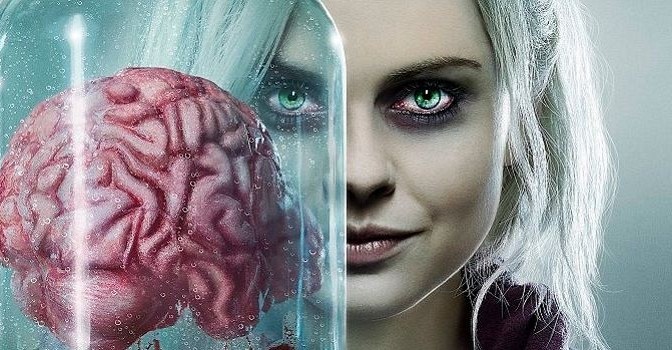
iZombie is back, and things have gotten weird

So, I loved the first season of iZombie, but I’m already struggling a little to get into the new season. It wasn’t bad, but I think I was just so excited about it, especially in a year of otherwise pretty lackluster programming, that there was no way I wasn’t going to be disappointed. And “Grumpy Old Liv” was such a disappointment, on multiple levels.

  1. I’m not a huge fan of time skips, and I especially hate them when they’re used poorly.
    And the time skip between the end of last season and the opening of this episode sucks. It’s not that it’s disorienting. Indeed, it’s not that very much has happened at all. There seems to have been almost no movement forward for any character except Blaine, who has started a new business (albeit as a front for taking back up his old business). It’s supposed to be three months since the events of last season’s finale, but it could just as well be three days for all the change in the characters’ statuses.
  2. Peyton is still missing in action.
    If there was one story thread from last season that I was hoping for an update on, and if there was one character who I was hoping to see done more justice this season, it was Peyton. She did at least get mentioned this week, but only to say that she’s still gone. Still, it’s more presence than she got in most of last season’s episodes. I’m just so concerned for her. And, as a feminist and a woman who loves (read: craves) stories about female friendship, it’s more than a little frustrating that this show just seems determined not to provide that story.
  3. I feel like Ravi’s entire life revolves around Liv and to a lesser degree Major.
    This is sort of an addendum to the Peyton thing, but only because Ravi’s apparent total lack of concern about Peyton’s disappearance is kind of appalling, and it was the thing about this episode that really hammered home the idea that, aside from his relationships with (and usefulness to) Liv and Major, Ravi has nothing else going on as a character. He has no family that we know of, no other friends that we’ve seen, no interests that he doesn’t share with either Liv or Major, no career ambitions that he’s stated aside from finding the zombie cure. It’s too bad.
  4. The whole “zombies are super secret thing” is wearing a bit thin.
    Frankly, I just don’t see how there isn’t some kind of public awareness about this problem. There don’t even seem to be any urban legends about it yet. I also don’t understand how Liv in particular, but also zombies in general, are so easily able to hide this from their friends and families. Liv’s behavior is so erratic that I feel like, at the very least, people around her would think she’s gone bonkers.
  5. Major is still so very boring. 
  6. The casual racism in this episode was the worst.
    Like it makes me almost not want to watch anymore. I know that it was supposed to be a part of the “grumpy old man” persona that Liv got from the brains she ate, but it sucked. It wasn’t funny, and it wasn’t insightful, and it feels really, really unnecessary. I know that the brains change Liv’s personality, but she seemed much more out of control than usual this week. In the past, she seemed to have some self-awareness about the bad qualities she got from brains, enough that she didn’t have to give in to the worst aspects of the identities she gets saddled with. I have a hard time, now, buying that she just completely lost her filter the way she is supposed to have here.

Still, there are a few interesting things going on in “Grumpy Old Liv. The scenes with Blaine were good, and Liv’s new roommate was an interesting surprise. The actual murder mystery this week was nicely done, and Steven Weber as the evil Max Rager CEO (or whatever) was delightfully wicked.

Overall, however, this episode just felt a little uninspired, and it felt more like a recap than a continuance of previous story. The time jump felt awkward and Liv’s brains-induced racism was so unpleasant and unlikable that it’s actually tainted the show for me a little.

Tor.com unveils the covers for January’s round of novellas

Emily Foster’s The Drowning Eyes is gorgeous to look at and sounds like a great read, but I have to say Lustlocked by Matt Wallace is probably the one I’m most excited about.

It had me at “horny 6-foot lizards.”

And, really, just look at this cover.
There’s basically no universe in which I’m not going to want to read a book with that cover. Especially when it’s novella length. It’s going to be a great read for a late January afternoon.

Lionsgate will be adapting Patrick Rothfuss’s ‘The Kingkiller Chronicle’

Patrick Rothfuss’s epic story of one boy’s struggle to pay his student loans will soon be made into, apparently, both a television series and a movie (or four, probably, since that’s how movies are made these days). Also video games. And the deal also includes rights to Rothfuss’s other work in the same universe.

Hollywood Reporter broke the news a couple of days ago, and the author has a lengthy post on his blog with much more actual information.

I’m actually moderately excited about this. I sort of love to hate the books, which are technically good and highly readable even though the treatment of women both by the main character, Kvothe, and by the author in the narrative is highly questionable. Can’t wait to write thousands of words about any movies or shows that get made.

Minority Report fixes some problems but then introduces a few more

I said last week that Minority Report wasn’t going to work until they managed to get Dash onto the police force in some kind of official capacity, and that was the first order of business in “Hawk-Eye.” The D.C. police are rolling out their new high tech super surveillance program, and Dash is going to be the civilian consultant partnered with Detective Vega. The good news is that they now have a legit reason to be hanging out together, but there’s some bad news wrapped up in here as well. Namely that none of this makes a lick of sense.

First, Vega and Dash have to bring Akeela in on the secret of Dash’s identity–apparently Akeela is the one who will be interviewing, selecting, and assigning the civilians who will be involved in the Hawk-Eye project. That’s an awful lot of responsibility for one individual in an enormous police force, especially for one individual who is low enough on the totem pole that she’s as terrified of losing her job as Akeela is. It just seems like this sort of very high stakes experimental program would have a little more oversight than this, but okay.

Second, they have to tell Arthur about it because Dash needs an identity. That makes sense, since no one is supposed to know who Dash is, but it doesn’t make sense that the government just released all of the precogs out into the world with no identities of their own. I mean, it just seems like there would need to be some way for the government to keep tabs on them. Also, we can already see in 2015 how increasingly difficult it’s becoming for people to just exist in the world without extensively documenting their lives–IDs, credit cards, mobile devices, social media, shopping and so on. We are all pretty incredibly connected. Already, almost everything we do requires a login. Minority Report is showing us a world where this is even more true–one major plot point in this very episode depends upon the obsolescence of cash, for example–so how has Dash been surviving without an identity?

Which all kind of leads into the biggest issue that I’m having with this show, which is the cognitive dissonance of it all. There are just too many contradictions, and they’re starting to be glaringly obvious enough that they are getting in the way of the story and garbling whatever message the show is trying to get across.

For example, this episode’s theme was, ostensibly, that everyone has a dark side. That’s a little obvious, especially for this kind of show, but it’s not the worst idea. It could have been a solid concept to build the story around, and there were some parts of the episode that worked perfectly in service of this theme, specifically the scenes with Agatha, who got really interesting this week. However, much of the episode was taken up with trying to deal with issues that I’m just not sure this sort of show is well-equipped to handle.

One major contradiction in this episode was Vega’s apparent (and entirely out of nowhere) distaste for pre-crime and her exaggerated skepticism of the Hawk-Eye program. In previous episodes, Vega seemed to be generally nostalgic for the pre-crime days. Although she recognizes some of the problems with the program, she also longs for the ability to prevent crime instead of just reacting to it. In fact, this is sort of her whole thing, and it’s the reason why she’s willing to risk her career (and her friend’s career!) in order to utilize Dash’s precognitive abilities. So why is she so disdainful about this new program that offers exactly the opportunity that she claims to want? Oh, because she’s some kind of loose cannon who doesn’t like to follow the rules? Enough that Blake asks Dash to keep an eye on her and tattle on her? Oh, okay.

Here’s the thing. Vega is a dirty cop. She has, so far, consistently engaged in behavior that is ethically questionable at best and downright frightening at times. In three episodes, we’ve seen a pattern of irresponsible use of an unapproved (and admittedly inaccurate!) information source, excessive force and brutality, misappropriation of and misuse of police resources, giving police-issue weapons to a civilian, and covering up crimes (both her own and others’). But, as in many (if not all) police shows, we’re supposed to see her as the hero because her intentions are pure.

This episode even calls that into question, though, with the (actual, not subtextual) suggestion that both Vega and Dash are less good-hearted and principled fighters for justice and more unethically abusing Vega’s station as a police officer to exorcise personal demons as a way of dealing with undiagnosed mental illnesses as a result of childhood trauma. Because that’s healthy and safe for society.

I don’t know about this show right now. There are still a ton of good ideas about policing, surveillance, civil liberties, and the justice system that I think Minority Report is trying to handle in a nuanced fashion. But I’m not sure this show, or maybe any show, is up to the task. There’s a real conversation to be had here, about the trade offs that we make in order to be safe, about the relative values of security and freedom, about the ethics and efficacy of predictive policing and surveillance, but whatever message the show is trying to have just gets garbled when it’s trying to talk out both sides of its mouth on every aspect of the issue.

Movie Review: The Martian

The Martian was never going to be one of my favorite films, just like the book was never going to be one of my favorite novels (although I did really enjoy it when I read it earlier this year). However, like the book, the movie was smart and funny and deeply enjoyable. Also, perhaps counterintuitively, it’s a pretty great advertisement for space travel.

The thing about The Martian–and this was also true of the book–is that there aren’t really many surprises. From the moment Mark Hadley (Matt Damon, who somehow manages to be both well-cast and almost entirely forgettable in the role) gets left on Mars, we know he’s going to survive and get rescued. The story, in both book and film, is about how he does it and about how his fellow astronauts and people back on Earth work together to bring him home.

Of course, a lot of the more technical stuff from the book was necessarily omitted from the movie. It’s probably for the best, though. Even on the page it often read like Hackaday, and a two-and-a-half hour how-to video would have pretty limited appeal. While this diminished some of the sense of danger on Mars–a big part of the tension in the novel was the series of disasters, both minor and major, that Mark had to figure out how to overcome–the sleeker storytelling left plenty of space for the far more interesting things that were happening on Earth and on the Ares spacecraft.

Speaking of the Ares crew, they were without exception wonderful. Jessica Chastain is excellent as Commander Melissa Lewis and manages to portray a complete and compelling emotional arc with relatively little screen time. Aksel Hennie’s Vogel and Michael Peña’s Martinez got some of the funniest lines in the movie. Kate Mara’s Johanssen and Sebastian Stan’s Beck were  a little underutilized, but their love story from the book was included in a sweet and subtle way that I really appreciated.

On Earth, most of the action is shot from the point of Vincent Kapoor, a character who was of Indian descent (and named Venkat, actually) in the book, but was played by Chiwetel Ejiofor in the movie. As much as I love Chiwetel Ejiofor and his performance, this is a strange casting choice, especially when there are so few roles for Asian actors in American cinema, and more especially when there doesn’t seem to have been much effort at diversity elsewhere in the casting process, either. Even Mindy Park (who I read as probably Korean in the book) was a blonde white woman, and all of the non-specified Ares crew were white. It’s not the worst movie in terms of representation, but I think there were definitely some missed opportunities–especially since by the near future when The Martian is supposed to take place US racial demographics will have changed pretty considerably. Frankly, a future as white as the one we’re shown in this movie is just damned unrealistic.

It was a good flick, though. Going into the film, probably my biggest concern was that the (extremely thematically important) collaboration with China would be left out, but it was included, albeit in an abbreviated form. The most significant changes from the book were actually on Mars, where the majority of Mark’s final journey was cut, but I found that I didn’t mind this very much. The material that was left out was mostly what was a little tiresome in the final quarter or so of the book, when the drama of Mark’s constant crises started to feel a bit overdone. That said, if they could have worked it in, I think the giant storm that forced Mark to make a major change of course in the book would have been cool to see as well as being a nice piece of symmetry to balance out the storm that got Mark left on Mars in the first place.

I don’t think The Martian is a movie that I’ll want to see over and over again, and I think it’s going to be interesting to see how it ages as we learn more about Mars in the next few years. It’s a beautiful film, though, full of gorgeously crafted shots of alien landscape as well as almost-but-not-quite familiar technology. It’s an optimistic story about a good possible future, and it’s the sort of movie that should make everyone who watches it want to be an astronaut. Be sure to take your kids.

Book Review: The Heart Goes Last by Margaret Atwood

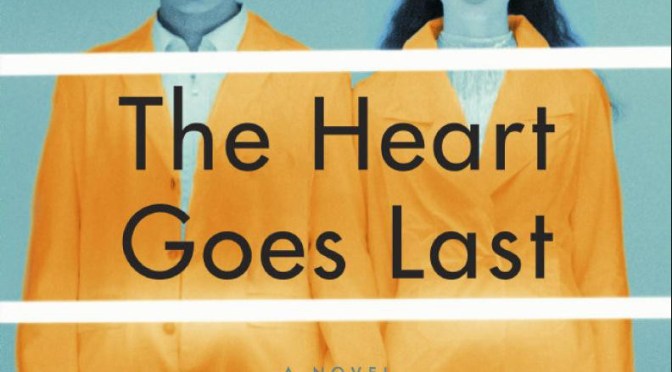
The Heart Goes Last isn’t as great a read as Oryx and Crake or The Robber Bride, and it’s not going to be a formative reading experience for me the way The Handmaid’s Tale or The Edible Woman were. And it’s not as meticulously excellent and perfectly curated as Atwood’s most recent story collection, Stone Mattress. Even still, The Heart Goes Last is something special, because I honestly believe that’s the only kind of work Margaret Atwood is capable of producing.
The story follows Stan and Charmaine, a down-on-their-luck couple who are just one couple of millions that are trying to scrape by in the wake of an economic disaster. Charmaine waits tables at a sort of frightening bar, and they’re living together in their car when they hear about a new opportunity that sounds, frankly, too good to be true, but still a damn sight better than having to guard their car and move around daily in order to avoid marauding looters and rapists.

The basic gist of the Positron project is this: they will join a new sort of large scale intentional community where they will spend half their time living in a [pretty comfortable] prison (Positron) and the other half living in an idyllic town (Consilience) where they will have their own home, jobs, food, and security. In either place, they will be provided for and protected from the ongoing economic crisis in the outside world. Obviously, things are not as they seem, and the majority of the book deals with how Stan and Charmaine learn exactly how much they’ve screwed up and then how they try with mixed success to extricate themselves from a pretty messed up predicament.

It’s tempting to compare The Heart Goes Last to Atwood’s earlier dystopian work, and there are some similarities. With The Handmaid’s Tale, it shares its examination of gender and sexuality in a strictly planned and regimented society. With the MaddAddam books, it shares concerns about corporatism and other evils of late stage capitalism. However, Positron/Consilience is a sort of kitschy post-postmodern paradise that lacks the darkness and grit of either the Republic of Gilead or the MaddAddam trilogy.

And where neither The Handmaid’s Tale nor MaddAddam were devoid of Atwood’s signature wry humor, in The Heart Goes Last we’re treated to a sort of ever-present tongue in cheek sarcasm with high camp stylings. I feel like The Heart Goes Last needs to be adapted to film by John Waters. Or perhaps Richard O’Brien. Or both. I think it could work.

In any case, it’s a funny, funny book that is also weird as hell, and it has a core of tragedy that, as someone who has struggled economically in recent years (although I never did have to live in my car), I found sometimes a little too relatable. There was no point in the book where I just though “this is too absurd; I don’t believe this.” I mean, sure, some weird things happen, but the sort of absurd situational humor that Atwood employs retains just enough realism that I always felt like Stan and Charmaine could be real people. Their extreme ordinariness is a big part of the humor, but they’re never boring or banal. Instead I find the characters’ normalcy comforting, and it helps to ground a story that has enough bizarre details that it could easily be driven off the rails by its own silliness.

The Heart Goes Last isn’t a great Margaret Atwood novel, possibly due in part to its odd genesis (it began as a serial work on now-defunct Byliner). There are definitely places, mostly in the beginning, where it reads more like a set of loosely related vignettes about the same characters. It doesn’t start to feel like a proper novel in its own right until somewhere after the first third.

The thing is, “not a great Atwood novel” is still a distinct cut above most everything else being published. I wouldn’t recommend The Heart Goes Last to someone just discovering the author, but if you already love Margaret Atwood, you’ll want to read it.

[This review is based on a free ARC received through NetGalley.]

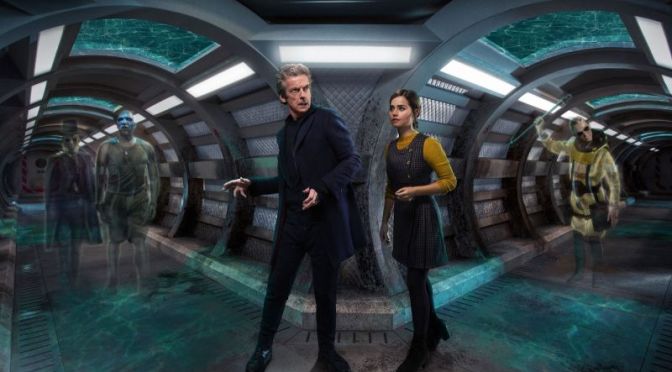
Doctor Who: “Under the Lake” was good-not-great, but an improvement on the last two weeks

“Under the Lake” was a good, creepy episode. It wasn’t great, but it was good enough–and enough better than the last two weeks’ episodes–to highlight just how low my expectations for this show have fallen.

Peter Capaldi continues to shine as the Doctor, and it feels like we’re starting to see him really hit his stride in the role. The constant mean-spirited digs at Clara that were so unpleasantly characteristic of last season continue to be absent, which goes a long way toward making Capaldi’s Doctor actually likable and fun to watch. That said, he struggled a little in this episode. I understand not wanting to make the Doctor warm and fuzzy and lovable, but I’m concerned that he’s become too much a version of Steven Moffat’s obnoxious, abrasive Sherlock–only less clever, though about the same level of unfunny.

I rather liked the group of people that the Doctor and Clara found inside the underwater oil-drilling base. Some of Doctor Who‘s best episodes include these kind of ensemble casts, and this one is excellent support for Peter Capaldi.

It’s nice to see a deaf actor (Sophie Stone) playing a deaf character, and Cass is kind of a badass in general as the person in charge on the base, faced with some tough decisions as things go from bad to worse. The Doctor’s inability to understand sign language was played for laughs in a sort of cringeworthy way, but the interactions between Cass and the Doctor–mostly headbutting–were some of my favorite parts of the episode.

The only sour note with the guest ensemble was Steven Robertson’s Pritchard, who was a totally one note corporate jerkwad. He works for the oil company, and he dies early. Doctor Who has utilized similar characters before, and to similar effect, but I don’t think Pritchard works here. It’s not that I don’t love a good morality play where the evil corporate tool dies because of his own greed and/or stupidity, but this character just wasn’t stupid and/or greedy enough for me to feel like his death was really deserved. I think this is because his death was just way too obviously a punishment in the narrative. Usually these sorts of characters’ deaths are somehow a direct result of their bad qualities, but that wasn’t the case here. It also didn’t help that the character barely got any actual speaking time. It’s a well-chosen trope, but poorly executed.

The biggest problem with the episode, however, is that Clara still has pretty much nothing to do. Companions often do sort of fade into the background when there are a lot of other characters around, but rarely so completely as this, and I’m not sure I’ve ever seen it be called out as overtly within the episode as Clara’s irrelevance is here. After an action sequence where Clara and a couple of other characters were in mortal danger, the others are being greeted and fawned over by their friends while Clara literally says that she’s safe, too, if anybody cares. And, of course, no one does care, except perhaps the audience, but I think I mostly just felt bad for Clara.

It’s a particularly depressing sort of self-awareness to see from the show, and it makes me think that things for Clara are not going to get better. If the rumors are true and Clara is going to die when Jenna Coleman exits the show, that may be a merciful end to a character that has consistently been under- or poorly utilized.

Overall, though, I liked this episode a lot. It’s the first episode so far this year that I’ve felt was actually good rather than just “good for what the show is now.” It’s telling, though, that it’s also the first episode of the season not penned by Steven Moffat. There were still a few Moffat-esque flourishes to the script, but “Under the Lake” was a solid episode, with a great supporting cast and a pretty creepy monster mystery. I didn’t love the “cliffhanger” ending, but I’m looking forward to seeing the other half of this story next week.